Riding Hanging Rock in Autumn
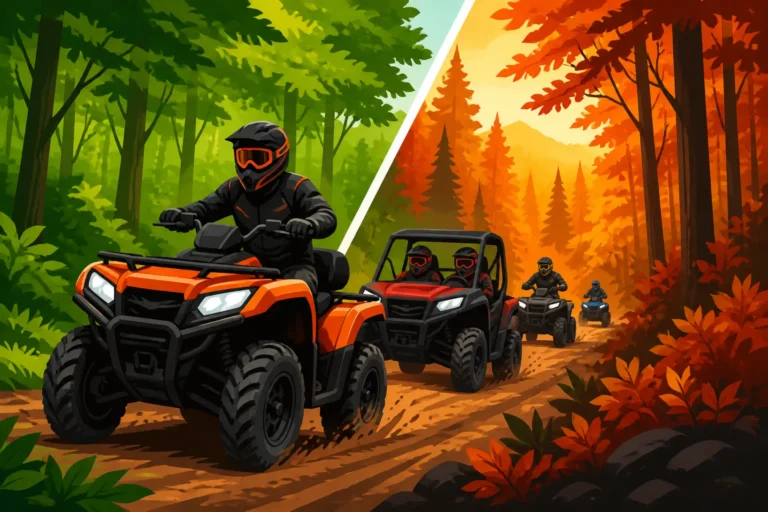
Autumn can make Hanging Rock State Forest feel like the perfect place for an Ohio ATV ride: cooler air, colorful hillsides, and trails that are less punishing than they can be in summer. But wet leaves, hunting activity, changing daylight, and seasonal closures can complicate a trip. This guide covers how to prepare, ride considerately, and check the details before unloading.
Planning an autumn ride at Hanging Rock
Know the riding area and its seasonal schedule
Hanging Rock State Forest is in Lawrence County in southern Ohio, near Ironton. Its off-highway vehicle trails run through hilly, wooded terrain, where fall color and changing ground conditions are part of the experience. The trail system is commonly described as having about 26 miles of routes, but mileage and access can change when sections close or conditions require maintenance. Treat a trail map as a planning tool, not proof that every segment will be open when you arrive.
Ohio’s state-forest riding season has a seasonal schedule, and autumn sits near the end of the usual riding window. State forest trails generally close for winter in December and reopen in spring, but dates and restrictions can be affected by local conditions or official notices. Before loading up, check the latest information from the Ohio Department of Natural Resources and confirm that the Hanging Rock system is open. [Ohio's Trail Season by Forest] and [Ohio Trail Closures to Check First] are useful starting points when you are comparing seasonal access and looking for closure information.
It is easy to assume that a trailhead will be open because the weather looks inviting. A warm Saturday does not override a posted closure, a maintenance restriction, or a trail that has become unsafe after rain. Check the official trail information close to your trip, then look again before you leave home if the forecast changes. If you are traveling from outside Lawrence County, that small check can save a long drive with a trailer.
Choose a machine that fits the trails
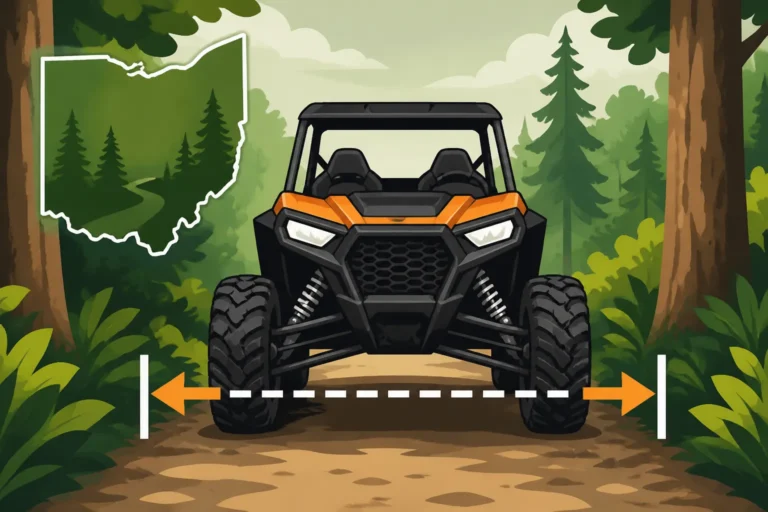
Before setting off, check your machine’s width against the rules for Ohio state forest trails. The state forest limit is 62 inches, and a side-by-side that exceeds it may not be allowed on those routes. Measure the widest point of the machine rather than relying on a brochure description or assuming a particular model is trail-legal. Mirrors, tires, wheel offsets, or other modifications may affect the measurement. [Ohio's 62-Inch State Forest Width Limit] explains why machine dimensions can determine where you are permitted to ride.
Trail choice matters too. A narrow quad can navigate some tight sections more easily than a wide UTV, while a larger machine may feel more stable on uneven ground but leave fewer places to ride. If you have recently added wider tires or changed the suspension, measure again before the trip. For a family or group with different machines, confirm that every vehicle fits the rules rather than checking only the lead rider’s machine.
Bring the registration and other required documents for your ride, and make sure the plate is visible and attached as required. Do not assume that trail access works like a separate park ticket: Ohio’s registration and state-forest access rules are their own system, and out-of-state riders may have different requirements. [Ohio APV Permits Explained] and [Ohio Reciprocity for Out-of-State Machines] can help clarify what to check if your machine is registered elsewhere.
Preparing for fall trail conditions
Expect leaves, mud, and quick changes in traction
Autumn trails can look dry from the parking area while holding slick patches in the shade. A layer of leaves can hide roots, ruts, rocks, and washed-out edges. In the hills around Hanging Rock, a route that felt straightforward on the way out may feel different on the return if rain has softened the surface or leaves have covered familiar landmarks.
Ride at a speed that gives you room to react. On a leaf-covered downhill, avoid abrupt braking or sharp steering, especially if the ground underneath is damp. Keep extra space between machines so the rider ahead can slow down without forcing everyone behind to brake suddenly. If you cannot see the trail surface clearly, ease off rather than treating the leaves as harmless decoration.
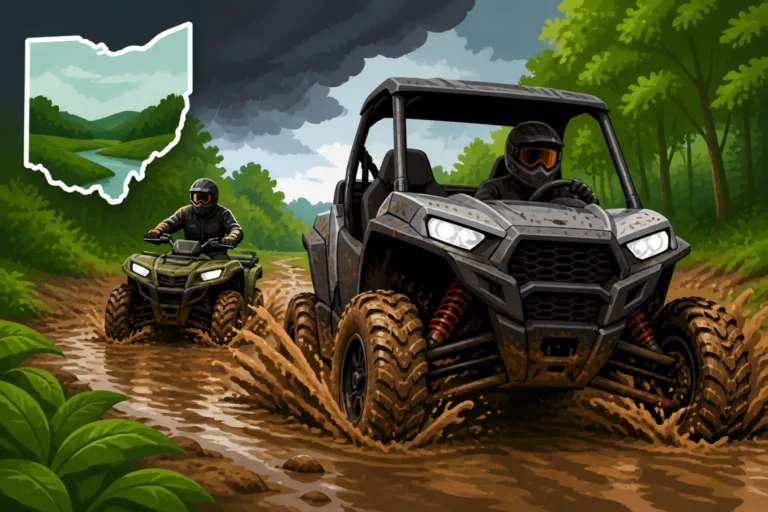
Rain is one of the biggest variables in southern Ohio. Clay-heavy ground can become slick, and repeated traffic can deepen ruts. If the trail is muddy enough that you are spinning tires, cutting new lines, or struggling to climb safely, turning around is often the better choice. A quick photo of the trail condition can be useful for your own notes, but it does not replace checking for official closures. For more detail on changing ground, see [Ohio Trails After Heavy Rain] and [Riding After a Week of Rain].
Pack for a shorter day than you expect
Fall daylight fades earlier than it does in midsummer, and dense woods can make a trail feel dim before sunset. Ohio riding hours are tied to daylight, so plan to be back well before the legal riding window ends. A late start can turn a relaxed loop into a rushed ride, especially if the group needs frequent stops or has a machine problem.
Pack clothing for a range of temperatures. A cool morning at the staging area can turn into a warm afternoon once you are moving, while a shaded, damp section may feel chilly even on a bright day. Layering lets you adjust without having to choose between overheating and riding in wet, uncomfortable clothes. Include gloves suitable for the conditions, water, basic first-aid supplies, and a way to contact someone if your group becomes separated.
A phone mapping app, including onX Offroad, can help you keep track of your position and plan around routes you have already reviewed. Download or save relevant map information before arriving, since cell coverage can be unreliable in wooded and hilly areas. Use mapping tools as a navigation aid, not as confirmation that a route is open or legally available. Check official trail maps and posted signs, and do not leave a marked route just because an app appears to show another path.
| Autumn concern | What to do before or during the ride |
|---|---|
| Seasonal access | Confirm the trail system is open and check for current closures |
| Wet leaves and hidden ruts | Reduce speed, leave room between machines, and avoid abrupt turns |
| Rain-softened ground | Turn around if traction is poor or your tires are damaging the trail |
| Shorter daylight | Start early and plan a route that allows time to return safely |
| Weak cell service | Save map information ahead of time and tell someone your plan |
| Hunting-season activity | Wear visible clothing when stopped and respect posted restrictions |
Riding responsibly during hunting season
Share the forest with hunters and other visitors
Autumn overlaps with hunting seasons in Ohio. That does not mean every trail is closed, but it does mean riders should pay close attention to signs, posted restrictions, and any temporary notices. Hunters may be using nearby forest roads or walking to locations away from the riding route. Give other forest users room, keep your noise and speed under control, and do not ride beyond a marked trail to investigate an unfamiliar track or access point.
Wear a conspicuous outer layer when stopped or walking near the trail. A bright color helps you stand out among leaves and tree trunks, particularly in shaded areas. It is also sensible to avoid stopping in a blind corner or blocking a trail. If your group needs to regroup, choose a wide, visible place where other riders can pass safely.
Respecting closures is especially important during busy fall weekends. A gate, sign, or temporary notice may be there because of trail work, ground damage, wildlife management, or another safety issue. Do not move barriers or ride around a closure. If a route is blocked, retrace your path or follow the official posted detour. For more seasonal riding context, [Ohio Riding in Hunting Season] and [Blaze Orange on an Ohio November Ride] cover practical considerations for sharing outdoor spaces during this time of year.
Keep speed and group spacing under control
Hanging Rock’s wooded routes can have limited sightlines. A blind bend may conceal another rider, a downed branch, or a change in trail surface. Stay at a pace that lets you stop within the distance you can see, and slow further near trail intersections and staging areas. If you are riding with children or newer riders, agree on a simple group plan before starting: who leads, who rides last, where you will wait, and what to do if someone has to stop.
Avoid tailgating. On a narrow trail, the rider ahead may need to brake for a rut or make a careful turn. A little extra space reduces the chance of a collision and gives the person behind a better view of the terrain. When a group includes different machine sizes or skill levels, ride at a pace that keeps everyone together without pressuring less experienced riders into risky choices.
Stay on marked routes and yield courteously when appropriate. Do not create a new bypass around a muddy spot or ride over vegetation to get around another machine. Shortcuts can widen into lasting damage, particularly when the ground is wet. [Ohio Trail Etiquette on Narrow Trails] offers additional guidance on sharing limited space without turning a busy trail into a frustrating one.
A practical checklist for your Hanging Rock trip
Check the rules, route, and machine before leaving
A little preparation can prevent the most common autumn trip problems. Confirm current access, read trailhead notices when you arrive, and check whether the route is suitable for your machine. Make sure your registration is current and your plate is visible. If you are unsure whether your vehicle’s width or paperwork meets the requirements, settle that question before driving to the trailhead rather than hoping it will be fine at the gate.
Inspect the machine at home, especially if it has been sitting since summer. Check tire condition and pressure, brakes, lights, steering, and fluid levels. Mud and wet leaves can make a small maintenance issue more serious, so do not ignore a soft brake lever, damaged tire, or loose component. Carry basic tools and the recovery equipment appropriate for your machine, but avoid attempting a recovery that could put anyone in danger or damage the trail.
Plan your route conservatively. If you do not know the area, choose a loop that leaves enough time to return before the end of legal riding hours. Make sure every rider understands how the group will regroup and what to do if someone gets separated. Sharing your intended route and expected return time with someone who is not riding is a simple precaution.
Use this quick pre-ride checklist
Before unloading, take a moment to check the conditions at the actual trailhead. Read posted notices, confirm that the system is open, and look for signs of fresh rain or soft ground. If the lot is muddy or the first section looks badly rutted, consider whether a different day would be safer and kinder to the trail.
Use the following checklist as a final check:
- Confirm the trail is open and review any temporary restrictions.
- Verify that your machine meets the applicable width and registration requirements.
- Inspect tires, brakes, steering, lights, and fuel before setting out.
- Save a map or navigation information in case cell service drops.
- Wear suitable layers and visible clothing, particularly when stopped.
- Set a turnaround time that leaves a comfortable daylight margin.
- Keep to marked routes and turn back if traction or visibility becomes unsafe.
The best autumn ride is not necessarily the longest one. At Hanging Rock, a thoughtful pace, a flexible route, and respect for seasonal conditions can make the day more enjoyable than trying to force a full loop in poor weather. If the ground is slick or a closure changes your plan, calling it early is a sensible choice—not a wasted trip.
Disclaimer
This article is for general informational purposes only and does not constitute professional advice. Laws, prices and regulations vary by location and change over time. Consult a qualified professional for guidance on your specific situation.