Comparing a Forest Trail to a Private Park
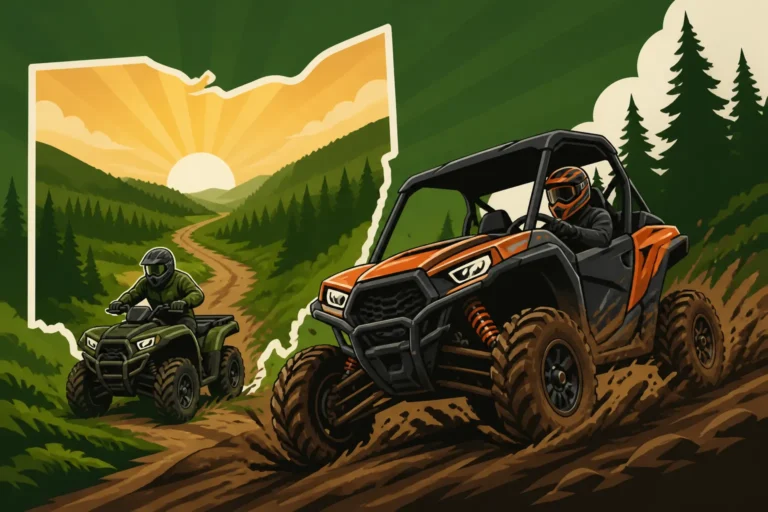
Choosing between an Ohio forest trail and a private riding park can change the whole day: where you can ride, what permits you need, how challenging the terrain feels, and whether you’ll find facilities nearby. This guide compares the two options so you can pick a ride that suits your machine, experience, group, and plans.
What Counts as a Forest Trail or Private Park
Ohio’s forest riding areas are designated routes
“Forest trail” can mean trails in an Ohio state forest or routes in Wayne National Forest, and those are not the same system. They have different managing agencies, rules, and access requirements. In either case, public forest land is not a blank canvas for off-road riding: you generally need to stay on routes specifically designated for motorized use.
Ohio’s state forest riding opportunities are limited to designated areas, including systems such as Perry, Pike, and Maumee state forests. Wayne National Forest has its own OHV trail systems in southeastern Ohio. The route network, riding season, machine restrictions, and permit details can differ from one area to another, so check the specific destination before loading your ATV or UTV. The overview of Ohio’s Four State Forest APV Areas can help you understand how state forest options differ, while Wayne National Forest’s Three Ohio Systems gives a separate starting point for planning a national forest ride.
A public trail may feel remote even when it is not far from a town. Around Nelsonville, for example, you may be planning a ride near the Hocking Hills region, while Wayne National Forest areas extend through parts of southeastern Ohio. Expect changing surfaces and surroundings: one route may cross reclaimed mining ground, another may wind through wooded hills, and a connecting road or trail section may be unavailable. Always use current official trail information rather than assuming a line on a map is open to motorized traffic.
A private park is a managed riding property
A private riding park is land operated for off-road recreation. The owner or operator determines which routes are open, what kinds of machines are allowed, what the admission process involves, and what facilities are available. One park might emphasize wooded trail loops, while another may have mud areas, open riding space, a motocross track, or a mix of terrain.
The word “private” does not mean that every part of the property is automatically open to every rider. Parks may have separate rules for passengers, youth riders, helmets, noise, pets, camping, and machine types. Some require a signed waiver or advance planning, and the conditions of a particular route may change with weather or maintenance. Check the park’s own posted rules before you go, especially if you are bringing a wide side-by-side or a youth machine.
Private parks can be a practical choice when you want a defined destination and a more controlled riding setting. However, amenities and services vary widely. A park may have restrooms and a staging area but no fuel nearby; another may offer camping or rentals but require reservations or additional planning. Don’t assume that one private park’s policies apply to another.
Forest and park labels do not tell the whole story
The riding experience depends on the actual route, not just whether the land is public or private. A forest trail can be carefully marked and easy to follow, while a private park can have confusing intersections or challenging terrain. Likewise, a forest may offer a quieter, more natural-feeling ride, but it can also involve fewer services and more distance between facilities.
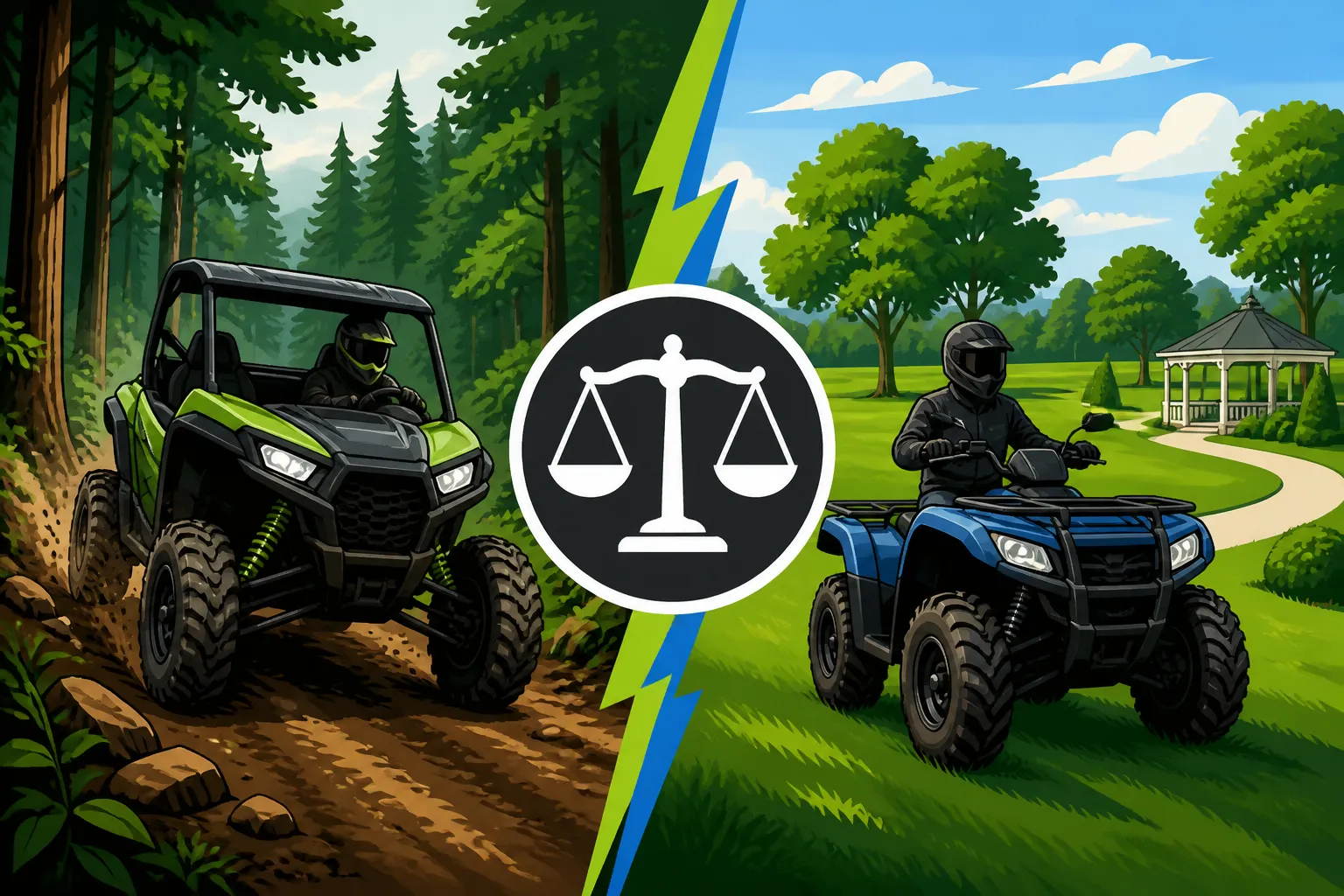
Think of the comparison as a choice between two management styles. Public forest riding follows agency rules and designated routes across managed public land. Private park riding follows the operator’s rules within a commercial or privately managed recreation property. Both can be enjoyable, but the preparation that keeps the day smooth is different.
How the Riding Experience Compares
Terrain and trail difficulty
Forest routes often feel like a ride through a larger landscape. You may encounter wooded sections, hills, rocky or uneven ground, old mining features, and changing trail conditions. In southeastern Ohio, wet clay can become slick, while exposed or reclaimed ground may have steep slopes and loose surfaces. A route that feels manageable in dry weather can become much more demanding after heavy rain.
Private parks can offer more variety within a smaller area. A group might choose easier loops for a newer rider, then split up so experienced riders can try more challenging sections. But the presence of multiple routes does not guarantee that every route is beginner-friendly. Mud holes, steep climbs, sharp turns, and obstacles can be demanding, especially for a rider on a stock machine or one who is still learning throttle and braking control.
Before choosing either option, be realistic about the least experienced rider in your group. A route that is fun for a confident adult may be stressful for a child, a first-time rider, or someone on a machine with limited ground clearance. For more planning context, see Ohio Trails for Beginners and Ohio Trail Difficulty Ratings. If you are unsure how a trail will feel, start conservatively and avoid committing to a difficult section simply because other riders are taking it.
Space, route variety, and riding pace
A forest trail day can involve a longer ride between trailheads or across a larger network. That can be rewarding if you enjoy exploring, following trail markers, and taking breaks in a natural setting. It can also mean that turning back is not always as simple as stopping at the next park exit. Pay attention to your starting point, available connectors, and the time needed to return before riding far from the staging area.
A private park may let you ride shorter loops repeatedly, which can make it easier to manage a mixed group. If someone needs a break, has a mechanical issue, or wants to stop early, the group may be closer to the staging area. On the other hand, repeated loops can feel less like an exploratory ride, and busy weekends may mean more encounters with other riders on popular routes.
Neither setting guarantees solitude. Forest trails can draw groups during good-weather weekends and busy riding periods. Private parks can be crowded around staging areas and popular features. If your priority is a quieter day, ask about expected conditions, arrive prepared to adjust your plan, and give other riders room on narrow trails. Ohio Trail Etiquette on Narrow Trails is useful background for sharing routes safely.
Weather and seasonal access
Weather has a strong effect on both settings, but it can affect public forest access differently from private park access. Forest trails may close seasonally or temporarily to protect the route, surrounding land, or trail infrastructure. Access rules are specific to the forest and trail system, so do not rely on a date remembered from a previous season. Check the agency’s current notices before you drive to the trailhead.
A private park may make its own call about opening, closures, or restrictions after rain. Some areas may stay open while particular trails are closed; others may shut down the property to prevent damage or unsafe conditions. Contact the operator before leaving, especially after a prolonged wet spell. Riding on a muddy route that is closed or unsuitable can damage the trail and create a poor experience for everyone.
| Planning factor | Forest trail | Private riding park |
|---|---|---|
| Who sets access rules | The responsible public land agency | The park operator |
| Where you can ride | Designated motorized routes only | Routes and areas the park opens |
| Permits and admission | Depends on the specific forest and route system | Admission and requirements depend on the park |
| Trail setting | Often spread through a larger public landscape | Usually concentrated on managed private property |
| Amenities | Vary by trailhead and location | Vary by park; confirm what is available |
| Weather closures | Check agency alerts and seasonal rules | Check the operator’s updates |
| Best fit for | Riders who enjoy mapped routes and a more exploratory day | Riders who prefer a defined venue and operator-managed access |
Permits, Machine Rules, and Pre-Ride Checks
Confirm the correct registration or pass
For Ohio state forest APV trails, an Ohio registration plate is an important part of the required riding setup. Wayne National Forest has a separate OHV pass requirement for its designated routes, so having a state registration does not necessarily mean you have satisfied every requirement for riding there. Out-of-state riders should check the rules that apply to their machine and home-state registration before traveling.
Private parks set their own admission and paperwork requirements. A park may expect proof of registration, require a waiver, or apply rules that differ from public land. Confirm those details directly with the property instead of assuming that a state forest permit or forest pass covers private-land admission. The practical differences are explained further in Ohio APV Permits Explained and Ohio Reciprocity for Out-of-State Machines.
Keep the required documents accessible rather than buried under riding gear. A phone photo can help you keep track of paperwork, but don’t assume a digital copy will replace whatever the agency or park requires you to carry. Also check that your plate is readable and properly displayed before leaving home. For forest routes, confirm whether a separate pass applies to each rider or machine, as requirements may depend on the system.
Check width limits and machine suitability
Ohio’s state forest routes can have machine-width restrictions, and a machine that is legal to own or register may still be too wide for a particular trail system. Confirm the applicable limit before choosing a destination. Do not measure by guesswork: accessories, tires, or other changes can affect the machine’s overall width. Ohio’s 62 Inch State Forest Width Limit explains why this measurement can shape where you ride.
Private parks may set different size limits or restrict certain types of machines on particular routes. Call ahead if you ride a wide side-by-side, have modified your machine, or are bringing a youth vehicle. Even when a machine is permitted, trail width and turning space matter. A large vehicle can make narrow routes uncomfortable, especially when meeting riders coming the other way.
Bring a machine suited to the terrain rather than expecting every route to accommodate every setup. A stock quad may be perfectly appropriate for some trails but a poor match for deep mud or steep, rough ground. A wide UTV may be welcome at a private park but restricted on a forest route. If you have doubts, ask the land manager or operator about the specific machine, not merely the general category.
Check maps, closures, and the route back
Before leaving, confirm the trailhead, current access, open routes, and any special restrictions. Official land-manager information should be your primary source for closures and rules. A mapping app such as onX Offroad can be useful for reviewing your planned route and understanding the surrounding area, but do not treat a map layer as permission to ride on a road, trail, or parcel that is not officially open to motorized use.
Save the information you need before you enter a low-signal area. Parts of southeastern Ohio can have unreliable cell coverage, and a phone that works at the gas station may not work along a remote trail. Use onX Offroad or another suitable navigation tool as a planning aid, and carry a backup plan for finding your starting point and returning to it. A downloaded map is most useful when you already know how to interpret it and have checked the official access details.
At the trailhead, take a moment to compare your plan with posted signs and notices. A closure sign or updated board takes priority over a route you planned at home. Tell someone where you are riding and when you expect to return, especially if your group is taking a longer forest route. For more on interpreting trail information and checking conditions, read Ohio Trail Maps From ODNR and Ohio Trail Closures to Check First.
Choosing the Right Option for Your Group
Choose a forest trail for a more exploratory day
A forest ride may suit you if you enjoy traveling through a broader landscape, following marked routes, and accepting that facilities may be limited. It can be a satisfying choice for riders who like changing terrain and are comfortable with a little more planning. Build your route around your group’s ability, machine width, daylight, and the trail system’s current access rules.
For example, a group starting near a Wayne National Forest staging area might want to ride a manageable loop, take a break, and return before anyone is tired or low on fuel. That is a safer plan than assuming you can keep extending the ride because the map appears to show connected routes. Forest riding rewards preparation: know your entry point, carry essentials, and understand which trails are open.
Choose a different day or destination if the weather is poor, the trail status is uncertain, or your machine may not meet the route restrictions. A forest route is not a good place to test an unfamiliar vehicle or push a beginner into a difficult ride. If the route is closed, respect the closure and make a backup plan rather than looking for an unofficial way around it.
Choose a private park for a defined venue
A private park may work better when your group wants a managed destination, repeated loops, or a range of routes in one place. It can also be a sensible option for a group with different riding speeds, because riders may have more flexibility to choose routes that fit their comfort level. That depends on the park’s layout, so review its trail descriptions and rules before you go.
Private parks can be especially convenient when you want to confirm details directly with an operator. You can ask whether your machine is allowed, what safety gear is required, whether the property has camping or other facilities, and how closures are handled. If you are bringing children, first-time riders, or a rental machine, make those details part of the call rather than leaving them until arrival.
The trade-off is that access, admission, and amenities are controlled by the property. A park might have a fee structure, operating schedule, reservation process, or rules that do not match your assumptions. Verify the details before the trip, and have an alternative if the park is closed or full. Ohio Private Trail Parks and Comparing a Forest Trail to a Private Park offer related planning angles.
Use a simple decision checklist
When deciding where to ride, start with the people and machines in your group rather than choosing a destination based only on scenery. Ask whether everyone can handle the expected terrain, whether the route allows your vehicle’s width, and whether the group has the right registration, pass, admission, and safety equipment. A short call or a careful check of official information can prevent a long drive to a place you cannot legally or comfortably ride.
Then consider the shape of the day you want. If you want to explore a broader natural setting and are comfortable managing navigation and limited services, a forest trail may be the better fit. If you prefer a defined property with an operator to contact and routes concentrated in one area, a private park may make more sense. Neither is universally better; the right choice is the one that fits your group and the rules of the specific riding area.
Finally, leave room to change plans. Heavy rain, a trail closure, a machine problem, or a tired rider can turn a carefully planned day into a different kind of outing. Keep your route conservative, carry basic supplies, and treat signs and land-manager instructions as part of the ride—not as an inconvenience to work around.
Disclaimer
This article is for general informational purposes only and does not constitute professional advice. Laws, prices and regulations vary by location and change over time. Consult a qualified professional for guidance on your specific situation.