Ohio’s Pike State Forest Trails
Pike State Forest offers a compact southern Ohio ride, but the experience depends on more than trail mileage: seasonal closures, machine-width limits, weather, and access rules all matter. This guide explains what to expect, how to prepare, and what to check before loading your ATV or UTV so your trip does not turn into a drive to a closed gate.
What to expect at Pike State Forest
A smaller trail system in southern Ohio
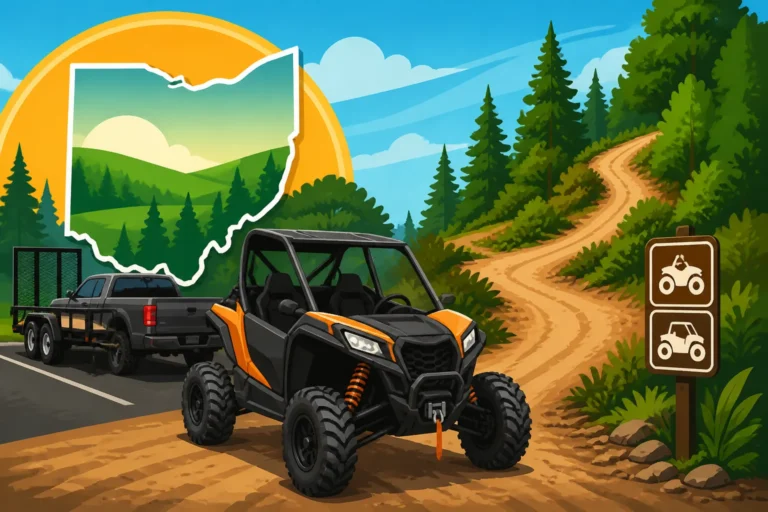
Pike State Forest is in Pike County, among the wooded hills of southern Ohio. Its off-highway vehicle routes are often described as a roughly 20-mile trail system. That scale makes it a different kind of outing from a full day spent covering a very large network: you can focus on a handful of loops, take your time with changing terrain, and still have a plan for getting back to the staging area before dark.
The mileage should not be mistaken for a guarantee that every route will be open or equally rideable on the day you arrive. A trail segment can be affected by maintenance, timber work, erosion, weather, or a temporary closure. The route map and the posted notices at the access point are more useful than an old estimate copied into a trip plan. Check [Ohio's Pike State Forest Trails] alongside the official information for the area before setting out.
Expect a forest ride rather than a groomed, predictable track. A short distance can take longer than it looks on a map when the surface is rutted, a hill requires a careful line, or you slow down to meet another group. Riders who arrive expecting to cover miles quickly may feel frustrated; riders who treat the day as a relaxed trail outing are more likely to enjoy the pace.
Terrain, riding pace, and trail expectations
Southern Ohio terrain can feel more varied than the map suggests. Forest routes may include climbs, descents, uneven ground, turns, and surfaces that change with rainfall and use. A route that feels manageable when dry can become much more demanding after a wet spell, especially where clay soil becomes slick or water collects in depressions.
That is one reason to plan around conditions, not just mileage. If your group includes a new rider, a young rider, or someone on a machine they have not ridden much, leave room for stops and regrouping. Agree ahead of time that the lead rider will slow down at confusing turns and that the last rider will not be left to navigate alone. A short trail system can still feel stressful if the group spreads out and loses track of one another.
The forest is also a shared public landscape, not a private riding park built around uninterrupted ATV use. Be prepared to respect signs, gates, closures, and other forest users. Stay on the designated route even if a tempting side track looks easier or more fun. Riding off the marked route can damage the land and create problems for future access. For broader guidance, see [Ohio Rules for Riding State Forest Land].
Check access, hours, and seasonal closures
Confirm that the trails are open before you travel
A trail area can be familiar and still be unavailable on a particular day. Ohio’s state forest riding season is generally seasonal, and closures can also happen for maintenance or conditions. Do not assume the forest is open just because the weather is pleasant, a friend rode there recently, or an online map shows a line through the woods.
Before loading, confirm the operating season and any temporary notices with the relevant official Ohio Department of Natural Resources information. Then check again close to departure. This is especially worthwhile if you are driving from central or northern Ohio, where a closed trailhead can turn a long-planned weekend into a wasted day. The general seasonal pattern is covered in [Ohio Trail Season by Forest] and [Ohio Trail Closures to Check First].
Build a backup plan that does not depend on finding an unauthorized route nearby. If Pike is closed, do not simply follow a road or track that appears to enter forest land. Find another legal riding destination, or turn the trip into a different outing. Planning this way can feel overly cautious until you have driven a trailer several hours to discover a gate closure; then it feels like common sense.
Plan around daylight and the riding season
State forest riding hours are limited to the designated daily window. Ohio state forest riding guidance generally sets that window from half an hour before sunrise to half an hour after sunset. This does not mean every trail is easy to navigate at the edges of the day. Shade, hills, dust, mud, and tree cover can make visibility feel poor well before sunset, so aim to finish your ride with a comfortable margin.
A useful approach is to choose a turnaround time before leaving the parking area. For example, if your group wants time to eat, take breaks, and load machines before dark, decide when you need to begin heading back rather than waiting until someone feels tired. That simple decision reduces the temptation to hurry through the final stretch or take a shortcut around a marked closure.
Season affects more than the posted opening dates. Early-season rides can bring soft ground and lingering wet spots, while a stretch of dry weather may leave loose dust and reduced visibility behind other machines. Autumn can bring fallen leaves that conceal rocks, holes, and ruts. If you want a deeper look at timing, [Reopening the First Friday in April] and [Closing the Second Monday in December in Ohio] explain the seasonal dates riders commonly plan around. Always confirm the applicable dates and notices before traveling.
Make sure your machine and paperwork are ready
Check width, registration, and the map
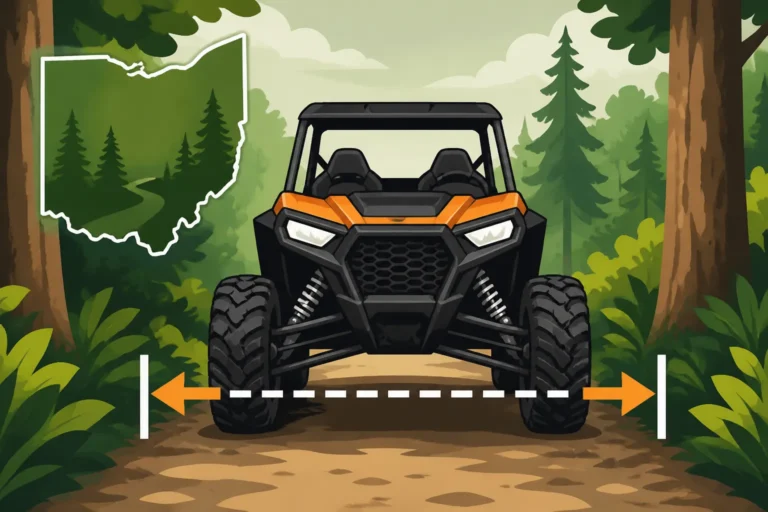
Machine width matters in Ohio’s state forest riding areas. A commonly applied state forest limit is 62 inches, so measure your ATV or UTV rather than relying on a model name or a salesperson’s description. Width can change with accessories such as aftermarket tires, wheel spacers, or other modifications. If your machine is close to the limit, verify how it is measured and whether the specific route system accepts it before making the trip.
A wide side-by-side may be perfectly capable on private property and still be unsuitable for a particular state forest trail. That is a disappointing discovery to make at the trailhead, especially after arranging a group ride around one vehicle. The guide [Ohio's 62-Inch State Forest Width Limit] explains why width can determine where you are allowed to ride, while [Measuring Against the 62 Inch Limit] offers a practical starting point for checking your machine.
For an Ohio machine, make sure its registration is valid and the plate is properly displayed. Ohio’s APV registration plate serves an important role for trail riding; do not assume a private-land permit, a dealer document, or a plate from another state automatically settles the question. Out-of-state riders should check whether their home-state registration is accepted and whether a temporary permit is needed. See [Ohio APV Reciprocity With Other States] and [The Ohio Temporary Permit for Visitors] before heading to the forest.
Carry the documents and equipment you may need
Bring your registration information and any required permit documentation in a place where you can reach it without emptying a gear bag on the ground. A phone photo can be useful as a backup, but do not assume a photo replaces a required original or satisfies every roadside check. Protect paper documents from rain, mud, and spilled drinks with a sealed pouch or a dedicated storage pocket.
Helmet and eye protection requirements matter on forest trails. Choose a helmet that meets the applicable standards rather than assuming any helmet marketed for recreational riding will do. Goggles or other suitable eye protection help with dust, branches, and debris thrown up by other machines. These are not just compliance details: a dusty group ride can make it difficult to see trail markers or judge the next turn if your eyes are watering.
Pack for a delay, not only for the ride you hope to have. Water, basic first aid supplies, a charged phone, and a small set of machine-specific tools can make an inconvenience easier to manage. Cell service may be uneven in wooded or hilly areas, so do not rely on a map app as your only navigation plan. If using onX Offroad to review a route, download or save the information you need before entering a low-signal area, and carry the official trail map as your primary reference. Digital mapping can help with planning, but it does not authorize travel on closed or unsigned routes.
| Before you leave | What to check | Why it matters |
|---|---|---|
| Trail access | Seasonal dates and temporary closures | A familiar riding area may be closed or partly restricted |
| Machine width | Measure the machine as equipped | State forest trails have a width limit |
| Registration | Confirm plate and paperwork are valid | Registration requirements apply to trail riding |
| Protective gear | Helmet and eye protection | Helps meet safety rules and manage dust and debris |
| Navigation | Official map, saved digital map, and route plan | Service can be unreliable in forested terrain |
| Group plan | Meeting point, turnaround time, and ride pace | Keeps riders together and helps avoid rushing near closing time |
Ride with care on Pike’s forest trails
Adapt your riding to weather and trail conditions
The most important adjustment is often speed. A trail that looks clear can hide a rut beneath leaves, a slick patch around a bend, or a steep change in slope. Ride slowly enough to stop within the distance you can see. This is particularly important when following another machine, because dust and flying debris can obscure the trail just when you need a clear view.
Rain changes how a route behaves. Mud can reduce traction on climbs and descents, while standing water may hide a hole or a soft edge. If a section looks badly damaged, do not widen the trail by steering around it into vegetation. Turn around if necessary and report or avoid the problem through the proper channels. Spinning tires and aggressive throttle can deepen ruts, damage the route, and make it harder for everyone who rides after you.
After a dry stretch, loose dust can be the bigger concern. Leave more space between machines, avoid riding directly in another rider’s dust cloud, and make sure the group has agreed on safe places to pull over. A rider who cannot see clearly should ease off and create distance instead of trying to keep pace. Checking [Ohio Trails After Heavy Rain] before a wet-weather outing can help you think through the conditions that make a ride less enjoyable or more difficult.
Share the forest and stay on marked routes
A responsible ride starts with accepting that you are a guest in a managed forest. Follow posted directions, obey gates, and stay on the designated APV trails. A narrow gap or an old-looking track is not an invitation to explore. Routes that appear on unofficial maps may be closed, private, or outside the legal riding area.
Expect to share the landscape with people who are not on machines. Slow down when approaching hikers, maintenance crews, or other forest users, and give them room. If you encounter a stopped group, reduce speed early and pass only when it is safe and allowed. Avoid revving, spinning tires, or crowding people on foot. Good trail manners protect other visitors and help preserve public support for keeping legal riding areas open.
Noise and equipment condition affect other riders, too. Secure loose cargo, check that lights and brakes work, and make sure your machine is not leaving fluids behind. If something breaks, move to a safe location if possible and avoid blocking the trail. A courteous group communicates clearly, keeps a manageable pace, and does not pressure a less experienced rider into attempting a climb or obstacle they are uncomfortable with.
Build a practical Pike State Forest ride plan
Choose a trip length that fits your group
A roughly 20-mile trail system may sound easy to cover, but total distance does not tell you how long a day will take. Terrain, trail conditions, stops, rider skill, and the number of machines in your group all affect the pace. A family group with younger riders may enjoy a shorter outing with time for breaks, while experienced adults may want to explore more of the available routes. Neither approach is better; the right plan is the one that lets everyone ride safely and finish without feeling rushed.
Before starting, identify the staging area, confirm which trails are open, and agree on a route that matches the least experienced rider. Ask whether everyone knows the basic signals or verbal calls your group uses when stopping, slowing, or turning around. If two people are navigating, decide who is leading and who is bringing up the rear. Switching roles without telling the group can leave someone isolated at a junction.
Keep your plan flexible. If conditions are worse than expected, shorten the loop. If a rider is tired or a machine develops a problem, turn back rather than treating the original route as a promise. Save a route in onX Offroad or another mapping tool if it helps your group stay oriented, but compare it with official information and on-site signs. A line on a screen is not proof that a trail is open.
Prepare for the drive home as carefully as the ride
A trail day does not end when the machines reach the parking area. Leave time to inspect and secure equipment before driving away. Check tie-downs, confirm that ramps and tools are stowed, and remove loose mud or debris that could come off during the drive. If your machine has been through wet or muddy conditions, a quick inspection can reveal a loose part or a damaged tire before it becomes a roadside problem.
Give yourself a few minutes to check the machine while it is still easy to access. Look for obvious leaks, damage around the wheels, debris packed into areas that could affect moving parts, and a plate that has been bent or covered with mud. Carrying out a basic post-ride check is especially helpful if you are planning another outing soon; finding a problem at home is much easier than discovering it at the next trailhead.
Finally, leave the staging area as you found it. Pack out trash, keep noise down, and do not leave broken gear or parts behind. If you encountered a closure, damaged section, or confusing sign, make a note and report it through the appropriate official channel rather than trying to resolve it by making a new route. Riders who take care of the area help make the next visit better for everyone.
Disclaimer
This article is for general informational purposes only and does not constitute professional advice. Laws, prices and regulations vary by location and change over time. Consult a qualified professional for guidance on your specific situation.