Blaze Orange on an Ohio November Ride
The crisp air of an Ohio November beckons many of us to hit the trails or simply enjoy a ride on our all-purpose vehicles. But this beautiful time of year often brings a unique challenge: navigating the woods and rural areas during hunting season. It's a real concern for many riders, wondering how to stay safe and visible when sharing the landscape with hunters, and this guide is here to walk you through exactly what you need to know about wearing blaze orange and riding safely in Ohio during the autumn months.
Understanding the November Landscape for Ohio Riders
November in Ohio is a magical time. The leaves have mostly fallen, revealing wider vistas through the trees, and the cool temperatures make for exhilarating riding conditions. However, it's also a time when many Ohioans take to the woods for various hunting seasons. This overlap means that riders need to be extra vigilant and aware of their surroundings to ensure a safe and enjoyable experience for everyone.
The Overlap of Hunting Season and Trail Riding
Ohio's deer gun season, often falling in late November and early December, is a significant event. But even outside of the specific gun seasons, various archery, muzzleloader, and small game hunting seasons are in full swing throughout the fall. This means that areas you might typically ride without much thought, such as state forests, wildlife areas, or even private land accessible via township roads, will have an increased presence of hunters. They could be camouflaged and often stationary, waiting patiently in blinds or stalking through the undergrowth.
Imagine you're on a familiar trail loop in Wayne National Forest, enjoying the solitude, when suddenly you spot a hunter. This isn't an uncommon scenario. The key is to understand that these public and sometimes even private lands are shared resources. Hunters are pursuing their passion, and so are we as riders. Respect, awareness, and proactive safety measures are crucial to prevent any misunderstandings or, worse, accidents. It's not about one group having more right to the land, but about everyone coexisting safely during a busy time of year.
Why Visibility Becomes Paramount in Autumn
As autumn progresses into November, the natural light changes dramatically. Daylight hours shorten, and the sun often hangs lower in the sky, casting long shadows. Overcast days are common, and the rich greens of summer give way to the muted browns, grays, and bare branches of late fall. While beautiful, this also means that natural visibility is reduced. A rider in dark gear can blend surprisingly well into the background, especially against a backdrop of bare trees or deep shadows.
Now, add hunters to this equation. Many hunters wear camouflage designed to break up their silhouette and help them blend seamlessly into the environment. While they are often required to wear blaze orange themselves during gun seasons (which we'll delve into next), it's still our responsibility as moving objects to be as conspicuous as possible. Being highly visible isn't just about avoiding an accidental encounter with a hunter; it's also about being seen by other riders, hikers, or even vehicles if you're legally riding a [Township Trustees' Resolution in Ohio] road to get to a trail. Poor visibility is an avoidable risk, and in the dynamic environment of a November forest, anything we can do to stand out is a win for safety.
Ohio's Blaze Orange Recommendations and Requirements
When it comes to blaze orange, there's often confusion about who needs to wear it and when. For hunters, Ohio has very specific laws. For APV riders, it's generally a strong recommendation based on safety, rather than a legal mandate, unless you yourself are hunting. Understanding this distinction is key to making informed choices about your riding gear in November.
Where Blaze Orange is Mandatory for Hunters (and Why Riders Should Follow Suit)
Ohio's hunting regulations are quite clear on blaze orange, especially during deer gun seasons. Hunters are typically required to wear a certain amount of solid hunter orange or camouflage hunter orange during these times. This isn't just a suggestion; it's a legal requirement designed to make hunters visible to other hunters, dramatically reducing the risk of accidental shootings. The general rule of thumb is often something like 500 square inches of hunter orange visible from all sides, or a hunter orange cap.
While this legal requirement applies to hunters, it does not directly apply to you as an APV rider unless you are actively engaged in hunting from your machine, which itself has its own set of rules. However, here's the critical part: the spirit of the law for hunters should be adopted by riders. Blaze orange works. It makes a human figure stand out against natural backgrounds. Deer, for example, are largely dichromatic, meaning they see a limited spectrum of colors and don't perceive orange as a distinct, bright color in the same way humans do. So, blaze orange makes you highly visible to other people without alarming game animals. By choosing to wear blaze orange, even when not legally required, you are proactively taking a vital step to protect yourself and ensure you are seen in an environment where others might be scanning for movement.
Practical Gear for APV Riders in Ohio's November Woods
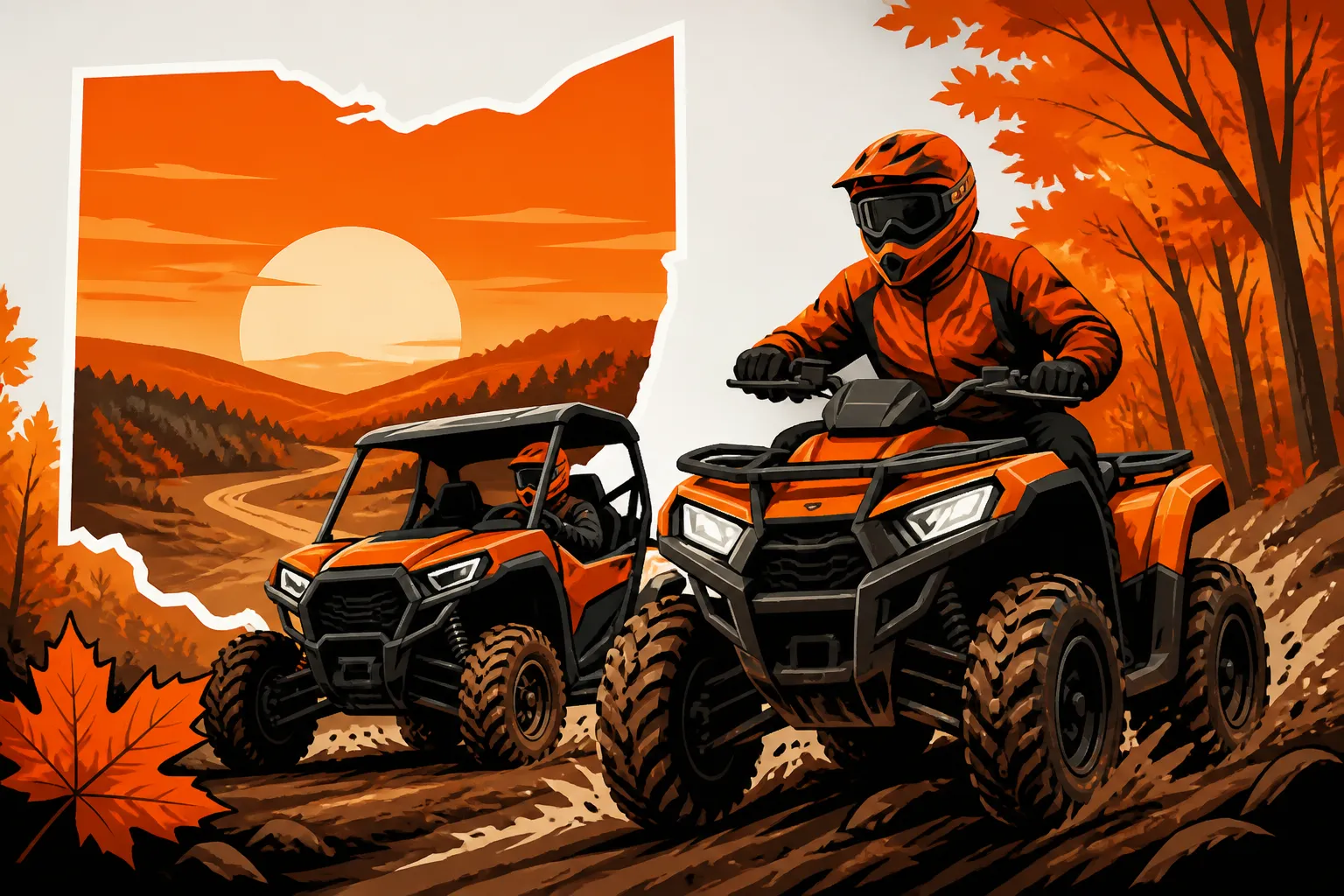
So, what kind of blaze orange gear should an APV rider consider for Ohio's November woods? The options are plentiful and can be tailored to your riding style and budget. The goal is maximum visibility. A good starting point is a blaze orange vest worn over your riding jacket. These are often inexpensive and can be easily slipped on. For more comprehensive coverage, consider a riding jacket that incorporates blaze orange panels or is entirely hunter orange. Some helmets also come with high-visibility orange accents or designs.
Don't forget the machine itself! A brightly colored flag, especially one with blaze orange, mounted high on your APV can significantly increase your visibility, particularly in rolling terrain or when cresting hills. For riders who enjoy customizing their machines for utility and safety, brands like SuperATV offer a range of accessories that can contribute to overall visibility and preparedness. While they might not directly sell blaze orange apparel, their durable cargo racks and [Ohio APV Lighting Requirements] can support carrying emergency gear or improving machine lighting for low-light conditions. When choosing gear, think about durability and weather-appropriateness. Ohio Novembers can be wet, cold, and muddy, so waterproof and insulated options are often a wise investment.
Safe Riding Practices During Hunting Season
Beyond wearing blaze orange, there are several key practices that can significantly enhance your safety and the enjoyment of everyone sharing Ohio's outdoor spaces during hunting season. These practices revolve around respect, awareness, and common sense.
Staying on Marked Trails and Respecting Boundaries
This is a fundamental rule for APV riding at any time, but it becomes critically important during hunting season. [Ohio's Four State Forest APV Areas] and [Wayne National Forest's Three Ohio Systems] have designated trails specifically for off-road vehicles. Sticking to these marked trails is not just about environmental preservation or avoiding fines for [Ohio Fines for Riding Off a Marked Trail]; it's a matter of safety. Hunters often scout and set up blinds in areas off the designated trails, assuming that public access for vehicles is restricted to marked routes. Veering off-trail puts you in unexpected areas where hunters might be focused on their activities, increasing the risk of an encounter.
Always respect private property boundaries. If you're unsure, assume the land is private and keep out, especially when driving on [Ohio Rules for Riding a Township Road] or county roads that border vast tracts of wooded land. Consulting detailed maps before your ride can help you understand where public access ends and private land begins. Even with landowners who are accustomed to APVs on their property, during hunting season, it's always best to reconfirm permission and make sure they are aware of your presence. Respecting these boundaries helps prevent potential conflicts and ensures you're riding in areas where your presence is expected, or at least anticipated, by others. For areas like [Monday Creek Near Nelsonville] or [Hanging Rock in Southern Ohio], staying on the clearly marked path is your best defense.
Noise, Courtesy, and Communication on the Trail
Our machines, by their nature, create noise. While modern APVs are much quieter than their predecessors, the sound of an engine traveling through a quiet forest can carry quite a distance. During hunting season, this noise can be startling to hunters and can disturb wildlife that hunters might be pursuing. While you don't necessarily need to avoid riding, being mindful of your noise level and speed can go a long way. If you come across a parked vehicle that looks like a hunter's, or see signs of hunter activity, consider slowing down and being extra alert.
Courtesy extends to your interactions with others. A friendly wave or nod to a hiker or hunter you encounter can diffuse any potential tension. If you're on a multi-use trail, always yield to horses and pedestrians, as they are often less able to react quickly to a fast-moving machine. Communication is also vital. Always let someone know your riding plan: where you're going, your intended route, and when you expect to return. In remote areas, cell signal can be spotty, so having a physical map and compass, or a satellite communication device, can be a lifesaver. Ensure your machine is well-maintained to avoid unexpected breakdowns, which could leave you stranded. Using quality parts and checking your machine thoroughly before each ride, perhaps even upgrading with robust components from SuperATV, can give you greater peace of mind and help you focus on the trail and your surroundings, rather than worrying about mechanical issues.
Additional Considerations for November Riding
Beyond direct interactions with hunters, November riding in Ohio brings its own set of environmental challenges and necessitates thorough preparation. The weather is unpredictable, and conditions can change rapidly, impacting everything from trail accessibility to your personal comfort and safety.
Checking Trail Conditions and Closures
Ohio's November weather is notoriously fickle. One day can be mild and sunny, perfect for riding, while the next can bring cold rain, sleet, or even early snowfall. These changes directly impact trail conditions. Trails that were dry and firm a week ago can become muddy, rutted, or even icy after a cold snap. Riding on excessively muddy trails not only makes for a more challenging and potentially dangerous experience, but it can also cause significant damage to the trails themselves, leading to [Ohio Trails Closed in Spring] or other closures.
Before you load up your machine, always check the latest [Ohio Trail Closures to Check First] and conditions. The Ohio Department of Natural Resources (ODNR) and Wayne National Forest websites are excellent resources for this, often providing real-time updates on trail status. Some trails, particularly those in state forests, might even have seasonal closures or temporary restrictions due to weather or specific hunting activities. For example, some trails close the [Closing the Second Monday in December in Ohio] for the winter. Ensure your tires are appropriate for the anticipated conditions – mud tires for wet trails, or even studded tires if you anticipate riding on frozen ground or light snow (where permitted). Proper maintenance, like checking tire pressure, brakes, and fluid levels, becomes even more critical when facing potentially adverse conditions.
Planning Your Ride and Emergency Preparedness
A well-planned ride is a safe ride, especially during the challenging conditions of November. Never head out into remote areas without first telling someone your exact route and your estimated time of return. This simple step can be life-saving if you encounter an unexpected issue. Pack an emergency kit that includes a first-aid kit, a multi-tool, a small flashlight or headlamp, fire-starting materials, extra water and high-energy snacks, and a sturdy tow strap. Even if you don't think you'll need them, these items can be invaluable in a pinch.
Consider the length and difficulty of your planned route against the shorter daylight hours. It gets dark early in November, and riding after sunset introduces additional risks. Aim to be off the trails well before official sunset. Also, dress in layers. The temperature can fluctuate significantly throughout the day, and being able to add or remove clothing layers will keep you comfortable and prevent hypothermia or overheating. Investing in quality accessories that enhance your machine's utility, such as robust winches or cargo boxes from SuperATV, can be incredibly helpful for carrying emergency gear or self-recovery in challenging situations. Remember, the goal is to be prepared for the unexpected so you can focus on the incredible experience of riding Ohio's trails in autumn.
Here's a quick summary of key safety tips for riding during hunting season:
| Safety Tip | Why It's Important | What to Do |
|---|---|---|
| Wear Blaze Orange | Maximizes your visibility to hunters and other riders. | Invest in a blaze orange vest, jacket, or helmet. Aim for maximum coverage. |
| Stay on Marked Trails | Avoids unexpected encounters with hunters off-trail; prevents trespass. | Consult Ohio Trail Maps From ODNR and stick to designated APV routes. |
| Reduce Noise & Be Courteous | Less disturbance to wildlife and hunters; fosters good relationships. | Slow down near known hunting areas or when encountering others. Acknowledge fellow trail users. |
| Check Trail Conditions | Prepares you for mud, ice, or closures; prevents trail damage. | Review ODNR/Wayne National Forest websites for current conditions and [Ohio Trail Closures to Check First] before you leave home. |
| Plan Your Ride | Ensures someone knows where you are and when to expect you back. | Inform a friend or family member of your route and estimated return. Pack an emergency kit with essentials. |
| Be Prepared for Weather | Ohio November weather is unpredictable. | Dress in layers, carry waterproof gear, and consider proper tires for mud or potential ice. |
| Respect Private Property | Avoids trespass and potential conflict with landowners/hunters. | Know property boundaries, especially when riding county or [Ohio Rules for Riding a Village Street]. Reconfirm permission if on private land. |
Disclaimer
This article is for general informational purposes only and does not constitute professional advice. Laws, prices and regulations vary by location and change over time. Consult a qualified professional for guidance on your specific situation.