Unloading at a Pull-Off and Riding In
We've all been there: you pull up to a promising-looking area, maybe a gravel lot next to a county road, or even just a wide spot on the shoulder, and your first thought is, "Wouldn't it be great to just unload here and ride right into the trails?" It's a natural instinct for any off-road enthusiast, that desire for seamless transition from trailer to trail. But in Ohio, the dream of "unloading at a pull-off and riding in" is often a lot more complicated than it appears. This guide is here to unravel the complex web of Ohio's APV laws, helping you understand when and how you can legally connect those road segments to your off-road adventures.
The Appeal and the Pitfalls of Unloading at a Pull-Off
The freedom of off-road riding is a powerful draw, and for many, the ideal scenario involves less trailering and more riding. The thought of finding a convenient pull-off, dropping the ramp, and immediately hitting either a connecting road to a trail or even just a local route that allows APV access, is incredibly appealing. It cuts down on travel time to official staging areas, offers flexibility, and sometimes feels like a more authentic way to explore. But here's the rub: what seems like a simple, logical approach can quickly land you in hot water if you're not intimately familiar with Ohio's highly specific and often localized rules.
The Dream vs. Ohio's Legal Landscape
The dream is simple: drive to an area, park, unload, and go. Reality, however, for Ohio ATV and UTV riders, is a mosaic of different regulations. It's not like simply parking your car and walking into a store. Your all-purpose vehicle (APV) — whether it's an ATV, a side-by-side, or even a dirt bike being used as an APV — operates under a different set of rules, particularly when it touches public roadways. The state of Ohio has a very particular definition of what an APV is and, more importantly, where it can be legally operated. Many riders assume that if a road looks like it connects to a trail, or if they see others doing it, it must be okay. This is a dangerous assumption, as the legality of such actions is often determined by local ordinances, not just general state law.
Why "Just Riding Down the Road" Isn't Simple
In many other states, there might be blanket rules or clear signage. Ohio, however, delegates much of the decision-making for road access to local authorities. This means that "just riding down the road" could be perfectly legal in one township, a gray area in an adjacent county, and outright illegal just a few miles down the same road if it crosses into a different jurisdiction. This variability is incredibly frustrating for riders who just want to enjoy their machines without becoming legal scholars. Add to that the specific equipment requirements for road use, and suddenly that simple ride becomes a checklist of concerns. You can't just put a plate on your machine and assume you're good to go; there's a lot more to it.
The Fine Line Between Legal and Illegal Access
The key to successfully "unloading at a pull-off and riding in" legally lies in understanding this fine line. It's about knowing precisely which roads are open, which type of APV is allowed (UTVs often have different rules than ATVs for road use), and what equipment is mandatory for that specific road segment. Without this knowledge, you risk not only hefty fines but also potential impoundment of your machine or even more serious legal consequences. The local sheriff's deputy or state patrol officer won't care about your intentions; they'll only care if you're violating the law. This is why thorough preparation and understanding the rules beforehand are absolutely non-negotiable.
Understanding Ohio's Road Access Laws for APVs
Ohio's approach to APV road use is unique, characterized by a decentralized system where local governments hold significant power. This means that your ability to "ride in" from a pull-off largely depends on the specific county and township you're in. It's a far cry from a statewide open-access policy, leading to a patchwork of rules that can be incredibly confusing if you're not prepared.
County and Township Resolutions: Your Local Rulebook
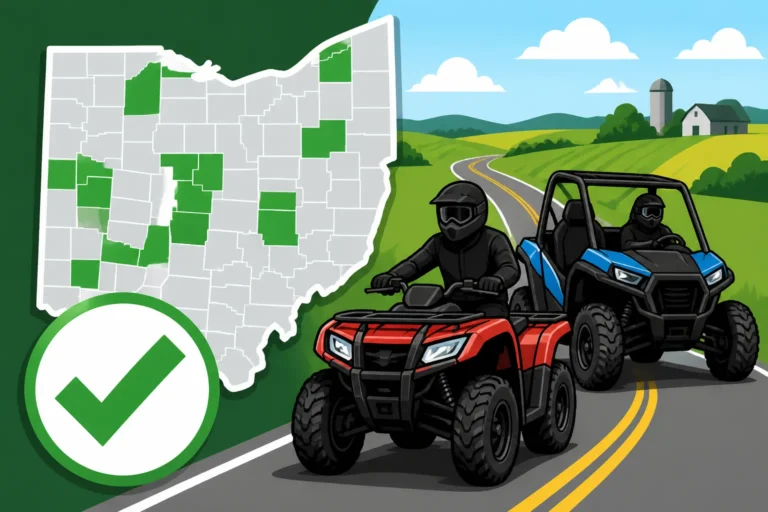
Unlike many states with a unified approach, Ohio law empowers individual county commissions and township trustees to decide whether or not APVs can use the roads under their jurisdiction. This means that a road you plan to access from a pull-off might be open to APVs in [Washington County Resolution 2024-1114] but completely off-limits in a neighboring county. For example, some counties, like Washington County, have adopted resolutions opening all roads they control to APVs, provided riders comply with specific regulations. Meanwhile, other counties have not, or they allow individual townships within their borders to make their own decisions. It's critical to research [Ohio Counties That Allow APVs on Roads] and [Ohio Townships That Allow APVs on Roads] before you even load your machine onto the trailer. You can often find this information by contacting the county engineer's office or the township clerk. [How an Ohio Township Opens Its Roads] or [How an Ohio County Opens Its Roads] involves a formal resolution or ordinance, so it's a public record you can investigate.
State Routes, Interstates, and the Absolute No-Go Zones
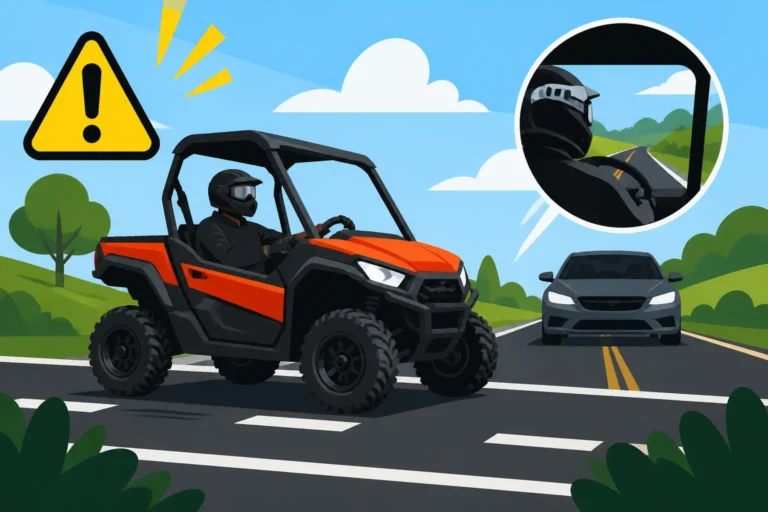
While local roads might be open to APVs through resolutions, there's a clear and unwavering line when it comes to state routes and interstates. Ohio law generally prohibits APVs from operating on state routes, and interstates are absolutely off-limits. There are virtually no exceptions for these higher-speed, higher-volume roads. This is a crucial distinction, as a convenient-looking pull-off on a state route might seem ideal, but riding from it would be illegal. Even if you're only trying to cross a state route to get to a trail, you need to understand the rules for [Crossing a Highway on an APV in Ohio]. The penalties for violating these restrictions can be severe, not to mention the inherent danger of mixing slower-moving APVs with high-speed traffic. Stick to township and county roads where explicitly permitted.
Crossing Roads: When is it Allowed, and How?
Even on roads where APVs aren't permitted for general travel, there are often provisions for crossing them. This is particularly relevant when you're trying to connect two legal riding areas or simply get from one side of a road to the other to access private property or a trail. When crossing, the law typically requires you to do so at a right angle, yielding to all traffic, and at the nearest safe intersection if possible. You cannot simply ride down the road for any distance, even if you intend to cross. This is not a loophole for riding on forbidden roads; it's a very specific, limited allowance. Also, keep in mind that "riding the berm" or "riding alongside a road" has its own set of rules in Ohio, as detailed in [Ohio Rules for Riding the Berm], and it's not always a legal option for extended travel, especially on high-traffic roads or where the berm simply isn't suitable.
Equipping Your APV and Yourself for Road Use in Ohio
Once you've done your homework and identified legal road segments for your "pull-off and ride-in" plan, the next crucial step is ensuring your machine, and you, are fully compliant with Ohio's road-use requirements. This isn't just about avoiding a ticket; it's about safety for yourself, your passengers, and other motorists. Many APVs, especially ATVs, aren't factory-equipped for road travel, and modifications are almost always necessary. Companies like SuperATV offer a wide range of aftermarket parts that can help bring your machine up to spec for road legality, from lighting kits to mirrors.
Essential Road-Legal Equipment for UTVs and Quads
Ohio distinguishes between the equipment needed for a UTV and a traditional ATV when it comes to road use, especially for those that undergo an inspection. UTVs that are designated as "street legal" vehicles often have a more extensive list of requirements, resembling a small car, while ATVs usually have a slightly simpler, though still specific, list.
Here's a breakdown of common requirements, though always check local ordinances for specifics:
| Feature | ATV (General Road Use) | UTV (Road-Legal Inspection) |
|---|---|---|
| Headlights | Yes (White) | Yes (White, Hi/Lo Beam) |
| Taillights | Yes (Red) | Yes (Red) |
| Brake Lights | Yes | Yes |
| Turn Signals | Not always required* | Yes (Front & Rear) |
| Rearview Mirror | Yes | Yes (At least one) |
| Windshield | Not required* | Yes (Safety Glass) |
| Wipers | Not required* | Yes (if windshield present) |
| Horn | Yes | Yes |
| Muffler | Yes (with spark arrestor) | Yes (properly muffled) |
| Seatbelts | N/A (for ATVs) | Yes (for all occupants) |
| Roll Cage | N/A (for ATVs) | Yes |
*For ATVs, while turn signals and windshields might not be explicitly required for all road use, equipping your machine with [Ohio APV Road Equipment List] and [Ohio UTV Road Equipment List] comparable to what a UTV needs for a full road inspection is a smart safety measure, particularly for increased visibility and communication with other drivers. Many aftermarket kits, including those from SuperATV, make it straightforward to add these essential items to your machine. Always ensure your lighting is functional, especially if you plan on [Riding Home After Sunset].
The Human Element: Licensing, Insurance, and Safety Gear
It's not just your machine that needs to be ready; you, the rider, do too.
- Driver's License: If you're operating an APV on any public road in Ohio, you must possess a valid driver's license. This isn't optional, even if you're only going a short distance.
- Insurance: While Ohio doesn't require APV insurance for off-road riding, if you plan to operate your APV on any public roads, even those legally open, you are usually required to carry liability insurance. This is the same basic insurance requirement that applies to cars and trucks. Always have [Ohio Registration and Insurance Proof] readily available.
- Helmets and Eye Protection: While not universally mandated for all road use, wearing a DOT-compliant helmet and eye protection is highly recommended and often required on specific trails or for younger riders. For example, [Ohio Helmet Rules on State Forest Trails] are explicit. When venturing onto public roads, prioritizing your safety with proper gear should always be paramount.
Paperwork to Keep Handy
Riding legally from a pull-off means you need to have all your ducks in a row. Always carry your:
- Driver's License: As mentioned, mandatory for road use.
- APV Registration Card: Your machine must be properly registered with the state of Ohio. This is your proof of registration and often serves as your trail permit on state forest lands.
- Proof of Insurance: If you're required to have it for road use, keep it with you.
- Title (or a copy): While you don't need the physical title on you, knowing your machine's information is helpful.
Having these documents immediately accessible, perhaps in a waterproof bag in your machine's storage compartment, will make any interaction with law enforcement much smoother. It demonstrates that you're a responsible and compliant rider.
Planning Your Ride: Connecting Pull-Offs to Trails Legally
The goal of "unloading at a pull-off and riding in" is often to bridge the gap between where you can park and where the actual off-road trails begin. This requires meticulous planning, an understanding of the local rules, and a strategic approach to navigating permitted road segments. It's not about improvisation; it's about precision.
Scouting Ahead: Identifying Permitted Road Segments
The most critical step in this entire process is scouting your route before you ever leave home. This means more than just looking at a map; it means identifying specific county and township roads that are legally open to APVs. You can't assume that because one road is open, the next one will be. Websites for county engineers, township trustees, or even local sheriff's offices sometimes post resolutions. Calling the appropriate local government office is often the most reliable way to confirm which roads are accessible. You might be surprised to find that while a specific township like [Riding Muskingum Township Roads] has opened its routes, the very next township has not. Look for maps or online resources that specifically highlight [Ohio Counties That Allow APVs on Roads] or [Ohio Townships That Allow APVs on Roads] to piece together a legal route.
The Strategy of Using the Berm or Riding Alongside a Road
On some county and township roads where APVs are permitted, or in specific situations like crossing a limited section, you might be allowed to ride on the berm or directly alongside the paved surface. This often comes with its own set of rules, such as maintaining a safe distance from the travel lane, traveling with the flow of traffic, and yielding to pedestrians and bicycles. [Ohio Rules for Riding the Berm] are very specific and highlight that this isn't a carte blanche for extended travel. It's usually meant for short segments where the road is too narrow or busy to safely share the lane, or to transition to a safe crossing point. Never assume you can ride the berm unless local regulations explicitly permit it for APVs. This can be a useful strategy to connect two legal off-road areas without fully entering the vehicle travel lane, especially if your machine is wide and makes sharing the road difficult.
Avoiding Common Mistakes and Potential Citations
The biggest mistake riders make when attempting to ride from a pull-off is simply assuming legality or following what others appear to be doing. Here are some pitfalls to avoid:
- Ignoring signage: Posted signs indicating "No ATVs" or "No Off-Road Vehicles" are absolute. Do not disregard them.
- Assuming reciprocity: Don't assume that just because your machine is registered and road-legal in another state, it's automatically compliant with Ohio's local road-use laws. [Do You Need Ohio Registration If Your State Has None?] or [Ohio Reciprocity With Pennsylvania] addresses this, but local road rules are still paramount.
- Misinterpreting "unposted" roads: Many riders mistakenly believe that if a road isn't explicitly posted as closed to APVs, it must be open. In Ohio, the opposite is often true; roads are closed unless specifically opened by local resolution. [Can You Ride an APV on an Unposted Ohio Road?] delves into this common misunderstanding.
- Lacking proper equipment: Riding on roads without the necessary lights, mirrors, or horn can lead to citations and is inherently unsafe. A properly equipped machine, possibly with aftermarket lights and mirrors from SuperATV, is a must.
- Operating without a valid license or insurance: These are non-negotiable for road use.
- Riding on state routes: These are almost always illegal for APVs. Stick to county and township roads that have explicitly opened their access.
- Riding on trails or private property without permission: Your road segment might lead to a trail, but ensure that trail itself is legal to ride, or that you have permission for private land.
Failing to adhere to these rules can result in [Ohio Fines for Illegal APV Road Use], vehicle impoundment, and a ruined day of riding. Always prioritize preparation and legality to ensure your "unloading at a pull-off and riding in" adventure is a good one.
Disclaimer
This article is for general informational purposes only and does not constitute professional advice. Laws, prices and regulations vary by location and change over time. Consult a qualified professional for guidance on your specific situation.