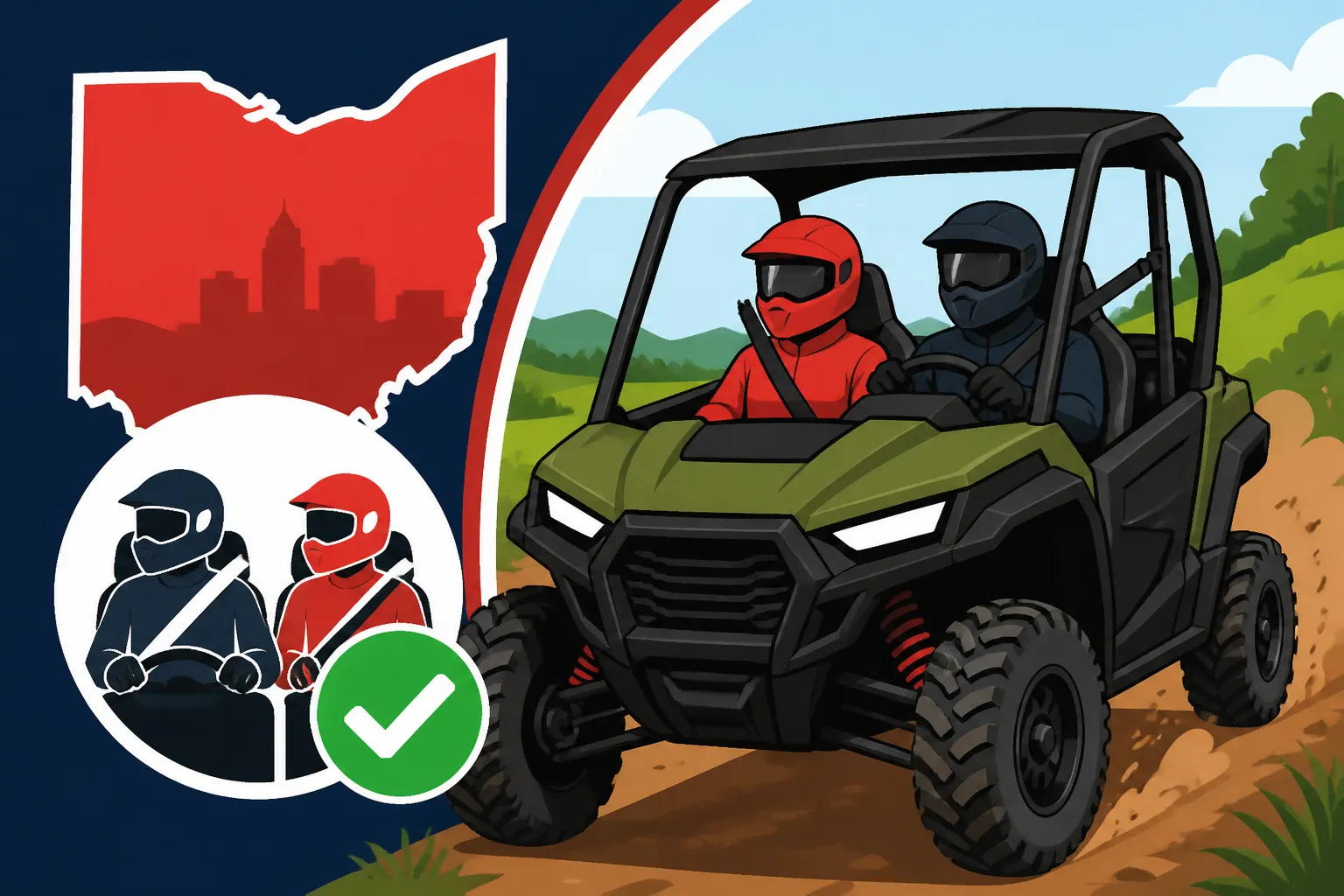
Ohio Rules for a Passenger on an APV
Riding an All-Purpose Vehicle (APV) in Ohio, whether it's a quad or a side-by-side, is an exhilarating experience, but when you want to share that adventure with a passenger, the rules can suddenly feel like a confusing maze. It's frustrating when you just want to take your child or a friend along for the ride, only to wonder if you're actually allowed, what safety gear they need, or if your machine is even designed for it. This guide is here to untangle the complexities of Ohio's rules for carrying passengers on an APV, helping you hit the trails or open roads safely and legally.
Understanding the Basics: Who Can Ride Along on Your Ohio APV?
Before you even think about hitting the ignition, it's absolutely crucial to understand the fundamental rules governing passengers on APVs in Ohio. This isn't just about common sense; it's about adhering to specific laws and ensuring everyone's safety. The biggest hurdle many riders face is simply knowing what kind of machine can carry a passenger and where those passengers are actually allowed to ride.
The Ohio Definition of an All-Purpose Vehicle APV and Passenger Capacity
Ohio law defines an All-Purpose Vehicle (APV) quite broadly, encompassing everything from traditional ATVs (quads) to utility vehicles (UTVs), dirt bikes, and even specialized machines. However, when it comes to carrying passengers, the design and manufacturer's intent for your specific machine are paramount. Many older or smaller ATVs are strictly designed as single-rider machines. You'll often see "rider only" or similar warnings on these. Attempting to squeeze a second person onto a seat designed for one, especially on a sport quad, is not only illegal in many scenarios but incredibly dangerous. The balance, suspension, and braking systems are simply not engineered for the extra weight and shifted center of gravity.
On the other hand, many modern ATVs are designed as "two-up" or "tandem" models, featuring an extended seat and often dedicated passenger handholds and footrests. These machines are explicitly built to safely accommodate a driver and one passenger. When you move to the side-by-side category, passenger capacity becomes even more pronounced. UTVs often come with bench or bucket seating for two, three, or even six passengers, complete with seatbelts and roll-over protection. The key is always to refer to your owner's manual and the manufacturer's specifications for your particular APV. If the manufacturer states it's a single-rider machine, then it's a single-rider machine, regardless of how much space you think there might be. Trying to add a passenger to a single-seat ATV is a surefire way to invite a citation and, more importantly, put someone at serious risk.
Riding with Passengers on Private Land vs. Public Trails
The rules for carrying passengers can differ significantly depending on where you're riding. This is a common source of confusion for many riders.
On Private Land: If you're fortunate enough to ride on private property with the landowner's permission, the rules are generally more relaxed regarding who can be a passenger, as long as you're not operating on a public road or thoroughfare. However, this doesn't mean safety goes out the window. As the operator, you still have a moral and often legal responsibility to ensure the safety of your passengers. Even on private land, if your machine isn't designed for a passenger, or if the passenger isn't wearing appropriate safety gear, you're still creating a hazardous situation. Landowners might also have their own specific rules or insurance requirements, so always check before you ride. It’s always best practice to treat every ride with the same level of safety and adherence to manufacturer guidelines, regardless of the terrain.
On Public Trails (State Forests, National Forests, etc.): This is where Ohio law, and often federal regulations for national forests, comes into play more strictly. For instance, when riding in Ohio's State Forests, there are clear guidelines. You'll need to be mindful of regulations like [Ohio's 62-Inch State Forest Width Limit], which impacts wider side-by-sides. More importantly, passenger capacity is enforced. If your ATV is a single-rider model, a passenger is strictly prohibited on these public trails. If it's a two-up ATV or a side-by-side designed for multiple occupants, then passengers are generally permitted, provided they meet age and safety equipment requirements (which we'll delve into next).
For areas like the Wayne National Forest, federal regulations often mirror or even exceed state requirements, so it's vital to check with the specific ranger district for any unique passenger rules or permit requirements before heading out. Don't assume that just because you can carry a passenger on your private farm, you can do the same on a designated public trail system.
Age and Supervision Requirements for Passengers in Ohio
Beyond whether your machine can physically carry another person, Ohio law, especially concerning minors, adds another layer of important considerations. The well-being of young riders is paramount, and there are specific age and supervision rules designed to protect them. It's not uncommon for folks to be unsure if their younger family members can even tag along, and navigating these rules can feel like a chore.
Minimum Age for APV Passengers in Ohio
Ohio law does not set a blanket minimum age for passengers on an APV statewide, which can be a bit misleading. The minimum age requirements typically apply to the operator of the machine. For instance, you can't have a 10-year-old operating an APV on public land. However, when it comes to passengers, the regulations become more nuanced depending on the type of land and the specific machine.
For operations on Ohio Department of Natural Resources (ODNR) controlled lands, like state forests, while there isn't a specific "passenger" age, the overall safety guidelines are strict. A general rule of thumb derived from operator age limits and safety recommendations is that very young children, who cannot properly hold on, brace themselves, or wear appropriate safety gear (like a properly fitting helmet), should not be passengers on an APV. It's a question of physical capability and developmental readiness, not just a numerical age. For a deeper dive into operator age, you might find information on [What Ohio Law Says About Minors on an APV] helpful, as the principles of responsible riding apply to passengers too.
When riding a multi-passenger vehicle, like a side-by-side, children typically must be able to sit upright, with their feet flat on the floor, and properly use the vehicle's seatbelts or harness systems. Many manufacturers have their own age or height recommendations for passengers in their multi-occupant vehicles, and these should always be followed. It's often the case that an older child, who might be allowed to operate a youth machine, will have an easier time safely being a passenger on a larger machine compared to a very small child. Remember, just because there isn't a hard age floor doesn't mean any age is appropriate.
Supervising Minor Passengers
When a minor is riding as a passenger on your APV, especially on public lands, proper adult supervision isn't just a good idea – it's often a legal requirement. Ohio law emphasizes the responsibility of adults when minors are involved in APV operation and riding. For example, if you're taking your child out on a two-up ATV or a side-by-side in an Ohio State Forest, the supervising adult generally needs to be licensed to operate a motor vehicle (if on a road-legal machine) and must be actively overseeing the ride.
This often means the supervising adult should be the operator of the APV carrying the minor. This ensures immediate control and the ability to react to situations. Imagine a scenario where a parent is driving a side-by-side with their 10-year-old in the passenger seat. The parent is actively supervising the child's safety, ensuring they keep their hands and feet inside the vehicle and remain seated. This is a common and appropriate form of supervision. For more specific details on supervision requirements for younger riders, particularly operators, you can refer to [Ohio Supervision Rules for Minors]. While that link focuses on operators, the spirit of responsible adult oversight extends directly to passengers.
It's important to remember that supervision isn't just about proximity; it's about active care and ensuring the minor understands and follows safety protocols. This might include brief stops to reiterate instructions, checking that helmets are snug, and ensuring the child is comfortable and not getting overwhelmed by the terrain. If you're riding with a 15-year-old as a passenger, the supervision might look slightly different than with a younger child, but the underlying responsibility to ensure their safety remains constant. You can learn more about [Ohio Rules for a Rider Aged 15] which touches upon the capabilities and responsibilities of older minors.
Safety Gear and Machine Requirements for Passengers
Safety isn't just about avoiding tickets; it's about protecting lives. When you add a passenger to your APV, especially on dynamic and unpredictable terrain, the need for proper safety gear and a suitably equipped machine becomes even more critical. There's no room for shortcuts here.
Essential Safety Equipment for All APV Passengers
Just like the operator, every passenger on an APV in Ohio needs to be equipped with appropriate safety gear. This isn't optional; it's a fundamental part of safe riding and often mandated by law, particularly on public trails.
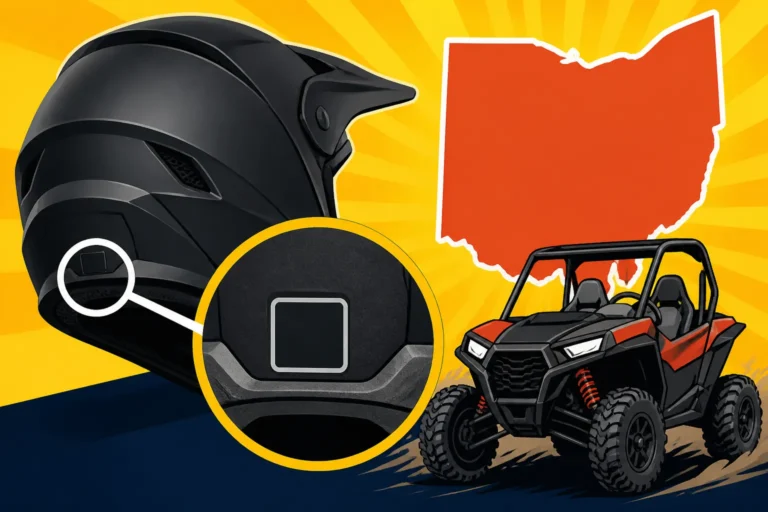
The absolute cornerstone of APV safety gear is a helmet. In Ohio, if you're riding an APV on public lands, a helmet is legally required for all riders, including passengers. This means a helmet that meets federal safety standards. You'll want to ensure your passenger wears a [DOT FMVSS218 Helmets in Ohio] certified helmet that fits snugly and is securely fastened. A helmet that's too loose or too large for a child can actually become a hazard rather than protection. Always make sure the helmet is the right size for your passenger, especially if you're bringing along different family members. For more details on helmet laws, refer to [Ohio Helmet Law for APV Riders].
Beyond helmets, eye protection is also non-negotiable. Whether it's goggles or a full-face helmet with a visor, your passenger's eyes need to be shielded from dust, debris, insects, and low-hanging branches. Ohio law specifically addresses this, and you can find more information under [Ohio Eye Protection Requirement]. Imagine taking a branch to the eye at speed – it's a situation you absolutely want to avoid.
Finally, proper attire includes long pants, long-sleeved shirts or jackets, over-the-ankle boots, and gloves. This gear provides crucial protection against scrapes, cuts, burns from hot engine parts, and offers some insulation against the elements. It’s a full body defense system against the typical hazards of off-road riding. Even on a hot summer day, this gear is essential for passenger safety, just as it is for the driver.
Machine Design and Modifications for Passenger Safety
Your APV isn't just a piece of recreational equipment; it's a vehicle with specific design limitations and safety features. When carrying passengers, adhering to these design principles is paramount.
First and foremost, as mentioned earlier, the machine must be designed by the manufacturer to carry the number of passengers you intend to transport. This means dedicated seating, not just a convenient flat spot. For two-up ATVs, this means an extended seat, often with a raised rear section for the passenger, and separate footrests and handholds. For side-by-sides, it means designated seats with seatbelts, a roll cage, and sometimes even doors or safety nets. Never exceed the manufacturer's stated passenger capacity or weight limits. Overloading an APV can severely compromise its handling, braking, and stability, turning a fun ride into a dangerous one.
While Ohio law doesn't explicitly mandate specific aftermarket modifications for passenger safety (beyond the manufacturer's design), smart riders often look to enhance their machine's safety and comfort for passengers. Brands like SuperATV offer a range of accessories that can contribute to a safer passenger experience on a side-by-side, such as stronger harnesses, upgraded seating with better lumbar support, or additional grab handles. These types of enhancements, while not legally required in most cases, can significantly improve a passenger's security and comfort, allowing them to better brace themselves and enjoy the ride. Just make sure any modifications you make don't compromise the machine's original safety features or structural integrity. Always prioritize safety and manufacturer guidelines.
Ohio Road Use and Passengers: Specific Considerations
Riding an APV on public roads in Ohio is a complex topic on its own, with strict rules about where and how you can operate. When you add passengers into the mix, these complexities multiply. It's crucial to understand that road use is very different from trail riding, and the rules often become much more stringent. Many riders mistakenly believe that if a township opens its roads, all rules from the trails apply – that's often not the case at all.
When Passengers Are Allowed on Ohio Roads
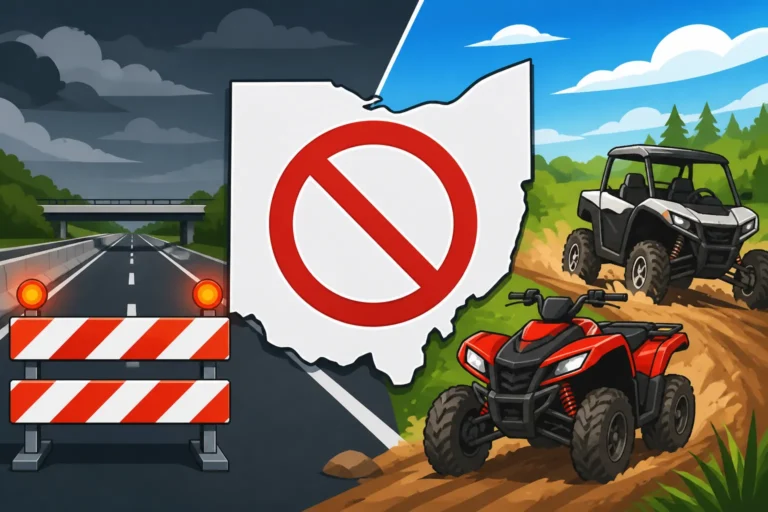
First, let's clarify that not all APVs are allowed on Ohio roads, and not all roads are open to APVs. Generally, traditional ATVs (quads) are prohibited on public roads. It's primarily UTVs that can be made "street legal" in certain jurisdictions after passing an inspection and meeting specific equipment requirements. Even then, an APV can only be operated on roads opened by a local resolution. You can find out more about which areas permit this by researching [Ohio Counties That Allow APVs on Roads] or [Ohio Townships That Allow APVs on Roads].
If you are operating a road-legal UTV on an approved public road, then passengers are generally permitted, provided the UTV is designed by the manufacturer for multiple occupants (i.e., it has multiple seats with seatbelts). Each passenger must occupy a designated seating position and use the vehicle's seatbelt. Unlike trail riding where sometimes an informal "piggyback" might happen (though strongly discouraged), road use demands strict adherence to seating and restraint systems. Carrying more passengers than your UTV has seatbelts for is illegal and incredibly dangerous. It's similar to how you would operate a car; every occupant needs a seat and a seatbelt.
Remember that "road legal" doesn't mean "any road." State routes and interstates are typically off-limits, even if your county or township has opened its own roads. Always verify the specific resolutions for the roads you intend to travel and ensure your vehicle is compliant.
Equipment and Licensing for Road-Legal Passenger Transport
Operating an APV with passengers on Ohio roads comes with specific requirements that blend off-road safety with on-road vehicle laws.
The operator of the road-legal APV must possess a valid driver's license. This isn't an optional extra; it's a fundamental requirement for operating any motor vehicle on public roads. You can learn more about this by checking out [A Driver's License on an Ohio Road]. This applies regardless of whether you have passengers or not, but it's especially important as you are responsible for everyone in your vehicle.
Furthermore, any APV operated on public roads must meet specific equipment standards and carry proof of insurance. Ohio mandates that road-legal APVs have certain safety features, which include things like headlamps, taillamps, brake lights, turn signals, mirrors, and often a horn. While a standard ATV usually doesn't need an inspection, a UTV aspiring for road-legal status in Ohio will need to pass an inspection to confirm it has all the necessary equipment. This is where a lot of riders doing DIY conversions rely on aftermarket parts, often from companies like SuperATV, to ensure their UTV has all the necessary lighting, mirrors, and windshield wipers to pass inspection and be safe for road travel. Understanding these requirements is key, and you can delve deeper into what's needed by exploring [Ohio UTV Equipment Rules Explained].
Finally, proof of financial responsibility (insurance) is mandatory for any motor vehicle on Ohio roads, and your road-legal APV is no exception. This typically means carrying an insurance card that demonstrates you have at least the minimum required liability coverage. Your passengers are relying on your adherence to these rules for their safety and for legal protection in unforeseen circumstances. [Ohio APV Insurance Requirement] provides a good starting point for understanding your obligations. Just like a car, if you get pulled over, you'll need to show your driver's license and proof of insurance, and if you have passengers, they need to be safely seated and restrained.
Remember, the goal is always to have a safe and enjoyable experience for everyone involved. By understanding and adhering to Ohio's passenger rules, you're not just avoiding fines; you're protecting your loved ones and ensuring many more rides in the future.
Here's a quick summary of key passenger considerations:
| Riding Environment | Passenger Capacity | Minimum Age (Passenger) | Helmet Required | Eye Protection | Seatbelts/Restraints | Operator's License |
|---|---|---|---|---|---|---|
| Private Land | Mfg. Capacity | No State Minimum (Safety Dependent) | Strongly Recommended | Strongly Recommended | Manufacturer's Design | Not Always Required |
| Public Trails (OH State Forests) | Mfg. Capacity (e.g., Two-Up ATV, UTV) | No State Minimum (Safety Dependent) | Yes | Yes | Manufacturer's Design (UTV) | Not Always Required |
| Ohio Roads (UTV Only, if Legal) | Mfg. Capacity (Designated Seating) | No State Minimum (Safety Dependent) | Yes | Yes | Yes (Mandatory for all Occupants) | Yes (Valid Driver's License) |
Disclaimer
This article is for general informational purposes only and does not constitute professional advice. Laws, prices and regulations vary by location and change over time. Consult a qualified professional for guidance on your specific situation.