Ohio APV Road Equipment List
Riding your all-purpose vehicle (APV) on Ohio's public roads can feel like navigating a maze of rules and regulations. Many riders get frustrated trying to figure out exactly what equipment their ATV or UTV needs to be considered road-legal, and the thought of getting pulled over for a missing blinker is enough to keep some off the pavement entirely. This comprehensive guide will walk you through the essential equipment list for your APV to legally traverse Ohio's open county and township roads, helping you understand the nuances between ATVs and UTVs and ensuring you're compliant and safe.
Understanding Ohio's APV Categories for Road Use
Before we dive into the specific gadgets and features your machine needs, it's really important to understand that Ohio law often treats different types of APVs… well, differently. What's perfectly fine for an ATV might not cut it for a side-by-side, and vice versa, especially when it comes to road use. This distinction is the bedrock of everything else we're going to discuss.
The Core Difference: APV (ATV) vs. UTV
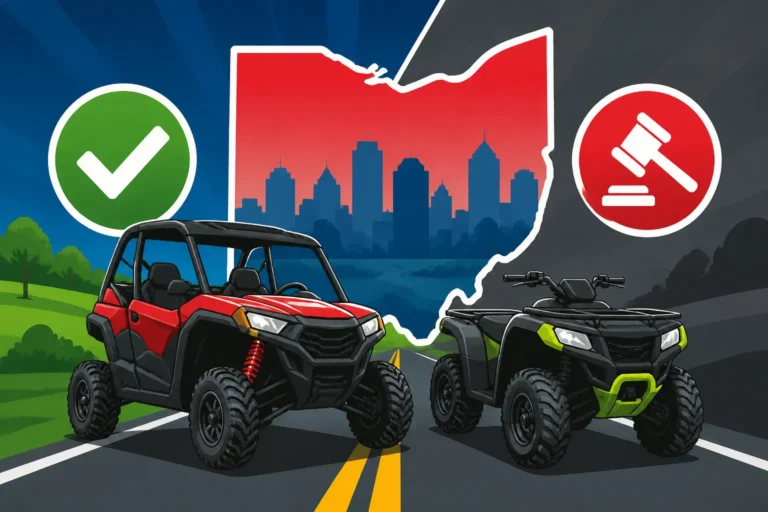
In Ohio, the term "All-Purpose Vehicle" (APV) is a broad umbrella that covers both traditional ATVs (often called quads) and UTVs (utility task vehicles, like side-by-sides). However, when it comes to riding on public roads, the law draws a significant line in the sand between these two. An ATV, or quad, is generally designed for a single rider, straddled, and steered with handlebars. A UTV, on the other hand, typically has a steering wheel, side-by-side seating for multiple passengers, and often a roll cage or cab structure. This difference isn't just about ergonomics; it dictates a lot of the safety equipment requirements.
For instance, because UTVs are closer in design to traditional automobiles, Ohio law often imposes more stringent equipment standards on them when they hit the road. It's not just a suggestion; it's a legal requirement that can lead to fines if ignored. So, while both are APVs, their individual design characteristics mean they don't always play by the exact same rules when leaving the trail for the tarmac. Always keep in mind whether you're dealing with an ATV or a UTV as you read through the requirements.
Why the Equipment Rules Exist
It’s easy to feel like these rules are just bureaucrats trying to make life harder, but there’s a real, tangible reason behind every single one: safety. When you take an off-road machine, designed primarily for uneven terrain and low-speed agility, and introduce it to public roads with cars, trucks, and varying speed limits, you introduce a whole new set of risks. The equipment requirements are there to bridge that gap.
Think about visibility, for example. An ATV or UTV might be hard to spot in traffic, especially at dawn or dusk, without proper lighting. Turn signals prevent confusion for other drivers, letting them know your intentions. Brake lights are a universal signal for slowing down. These aren't just about protecting you; they're about protecting everyone else on the road, too. Integrating an APV into traffic means it needs to communicate its presence and intentions just like any other vehicle, and the equipment list ensures it can do that effectively. Without these minimum standards, the risk of accidents would skyrocket, making road access for APVs a non-starter in most communities.
Essential Equipment for All Ohio APVs on Roads
Whether you’re on a quad or a side-by-side, there’s a baseline of equipment that every APV must possess to be considered road-legal in Ohio. These are the non-negotiables, the foundational elements that ensure basic safety and communication with other vehicles on the road. Think of these as the fundamental necessities before you even consider the specific requirements for UTVs. For a general overview, you might want to look at [Ohio Equipment Rules for an APV on a Road].
Lighting Requirements for Visibility
Visibility is paramount when you’re sharing roads with cars and trucks, many of which are significantly larger and faster than your APV. Ohio law is quite specific about what kind of lighting your machine must have. First, you need headlights – and not just any headlights. They must be capable of illuminating the road for a specified distance, typically with both a high and low beam option. This allows you to see where you're going, but also to dim your lights when approaching oncoming traffic, preventing you from blinding other drivers.
At the rear, taillights and brake lights are absolutely essential. Your taillights must be illuminated whenever your headlights are on, making your machine visible from behind. Brake lights, which activate when you apply the brakes, serve as a critical warning to anyone following you. Both need to be visible from a certain distance, typically 500 feet. Don't forget the license plate light, which ensures your rear plate is illuminated and legible after dark. Finally, reflectors are also required, usually at the front, rear, and sides, to enhance your visibility even further, especially if your lights fail or are momentarily obscured. Ensuring all your lights are functional and properly aimed is not just about compliance; it's about being seen and staying safe.
Braking and Steering Systems
No surprises here: you need to be able to stop and steer your machine effectively. Ohio law dictates that your APV must have fully functional brakes on all wheels. This doesn't necessarily mean four separate brake levers; often, a combined system that applies braking force to both front and rear wheels, or independent systems, will suffice. The key is that the braking system must be in good working order, allowing you to slow down and stop safely and reliably, even in an emergency. It's a fundamental safety feature that can prevent collisions.
Equally important is a sound steering system. Your handlebars (for an ATV) or steering wheel (for a UTV) must be firmly attached and provide precise control over the direction of your machine. There should be no excessive play or looseness in the steering mechanism. On a paved road, where traction is different from dirt or gravel, precise steering is vital for maneuvering around obstacles, staying in your lane, and responding to sudden changes in traffic or road conditions. A well-maintained braking and steering system isn't just a legal requirement; it's what gives you confidence and control on the road.
Sound and Exhaust Rules
Nobody wants to deal with an excessively loud machine, and Ohio law agrees. Your APV must be equipped with a properly functioning muffler and spark arrester. The muffler's job is to reduce the noise emitted from your engine's exhaust to acceptable levels, preventing it from disturbing residents or other road users. A spark arrester is a critical safety device, especially when riding in areas where dry vegetation could ignite. It's designed to prevent hot carbon particles (sparks) from exiting the exhaust system, significantly reducing the risk of wildfires. These components are often standard on factory-produced machines, but if you've made modifications, you'll need to ensure they still meet the legal sound and safety standards.
Beyond the exhaust, every road-legal APV in Ohio needs a working horn. This isn't just for fun; it's a vital safety device. A horn allows you to provide an audible warning to pedestrians, other drivers, or even animals, alerting them to your presence and potentially preventing an accident. It needs to be loud enough to be heard but not so piercing that it's considered an excessive noise nuisance. Regular checks to ensure your horn, muffler, and spark arrester are all in good order are part of responsible APV ownership.
Additional Equipment Specific to UTVs for Road Use
While ATVs and UTVs share some basic road equipment requirements, UTVs often face a more comprehensive list due to their design, which is closer to a car. This means if you're planning to take your side-by-side onto Ohio's roads, you'll need to pay extra attention to these specific additions. For a full picture, you might want to review [Ohio Equipment Rules for a UTV on a Road].
The Ohio UTV Inspection Before Registration
This is a big one for UTV owners and often catches people by surprise. Unlike ATVs, UTVs typically require a physical inspection before they can be registered for road use in Ohio. This inspection is where a qualified professional checks to ensure your UTV actually has all the necessary safety equipment installed and working correctly. It's not just a paperwork exercise; it's a hands-on verification that your machine is ready for public roads.
During this inspection, the examiner will meticulously go through a checklist, looking for things like proper lighting, turn signals, mirrors, a functioning windshield, seatbelts, and sometimes even specific tire types. If your UTV fails any part of this inspection, you won't be able to get your road-legal registration until you fix the deficiencies and have it re-inspected. It’s a crucial step that ensures UTVs meet a higher standard of roadworthiness, reflecting their larger size and passenger-carrying capabilities. Understanding [The Ohio Inspection a UTV Must Pass] is key to a smooth registration process.
Windshields, Wipers, and Mirrors
Because UTVs often have a cab-like structure, they have specific requirements that mirror those of traditional vehicles. A windshield is a must-have, and not just any piece of plexiglass will do. It typically needs to be made of safety glass or a similar shatter-resistant material to protect occupants from debris and impacts. This isn't just about comfort; it's about serious occupant protection. To go along with that windshield, windshield wipers are also usually required. Imagine hitting a sudden rain shower on a county road without them – visibility would instantly drop to zero. Wipers ensure you maintain a clear view of the road ahead, regardless of the weather. Many accessory companies, like SuperATV, offer robust windshield and wiper kits specifically designed to meet these road-legal requirements for various UTV models.
Furthermore, mirrors are critical for safely navigating traffic. You’ll need at least one rearview mirror, typically mounted to give you a clear view of the road behind you. Many UTVs for road use also benefit from, and may even be required to have, side mirrors, much like a car. These expand your field of vision, helping you to safely change lanes, make turns, and be aware of vehicles approaching from the sides. Companies like SuperATV also provide a range of durable mirrors that can withstand off-road conditions while still offering clear, wide-angle views for street driving. You can learn more about these specifics under [Wipers and Glass on an Ohio UTV] and [Turn Signals and Mirrors on an Ohio UTV].
Turn Signals and Seatbelts
These are two more features that bring UTVs firmly into the realm of traditional road vehicles. Turn signals, both front and rear, are a non-negotiable requirement for UTVs on Ohio roads. They provide a clear visual indication of your intentions to other drivers, preventing confusion and significantly reducing the risk of accidents during lane changes or turns. Without them, you'd be relying on hand signals, which are far less visible and often not expected from a UTV.
Secondly, because UTVs are designed to carry multiple passengers and often have dedicated seating, seatbelts are mandatory for every occupant. These aren't just for show; they must be fully functional, properly anchored, and worn by everyone in the vehicle. Just like in a car, seatbelts are the primary restraint system in the event of a sudden stop or collision, and their proper use is crucial for safety. When considering aftermarket accessories to meet these rules, remember that SuperATV offers various turn signal kits and high-quality, comfortable seatbelts that can enhance both safety and compliance.
Tires and Speed Limitations
The tires you use on your UTV also matter when you hit the pavement. While off-road tires are fantastic for mud and trails, they aren't always ideal, or even legal, for sustained road use. Ohio typically requires DOT-approved tires for UTVs on public roads. These tires are designed and tested to meet specific safety standards for highway use, offering better grip on asphalt, improved durability at higher speeds, and proper handling characteristics. Using non-DOT tires on the road could lead to a citation and compromise your safety.
Finally, it's important to understand that even with all the right equipment, UTVs often come with speed limitations on certain roads. Many local ordinances and even state statutes limit UTVs to roads with speed limits of 35 MPH or less. This is largely due to their design, which prioritizes off-road capability over high-speed highway stability. Always check local resolutions and signage. For example, [Why an Ohio UTV Stops at Thirty-Five] directly addresses this important limitation. Ignoring these speed limits, even on a road-legal UTV, could result in fines or worse.
The Human Element: Licensing, Insurance, and Safety Gear
Beyond what your machine needs, what you need as a rider or passenger is equally important. Ohio law doesn't just regulate the vehicle; it also regulates the people operating and riding in it when on public roads. Failing to meet these personal requirements can be just as problematic as a missing piece of equipment.
Driver's License and Proof of Insurance
If you're going to operate an APV on a public road in Ohio, you absolutely must possess a valid driver's license. This isn't just about knowing how to drive; it signifies that you've met the state's requirements for operating a motor vehicle safely and legally. An ATV or UTV on a public road is considered a motor vehicle, and the same licensing rules apply as for a car or truck. You can't just hop on with a learner's permit or without any license at all. If you're pulled over, the deputy will expect to see a valid license. You'll also need to carry proof of insurance. Ohio law typically mandates that any vehicle operated on public roads must be insured to cover potential liability in case of an accident. This means having an insurance card or declaration page readily available to show law enforcement if requested. Having [A Driver's License on an Ohio Road] and [Proof of Insurance on an Ohio Road] on your person is a fundamental requirement for legal road use. Without both, you're looking at potential fines and other legal consequences.
Helmets and Eye Protection
Ohio has specific rules regarding helmets and eye protection, especially when it comes to APVs on roads. While not every adult rider is always required to wear a helmet on every public road, there are crucial exceptions and specific conditions where it becomes mandatory. For instance, riders under the age of 18 are typically required to wear a helmet at all times when operating or riding an APV on any public land, including roads. Additionally, if you're riding on state forest trails or other designated public lands, helmet rules often become universal, regardless of age. Always make sure any helmet you wear is DOT-compliant, meaning it meets federal safety standards.
Along with a helmet, eye protection is also frequently required, especially if your APV does not have a windshield. Goggles or a face shield on your helmet protect your eyes from dust, debris, insects, and wind, ensuring you can maintain clear vision and control of your machine. It’s not just a comfort thing; it’s a critical safety measure to prevent distractions and injuries. Always check the specific ordinances of the county or township you're riding in, as local rules can sometimes add requirements beyond state minimums. Familiarize yourself with [Ohio Helmet Law for APV Riders] and [Ohio Eye Protection Requirement] to stay compliant and safe.
Ohio APV Road Equipment Comparison
To help clarify the differences in equipment requirements between traditional ATVs and UTVs when riding on Ohio roads, here's a quick comparison:
| Feature/Equipment | ATV (Quad) Requirements (General) | UTV (Side-by-Side) Requirements (General) |
|---|---|---|
| Headlights | Required (High/Low beam, visible specified distance) | Required (High/Low beam, visible specified distance) |
| Taillights/Brake Lights | Required (Visible specified distance) | Required (Visible specified distance) |
| License Plate Light | Required | Required |
| Reflectors | Required (Front, rear, sides) | Required (Front, rear, sides) |
| Brakes | Required (Functional on all wheels) | Required (Functional on all wheels) |
| Steering | Required (Functional, handlebars) | Required (Functional, steering wheel) |
| Muffler/Spark Arrester | Required (Noise reduction, fire prevention) | Required (Noise reduction, fire prevention) |
| Horn | Required (Audible warning device) | Required (Audible warning device) |
| Windshield | Not typically required | Required (Safety glass, shatter-resistant) |
| Windshield Wipers | Not typically required | Required (Functional) |
| Mirrors | Rearview mirror often required, side mirrors recommended | Required (Rearview and typically side mirrors) |
| Turn Signals | Not typically required, but highly recommended for visibility | Required (Front and rear) |
| Seatbelts | Not applicable (single rider, straddled) | Required for all occupants |
| Tires | Off-road tires generally acceptable on roads where permitted | DOT-approved tires generally required |
| Pre-Registration Insp. | Not typically required | Required (to verify equipment compliance) |
| Driver's License | Required | Required |
| Proof of Insurance | Required | Required |
| Helmet (Age 18+) | Required in some areas/conditions, otherwise highly recommended | Required in some areas/conditions, otherwise highly recommended |
| Helmet (Under 18) | Required | Required |
| Eye Protection | Required if no windshield | Required if no windshield |
| Speed Limit Restrictions | Depends on local ordinance (often 35 MPH roads) | Depends on local ordinance (often 35 MPH roads) |
This table provides a general guideline. Always refer to the specific statutes and local ordinances of the areas where you plan to ride, as rules can sometimes vary. For further details on where these machines are allowed, check out [Where Ohio Law Allows APVs on Roads].
Conclusion
Getting your APV ready for Ohio's roads involves more than just slapping on a license plate. It's about understanding the specific legal requirements for your type of machine, ensuring all necessary safety equipment is installed and functioning correctly, and, of course, having your own credentials in order. While some of these rules might seem like a hassle, they are all designed to keep you, your passengers, and other drivers safe. By diligently checking off this equipment list, from your headlights to your seatbelts, you can confidently and legally enjoy the freedom of riding your ATV or UTV on Ohio's approved roads. Always double-check local regulations and remember that a little preparation goes a long way in preventing issues like [Ohio Fines for Illegal APV Road Use].
Disclaimer
This article is for general informational purposes only and does not constitute professional advice. Laws, prices and regulations vary by location and change over time. Consult a qualified professional for guidance on your specific situation.