What Ohio Law Says About Minors on an APV
Riding an All-Purpose Vehicle (APV) in Ohio can be an absolute blast, a fantastic way to explore trails, connect with nature, or simply enjoy some thrilling family time. However, when it comes to minors and these powerful machines, the rules can feel like a tangled mess of regulations, leaving many parents scratching their heads and worrying about inadvertently breaking the law. This comprehensive guide is here to clear up that confusion, diving deep into what Ohio law actually says about minors operating APVs, so you can make informed decisions and ensure everyone's safety and legality on the trails.
The Foundations: Ohio's Definition of a Minor and an APV
Before we get into the nitty-gritty of who can ride what and when, it's crucial to understand how Ohio defines two key terms: "minor" and "All-Purpose Vehicle" (APV). Without this foundational knowledge, everything else can seem like a jumble of disconnected rules.
Who is Considered a "Minor" Under Ohio Law for Riding?
In Ohio, as in most places, the legal definition of a "minor" typically refers to anyone under the age of 18. This broad definition carries significant implications when it comes to operating motor vehicles, including APVs. While a 16-year-old might feel perfectly capable behind the wheel of a UTV, and they might even have their driver's license for a car, the law often places additional restrictions on them when it comes to off-road machines.
The nuance here isn't just about age itself, but the associated responsibilities and requirements that shift as a person grows from a small child into a teenager. Parents often wonder if their child's maturity level is taken into account, but the law operates on concrete age benchmarks. These age limits are put in place not to restrict fun, but to safeguard young riders, acknowledging the inherent risks associated with operating powerful machinery and the developing judgment skills of youth. It also places a clear legal responsibility on parents or guardians, ensuring they understand their role in supervising and training their younger riders.
What Exactly is an "All-Purpose Vehicle" (APV) in Ohio?
Ohio law uses the term [Why Ohio Says All-Purpose Vehicle] to encompass a wide variety of off-highway vehicles that many people might refer to as ATVs, UTVs, side-by-sides, or even dirt bikes. This unified term is essential because the same set of regulations generally applies across these different machine types when it comes to registration, titling, and, crucially, who can operate them.
An APV is defined, broadly, as any self-propelled vehicle designed primarily for recreational use off public roads and highways, not including snowmobiles or agricultural equipment designed for farm use. This means that whether your child wants to ride a small, single-rider ATV, or if you're looking to take them along in a multi-passenger side-by-side like those offered by SuperATV, these regulations regarding minors will apply. The distinction matters because while a youth ATV might be perfectly sized for a younger rider, the underlying legal age requirements for operating any APV remain consistent across the category. Understanding this broad definition helps you avoid confusion about whether your specific machine falls under Ohio's APV laws.
Age Restrictions for Operating an APV in Ohio
One of the most common questions parents have is, "How old does my child need to be to ride an APV in Ohio?" The answer, like much of APV law, isn't always a simple number, but it does have clear cutoffs.
The Absolute Minimum Age to Operate an APV
Ohio law establishes an absolute minimum age for operating an APV, and it's something every parent and guardian needs to be aware of. Generally speaking, no one under the age of 12 is permitted to operate an APV on land other than private property owned by their parents or guardians, or private property for which their parents or guardians have obtained express written permission. Even then, on private land, direct adult supervision is highly recommended and in some cases, legally implied for safety.
Once a rider reaches 12 years old, they enter a new legal category. At this age, they can operate an APV on various public lands, such as state forest trails, but only under specific conditions, which we'll explore further below. This distinction between private and public land is critical, as many parents mistakenly believe that if their child can ride on their own property, they can ride anywhere. Always remember that [Ohio Minimum Age to Ride an APV] applies differently depending on where you are. The law aims to prevent very young, less experienced riders from encountering the unpredictable challenges of public trails without the necessary physical and mental development.
Rules for Riders Under Sixteen
For those riders between the ages of 12 and 15, Ohio law implements specific supervision requirements, particularly when they venture onto public trails. It's not enough for them to simply be 12; they must be accompanied by an adult who meets certain criteria. For a full breakdown, check out [Ohio Rules for Riders Under 16].
Specifically, a rider aged 12 to 15 operating an APV on public land must be under the direct supervision of a licensed adult. This adult must be at least 18 years old and must possess a valid driver's license. Furthermore, this adult must either be riding on their own APV, or be a passenger on the same APV as the minor, if the machine is designed for multiple occupants. This means a parent can't just drop their 14-year-old off at a trailhead and expect them to be legal; the adult must actively accompany them. This rule is designed to ensure that an experienced, licensed individual is on hand to provide guidance, intervene in emergencies, and ensure the minor is riding safely and responsibly. You can find more details on [When a Licensed Adult Must Ride With a Minor].
The Importance of a Driver's License for Older Minors
Once a rider turns 16, the legal landscape changes slightly, primarily in relation to road access. While the fundamental APV operation rules still apply, the acquisition of a standard driver's license becomes a crucial factor, especially if there's any intention of riding on public roads where APVs are permitted.
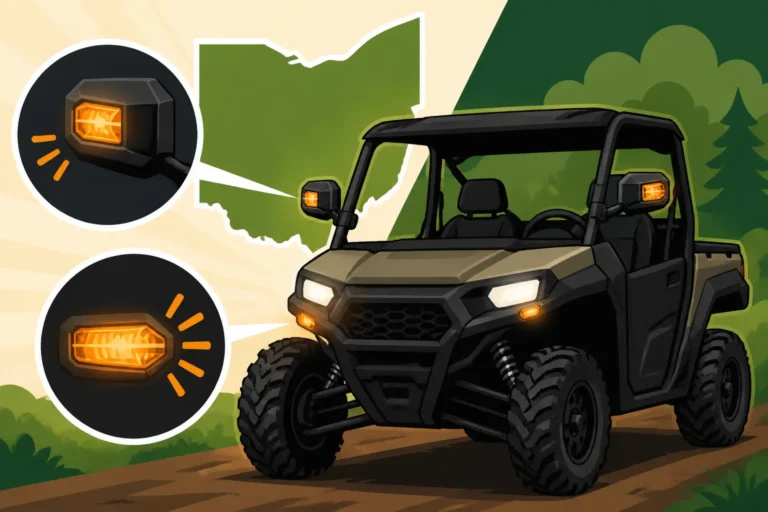
Ohio law, in areas where counties or townships have opened roads to APVs, often requires the operator to possess a valid driver's license. This means that a 16 or 17-year-old with a driver's license might be able to legally operate an APV on an open county road, whereas a 15-year-old, even under supervision, would not be permitted due to the licensing requirement. It's a key distinction that links off-road vehicle use with general motor vehicle operating privileges. However, even with a driver's license, minors (anyone under 18) must still adhere to all other APV laws, including any specific equipment requirements for road use, which can include items like turn signals, mirrors, and headlights that might be found on some SuperATV kits designed for street legality.
Supervision and Safety: Ohio's Requirements for Young Riders
Beyond just age, Ohio law places a strong emphasis on supervision and proper safety gear to protect young APV riders. These aren't just suggestions; they are legal mandates designed to minimize risks.
Who Can Supervise a Minor APV Rider in Ohio?
The role of a supervising adult is critical when a minor is riding an APV in Ohio. As mentioned, for minors aged 12 to 15 riding on public land, the supervising adult must be at least 18 years old and possess a valid driver's license. This isn't just a casual "keep an eye on them" requirement; it demands active participation and presence. The supervising adult is legally responsible for the minor's compliance with all APV laws and safe operating practices.
Imagine a scenario where a group of friends, including a 14-year-old, head out to a state forest trail. If the 14-year-old is riding their own ATV, there needs to be a licensed adult (18+) actively riding with them, either on another APV or as a passenger on a multi-rider machine. This ensures that in case of an accident, a wrong turn, or an equipment issue, there's a capable and legally responsible individual immediately present to assist. For more specific guidelines, refer to [Ohio Supervision Rules for Minors]. The law is clear that this direct supervision is non-negotiable for public land use by riders in this age bracket, underpinning the state's commitment to safety for its younger off-road enthusiasts.
Required Safety Gear for Minors on APVs
When it comes to safety gear, Ohio law is unequivocally clear, especially for minors. Everyone under the age of 18, regardless of where they are riding (public or private land), must wear a helmet that meets federal safety standards (DOT FMVSS 218). This isn't a recommendation; it's a legal requirement designed to protect against head injuries, which are among the most serious types of injuries sustained in APV accidents.
Beyond helmets, eye protection is also mandated for all APV riders in Ohio, which naturally includes minors. Goggles or a helmet with an integrated face shield are essential for protecting against debris, dust, and insects. While not legally mandated, parents are strongly encouraged to ensure their minor riders also wear additional protective gear such as sturdy over-the-ankle boots, long pants, long-sleeved shirts, gloves, and a chest protector. This comprehensive approach to safety gear, from a [Ohio Helmet Rules for APV Riders] to [Ohio Eye Protection Requirement], significantly reduces the risk of injury and prepares young riders for the unpredictable nature of off-road terrain. Investing in quality gear for young riders is just as important as choosing the right machine.
Passenger Rules When Minors Are Involved
The question of carrying passengers, particularly minors, on an APV is another area where Ohio law provides clear guidance. Many ATVs are designed for a single rider only, and it is illegal to carry a passenger on such a machine, regardless of age. Doing so can significantly impair the operator's ability to control the vehicle and is extremely dangerous.
However, many UTVs or side-by-sides are specifically designed and equipped with multiple seats for passengers. When a minor is a passenger in one of these machines, they must still adhere to specific rules. They must be able to sit with their feet flat on the floorboards, holding onto the handholds, and wearing a helmet and eye protection if under 18. Some machines might also have minimum passenger height or weight requirements for safety. Always ensure that any machine intended to carry a minor passenger is designed for that purpose, and that the minor is securely seated and properly restrained. You can find more information about [Ohio Rules for a Passenger on an APV] to ensure you're compliant and safe.
Where Minors Can (and Cannot) Ride APVs in Ohio
The location where an APV is ridden significantly impacts the rules, especially for minors. Understanding the distinctions between private land, state forests, and public roads is paramount.
Private Property vs. Public Trails: Different Rules Apply
This is perhaps one of the most common misunderstandings. Many parents assume that if their child can ride an APV on their own large backyard or farm, they can ride it anywhere. This is simply not true. While private property often offers more flexibility, public land has stricter rules that apply to all riders, especially minors.
On private property, if you are the landowner, or if you have explicit [Ohio Rules for Riding Private Land] from the landowner, the specific age and supervision rules from the state's public land laws may not apply in the same way. However, you are still responsible for the minor's safety and any incidents that occur. It's always advisable to follow best safety practices, including helmets and appropriate supervision, regardless of legal mandates on private land. The moment you leave private land and enter public trails, state forests, or roads, the full force of Ohio's APV laws regarding minors kicks in, bringing with it specific age and supervision requirements that cannot be ignored.
Riding in Ohio's State Forests and Wayne National Forest
Ohio boasts some fantastic state forest APV areas, and the Wayne National Forest offers even more extensive opportunities for off-road adventure. However, these public lands come with very specific rules for minors. For Ohio State Forest trails, the minimum age to operate an APV is generally 12 years old. Riders aged 12 to 15 must be under the direct supervision of a licensed adult (18 years or older) as described earlier.
Wayne National Forest, being federal land, operates under similar but sometimes slightly different rules, including requiring an OHV permit for all riders. For state forest details, check out [Ohio Minimum Age for State Forest Trails] and [Ohio Supervision Rules on Forest Trails]. These regulations are strictly enforced by forest rangers and law enforcement to ensure safety, minimize environmental impact, and maintain a high-quality riding experience for all. Ignorance of these rules is not an excuse, and violations can lead to citations and even the loss of riding privileges. Always check the specific rules for the area you plan to visit before loading up your machine, particularly when taking minors.
Understanding Local Ordinances and Road Use for Minors
While Ohio generally restricts APVs from public roads, certain counties and townships have passed resolutions to open specific, lower-speed roads to APV traffic. This is where things can get particularly tricky for minors. Even if a county or township opens its roads, the statewide rules regarding a valid driver's license for road operation still apply.
This means that a minor, even if they are 16 or 17, would need a valid driver's license to legally operate an APV on these open roads. A 12-year-old, even with an adult supervisor, would not be permitted on these roads because they lack a driver's license. It's a critical distinction: the ability to operate an APV on a trail does not automatically grant the right to operate it on a road, especially for minors. Always research [Ohio Counties That Allow APVs on Roads] and then delve into the specific local ordinances, looking closely at any age and licensing clauses, before attempting to use public roads with a minor operating an APV.
Penalties, Enforcement, and Parental Responsibility
Navigating Ohio's APV laws for minors isn't just about knowing the rules; it's also about understanding the consequences of not following them and the crucial role parents play.
Consequences for Violating Minor Riding Laws
Ignoring Ohio's APV laws regarding minors can lead to a range of unpleasant consequences, from fines to legal repercussions. If a minor is caught operating an APV illegally (e.g., underage, unsupervised on public land, or without a helmet), the immediate result is often a citation. These citations typically carry fines, and repeated offenses can lead to more severe penalties.
More significantly, the responsibility for these violations often falls directly on the parents or guardians. It's not just the minor who gets a ticket; the adult who allowed or enabled the illegal operation can also face charges. In some cases, especially involving serious accidents or negligence, there could be civil liability for damages or injuries. Law enforcement officers, whether from the local sheriff's department, the Ohio Department of Natural Resources (ODNR), or the U.S. Forest Service, are trained to enforce these laws, and they do so with an emphasis on safety and accountability.
The Role of Parental Responsibility and Liability
As a parent or guardian, you bear significant responsibility for your child's safety and adherence to the law when it comes to APVs. This responsibility extends beyond simply knowing the rules; it encompasses actively teaching safe riding practices, ensuring proper gear is worn, and providing adequate supervision.
Beyond the legal fines and penalties, there's also the potential for civil liability. If a minor operating an APV under your supervision (or lack thereof) causes an accident that results in injury or property damage to another party, you could be held financially responsible. This is why having appropriate insurance is so vital, even if not explicitly mandated for all types of APV use. Parents are seen as the gatekeepers of safe and legal APV riding for their children, and the law holds them accountable for the choices their young riders make.
The Value of Formal Safety Training for Young Riders
While Ohio does not currently mandate a formal safety course for all APV riders, it is highly recommended, especially for minors. Think of it this way: you wouldn't let a child drive a car without lessons, and an APV, while different, is still a powerful machine with its own unique handling characteristics and risks.
ATV and UTV safety courses, often offered by organizations like the ATV Safety Institute (ASI), teach critical skills, safe riding techniques, risk awareness, and proper machine control. For young, developing riders, these courses can be invaluable, providing a structured learning environment that goes beyond what a parent might teach in the backyard. A minor who has completed a safety course is generally better equipped to handle unexpected situations on the trail, make responsible decisions, and operate their APV with greater confidence and competence. While not required, consider [Ohio ATV Safety Course Options] a wise investment in your child's safety and your peace of mind.
| Age Group | Private Property (Owner/Permission) | Public Land (State Forests, Trails) | Public Roads (Open by Local Ordinance) | Helmet Required | Supervision Required (Public Land) | Driver's License Required (Roads) |
|---|---|---|---|---|---|---|
| Under 12 | Yes, with owner permission/supervision advised | No | No | Yes | N/A | No |
| 12-15 | Yes | Yes, with licensed adult (18+) | No | Yes | Yes | No |
| 16-17 | Yes | Yes (supervision advised, not always legally required) | Yes, with valid driver's license | Yes | No (on trails), Yes (on roads if applicable) | Yes |
| 18+ | Yes | Yes | Yes, with valid driver's license | No (but highly recommended) | No | Yes |
Please note: This table provides a general overview. Always check specific local ordinances and trail rules, as they can have additional requirements. "Supervision advised" indicates best practice for safety, even if not always a direct legal mandate for that age group in that specific context.
Disclaimer
This article is for general informational purposes only and does not constitute professional advice. Laws, prices and regulations vary by location and change over time. Consult a qualified professional for guidance on your specific situation.