Proof of Insurance on an Ohio Road
There's a specific kind of knot that forms in your stomach when you're out riding your ATV or UTV on a permitted Ohio road, enjoying the freedom, and then you see those flashing lights in your rearview mirror. Immediately, your mind races: "Do I have everything? Is my registration current? And oh man, my insurance card… is it even on me?" This guide is all about untangling that particular worry, laying out exactly what Ohio law expects when it comes to proof of insurance when your all-purpose vehicle hits the pavement.
The Core Requirement: Why Insurance Matters on Ohio Roads
When you're tearing up the trails in Wayne National Forest or exploring a private park, the rules for your all-purpose vehicle (APV) are generally focused on safety, permits, and perhaps a spark arrestor. But the moment you roll onto a public road, even just to cross it or connect to another trail, the game changes entirely. This isn't just about fun anymore; it's about blending into the larger world of traffic laws that govern cars, trucks, and motorcycles. Ohio law views your ATV or UTV, when on a public road, as another vehicle that can cause damage or injury. That's why having proper insurance, and being able to prove it, becomes absolutely critical.
Understanding Ohio's Mandate for Road Use
It might feel like an unfair burden if you only ride your machine on a county road for a few miles to get from one section of private land to another, or to access a state forest trail system. After all, your quad or side-by-side isn't a car, right? However, Ohio law makes a clear distinction: if your APV is operating on any public roadway—be it a county road, a township road, or even just crossing a state route where permitted—it falls under the same general financial responsibility statutes that apply to any other motor vehicle. The purpose of this mandate isn't to punish riders but to ensure that if an accident happens, the injured parties or damaged property can be compensated. Imagine a scenario where you accidentally clip a mailbox or, worse, collide with another vehicle. Without insurance, you'd be personally on the hook for potentially devastating costs, which could easily lead to financial ruin. The state wants to avoid that for everyone involved.
The rationale is simple: public roads are shared spaces, and with that privilege comes responsibility. While your machine might be designed for off-road thrills, when it's mixed with passenger vehicles, bicycles, and pedestrians, the risks escalate. Your insurance acts as a safety net, not just for others but for you too, protecting your assets from claims that could arise from an unexpected incident. This is why when you're thinking about [Ohio Rules for Riding a County Road] or [Ohio Rules for Riding a Township Road], insurance should be at the top of your checklist.
What Kind of Coverage Ohio Requires
So, what exactly does Ohio expect you to have? For any motor vehicle operating on public roads, Ohio law generally requires liability insurance. This is the bedrock of vehicle insurance and is designed to cover damages you might cause to other people or their property in an accident. It's important to understand that liability coverage doesn't pay for damages to your ATV or UTV, nor does it cover your own medical expenses if you're injured. Its primary function is to protect you financially from claims made by others.
While Ohio specifies minimum amounts for bodily injury liability (per person and per accident) and property damage liability, these exact figures can fluctuate over time and aren't something I can quote specifically. However, the general principle remains: you must have enough coverage to meet these state-mandated minimums. Many riders choose to carry higher limits than the minimums, and often add optional coverages like comprehensive (for theft, fire, vandalism) or collision (for damage to your own machine in an accident). While these aren't legally required for road use, they're smart choices for protecting your investment, especially if you've put a lot of time and money into upgrading your machine with parts from companies like SuperATV. It’s crucial to speak with an insurance agent who specializes in powersports to ensure your policy is tailored not just to meet legal minimums but also to adequately protect you and your machine given how and where you ride. They can help you understand the nuances of [Ohio APV Insurance Requirements].
Physical Proof: What to Carry and Where
Knowing you have insurance is one thing; proving it to an Ohio law enforcement officer on the side of a dusty township road is another. The state has specific requirements for what constitutes acceptable proof, and equally important, you need to be able to access it quickly and safely when requested. Fumbling around for documents, especially in a stressful situation, isn't ideal for anyone involved.
Acceptable Forms of Insurance Proof
Generally, Ohio accepts a few forms of proof that you have the required liability insurance. The most traditional and still widely accepted is your physical insurance card. This small card, issued by your insurance company, typically contains your policy number, effective dates, the vehicles covered, and the name of the insured. It's a tangible piece of evidence that's easy for an officer to read and verify. Make sure it's current; an expired card is just as bad as no card at all.
Increasingly, digital proof on a smartphone is also accepted. Many insurance providers offer mobile apps that display your insurance card, or they might allow you to download a digital copy as a PDF. This can be incredibly convenient, as most riders carry their phones with them. However, there's a caveat: your phone needs to be charged, and if you're in an area with no signal, accessing a web-based card could be an issue. Always have it downloaded for offline access if relying solely on digital proof. Less commonly, but sometimes accepted, is a policy declarations page, which is the detailed document outlining all your coverages, limits, and terms. This is usually too bulky to carry but might be accepted if no other form of proof is available. Regardless of the format, the key is legibility and completeness. An officer needs to be able to clearly see all the necessary information to confirm your compliance.
Keeping Your Proof Safe and Accessible
This is where the rubber meets the road—or, more accurately, the mud meets the paper. An ATV or UTV ride can be a messy business. Dust, mud, water, and vibrations are all enemies of paper documents and even electronics. A physical insurance card tucked into your wallet might survive, but it's far better to laminate it or, at the very least, keep it in a sturdy, waterproof pouch. This pouch can then be stored in a secure, easily accessible spot on your machine. Think about places like a small, lockable glove box, a fender bag, or a watertight compartment under the seat. Some riders attach a small document holder to their handlebars or within a roll cage bag. The goal is to protect it from the elements and ensure it's easy to retrieve, even if you're wearing gloves.
If you're relying on digital proof, ensure your phone is well-protected in a waterproof, impact-resistant case. Consider a mounting solution that keeps it secure but still visible, perhaps in a map bag. Always start your ride with a fully charged battery, and consider carrying a portable power bank, especially on longer trips. Nothing is more frustrating than needing to show proof of insurance only to find your phone is dead or the screen is too cracked to read. For more ideas on securing documents, you might find tips in [Keeping Paperwork in a Toolbox]. Ultimately, the best solution is often a combination: a physical laminated card as a backup, even if you primarily use your phone.
When a Deputy Checks Your Papers: What to Expect
It's a moment no one enjoys, but it's a reality of riding on Ohio's roads. Being stopped by law enforcement, whether for a routine check or a perceived infraction, requires you to be prepared and cooperative. Knowing what to expect can make the interaction smoother and less stressful.
Roadside Stops and Document Requests
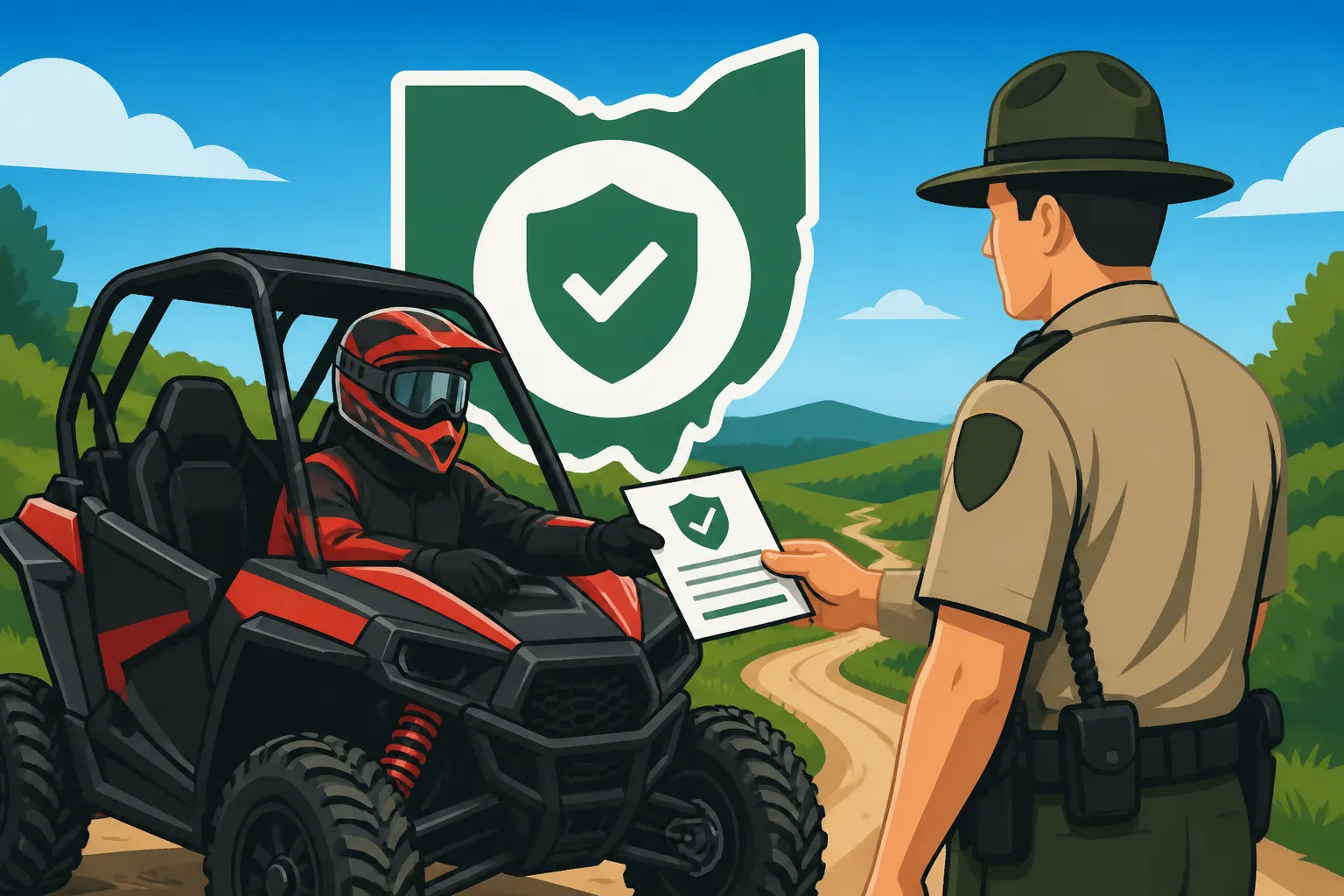
When an Ohio deputy or State Patrol officer pulls you over while you're operating your ATV or UTV on a public road, they're typically looking to ensure you're compliant with all relevant laws. This includes your driver's license (yes, a valid driver's license is required for road use), your APV registration and plate, and, critically, proof of insurance. An officer might initiate a stop for various reasons: perhaps you were observed operating on a restricted road, or maybe a headlight was out, or even just for a routine check in an area known for APV activity. When asked for your documents, present them calmly and clearly.
The officer will likely take your documents back to their cruiser to verify their validity. They'll check the name on your license against the registration and insurance, confirm the plate number matches your machine, and ensure your insurance policy is active and meets Ohio's requirements. This process is standard for all motor vehicles. Remember, cooperation is key. Arguing or being confrontational will only complicate the situation. If you've been responsible and have all your papers in order, the stop should be brief and uneventful. However, if you're missing something, the situation can escalate, potentially leading to fines or other legal actions, just as it would for a car driver.
Consequences of Not Having Proof
If you're stopped and cannot provide proof of insurance for your ATV or UTV when operating it on an Ohio road, you're likely going to receive a citation. This isn't just a minor inconvenience; it carries significant penalties. Operating a motor vehicle without proof of financial responsibility (which includes insurance) is a serious offense in Ohio. The specific fines can vary, but they are generally substantial and often include court costs. Furthermore, repeated offenses can lead to even harsher penalties, potentially impacting your ability to register vehicles or even your driver's license privileges in some circumstances.
Beyond the immediate legal and financial repercussions, not having insurance puts you at immense personal risk. If you're involved in an accident and are deemed at fault, you would be personally liable for all damages and injuries to other parties. This could mean paying out of pocket for vehicle repairs, medical bills, lost wages, and even pain and suffering claims. These costs can quickly run into tens or hundreds of thousands of dollars, far exceeding what most individuals can absorb without insurance. It's a gamble with incredibly high stakes, and it's simply not worth the risk. Always ensure you have your [Ohio APV Registration and Insurance Proof] on hand when riding on public thoroughfares. Just as with [Ohio Fines for Illegal APV Road Use] for unregistered machines, the consequences for lacking insurance are designed to deter non-compliance and protect the public.
Beyond the Card: Understanding Your Policy
Having the physical card or digital proof is just the starting point. True peace of mind and protection come from understanding what your insurance policy actually covers, its limitations, and how it interacts with the specific ways you use your ATV or UTV, especially when venturing onto Ohio roads.
Knowing Your Policy's Coverage Limits
Your insurance card is a summary, a snapshot of your coverage. The real details, however, lie within your full policy document. It’s crucial to sit down and read through it, or at least discuss it thoroughly with your insurance agent. Pay close attention to your bodily injury liability limits, which dictate the maximum amount your insurance will pay for injuries to others in an accident you cause. These are typically listed as two numbers: one for the maximum per person and one for the maximum per accident. Similarly, property damage liability specifies the maximum amount for damage to another person's property. If damages exceed these limits, you are personally responsible for the difference.
Beyond these required liability coverages, many riders opt for additional protections. Collision coverage helps repair or replace your own APV if it's damaged in a collision, regardless of fault. Comprehensive coverage protects against non-collision incidents like theft, vandalism, fire, or damage from natural disasters. Knowing these limits is vital because it helps you assess your overall financial exposure. If you've invested heavily in your machine, perhaps with performance upgrades or accessories from SuperATV, you'll want to ensure your comprehensive and collision coverages are adequate to replace those investments should the worst happen. Don't assume your limits are sufficient; confirm them and adjust as needed to match the value of your machine and your comfort level with risk.
Riding Within Policy Terms
An insurance policy is a contract, and like any contract, it comes with terms and conditions. It's not enough to simply have a policy; you must also operate your ATV or UTV within the parameters outlined in that policy for coverage to be valid. For example, some policies might have specific exclusions for certain types of high-risk riding, like racing, or for operating in unauthorized areas. While Ohio law allows APVs on certain designated county and township roads, riding your machine on a state route where it's prohibited, or trespassing on private land, could potentially void your coverage in the event of an accident.
Furthermore, modifications to your machine can sometimes impact your insurance. If you've made significant upgrades, especially those that increase horsepower or alter the vehicle's structural integrity, it's always wise to inform your insurance provider. While many accessories from SuperATV are designed to enhance performance and utility safely, failure to disclose major modifications could, in some extreme cases, lead to a claim denial. The insurance company needs to know the true risk they are insuring. Always err on the side of transparency with your agent. Ensure your policy explicitly covers your machine for road use, even if it's only for short distances or crossings. Misunderstandings here can lead to devastating financial surprises later.
Special Considerations for Ohio Riders
Navigating the complexities of APV insurance on Ohio roads can get even more nuanced depending on your specific situation. Whether you're visiting from out of state, renting a machine, or need to ensure your UTV meets specific road-legal equipment requirements, there are extra layers of consideration.
Nonresident Riders and Insurance
For those visiting Ohio from another state, the question of insurance can be a tricky one. Generally, Ohio extends reciprocity to valid insurance policies from other states. If your ATV or UTV is properly insured in your home state, and that insurance meets or exceeds Ohio's minimum liability requirements, it should be recognized. This means if you're coming from Pennsylvania, West Virginia, or Michigan, your existing policy should cover you on Ohio's permitted roads. However, it's always a good idea to double-check with your insurance provider before you travel to confirm your coverage extends to Ohio. Some policies might have geographical limitations.
It's also essential that your home state's registration and titling (if applicable) are in order. While Ohio does have a [Do You Need Ohio Registration If Your State Has None?], the insurance requirement is typically separate and universal for road use. Don't forget, even with reciprocity for insurance, you'll still need to follow Ohio's specific laws regarding vehicle operation, such as helmet laws for minors or speed limits on designated roads. Always carry your out-of-state insurance card and registration with you, ready to present if stopped. This applies whether you are on a public road or utilizing [Ohio Reciprocity for Out-of-State Machines] on trails.
Rental Machines and Insurance
Renting an ATV or UTV in Ohio for some trail riding or even limited road use is a popular option for many. But what about insurance? When you rent a machine from a commercial outfitter, the rental agreement will typically outline the insurance provisions. Most rental companies will either provide basic liability insurance as part of the rental fee or require you to purchase it as an add-on. They might also offer optional damage waivers, which are not insurance but an agreement to waive certain claims against you for damage to their machine.
It's absolutely crucial to read the rental agreement carefully and understand exactly what is covered and what is not. Don't just skim it. Clarify who is covered (is it just the primary renter, or can passengers and secondary drivers be covered?), what the deductibles are, and if there are any exclusions (e.g., damage caused by reckless driving). In some cases, your personal auto insurance policy might offer some limited coverage for rental vehicles, but this is rare for ATVs/UTVs and should be confirmed directly with your agent. Never assume you're covered; ask specific questions and ensure you receive clear answers in writing if possible.
Making Sure Your UTV is Road-Ready for Insurance
For UTVs especially, the line between an off-road toy and a road-legal vehicle can sometimes blur, leading to confusion about insurance. If you intend to regularly operate your UTV on Ohio roads, beyond just quick crossings, it needs to meet specific equipment requirements to be considered road-legal. This includes items like headlights, taillights, brake lights, turn signals, mirrors, a horn, and often a windshield with wipers, among others. Companies like SuperATV offer a wide range of accessories and kits specifically designed to help UTVs meet these requirements, making the transition to road-legal status smoother.
The critical point for insurance is that if your UTV is involved in an accident on a public road, and it doesn't have the legally mandated road-use equipment, your insurance company could potentially deny a claim. They might argue that the vehicle was not legally equipped for road operation, thus violating the terms of your policy. It's not enough to simply have insurance; your vehicle also needs to be compliant with [Ohio UTV Road Equipment List] for that insurance to fully protect you. A pre-ride inspection to ensure all equipment is functioning correctly is a good habit, not just for safety but for ensuring your insurance remains valid. An officer performing [What an Ohio Deputy Checks Roadside] will certainly be looking for these items.
Here's a quick overview of acceptable proof types:
| Type of Proof | Pros | Cons | Best Practice for APV Riders |
|---|---|---|---|
| Physical Insurance Card | Universally accepted, tangible, easy to read. | Susceptible to damage (water, mud, tearing), can be lost. | Laminate or keep in a waterproof, secure pouch. Carry a backup. |
| Digital Card (Smartphone) | Convenient, always with you (if phone is charged). | Relies on phone battery/signal, screen damage, phone can be lost. | Download for offline access. Use a rugged, waterproof phone case. |
| Policy Declarations Page | Detailed, provides full policy info. | Bulky, not designed for carrying, less immediate for roadside stops. | Keep a copy at home. Not ideal for carrying on the machine. |
| Insurance Company Letter | Official, might be useful if card is delayed. | Less common, officer might not recognize, can be hard to store. | Only as a temporary solution if no card is available. |
Disclaimer
This article is for general informational purposes only and does not constitute professional advice. Laws, prices and regulations vary by location and change over time. Consult a qualified professional for guidance on your specific situation.