The Ohio Inspection a UTV Must Pass
Getting your UTV ready for the open road in Ohio can feel like navigating a maze of paperwork and requirements. It's not as simple as just adding a license plate and hitting the pavement; there's a specific inspection your UTV needs to pass before it can legally cruise down those township and county roads. This guide is here to walk you through that often-confusing process, demystifying what an Ohio UTV inspection entails and what you need to do to get your machine approved for street use.
Why Ohio Requires a UTV Inspection for Road Use
It might seem like a hassle, especially if you see ATVs or other machines that don't need such a rigorous check, but there's a clear reason behind Ohio's UTV inspection mandate. The state wants to ensure that any vehicle sharing public roads meets fundamental safety standards to protect both the operator and other motorists. It's all about making sure these powerful off-road machines are properly equipped when they leave the dirt and enter the asphalt world.
Differentiating UTVs from ATVs in Ohio Law
Ohio law has specific definitions for what it calls an "all-purpose vehicle" or APV. While both ATVs (quads) and UTVs fall under the broader APV umbrella for registration purposes, their requirements for road use diverge significantly. Generally speaking, ATVs, with their straddle seating and handlebar steering, are not designed for the same level of road safety as a car or truck, and Ohio largely restricts their road use. UTVs, on the other hand, often feature side-by-side seating, a steering wheel, and a more car-like control system, making them more adaptable to road-legal modifications. Because of this inherent difference in design and intended use, UTVs are singled out for a comprehensive inspection to bridge the gap between their off-road origins and their potential for on-road travel. This is why you'll hear about [Ohio UTV Inspection Before Registration] while quads often bypass this step for most road situations. The state sees UTVs as having the potential to be made safer for roads, whereas ATVs do not typically have the same foundational design that lends itself to such conversions. You'll find the full definitions in [Ohio Law Defines an APV].
The Purpose of the Inspection: Safety and Public Roads
The primary goal of the UTV inspection is straightforward: safety. When you take your UTV onto public roads, it's sharing space with cars, trucks, motorcycles, and even pedestrians. These roads are designed with specific safety expectations for vehicles. The inspection ensures your UTV has the necessary equipment to be visible, controllable, and predictable to others. This includes proper lighting, braking capabilities, and a clear field of vision for the operator. Without these checks, a UTV that's perfectly safe for a dirt trail could pose a significant hazard on a busy county road. The state isn't trying to make it hard for you; they're trying to create a safer environment for everyone who uses the public infrastructure, ensuring that your machine can safely navigate traffic, be seen in various conditions, and stop effectively.
Essential Equipment for an Ohio UTV Inspection
So, what exactly does your UTV need to have to pass muster? This isn't just about adding a blinker here or a mirror there; it's about a complete suite of safety features designed to bring your off-road warrior up to a standard acceptable for sharing the pavement. Think of it like a mini-car inspection, but specifically tailored for your side-by-side.
Lighting and Signals: Headlights, Taillights, Brake Lights, and Turn Signals
Visibility is paramount on public roads, especially as day turns to dusk or when weather conditions change. Your UTV must be equipped with working headlights that project sufficient illumination, taillights that are clearly visible from the rear, and brake lights that activate when you depress the brake pedal. These are non-negotiable for any vehicle on the road. But beyond basic illumination, your UTV also needs functional turn signals – both front and rear – to clearly indicate your intentions to other drivers. This means you need dedicated amber lights that flash to the left and right, not just your headlights or taillights flickering. Many UTVs come with some form of lighting, but often, the turn signals are an aftermarket addition. Companies like SuperATV offer a range of universal turn signal kits and lighting solutions specifically designed for UTVs, making it easier to meet these [Ohio Lighting Requirements for APVs]. Remember, these aren't just for looking good; they're critical communication tools on the road. [Turn Signals and Mirrors on an Ohio UTV] are often upgraded together as part of a road-legal kit.
Mirrors, Windshield, and Wipers: The Clear View Mandate
Just as important as being seen is your ability to see clearly. An Ohio-legal UTV for road use must have a rearview mirror that provides an unobstructed view of the road behind you, and typically, two exterior rearview mirrors (one on each side) are also required. These allow you to monitor traffic around you without having to constantly turn your head. Furthermore, a proper windshield is a must. This isn't just any piece of plastic; it needs to be made of safety glass that won't shatter into dangerous shards upon impact. Many off-road windshields are made for protection against trail debris but don't meet the safety glass standards for road use. Paired with the windshield, working wipers are often necessary, especially in Ohio's unpredictable weather. Imagine getting caught in a sudden downpour on a gravel road without any way to clear your view – it's a recipe for disaster. [Wipers and Glass on an Ohio UTV] are crucial for maintaining visibility in all conditions. Again, providers such as SuperATV are excellent resources for UTV-specific safety glass windshields and wiper kits that are designed to meet these exact road-legal criteria, ensuring you have a clear and safe perspective of the road ahead, rain or shine.
Horn, Seatbelts, and Other Safety Gear
Beyond lights and visibility, other fundamental safety items are necessary. Your UTV must have an audible warning device, meaning a working horn. This is essential for alerting other drivers or pedestrians to your presence, especially in situations where visual cues might be missed. All seating positions must also be equipped with functional seatbelts. If your UTV has two seats, it needs two working seatbelts. If it's designed for four, then four seatbelts are required. These are not just for off-road jostling; they are vital for occupant safety in the event of a road collision. The inspection will check that these seatbelts are securely mounted and in good working order. While not always explicitly listed in every inspection checklist, having items like a functioning speedometer, an odometer, and a muffler system that keeps noise within legal limits also contributes to a UTV's roadworthiness. Your UTV should also have tires that are in good condition and suitable for road use, meaning they aren't bald or excessively worn.
The Inspection Process: What to Expect
You've done the work, you've installed the right gear, and your UTV looks ready for the road. Now comes the actual inspection. This isn't a pop quiz you can cram for overnight, but rather a methodical check of all the modifications and equipment you've installed. Knowing what to expect can significantly reduce any anxiety and help you ensure your UTV is truly prepared.
Where to Get Your UTV Inspected
In Ohio, the inspection process for making your UTV road-legal isn't handled by just any mechanic. You'll need to take your machine to a location authorized to perform these specific safety checks. Typically, this means a licensed motor vehicle dealership that also sells or services ATVs and UTVs, or certain other state-approved inspection stations. These facilities have certified inspectors who understand the nuances of Ohio's APV laws and the specific requirements for UTVs. It’s always a good idea to call ahead to your local dealership or potential inspection station to confirm they offer this service and to schedule an appointment. They can also often provide a pre-inspection checklist, which can be incredibly helpful for double-checking everything before you bring your machine in. This crucial step is often the first hurdle in the journey to get [The Ohio Inspection a UTV Must Pass].
What an Inspector Looks For: A Deep Dive into the Checklist
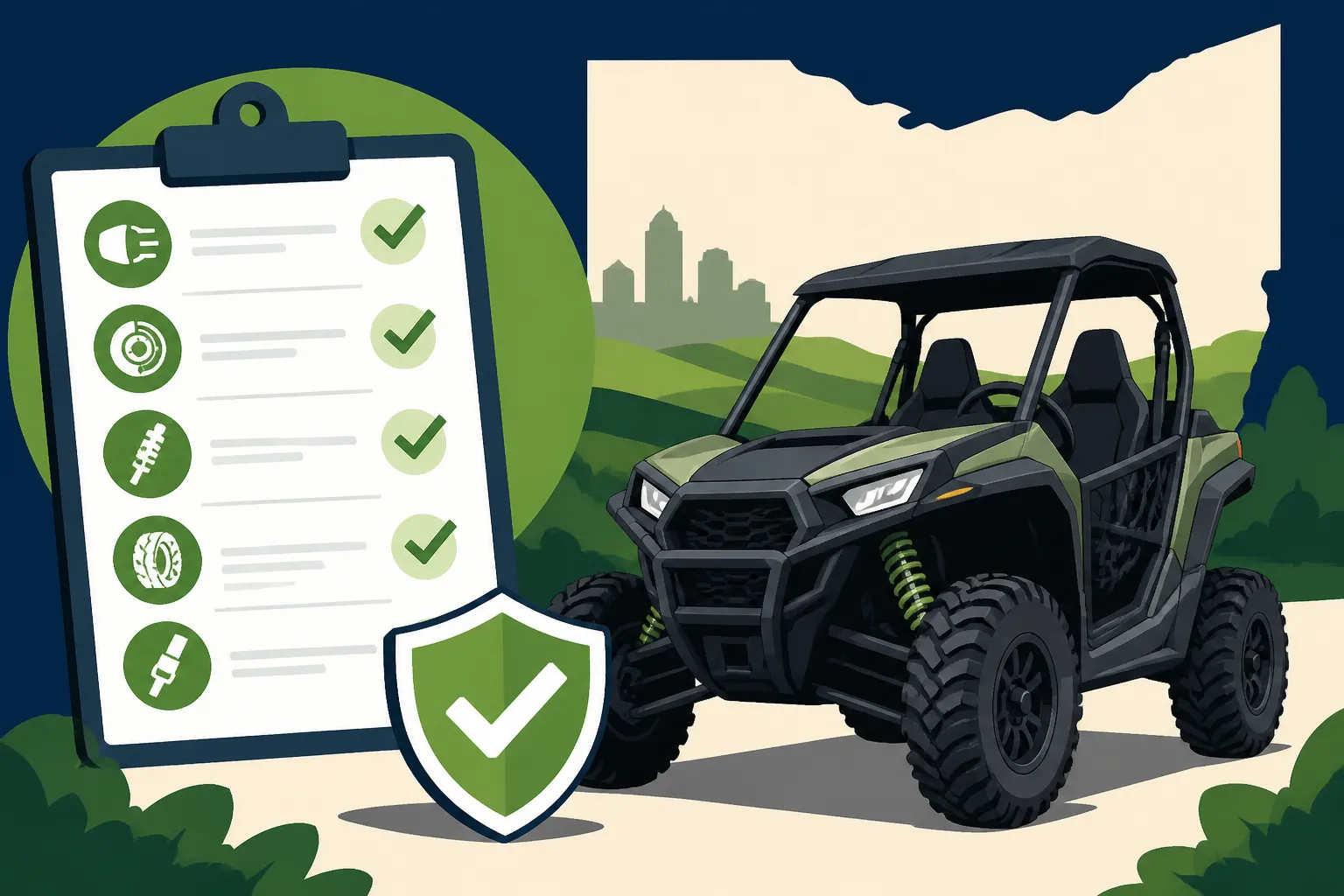
When you bring your UTV in for inspection, the certified inspector will go through a detailed checklist. They aren't just glancing at your machine; they are systematically verifying the presence and functionality of every required item. This includes, but isn't limited to:
- Lighting: Headlights (high/low beam), taillights, brake lights, front and rear turn signals – all must be working correctly and visibly.
- Visibility: All required mirrors (rearview and side mirrors) must be securely mounted and provide an adequate field of vision. The windshield must be safety glass and free of major cracks or obstructions. If wipers are required, they must be functional.
- Audible Warning: The horn must work and be easily accessible.
- Occupant Safety: All designated seating positions must have functional and properly anchored seatbelts.
- Brakes: Both service brakes (foot pedal) and parking brake must be operational and effective.
- Tires: Tires must be in good condition with sufficient tread depth and properly inflated.
- Exhaust: The exhaust system must be intact and have a spark arrester, and the noise level must be within legal limits.
- Steering: The steering system must be free of excessive play and operate smoothly.
- General Condition: The inspector will also look for any obvious structural damage, loose components, or other issues that could compromise safety on the road.
This comprehensive check ensures that your UTV is not just modified, but truly ready for the demands of public road travel. [What an Inspector Looks For] covers all the bases.
Common Reasons for Failing an Inspection
It’s completely normal for a UTV to fail its first inspection, especially if it’s a machine primarily used off-road that’s just been modified. Don’t get discouraged; view it as an opportunity to make your UTV even safer. Some of the most common reasons for failing include:
- Incorrect Lighting: Perhaps the turn signals aren't bright enough, or they don't flash consistently. Sometimes, riders forget to install front turn signals or ensure they are properly visible from the front and sides.
- Non-Safety Glass Windshields: Many aftermarket UTV windshields are made from polycarbonate or acrylic, which are great for off-road durability but do not meet the safety glass requirements for highway use. This is a common oversight.
- Missing or Damaged Mirrors: A mirror might be too small, not securely mounted, or simply missing altogether.
- Non-Functional Horn or Seatbelts: A horn that intermittently works, or seatbelts that are frayed, jammed, or improperly anchored will lead to a failed inspection.
- Excessive Noise or Emissions: A modified exhaust system that’s too loud or lacks a proper spark arrester will typically not pass.
- Tire Issues: Worn-out tires, or those with damage, are a definite red flag.
- General Maintenance Neglect: An inspector might notice loose suspension components, faulty wiring, or other glaring safety issues that were overlooked during modifications.
Often, these are simple fixes, and once addressed, you can usually schedule a re-inspection to get your UTV approved.
After the Inspection: Next Steps to Road Legality
Passing the inspection is a huge milestone, but it's not the final step. There are still a couple more important pieces of paperwork to handle before you can truly call your UTV "street legal" in Ohio. It's about taking that official stamp of approval and translating it into a legal right to operate on designated public roads.
Obtaining Your Certificate of Inspection: What it Means
Once your UTV successfully passes its inspection, the authorized inspection facility will issue you a Certificate of Inspection. This document is your official proof that your UTV meets Ohio's specific safety and equipment standards for road use. It's not just a receipt; it's a critical piece of the puzzle. Think of it as your UTV's "report card" for roadworthiness. You'll need this certificate when you go to register your UTV for road use, as it demonstrates to the state that your machine is properly equipped. Keep this document safe and accessible, as it might be required as proof if ever questioned about your UTV's road legality.
Registering Your UTV for Road Use: The Final Hurdle
With your Certificate of Inspection in hand, the next step is to head to your local Deputy Registrar's office, which is where you handle vehicle registrations. This is where your UTV, now officially deemed safe for the roads, gets its official license plate and registration. You’ll need to bring several items with you, including your Certificate of Inspection, proof of ownership (like your title or Manufacturer’s Certificate of Origin for a new machine), and valid identification. They will process your application, collect the necessary fees for registration, and issue you an APV plate and a registration card. This is the moment your UTV officially becomes "road legal" in Ohio, or at least for those roads that permit APV use. It’s the same process as [Registering an APV in Ohio], and you’ll need all your [Ohio APV Registration Paperwork] in order.
Maintaining Road-Legal Status: Ongoing Responsibilities
Getting your UTV inspected and registered isn't a one-time deal that lasts forever without any further thought. Maintaining its road-legal status is an ongoing responsibility. First and foremost, you must ensure that all the safety equipment that allowed your UTV to pass the inspection remains functional. This means regularly checking your lights, turn signals, brake lights, horn, mirrors, and seatbelts. If a headlight burns out, replace it promptly. If a mirror gets broken, fix it. Your registration will also need to be renewed periodically, typically every three years in Ohio. Additionally, if you make any significant modifications to your UTV after it's been inspected and registered, especially those that remove or alter safety equipment, you could jeopardize its road-legal status. It’s crucial to treat your road-legal UTV with the same diligence and maintenance you would any other vehicle you operate on public roads.
Understanding Ohio's Road Laws for UTVs
So, you’ve passed the inspection, secured your plate, and your UTV is officially registered for road use. Congratulations! But before you hit every paved surface in Ohio, there’s one more critical layer of understanding you need: knowing where and how you can legally ride your UTV on public roads. Ohio's approach to APV road use is often described as a "patchwork," meaning it varies greatly from one locality to another.
Where You Can and Cannot Ride: County and Township Roads
This is perhaps the most nuanced part of riding a road-legal UTV in Ohio. Unlike cars, which can generally go anywhere, UTVs are restricted to specific types of roads that have been explicitly opened by local authorities. In Ohio, only county commissioners or township trustees have the authority to pass resolutions or ordinances allowing APVs on the roads they control. This means that one township might open all its roads to UTVs, while the neighboring township might ban them completely. You could literally be riding down a county road, cross an invisible line into a township that hasn't approved UTV use, and suddenly be riding illegally. State routes, U.S. routes, and interstates are generally off-limits to UTVs, regardless of local ordinances. It is absolutely vital that you research the specific county and township you plan to ride in. Many riders call the county engineer’s office or the township clerk directly to confirm the current status of their roads. [Ohio Counties That Allow APVs on Roads] can change, and [How an Ohio Township Opens Its Roads] varies by jurisdiction.
Here's a simplified table to illustrate the authority over roads:
| Road Type | Governing Authority | UTV Road Use Status |
|---|---|---|
| Interstate Highways | State (ODOT) / Federal | Generally Prohibited |
| U.S. Routes | State (ODOT) / Federal | Generally Prohibited |
| State Routes | State (ODOT) | Generally Prohibited |
| County Roads | County Commissioners | Permitted only if the Board of County Commissioners has passed a specific resolution. |
| Township Roads | Township Trustees | Permitted only if the Board of Township Trustees has passed a specific resolution. |
| Municipal Streets | City/Village Councils | Permitted only if the city/village council has passed a specific ordinance. |
| Private Roads | Landowner | Permitted with landowner permission. |
Operator Requirements: Driver's License and Insurance
Even after your UTV passes inspection and gets its plate, you, as the operator, have your own set of responsibilities. First, you must possess a valid driver's license. Operating any registered motor vehicle on public roads, including a road-legal UTV, requires that you are a licensed driver. This isn't just a suggestion; it's a legal requirement, just like driving your car or truck. So, if you're thinking of letting a younger, unlicensed family member take the UTV for a spin on an open township road, think again – it's against the law. [A Driver's License on an Ohio Road] is non-negotiable.
Second, proof of financial responsibility, or insurance, is also mandated. While the specific coverage amounts may differ slightly from what's required for a standard automobile, you must have insurance that meets Ohio's minimum liability requirements. This protects you and others in the event of an accident. Carrying your insurance card with you while riding is essential, as law enforcement can ask for it, just as they would if you were driving any other vehicle. Some off-road insurance policies might not cover road use, so it's critical to verify with your insurance provider that your policy extends to legal road operation in Ohio. Without valid [Proof of Insurance on an Ohio Road], you could face fines and penalties.
Disclaimer
This article is for general informational purposes only and does not constitute professional advice. Laws, prices and regulations vary by location and change over time. Consult a qualified professional for guidance on your specific situation.