Why an Ohio UTV Stops at Thirty-Five
Many UTV owners in Ohio feel a real tug-of-war when it comes to hitting the open road. You see signs, hear whispers about what's allowed, and often get conflicting advice, especially when it comes to speed. This guide is here to untangle the confusion surrounding why your UTV in Ohio often "stops" at that sometimes frustrating thirty-five miles per hour mark, and what it truly means for your trail and road adventures.
The Unique Identity of Ohio's UTVs on the Road
It’s easy to lump all off-road vehicles into one big category, especially when you’re just looking to get from point A to point B or connect trails. However, Ohio law draws some pretty important distinctions that directly impact how fast your UTV can legally go on certain public roads. Understanding these foundational definitions is key to navigating the rules without getting caught in a bind.
How Ohio Law Defines an APV and UTV
Ohio Revised Code carves out specific definitions for what it calls "All-Purpose Vehicles" (APVs), which include what most of us know as ATVs, side-by-sides, and even some dirt bikes. The important thing to grasp is that while all UTVs are APVs under Ohio law, not all APVs are UTVs. This distinction matters deeply when you start talking about road use. An ATV, for instance, has different characteristics and therefore different allowances compared to a UTV designed for multiple passengers and cargo. The law looks at things like seating position, steering type, and overall design to classify these machines.
For a UTV specifically, the law often highlights its side-by-side seating and steering wheel, mimicking a car-like control. This design is what sets it apart from a traditional quad. Because of this, UTVs are the focus when it comes to opening up certain public roads. It's not just about having four wheels; it’s about the whole package and how the state perceives its safe operation in mixed traffic environments. This underlying legal framework is the very first step in understanding why there are different rules for different types of machines, and ultimately, why your UTV faces a specific speed constraint.
The process for getting your UTV recognized as a road-legal machine in counties and townships that allow it involves specific steps that an ATV owner might not need to take. This includes a more rigorous inspection process. [How Ohio Law Defines an APV] goes into greater detail on these classification nuances, but for now, just remember that your side-by-side isn't just a big ATV in the eyes of the law when it comes to road eligibility. It's its own beast, with its own set of expectations for equipment and performance if you want to leave the trail for a bit.
Equipment Requirements for Road-Legal UTVs
Before your UTV can even think about hitting that thirty-five mph limit on an open county or township road, it needs to be equipped properly. This isn't just about safety; it's about compliance with specific state statutes that dictate what makes an APV suitable for road use. We're talking about more than just headlights and taillights here; the requirements often mirror what you'd find on a traditional car in some respects, designed to make the UTV visible and controllable in traffic. Without the right gear, your UTV isn't going anywhere legally on the pavement, regardless of what local ordinances say.
Things like turn signals, rearview mirrors, and even specific types of windshields become non-negotiable. For many UTV owners, this means investing in aftermarket parts to bring their machine up to snuff. Brands like SuperATV offer a wide range of these road-legal conversion kits and individual components, from signal lights to DOT-approved windshields, making it easier to meet the criteria. It’s not just about slapping some lights on; they need to function correctly, be wired safely, and meet certain brightness standards. Your local deputy registrar or title office won't just take your word for it; the machine might even need to pass an inspection.
The state isn't just being difficult for the sake of it. These equipment rules are designed to enhance safety for the UTV operator and other motorists sharing the road. Imagine trying to make a turn without a clear turn signal in traffic, or not being able to see what's behind you. That's why [Ohio Equipment Rules for a UTV on a Road] are so specific, covering everything from working brake lights to a horn. For UTVs, the inspection before getting that special road designation is particularly important because it verifies that all these necessary components are in place and working, paving the way for the limited road use permitted.
The Thirty-Five MPH Rule: Demystifying the Speed Limit
So, you've got your UTV properly equipped and titled as an APV. You've heard about riding on county and township roads, but then you encounter this seemingly arbitrary speed limit: thirty-five miles per hour. This isn't just a suggestion; it's a critical legal constraint that dictates where and how your UTV can operate outside of private property or designated off-road trails. Understanding its origin and application is vital for every Ohio UTV enthusiast.
Where the Speed Limit Comes From in Ohio Law
The thirty-five mph limit for UTVs on eligible public roads isn't some random number pulled out of a hat. It's rooted in state law that defines the conditions under which these vehicles can integrate into the existing road infrastructure. Essentially, the state classifies UTVs, even those equipped for road use, as distinct from conventional motor vehicles. This distinction often comes with specific limitations regarding their operation on public roadways, with speed being a primary factor. The idea is to allow limited utility and access while acknowledging the inherent differences in design, braking capabilities, and driver protection compared to a car or truck.
This speed ceiling often comes into play when local jurisdictions — counties and townships — pass resolutions to open their roads to APVs, including UTVs. While these local bodies have the power to open their roads, they cannot override state-mandated restrictions on the type of vehicles allowed or their operational parameters. So, while a county might say "yes, UTVs can use our roads," that "yes" always comes with the implicit caveat of "within state law," which includes the thirty-five mph maximum. It’s a matter of state preemption; local control exists within state-set boundaries.
It can feel frustrating, especially if your UTV is capable of much higher speeds. You might wonder why it can't keep up with regular traffic. The answer lies in how the law balances recreational and utility use with public safety. The thirty-five mph limit attempts to mitigate risks associated with speed differentials between UTVs and faster-moving vehicles on shared roads. It forces UTVs onto roads where overall traffic speed is likely lower, reducing the chance of dangerous interactions. This legislative intent is why a UTV stops at thirty-five is a hard and fast rule in many situations, directly influencing where you can and cannot ride.
The Role of Local Ordinances and Resolutions
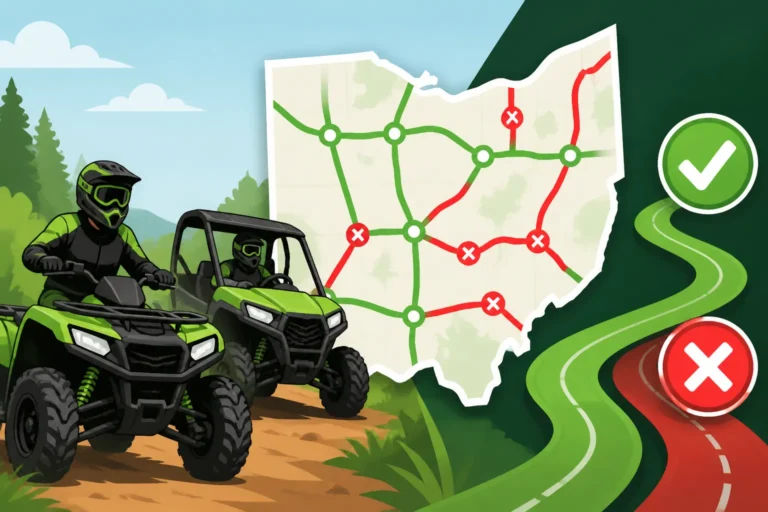
While the state sets the maximum speed, it's the individual counties and townships that hold the key to actually opening their roads for UTV use in the first place. This is a crucial distinction. Ohio law gives county commissioners and township trustees the authority to pass resolutions that permit the operation of APVs, including UTVs, on specific roads under their jurisdiction. Without such a resolution, even a fully equipped and registered UTV cannot legally operate on those roads, regardless of its speed capability. This creates a patchwork of accessible roads across the state, making local research absolutely essential for riders.
These local resolutions will explicitly list which roads, or types of roads (e.g., all county roads, or all township roads), are open for UTVs. Importantly, they cannot permit UTVs on state routes or interstates; those remain strictly off-limits to APVs. The resolution is the permission slip, but it still operates within the state’s framework, which includes the thirty-five mph speed cap. So, a resolution might say, "APVs may operate on all township roads," but that operation is still limited to thirty-five mph. [A County Commissioners' Resolution in Ohio] and [A Township Trustees' Resolution in Ohio] are excellent resources to understand how these decisions are made and what they entail.
This local control means that riders need to be diligent in verifying the status of roads in any given area. What’s legal in Washington County might not be in Muskingum, or even in an adjacent township. This hyper-local variability means a quick check with the county engineer’s office or township clerk is always a good idea before you load up and head out. They can provide copies of resolutions and maps, clarifying where you can legally ride your UTV and adhere to that mandated speed. It’s all about riding smart and respecting the local rules alongside the statewide mandates.
Practical Implications for Ohio UTV Riders
Understanding the thirty-five mph rule and the legal framework is one thing, but actually putting it into practice on Ohio roads is another. This speed limit has direct consequences for the type of equipment you'll need, how you plan your routes, and ultimately, your overall riding experience. It’s not just a number on a sign; it profoundly shapes your UTV's role as a connection machine between trails or a utility vehicle around your community.
Equipping Your UTV to Meet Road Standards
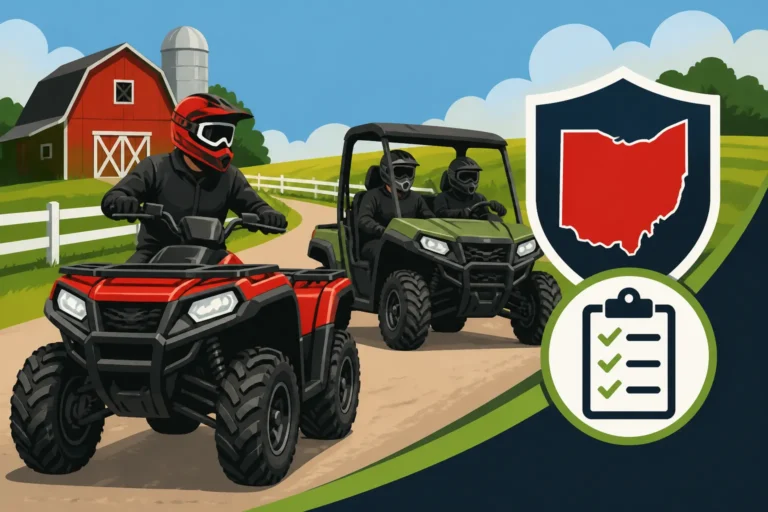
When you're serious about taking your UTV on those thirty-five mph roads, simply owning the machine isn't enough. You're going to need to ensure it meets a very specific checklist of equipment requirements mandated by Ohio law for APVs operating on public roadways. This goes beyond the basics you might use for trail riding. The goal is to make your UTV visible, signal its intentions, and allow for safe operation alongside other vehicles, albeit at a lower speed. Missing even one item can lead to a citation and undermine your ability to use those open roads.
Key items often include a horn, rearview mirrors (usually one on the left side, or a center mirror if visibility is adequate), turn signals for both front and rear, and functioning brake lights. A headlight and taillight are a given, but they need to be properly adjusted for road use. For UTVs specifically, a windshield is often required, and it needs to be made of safety glass. You’ll also need wipers if your UTV has a windshield, ensuring clear visibility in inclement weather. [Ohio UTV Equipment Rules Explained] provides a comprehensive rundown of what you’ll need to tick off your list.
Many riders turn to aftermarket solutions to get their UTVs road-ready. Companies like SuperATV specialize in these accessories, offering complete street-legal kits that bundle many of the necessary components. This can save you a lot of time and hassle trying to source individual parts and ensure compatibility. Remember, simply having the parts isn't enough; they must be installed correctly and be fully functional for your UTV to pass any required inspection and be compliant on the road. Without these upgrades, your UTV will remain a dedicated off-road machine, regardless of local ordinances.
Planning Your Route: Roads You Can and Can't Use
The thirty-five mph speed limit directly impacts your route planning, forcing you to think strategically about where you can and cannot ride your UTV. It’s not just about avoiding state routes and interstates, which are always off-limits. It's also about understanding the flow of traffic on the county and township roads that are open to you. The goal is to use roads where the speed differential between your UTV and other vehicles isn't dangerously high. Sticking to roads with lower posted limits or those primarily used by local traffic is a smart move.
Imagine you're trying to connect two different trail systems or simply need to get to the general store a few miles down the road. You can't just hop on any road. You'll need to confirm which specific county or township roads have been designated as open for UTVs through local resolutions. Many riders print out maps or use GPS apps that show these open routes. Trying to use a UTV on a road where the default speed limit is fifty-five mph, even if it's a county road, can be risky and illegal if your machine is limited to thirty-five. [Why an Unposted Ohio Road Defaults to Fifty-Five] helps clarify why this is a concern.
Always remember that even on open roads, the thirty-five mph limit applies to your UTV. This means you’ll often be riding significantly slower than other vehicles. You'll need to be hyper-aware of your surroundings, use your mirrors frequently, and be prepared to pull over to allow faster traffic to pass safely. This isn't just a legal requirement; it's a matter of courtesy and self-preservation. Planning routes that minimize exposure to high-speed traffic, perhaps by favoring less-trafficked rural roads, will make your UTV road experience much safer and more enjoyable within Ohio's legal framework. This careful planning extends to where you might need [Ohio Rules for Riding a County Road] or [Ohio Rules for Riding a Township Road].
Enforcement and Rider Responsibility on Ohio Roads
When you decide to take your UTV onto Ohio's public roads, even under the specific thirty-five mph rules, you're stepping into a different realm of responsibility. It's no longer just about trail etiquette; it's about adhering to traffic laws, sharing the road safely, and being prepared for interactions with law enforcement. Understanding these aspects is crucial for a smooth and lawful experience.
What to Expect from Law Enforcement
Ohio's law enforcement officers – from local deputies to state troopers – are tasked with ensuring that all vehicles on public roads comply with state and local statutes. For UTV riders, this means they will be checking for adherence to the thirty-five mph speed limit, proper registration, and the necessary road-legal equipment. Just because a road is open to UTVs doesn't mean you're exempt from regular traffic stops. An officer might pull you over if they observe you exceeding the speed limit, operating unsafely, or if your machine appears to be lacking the required equipment.
When stopped, be prepared to provide your driver's license, proof of registration (your APV plate acts as your state trail permit and identifies your machine), and proof of insurance (which is usually required for any road-legal vehicle, even limited ones). An officer may also visually inspect your UTV to ensure it has functional turn signals, brake lights, mirrors, a horn, and a proper windshield with wipers if applicable. They are looking for compliance with the same rules that allow you on the road in the first place. Not having these documents or compliant equipment can lead to citations, fines, and potentially having your UTV impounded. [Ohio Fines for Illegal APV Road Use] can be quite substantial, so compliance is key.
Remember, officers are looking out for safety. While you might feel like your UTV is capable of more, the law is the law. Arguing about the speed limit won't change it. The best approach is always to be courteous, cooperative, and demonstrate that you are a responsible operator who understands and respects the regulations. This positive interaction can go a long way in ensuring future pleasant rides. Your UTV is unique on the road, so expect that officers will be checking for its specific requirements.
Safety Considerations at Lower Speeds
While the thirty-five mph limit is a legal requirement, it's also a fundamental safety consideration for UTVs on public roads. UTVs, by their very nature and design, handle differently than cars. They often have a higher center of gravity, different braking characteristics, and are not designed for high-speed impacts with other vehicles. Operating at a reduced speed helps mitigate some of these inherent differences and makes sharing the road much safer for everyone involved.
Even at thirty-five mph, it's critical to maintain a safe following distance, especially behind other vehicles that can stop more quickly. You also need to be acutely aware of turns, gravel sections, and uneven pavement, as a UTV can react differently to these conditions than a passenger car. The lower speed gives you more reaction time to unexpected hazards, whether it's an animal darting into the road or a sudden stop from the vehicle in front of you. Always assume that other drivers might not see your UTV, particularly if it's smaller or blends in with the background.
Visibility is a two-way street. While your UTV needs proper lighting and reflective elements (often built into aftermarket kits from companies like SuperATV), you also need to ensure you have an unobstructed view of the road and your surroundings. This means keeping your windshield clean, your mirrors adjusted, and avoiding distractions. The thirty-five mph limit might feel slow, but it allows you to truly focus on defensive driving, anticipating potential dangers, and enjoying the ride safely within the unique parameters set for UTVs on Ohio's shared roadways. Remember, safety isn't just about what the law says; it's about good judgment and protecting yourself and others.
Comparing UTV Road Use to Other Vehicle Types in Ohio
The rules for UTVs on Ohio roads, particularly the thirty-five mph speed cap, can seem a bit isolated if you don't understand how other types of niche vehicles are treated. By comparing UTVs to golf carts, low-speed vehicles, and even traditional ATVs (quads), we can better appreciate the logic behind the specific regulations that apply to side-by-sides. It highlights that Ohio's legal framework is designed to categorize vehicles based on their design, intended use, and inherent safety characteristics when mixed with conventional traffic.
UTVs Versus Golf Carts and Low-Speed Vehicles
It's common for people to confuse the rules for UTVs with those for golf carts or dedicated Low-Speed Vehicles (LSVs). While all three might operate at lower speeds, their legal classifications and road allowances are distinctly different in Ohio. Golf carts are typically restricted to very specific, often residential or recreational, areas where local ordinances explicitly permit them, usually at even lower speeds than UTVs. They generally lack the robust safety features and equipment that UTVs are required to have for public road use. [Ohio Golf Cart Street Rules] are much more restrictive, often limiting them to neighborhood streets or areas with a posted speed limit of 25 mph or less, and requiring fewer pieces of safety equipment.
Low-Speed Vehicles (LSVs), on the other hand, are a separate category of vehicles designed to be street-legal from the factory. They have specific federal safety standards they must meet, including things like seatbelts, headlights, taillights, turn signals, windshields, and often a VIN. LSVs typically have a top speed of twenty to twenty-five mph. The key difference is that LSVs are built as road-legal vehicles, whereas UTVs are primarily off-road machines adapted for limited road use. While both operate at lower speeds, the regulatory pathway and design intent are fundamentally different. Your UTV, even with all the proper modifications and registration, is still legally an APV that has gained conditional access to roads, not a purpose-built LSV.
This distinction is crucial because it clarifies why your UTV, even when road-legal, isn't treated exactly like a golf cart (which has more limited access) or an LSV (which has broader road access but lower speeds). The thirty-five mph rule for UTVs places them in a unique middle ground, allowing them greater utility and range than a golf cart might offer on public roads, but still distinguishing them from true low-speed vehicles with their own federal standards. It's Ohio's way of carefully integrating these versatile machines into the transportation landscape without compromising overall road safety.
Why Quads (ATVs) Are Different on Ohio Roads
While UTVs and ATVs are both classified as All-Purpose Vehicles (APVs) under Ohio law, their road-use privileges differ significantly, especially when it comes to speed. Generally speaking, traditional ATVs (quads) have far more limited access to public roads than UTVs, even in counties and townships that have opened their roads to APVs. This often comes down to their design characteristics and how the state perceives their safety in a mixed traffic environment.
An ATV, with its straddle seating and handlebar steering, is often deemed less stable and harder to control in situations involving variable road surfaces or interactions with conventional vehicles. The open design, coupled with its inherent handling characteristics, means that Ohio law is much more cautious about permitting ATVs on public roads. While some specific very low-speed, short-distance crossings might be permitted in certain areas, the widespread ability to ride on county and township roads that UTVs can access is typically not extended to ATVs. The equipment requirements are also often different, with UTVs needing more car-like features.
This is why you'll rarely see specific provisions for ATVs on most county or township road-opening resolutions; they almost always focus on UTVs and other multi-wheeled APVs with steering wheels. The thirty-five mph rule, therefore, is primarily a UTV-specific limitation because ATVs are largely kept off these roads altogether. It’s not just about speed; it's about the fundamental safety profile and operator interface of the machine itself. So, if you own both an ATV and a UTV, be very aware that just because your UTV can hit a thirty-five mph road, your ATV likely cannot, even if it's registered as an APV. The state sees them as two very different beasts when it comes to shared asphalt.
| Vehicle Type | Primary Intended Use | Typical Road Access in Ohio (if permitted locally) | Top Road Speed (if permitted) | Key Distinguishing Features |
|---|---|---|---|---|
| UTV (APV) | Off-road, utility, recreation | County & Township roads (via local resolution) | Up to 35 mph | Side-by-side seating, steering wheel, car-like controls |
| ATV (APV) | Off-road, recreation | Very limited (specific crossings, emergencies only) | N/A (generally not permitted) | Straddle seating, handlebars, single rider (mostly) |
| Golf Cart | Golf courses, private property | Very limited (specific low-speed residential areas) | Up to 25 mph | Open chassis, often electric, very basic controls |
| Low-Speed Vehicle (LSV) | Street-legal, low-speed travel | Most roads 35 mph or less (federally defined) | 20-25 mph | Built to federal safety standards, road-certified from factory |
Disclaimer
This article is for general informational purposes only and does not constitute professional advice. Laws, prices and regulations vary by location and change over time. Consult a qualified professional for guidance on your specific situation.