A Township Trustees’ Resolution in Ohio
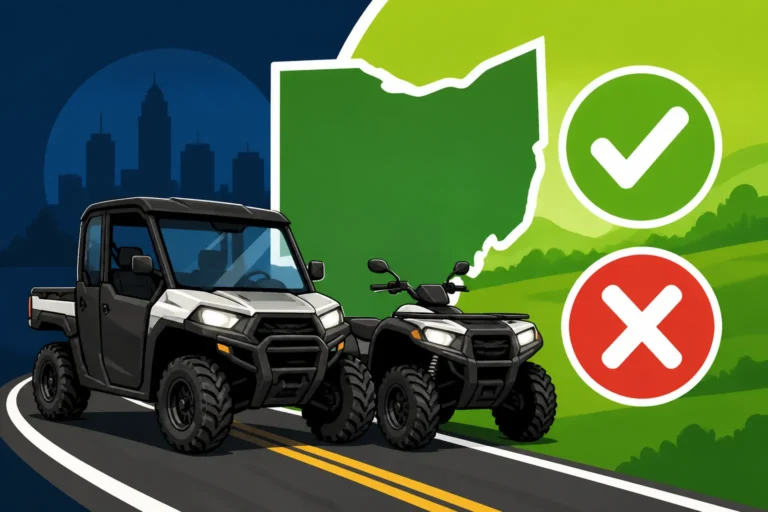
It can be incredibly frustrating to own an All-Purpose Vehicle (APV), whether it's a nimble ATV or a capable side-by-side UTV, and feel like you're constantly guessing where you can and can't legally ride in Ohio. You see others riding down certain streets and wonder, "Why them and not me?" The truth is, Ohio's laws surrounding APV road access are a patchwork, often leaving riders in a confusing limbo. This guide is here to shed light on one of the most common ways local roads are opened: through a Township Trustees' Resolution. We'll break down exactly what that means, how it happens, and what you need to know to ride legally and confidently on those township roads.
Understanding Ohio's Stance on APVs and Roads
When you first dive into Ohio's APV laws, it can feel like the state is saying a resounding "no" to road use. And for a good reason, there are broad prohibitions in place, but they don't cover every single road. Understanding these foundational rules is key to grasping why township trustees even need to get involved.
Why Ohio Roads Aren't Universally Open to ATVs and UTVs
Let's be real, many riders dream of simply hopping on their quad or UTV and heading out from their driveway to the nearest gas station or a friend's house without the hassle of loading it onto a trailer. But for the vast majority of Ohio's paved infrastructure, that's simply not allowed. State routes (those marked with "SR" or "US" numbers) and interstates are firmly off-limits to APVs. The reasoning from a legislative standpoint often centers on safety: these are high-speed, high-traffic thoroughfares not designed for the typical performance characteristics of an APV. Imagine trying to keep up with highway traffic on a side-by-side that tops out at 40 mph, or navigating multiple lanes on an ATV. It's a recipe for disaster, and the state's blanket ban reflects that concern.
This doesn't mean your machine isn't capable or safe for some road use. You might have added [Ohio UTV Road Equipment List] like a windshield and turn signals, perhaps even a full cab, making your UTV feel just as road-worthy as a small car. The frustration comes from knowing your machine can handle it, but the law paints with a broad brush. However, this broad stroke is specifically for state-controlled roads. It leaves a crucial opening for local governments to make their own decisions on the roads they maintain.
The Role of Local Government in Opening Roads
Because the state doesn't have a uniform "yes" for APV road access, it passes the buck, so to speak, to the local level. This means that if you want to ride your APV on a public road, you need to look to your county commissioners or, more commonly, your township trustees. These are the elected officials who oversee the very roads that crisscross much of rural and suburban Ohio – the roads you probably use every day. Without a statewide allowance, the power to permit APV travel on these local arteries rests squarely with these community leaders.
This local control is a double-edged sword. On one hand, it allows communities to decide what works best for their specific roads, traffic patterns, and resident needs. A township with miles of quiet, gravel farm roads might see no issue with APVs, while a bustling suburban township might see them as a safety hazard. On the other hand, it means you can literally cross a township line and go from legal riding to illegal riding in a matter of feet. It places the burden on the rider to know the rules for every single jurisdiction they might pass through. This is why understanding [How an Ohio Township Opens Its Roads] is so vital.
The Township Trustees' Resolution: What It Is and How It Works
So, if you're hoping to ride on those charming country roads within your township, you're looking for a Township Trustees' Resolution. This isn't just a casual agreement; it's a formal, legally binding decision made by your local governing body.
The Legal Foundation for a Township Resolution
In Ohio, the authority for townships and counties to permit APV use on their roads stems from specific sections of the Ohio Revised Code. While it's not our place to quote chapter and verse of the law, suffice it to say that the state has carved out a path for local control. Essentially, the state law states that APVs are generally prohibited from roads, but then it provides an exception: a board of township trustees or a board of county commissioners may by resolution, authorize the operation of APVs on roads and highways under their jurisdiction. This legal framework is what empowers your local trustees to act.
When a board of township trustees passes such a resolution, it’s not just a friendly suggestion. It's a public record, a formal declaration that, as of a certain date, APVs are permitted on specified township roads, usually with conditions. This formal act provides clarity and legal standing, protecting both the riders and the township. It supersedes the general state prohibition for those specific roads, making it a powerful local decision. This resolution becomes the official word, and it’s what a sheriff's deputy or local police officer will reference if there's ever a question about your legality on the road.
The Process of Passing a Resolution
You might wonder how a township even gets to the point of passing one of these resolutions. It's typically a multi-step process, not something that happens overnight or without public input. First, the idea usually comes from residents – local riders, farmers, or community members who see a need or benefit. They might approach their trustees, attend a public meeting, or even organize a petition. Once the idea is on the table, the trustees will likely discuss it during one or more of their regular public meetings. These meetings are open to the public, and you'll often find them listed on the township's website or posted at the township hall.
During these discussions, trustees will weigh several factors. Safety is almost always paramount: What are the traffic volumes like on these roads? Are there blind hills or sharp curves? What's the average speed of other vehicles? They'll also consider the condition of the roads, potential environmental impacts, and the overall sentiment of the community. Sometimes, they might even hold special public hearings to gather more input from residents, both those in favor and those opposed. Once they've deliberated, a formal vote takes place. If a majority of the trustees vote in favor, the resolution is officially passed, documented, and then goes into effect. It's a process that requires community engagement and demonstrates responsible decision-making, which is why active rider groups often play a big role in successful outcomes.
What a Township Resolution Means for Riders
So, your township trustees have passed a resolution! That's fantastic news, but it's not a free pass to ride anywhere and everywhere. There are crucial distinctions and requirements you need to be aware of.
Which Roads Are Included (and Excluded)
This is perhaps the most critical point: a township's resolution only applies to roads directly under its jurisdiction. These are typically the smaller, often less-traveled roads within the township's boundaries. They are maintained by the township and are distinct from county roads, state routes, or interstates. This means if you're riding your APV on a township road that's been opened, and then you cross an invisible line onto a county road or, worse, a state route, you are instantly riding illegally, regardless of the township's resolution.
Knowing which roads are which can be tricky. Often, county roads are numerically designated (e.g., County Road 15), while state routes are clearly marked with SR or US shields. Township roads might simply have street names, but sometimes mapping apps or even local township maps can help identify their jurisdiction. It's your responsibility to know the difference and plan your route accordingly. You absolutely cannot use a township resolution as an excuse to ride on [Ohio Rules for Crossing a State Route], for example, even if it's just to get to another permitted township road. Always assume state routes and county roads are off-limits unless you have explicit, separate confirmation from the county commissioners themselves.
Specific Operating Requirements Mandated by the Resolution
Just because a township opens its roads doesn't mean it's a free-for-all. Resolutions almost always come with specific operating requirements that riders must adhere to. These are often designed to enhance safety and minimize disruption to other road users. Common stipulations include:
- Speed Limits: Most resolutions will cap the speed at which an APV can travel on their roads, often 35 miles per hour, or sometimes even slower. This is typically lower than the posted speed limit for cars on the same road.
- Time of Day Restrictions: Some townships might limit APV road use to daylight hours only, or restrict it during certain peak traffic times.
- Equipment Requirements: While Ohio state law has general equipment rules for APVs on roads, a township resolution might add further specifics. This could include requirements for headlights, taillights, brake lights, mirrors, and even [Turn Signals and Mirrors on an Ohio UTV]. For many UTV owners, this means adding aftermarket accessories to ensure compliance. Companies like SuperATV specialize in providing these types of essential upgrades, offering everything from full street-legal kits to individual mirrors and signal systems that can help you meet the resolution's demands. It’s important to remember that these aren't just suggestions; they are legal requirements that must be met to ride legally on those roads.
- Proof of Insurance and Driver's License: These are almost universally required, mirroring general rules for operating any motor vehicle on public roads.
These requirements are not arbitrary; they reflect the township's efforts to balance recreational access with public safety. Disregarding them not only puts you and others at risk but also jeopardizes the privilege for all riders in that township. You can find detailed information about equipment on our page about [Ohio UTV Road Equipment List].
Consequences of Non-Compliance
Riding an APV on a township road that hasn't been opened by resolution, or violating the terms of an existing resolution, carries real consequences. It's not just a slap on the wrist. You could face significant fines, receive a citation, and in some cases, your APV could even be impounded. An officer doesn't need to consult a giant state database; they just need to know whether that specific road is permitted by the local government.
The confusion for riders is palpable. One minute you're legally riding in Township A, the next you've crossed into Township B, which has no resolution, and suddenly you're breaking the law. This fragmented system is precisely why it's so critical to understand the rules before you ride. A citation for illegal APV road use can be costly, inconvenient, and reflects poorly on the entire APV community. These penalties are designed to deter illegal activity and enforce the local regulations put in place by the trustees. Always be sure to carry your [Ohio APV Registration and Insurance Proof] when riding on any public road.
Practicalities for Riders in Townships with Resolutions
Once you understand what a township resolution is and its implications, the next step is to figure out how it applies to your specific riding plans. This involves a bit of homework and careful planning.
How to Find Out If a Township Has Opened Its Roads
This is often the trickiest part, as there isn't one centralized state database listing every township's APV resolutions. The most reliable way to find out if a specific township has opened its roads is to contact the township clerk's office directly. You can usually find their contact information on the township's official website or by calling the county administration building. When you call, ask specifically about any resolutions pertaining to All-Purpose Vehicles (APVs) or Off-Highway Vehicles (OHVs) on township roads. They should be able to provide you with a copy of the resolution or at least direct you to where it's posted.
Another good resource can be local riding clubs or community groups. Often, these groups are the ones who advocated for the resolution in the first place and will have the most up-to-date information. While township websites are becoming more common, not all of them will prominently display their APV resolution, so a direct inquiry is usually best. Remember, you're looking for an official document, not just hearsay. Our guide [How to Find an Ohio Township Resolution] offers more detailed advice on this. Don't rely on simply seeing other people riding; they might be unaware of the rules or even riding illegally.
Essential Documents and Equipment for Road Use
Even if your township has passed a resolution, you still need to ensure your machine and your paperwork are in order. First and foremost, your APV needs to be registered with the State of Ohio and display a current APV plate and validation sticker. This is non-negotiable for any public road use. You'll also need a valid driver's license. If you have riders under 16, be sure you understand [Ohio Minimum Age to Ride an APV] rules and [Ohio Helmet Law for APV Riders], as state law may still apply regardless of local resolutions.
Beyond registration and licensing, you must carry proof of insurance. While Ohio doesn't universally require APV insurance, it absolutely does for any APV operating on public roads, including township roads opened by resolution. Many riders also find it helpful to carry a copy of the township's resolution with them, perhaps a printed copy or a digital version on their phone. This can be useful in explaining the legality of your ride if you're ever stopped by law enforcement unfamiliar with the local rules. As mentioned before, ensuring your APV has the proper lighting, mirrors, and turn signals (many UTVs may need aftermarket kits for this, like those from SuperATV) is also crucial.
Planning a Ride Across Township Boundaries
Here's where things get really complex. If you plan a longer ride that takes you through multiple townships, you must know the rules for every single one of them. A resolution in Township A doesn't carry over to Township B. This means your carefully planned route might involve riding on legal township roads, then trailering your machine across a non-permitted township or county road, and then unloading again to continue on another set of permitted township roads.
This fragmented system can be a major headache for riders and highlights the desire for more statewide clarity. It underscores the importance of having good maps, pre-planning your route meticulously, and even having contingency plans. While a county resolution to open all county roads would certainly simplify things for broader access, township resolutions provide more granular, often smaller, permitted riding areas. If you only ride within one township, this is less of a concern, but for any kind of extended ride, you need to be prepared for differing rules at every boundary.
The Future of APV Road Access in Ohio Townships
The landscape of APV road access in Ohio is constantly evolving, driven by rider advocacy, community dialogue, and ongoing legislative efforts. What's true today might change tomorrow, which makes staying informed crucial.
Advocacy and Community Engagement
If your township doesn't currently have a resolution allowing APVs on its roads, but you believe it should, community engagement is your most powerful tool. This isn't about demanding access; it's about advocating responsibly. Form a local riding group, attend township trustee meetings, and present a well-researched case. Highlight the economic benefits of increased tourism if riders visit, discuss the safety measures you'd be willing to take, and emphasize the responsible nature of the riding community. Show that you understand the concerns of other residents and are willing to work with the trustees to find common ground.
Responsible advocacy can make a huge difference. When trustees see organized, safety-conscious riders who are willing to be part of the solution, they are much more likely to consider a resolution. Sharing personal stories about how APV access would benefit your farm, your commute, or your family recreation can be powerful. Remember, trustees are your neighbors, and they respond to their constituents. This is a chance for riders to shape local policy for the better.
Potential Changes and Ongoing Legislative Efforts
The state legislature often grapples with proposals to standardize APV road access across Ohio. These bills sometimes aim to create uniform rules that would apply statewide, potentially simplifying the current patchwork system. However, such legislation is complex and faces many hurdles, including concerns from various stakeholders like law enforcement, environmental groups, and different communities. While there's always talk, a significant statewide change that opens all roads or creates a simple, universal permit system hasn't materialized yet.
Therefore, for the foreseeable future, township resolutions will remain a primary avenue for legal APV road use in many parts of Ohio. Keeping an eye on state legislative developments (for instance, understanding [Why the 2025 Ohio Bill Is Not Law] if it relates to APVs) is important for the long-term outlook, but focusing on local efforts is key for immediate, actionable change. The dynamic nature of these laws means staying engaged and informed is not a one-time task but an ongoing commitment for Ohio APV enthusiasts.
Here's a quick reference on who controls which roads:
| Road Type | Who Can Open It for APVs | Common Restrictions/Considerations |
|---|---|---|
| Interstates | No (State Law) | High speed, high traffic, safety concerns. Absolutely prohibited. |
| State Routes (SRs, US Routes) | No (State Law) | High speed, high traffic, safety concerns. Absolutely prohibited. |
| County Roads | County Commissioners | Requires county-level resolution, often 35 mph limit, specific equipment. |
| Township Roads | Township Trustees | Requires township-level resolution, often 35 mph limit, specific equipment. |
| Private Roads | Landowner | Requires explicit permission from landowner. |
Disclaimer
This article is for general informational purposes only and does not constitute professional advice. Laws, prices and regulations vary by location and change over time. Consult a qualified professional for guidance on your specific situation.