Ohio’s UTV Inspection Before Registration
Navigating the world of off-road vehicles in Ohio can feel like trying to solve a puzzle, especially when you start thinking about taking your UTV onto public roads. Many riders get excited about the idea of a street-legal side-by-side, only to hit a wall when they discover there's an inspection process involved even before they can get a license plate. It's confusing, frustrating, and can make you wonder if it's even worth the effort. But don't despair! This comprehensive guide is here to walk you through every single step of Ohio's UTV inspection process, explaining why it exists, what it entails, and how you can successfully get your machine road-ready and registered.
The Basics: Why Ohio UTVs Need an Inspection (But ATVs Don't)
When you're trying to figure out the rules for your off-road machine in Ohio, one of the first things you'll notice is that UTVs often face different requirements than ATVs, especially when it comes to road use. It can feel a bit arbitrary, like the state is picking favorites, but there's a method to the madness, and it all boils down to how these vehicles are defined and perceived in the eyes of the law.
Understanding the "All-Purpose Vehicle" Distinction
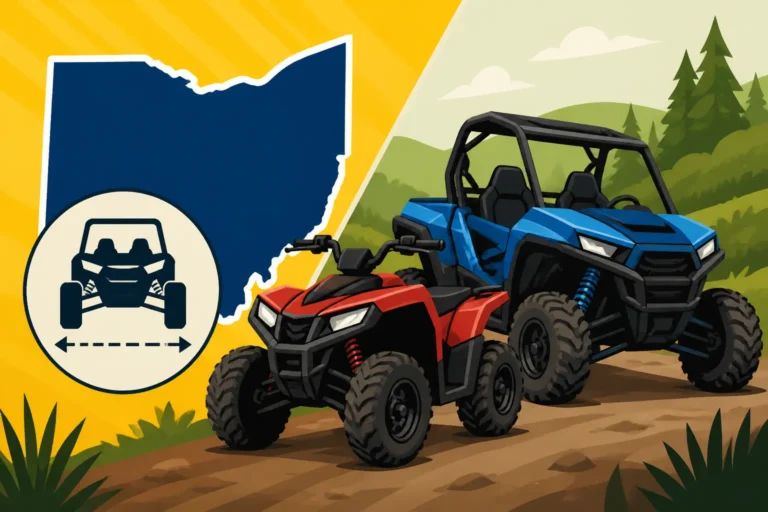
In Ohio, both ATVs and UTVs fall under the broad umbrella of what the state calls an "all-purpose vehicle," or APV. This term might seem a little vague, but it's crucial because it's the foundation for all the regulations that follow. Essentially, an APV is any self-propelled vehicle, other than a snowmobile, that is 50 inches or less in width, has an unladen weight of 1,000 pounds or less, travels on three or more low-pressure tires, and has a seat or seats designed to be straddled by the operator and any passenger. This definition primarily describes what most of us recognize as a traditional ATV.
However, the law also expanded the APV definition to include side-by-sides, which are typically wider, heavier, and have steering wheels and bench or bucket seating, not straddle seats. This is where the distinction becomes important. While both are APVs, the state recognizes that UTVs, with their car-like controls and greater capacity, have a higher potential for road use and thus, a greater need for scrutiny to ensure public safety. It's not about making things harder for you; it's about trying to fit a square peg (your UTV) into a round hole (road use regulations) in a way that minimizes risk for everyone on the road. You can learn more about this categorization in [Why Ohio Says All-Purpose Vehicle].
The Core Reason for the Inspection
So, if both are APVs, why does Ohio mandate an inspection for UTVs seeking road legality but generally not for ATVs? The answer lies in the state's intent to regulate vehicles that operate on public roadways. ATVs, traditionally, are seen as recreational machines primarily for off-road trails. While they also need to be registered in Ohio, the expectation for their use doesn't typically extend to mixing with passenger cars on public streets, except for very limited crossings or specific county/township permissions.
UTVs, on the other hand, often come with features that hint at road capability, or at least they can be easily modified to achieve it. Owners might want to use their UTVs to run errands, commute short distances, or simply connect trails without having to trailer their machine everywhere. Because UTVs are heavier, wider, and offer a more enclosed riding experience than ATVs, the state recognizes that they can be made safer for road use, but that safety isn't guaranteed right off the assembly line. The inspection is the state's way of ensuring that any UTV venturing onto public roads meets a baseline of safety and equipment standards, protecting not only the UTV occupants but also other motorists and pedestrians. It’s a crucial step in translating your off-road companion into something that can coexist, however limitedly, on the asphalt.
What Makes a UTV "Road-Legal" in Ohio?
Getting your UTV ready for an Ohio road-legal inspection isn't just about slapping on a few accessories and hoping for the best. It requires a thoughtful approach to ensure your machine meets all the necessary safety and equipment standards. Think of it as preparing for a very important test – you wouldn't show up without studying, right? Your UTV needs to "study" by having all the right components in place and functioning perfectly.
Essential Equipment for Ohio Road Use
Ohio law is pretty specific about what your UTV needs to have to be considered road-legal. This isn't just a suggestion; it's a mandatory checklist that an inspector will meticulously go through. If even one of these items is missing or not functioning correctly, your UTV will not pass.
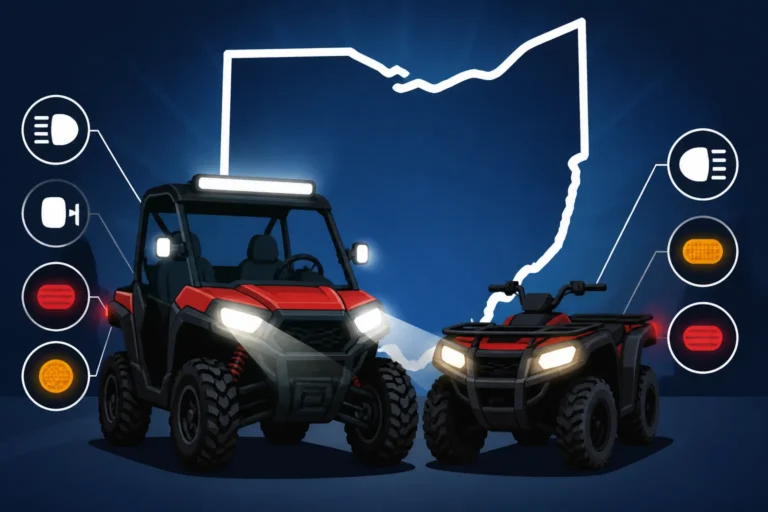
First and foremost, your UTV needs headlights. These aren't just for looking cool on the trail after dark; they need to be properly aimed and functional for visibility to oncoming traffic. Alongside headlights, you'll need taillights and brake lights. These are absolutely critical for indicating your presence and intentions to vehicles behind you. Imagine trying to drive a car without working brake lights – it's a recipe for disaster. Your UTV is no different. You'll also need turn signals, both front and rear, so other drivers know when you plan to change lanes or turn. A lot of UTVs don't come standard with these, so it's a common aftermarket addition.
Next up is an audible warning device: a horn. It needs to be loud enough to be heard by other motorists, not just a little "beep-beep." Then, you need mirrors. Specifically, one rearview mirror or two exterior mirrors, positioned to give you a clear view of the roadway to the rear and side of your UTV. Good visibility is paramount for safe road operation. Finally, a proper windshield made of safety glass is a must, along with wipers to keep it clear in inclement weather. Many stock UTVs come with half-windshields or no windshield at all, or perhaps one made of polycarbonate that isn't considered "safety glass." This is often a significant upgrade point for riders aiming for road legality, and it's where products from brands like SuperATV often come in handy, offering road-legal windshields and turn signal kits designed to meet these exact specifications. These details are further outlined in [Ohio UTV Road Equipment List] and [Turn Signals and Mirrors on an Ohio UTV].
Beyond the Basics: Other Considerations
While the aforementioned equipment covers the most obvious requirements, there are other crucial elements that contribute to your UTV's roadworthiness in Ohio. These might be less about external visibility and more about occupant safety and environmental compliance, but they are equally non-negotiable for passing inspection.
Your UTV must be equipped with seatbelts for all occupants, and they must be in good working order. These are typically standard on most UTVs, but they need to be free of fraying, tears, and properly latch and unlatch. The UTV's roll-over protective structure (ROPS), often referred to as a roll cage, must be intact and free from damage. This is a primary safety feature designed to protect occupants in the event of a roll-over, and any compromise to its integrity will be a red flag. The tires on your UTV also come under scrutiny. They must be Department of Transportation (DOT) approved, which means they have a specific marking on the sidewall indicating they meet federal safety standards for highway use. Many aggressive off-road tires are not DOT-approved, so this is another common area where riders might need to upgrade.
Additionally, your UTV needs a proper muffler to keep exhaust noise within acceptable limits and a spark arrester to prevent wildfires from sparks escaping the exhaust system. These are typically standard on new machines but should be checked for damage or modification. Finally, a secure license plate bracket is required for when you eventually get your plate. While these items might not be as immediately visible as a set of turn signals, they are integral to the UTV's overall safety and compliance. Ensuring all these components are present and functioning properly before your inspection will save you a lot of time and frustration, bringing you one step closer to [Wipers and Glass on an Ohio UTV] and ultimately, legal road use.
The Inspection Process: Where and How It Happens
Alright, you've kitted out your UTV, you've double-checked every light and mirror, and you're feeling pretty confident. Now comes the actual inspection. This isn't a casual drop-in at your local garage; it's a specific process that typically involves law enforcement. Knowing where to go and what to expect can dramatically streamline the experience and prevent unnecessary trips.
Finding an Authorized Inspection Location
Unlike your annual car inspection, which you might get at a certified mechanic, UTV road-legal inspections in Ohio are usually conducted by law enforcement. This means you'll likely be looking for a State Highway Patrol Post, a County Sheriff's Office, or sometimes even a local police department. It's important to understand that not all agencies offer this service, and those that do might have specific hours or procedures.
Your best bet is to call ahead. Don't just show up with your UTV on a trailer. Contact your nearest Ohio State Highway Patrol Post first. They are often the most familiar with these specific APV inspections. Explain that you need a UTV inspection for road legality and registration. They can confirm if they perform the inspections, what days and times are best, and if there's any specific officer who handles them. If the State Patrol isn't an option, inquire with your County Sheriff's Office. Again, clarity and communication are key. You want to make sure you're not wasting your time, or theirs, by showing up unannounced or at an inconvenient time. Some private inspection stations might claim to do it, but for an official road-legal UTV inspection, law enforcement is almost always the required route. This step is a prerequisite to getting [The Ohio Inspection a UTV Must Pass] signed off.
What to Bring to Your Inspection
Once you've scheduled your inspection or confirmed an agency's availability, you need to ensure you have all your ducks in a row. It’s not just about the UTV itself; it’s about the paperwork that proves you own it and are legally entitled to register it. Showing up unprepared will only lead to delays and a rescheduled appointment, which nobody wants.
Firstly, you absolutely must bring proof of ownership for your UTV. This means the original Certificate of Origin (MCO) if it’s a brand-new machine, or the vehicle's title if you've purchased it used. The inspector needs to verify the Vehicle Identification Number (VIN) on your UTV against this document to ensure everything matches up and that the vehicle isn't stolen or has a problematic history. Think of it as linking your UTV's identity to its legal paperwork.
Secondly, bring your personal identification, such as your driver's license. The officer will need to confirm your identity as the owner or authorized agent. While many law enforcement inspections are free, it's always wise to inquire when you call ahead if there are any associated fees. If there are, be prepared to pay with cash or a check, as credit card processing might not be available at all locations. Finally, make sure your UTV is clean! While not a legal requirement, a clean machine shows respect for the inspector and makes it easier for them to locate the VIN and inspect components without wading through mud and grime. Having everything ready to go will make the process as smooth as possible.
What an Inspector Looks For: A Deep Dive into the Checklist
When you finally get your UTV to the inspection point, whether it's the State Patrol or the Sheriff's Office, the officer isn't just giving it a quick once-over. They're performing a thorough check against Ohio's specific requirements for road-legal UTVs. It’s a detailed process designed to ensure your machine is genuinely safe to share the road with other vehicles. Understanding what they're looking for can help you proactively prepare and avoid any surprises.
The Mechanical and Safety Checkpoints
The core of the inspection revolves around your UTV's safety equipment and mechanical integrity. The inspector will systematically go through each required item, verifying its presence and functionality.
- Lights, Lights, Lights: Every single light on your UTV will be tested. This means headlights (high and low beam), taillights, brake lights (when the pedal is pressed), and critically, your turn signals (front and rear, left and right). They'll want to see that all lenses are intact, bulbs are working, and the lights are visible.
- Braking System: The inspector will check your brakes. This includes the primary service brakes (foot pedal) and often the parking brake. They'll assess brake pedal feel, ensuring it's firm and not spongy, indicating proper hydraulic function.
- Steering and Suspension: They'll give your steering a feel, looking for excessive play or looseness. The suspension components will also be visually inspected for damage, leaks, or significant wear that could compromise handling.
- Tires: As mentioned earlier, DOT-approved tires are a must. The inspector will check for the DOT stamp on the sidewall, adequate tread depth, and proper inflation.
- Horn and Mirrors: Your horn must emit an audible sound, loud enough to serve as a warning. They'll also verify that your mirrors are securely mounted and provide the required field of view to the rear and sides.
- Windshield and Wipers: If your UTV has a windshield (which it should for road legality), they'll check that it's made of safety glass (often indicated by a specific marking) and is free of major cracks or obstructions. The wipers will be tested to ensure they effectively clear the windshield.
- Seatbelts and ROPS: All seatbelts will be inspected for proper function, absence of damage, and secure anchorage. The roll-over protective structure (ROPS) will be visually checked for any structural damage, modifications, or signs of weakening.
- Muffler and Spark Arrester: They'll typically ensure a muffler is present and intact, and that a spark arrester is part of the exhaust system, as required by law to prevent trail fires.
This thorough examination ensures that your UTV is equipped to handle the demands of public road use safely, minimizing hazards for you and others. For a comprehensive overview, see [Why a UTV Needs an Inspection Before Its Plate] and [What an Inspector Looks For].
Documentation and Identification Verification
Beyond the physical inspection of your UTV's components, the officer will also conduct a critical verification of your vehicle's identity and your ownership documentation. This part of the process is just as important as the mechanical checks because it confirms the legal standing of your machine.
The inspector will meticulously check the Vehicle Identification Number (VIN) on your UTV. They'll locate the physical VIN plate or stamping on the frame (often on the left side, near the front wheel well, or under the seat) and compare it against the VIN listed on your Certificate of Origin (MCO) or title. This step is crucial for two main reasons: firstly, to ensure there are no discrepancies that could indicate a clerical error or, more seriously, a tampered VIN; and secondly, to confirm that the vehicle you are presenting for inspection is indeed the one legally owned by you as per the documentation. Any mismatch or sign of alteration will immediately halt the inspection process and likely lead to further investigation.
They will also verify the vehicle type, confirming that your machine is indeed categorized as a UTV and not, for example, a modified ATV trying to pass as a side-by-side. This aligns with Ohio's specific APV definitions and ensures the correct regulations are being applied. They might also note down other pertinent details about your UTV, such as its make, model, and year, to complete their inspection report. This careful cross-referencing of physical vehicle with legal documents is a standard procedure designed to prevent fraud and ensure that only legitimately owned and compliant vehicles are registered for road use.
Here's a quick rundown of the main inspection points:
| Component | Requirement | Checkpoints |
|---|---|---|
| Lighting | Headlights, Taillights, Brake Lights, Turn Signals | All functional, visible, proper color, secure mounting |
| Audible Warning | Horn | Loud, easily actuated, audible to other motorists |
| Mirrors | One rearview OR two side mirrors | Clear, intact, securely mounted, provide adequate rear/side visibility |
| Windshield & Wipers | Safety glass windshield, functional wipers | DOT-approved glass, clear view, wipers clear arc effectively |
| Brakes | Service brakes (foot), Parking brake | Functional, firm pedal, no excessive travel, parking brake holds |
| Steering | No excessive play | Smooth operation, no binding, minimal free play |
| Suspension | Intact, no damage or leaks | Visually inspect shocks, springs, control arms for damage |
| Tires | DOT-approved, adequate tread | DOT stamp visible, proper inflation, sufficient tread depth |
| Safety Restraints | Seatbelts for all occupants | No fraying/tears, proper latch/unlatch, secure anchorage |
| Protective Structure | Roll-Over Protective Structure (ROPS) | No damage, modifications, or compromised integrity |
| Exhaust | Muffler, Spark Arrester | Present, intact, no excessive noise, functional spark arrester |
| Identification | VIN (Vehicle Identification Number) | Matches ownership documents, no signs of tampering |
| Ownership Proof | MCO or Title | Present, matches VIN and owner identity |
Common Pitfalls and How to Avoid Them
The UTV inspection process in Ohio, while straightforward once you understand it, is often tripped up by a few common mistakes or misunderstandings. Many riders, excited to hit the open road, overlook crucial details or make assumptions that can lead to failed inspections, wasted time, and frustration. Being aware of these pitfalls beforehand can save you a lot of headaches.
Aftermarket Modifications and Compliance
One of the biggest hurdles for UTV owners seeking road legality is ensuring their aftermarket modifications comply with Ohio law. It's fantastic to customize your machine, and companies like SuperATV offer a huge range of parts, from lift kits to performance upgrades. However, not all off-road accessories are created equal when it comes to meeting street-legal standards.
For example, a common issue is with windshields. Many UTVs come from the factory with a half-windshield or a full one made of polycarbonate that is perfect for protecting against trail debris. But for road legality, Ohio typically requires a windshield made of "safety glass," often designated with AS1 or AS2 markings, similar to what you'd find in a car. A polycarbonate windshield, no matter how tough, likely won't pass this specific requirement. The same goes for tires. Those aggressive, deep-lug mud tires that are amazing in the slop often lack the "DOT-approved" stamp on their sidewall, making them non-compliant for road use. You might have added a custom light bar that illuminates the entire forest, but it might not have the correct beam pattern or brightness for legal on-road use, where you also need proper headlights for high and low beams, taillights, and turn signals.
The key here is to research. Before purchasing or installing any aftermarket component intended for road use, verify that it meets DOT or state-specific standards. Don't assume. Many manufacturers, including SuperATV, clearly label their products as "road legal" or "DOT compliant" where applicable. If you're building your machine with road use in mind, start with components that are designed to meet these regulations from the get-go. Otherwise, you might find yourself having to replace brand-new parts just to pass inspection. These considerations are vital to understand [Ohio UTV Inspection Requirements].
The "Why Bother?" Mentality and Its Consequences
It's easy to look at the list of requirements and the inspection process and think, "Is this really worth it? Can't I just ride anyway?" This "why bother" mentality can lead to significant problems down the road, and it's essential to understand the repercussions of trying to skirt the rules.
Firstly, if your UTV doesn't pass inspection, you simply cannot proceed to registering an APV in Ohio for road use. This means you won't get a license plate, and without that plate, your UTV is strictly limited to legal off-road areas. You cannot legally ride it on any public roads, even those few county or township roads that might be opened to APVs. Trying to do so puts you at risk of immediate law enforcement intervention.
The consequences of riding an unregistered or non-compliant UTV on public roads in Ohio are not minor. You could face a citation for operating an unregistered vehicle, a violation that can come with significant fines and potential impoundment of your machine. In addition to registration issues, you could also be cited for missing essential equipment, like turn signals or a horn, even if you just wanted to "quickly" cross a road. Beyond the legal ramifications, there's a safety aspect. The inspection is there to ensure your UTV is reasonably safe for road conditions. Skipping it or failing to adequately equip your machine puts you, your passengers, and other motorists at a higher risk of accidents. It’s far better to invest the time and effort upfront to comply than to face the legal and safety consequences later, especially when considering [Ohio Fines for an Unregistered APV].
What Happens After a Successful Inspection?
Congratulations! You've navigated the complexities of Ohio's UTV inspection, and your machine has passed with flying colors. This is a huge step, but it's not the final one in getting your UTV legally on the road. There's still a bit of paperwork and a couple more stops to make before you're fully plated and ready to roll.
The Inspection Form and Your Next Steps
After your UTV passes inspection, the law enforcement officer will provide you with a signed document. This is often the Ohio Bureau of Motor Vehicles (BMV) Form 3722, titled "Inspection Certificate for All-Purpose Vehicle (APV)." This piece of paper is incredibly important—it's your official proof that your UTV meets the state's requirements for road-legal operation. Without it, you cannot proceed with the next critical step: titling your UTV.
Your very next destination should be the Clerk of Courts Title Office in your county. This is where you'll present your inspection certificate along with your original Certificate of Origin (for a new UTV) or your existing title (for a used UTV). The Clerk of Courts office is responsible for issuing official vehicle titles, which establish legal ownership. It's a one-time process for your UTV, but it's a mandatory prerequisite before you can get a license plate. Make sure all your paperwork is in order, including your personal identification. The title office staff will review your inspection certificate and ownership documents before issuing your new, clean Ohio title for your road-legal UTV. For detailed guidance, check out [Filling Out Form BMV 3722] and [Titling an APV at an Ohio Clerk of Courts].
From Inspection to Plate and Beyond
Once you've secured your Ohio title from the Clerk of Courts, you're on the home stretch! The final step in the registration process is to visit a Deputy Registrar's license plate agency. This is where most people go to get vehicle registrations and license plates.
At the Deputy Registrar's office, you'll present your newly issued Ohio title, your inspection certificate (which might have been stamped by the title office or just needs to be shown), and your driver's license. You will complete the registration application, pay the necessary registration fees, and then you'll finally be issued your official Ohio APV license plate and validation sticker. This plate is what identifies your UTV as a legally registered vehicle in Ohio, enabling you to operate it on approved public roads. The registration is typically valid for a three-year cycle, expiring on December 31st of the third year.
Receiving your plate and sticker is a moment of triumph, but remember that the responsibility doesn't end there. You must securely mount your new license plate on the rear of your UTV, ensuring it's clearly visible. The validation sticker goes in the designated area on the plate. More importantly, you have an ongoing responsibility to maintain your UTV's road-legal equipment. Just because it passed inspection once doesn't mean you can let the turn signals burn out or the windshield crack. Ohio law requires these items to be functional whenever you operate your UTV on public roads. Keep your registration card with you when riding. Congratulations on making your UTV street-legal and ready for [Registering an APV in Ohio] and [Ohio APV Plates and Validation Stickers]!
The Nuances of Road Use for UTVs in Ohio
Earning that coveted Ohio license plate for your UTV feels like opening up a whole new world of riding possibilities. You've jumped through the hoops, passed the inspection, and completed the registration. But hold on a second before you blast off down the nearest highway! The term "road-legal" for UTVs in Ohio doesn't quite mean the same thing as it does for your car. There are very specific rules and limitations about where you can actually ride, and it's absolutely crucial to understand them to avoid fines and frustration.
Not All Roads Are Open
This is perhaps the biggest misconception riders have after getting their UTV registered. Just because your UTV now has an Ohio license plate doesn't automatically grant it the right to operate on every public road in the state. Ohio law maintains significant distinctions. Generally, UTVs (and other APVs) are prohibited from riding on:
- State Routes: These are typically marked with a shield symbol and a number (e.g., OH-33, US-23). These roads are managed by the Ohio Department of Transportation (ODOT) and are almost universally off-limits to APVs.
- Interstates: Absolutely no APV of any kind is permitted on Ohio's interstate highways.
- Most City and Village Streets: Unless a specific city or village council has passed an ordinance explicitly allowing UTVs on certain designated streets within their jurisdiction, city roads are usually off-limits. These local ordinances are rare and often come with additional restrictions.
So, where can you ride? Your road-legal UTV is primarily restricted to county roads and township roads. But even here, there's a catch: these roads must have been explicitly opened to APV traffic by a resolution passed by the local County Commissioners (for county roads) or Township Trustees (for township roads). This means that you can't just assume a county road is open. You need to verify that the local government has taken official action to allow APV use. It's a patchwork system across the state, with some counties and townships embracing UTV use and others keeping their roads closed. Before you head out, it's your responsibility to know the local ordinances. This concept is explored further in [Where Ohio Law Allows APVs on Roads] and [Ohio Counties That Allow APVs on Roads]. Riding on a closed road, even with a plate, can lead to [Ohio Fines for Illegal APV Road Use].
Ongoing Responsibilities and Equipment
Earning your license plate is a fantastic achievement, but it also comes with ongoing responsibilities. Operating your UTV on public roads, even the designated ones, means you are now subject to many of the same rules as other motor vehicles, alongside some specific APV regulations.
Firstly, you must continuously maintain all the equipment that allowed you to pass your inspection. This means ensuring your headlights, taillights, brake lights, turn signals, horn, mirrors, windshield, and wipers are always functional and in good repair. If a bulb burns out, replace it immediately. If your windshield cracks, get it repaired or replaced with another safety glass compliant unit. Law enforcement can, and will, pull you over for equipment violations, even if your UTV is registered.
Secondly, you must always carry proof of registration and insurance. Just like with a car, you'll need to have your registration card with you whenever you're operating your UTV on a public road. Ohio also requires specific liability insurance coverage for any vehicle operating on public roads, so ensure your UTV policy meets these minimums and carry your insurance card. You must also possess a valid driver's license. While you can ride an APV off-road without a standard driver's license (under certain conditions), operating one on public roads requires a valid license, just like driving a car.
Finally, stay informed about local ordinances. As mentioned, the rules can vary from one township or county to the next. What's allowed in Washington County might be prohibited in Athens County. Check local government websites, call township clerks, or consult with local rider groups to understand the specific rules for the area you plan to ride. Being a responsible and informed rider not only keeps you safe and legal but also helps to promote a positive image for the entire off-road community. This level of detail about your responsibilities is a key part of [Ohio APV Registration and Insurance Proof].
Disclaimer
This article is for general informational purposes only and does not constitute professional advice. Laws, prices and regulations vary by location and change over time. Consult a qualified professional for guidance on your specific situation.