Riding Home After Sunset
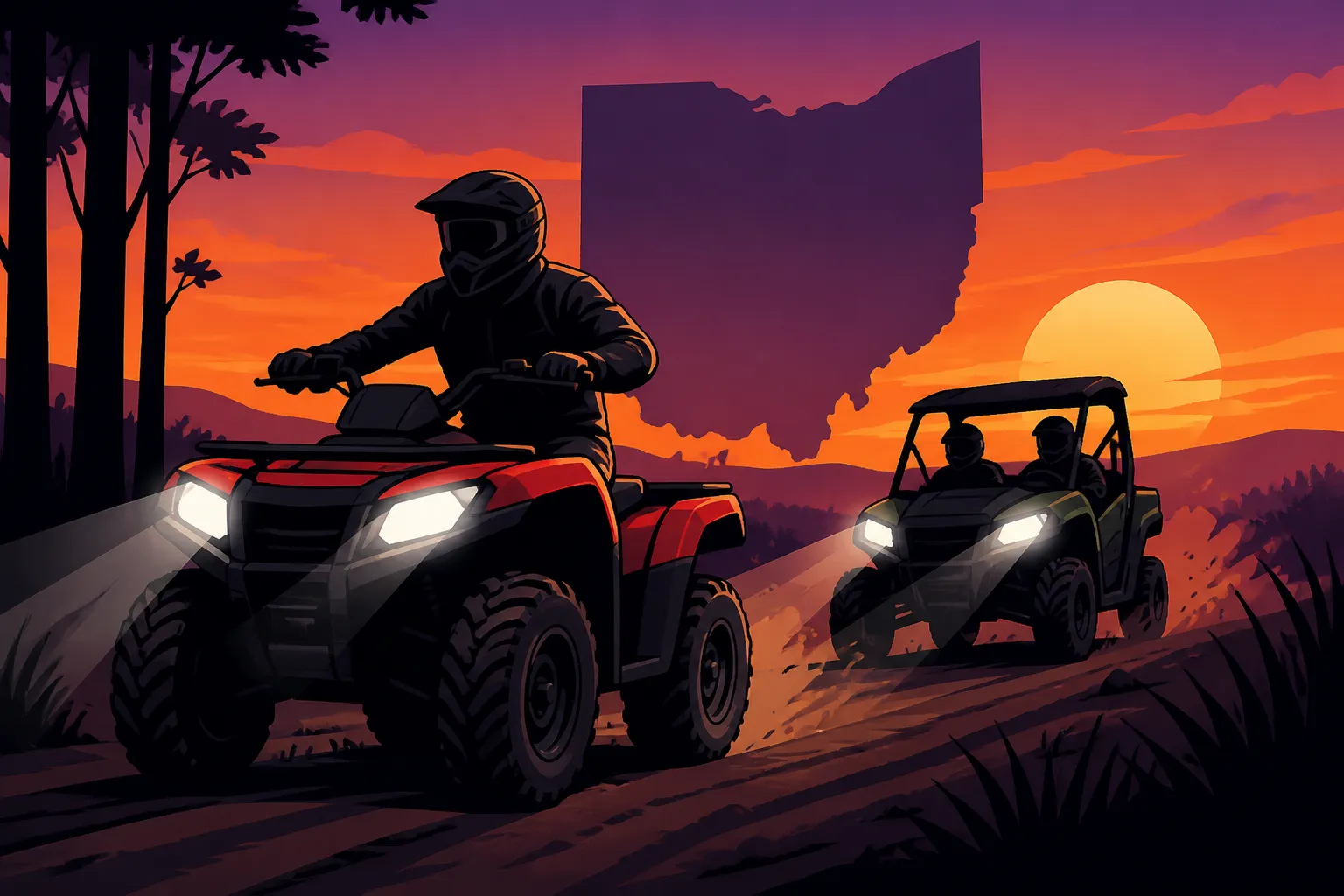
There’s nothing quite like that last bit of daylight fading into twilight as you’re wrapping up an incredible day of riding the backroads and trails of Ohio. But as beautiful as those sunsets can be, that golden hour quickly turns to darkness, and suddenly you’re facing a whole new set of challenges to get your all-purpose vehicle (APV) — be it an ATV or UTV — home safely. This guide is here to walk you through everything you need to know about legally and safely navigating Ohio's roads after the sun dips below the horizon, easing those worries about visibility, regulations, and unexpected hazards.
The Legal Landscape of Night Riding in Ohio
Getting caught out after dark on an Ohio road without the proper setup for your APV can turn a fun day into a frustrating and potentially expensive one. Ohio law has clear expectations for vehicles operated on public roads, and that certainly extends to ATVs and UTVs that are legally permitted to be there. It’s not just about having lights; it’s about having the right lights, in the right condition, and using them correctly to ensure both your safety and the safety of everyone else on the road. Understanding these regulations is your first line of defense against citations and, more importantly, against accidents.
Understanding Ohio's APV Lighting Requirements
When it comes to hitting the road after dark, your APV needs to light up the night, and not just for your own visibility. Ohio law, like most states, has specific stipulations to ensure that your machine is seen by other drivers and that you can adequately see what’s ahead. For any APV operated on public roads, you’re looking at a requirement for at least one working headlight that emits a white light visible from a certain distance, usually 500 feet, and at least one red taillight visible from the same distance. Beyond that, many UTVs, particularly those set up for road use, will also need brake lights that activate when the brakes are applied.
It’s easy to think a single headlight is enough, especially if you’re just cruising a quiet township road, but imagine coming around a bend only to be met by an oncoming car whose driver can barely make out your single, dim beam. This is why some riders opt for dual headlights, or even supplement their existing setup with additional lights. The intent of the law is clear: your machine needs to be a visible presence, not just a flicker in the dark. For a deeper dive into what equipment you need, you might want to check out [Ohio APV Road Equipment List]. Remember, these aren't suggestions; they are legal mandates.
Headlight Aiming and Visibility for Night Rides
Having powerful lights is one thing, but having them properly aimed is another crucial detail often overlooked. A headlight that’s pointed too high can blind oncoming traffic, while one aimed too low will drastically reduce your forward visibility, turning small dips or bumps into unexpected jolts. Proper aiming ensures your light beam hits the road where you need it most, illuminating potential hazards like potholes, fallen branches, or even deer that might dart out from the roadside. It also prevents you from being that rider who’s inadvertently annoying everyone else on the road.
Think about the conditions you're riding in. Are you on flat, open roads? Or are you navigating winding, hilly county routes? The ideal aim can change slightly depending on your typical terrain. For most recreational riders, a good rule of thumb is to have your low beams illuminate the road for a safe stopping distance at your intended speed, without shining directly into the eyes of approaching drivers. Manufacturers like SuperATV offer a range of aftermarket LED light bars and pod lights that not only provide incredible brightness but often come with adjustable mounts, making it easier to fine-tune your beam for optimal visibility without dazzling others. This investment isn’t just about convenience; it’s a critical safety upgrade for anyone riding after dark.
The Importance of Reflectors and Auxiliary Lighting
While headlights and taillights are the stars of the night riding show, reflectors play a vital supporting role, especially if your primary lighting fails. Ohio law typically requires red reflectors on the rear of the vehicle, visible from a certain distance, and sometimes amber reflectors on the sides. These passive safety devices catch the light from other vehicles, making your APV visible even if your electrical system goes kaput. It's a "better safe than sorry" measure that can literally save your bacon on a dark road.
Beyond legal requirements, many experienced riders also embrace auxiliary lighting. This could be anything from additional LED pod lights to side-facing floodlights. These aren't necessarily for driving down the road at speed, but rather for navigating tricky parking areas, loading and unloading at a darkened trailhead, or spotting trail markers when you're just off the main path. Imagine pulling into a campsite after sunset, needing to set up your tent, and having ample light to see what you're doing. Some riders even install illuminated whip flags or reflective tape strategically placed on their helmets or gear, further enhancing their overall visibility to others. For detailed information on what Ohio expects, you can refer to [Ohio Lighting Requirements for APVs]. Remember, the more visible you are, the safer your night ride will be.
Safety Considerations for Riding After Dark
Riding your APV after sunset transforms the entire experience. What feels routine in broad daylight can become surprisingly challenging and even hazardous when darkness descends. It's not just about what you can see, but what you can't see, and how your own senses and those of other road users are impacted. Empathy for other drivers and a heightened sense of awareness for your surroundings become absolutely paramount. Don't underestimate the mental and physical toll of riding in reduced visibility.
Rider and Passenger Visibility
Let's be honest, an APV isn't as large or as common on Ohio roads as a car or truck, especially at night. This means you, as the rider, need to actively work to ensure you and any passengers are as visible as possible. While your machine's lights do a lot, consider your apparel. Bright, reflective clothing isn't just for joggers; it's a smart choice for any night rider. A reflective vest or jacket can make a huge difference in how quickly another driver spots you, especially if their headlights are aimed lower or you’re in their blind spot.
It's also worth thinking about helmet visibility. Many helmets come with reflective elements, or you can add reflective decals. The goal here is to create a complete safety profile: your machine is lit up, and you and your passengers are too. Don’t assume others see you just because your lights are on. Always assume you are invisible until proven otherwise. This mindset will encourage you to ride defensively and make conscious choices to enhance your visibility, such as avoiding riding the very edge of the berm where you might blend into the shadows.
Navigating Road Hazards in Low Light
Daytime riding allows your eyes to pick up subtle changes in road texture, small potholes, gravel patches, and wildlife on the shoulder. At night, your perception of depth and detail is severely diminished. A small pothole can become a suspension-jarring surprise, and a patch of loose gravel can feel like an ice rink. Deer, raccoons, and other nocturnal animals become a much greater threat, often appearing suddenly in your limited headlight beam with little time to react. Ohio is rich with wildlife, and they don't always respect posted speed limits or common sense road etiquette.
When riding at night, slow down. Seriously. Your reaction time decreases, and your stopping distance needs to increase to compensate for the reduced visibility. Keep a much greater following distance from other vehicles, and be extra cautious on turns, blind spots, and intersections. If you're riding a county or township road that's known for being rough, consider taking an alternate, better-maintained route if possible. Even a brief moment of inattention or a slightly misjudged turn can have far greater consequences in the dark. For concerns about riding off paved surfaces, understanding [Ohio Rules for Riding the Berm] can be particularly useful in low light conditions.
Fatigue and Impairment
Riding an APV, whether an ATV or UTV, is a physically and mentally demanding activity. Throw darkness into the mix, and that demand multiplies. Staring into the beam of your headlights, constantly scanning for hazards, and compensating for reduced depth perception can lead to rider fatigue much faster than daytime riding. When you're tired, your judgment becomes impaired, your reaction times slow, and your ability to maintain focus wanes.
This is critical because fatigue can mimic the effects of impairment, making you just as dangerous as someone who's had too much to drink. If you feel tired, pull over in a safe, well-lit area. Take a break, stretch, grab a snack, or even consider calling for a ride if you're truly too fatigued to continue safely. Never, ever, ride under the influence of alcohol or drugs. Ohio's DUI laws apply to APVs just as they do to cars, and the consequences of an accident are far more severe when your judgment is compromised. Be honest with yourself about your state of mind and body, especially when contemplating a night ride. This extends to understanding other rules, such as [Ohio Driver's License Rules for APVs] and [Ohio APV Insurance Requirement].
Practical Tips for a Safe Journey Home
Preparing for a night ride isn't just about having the right gear; it's about a mindset of proactive safety. You wouldn't head out on a long road trip without checking your tires and fluid levels, and the same careful consideration should apply to night riding on your APV. A little preparation goes a long way in turning a potentially stressful journey into a smooth, safe ride home.
Pre-Ride Checks for Night Operations
Before the sun even begins to dip, perform a thorough check of your APV, specifically focusing on components critical for night operation.
- Lights: Are all your headlights, taillights, and brake lights functioning? Do they activate correctly? Are they clean and free of mud or dirt that could reduce their effectiveness? This is the absolute non-negotiable check for riding after dark. If you've got auxiliary lights or a light bar, confirm those are working too. Sometimes, a quick rinse or wiping down the lenses makes a world of difference.
- Battery and Charging System: Night riding puts extra strain on your electrical system. Make sure your battery is fully charged and that your charging system (stator/alternator) is functioning properly to keep up with the demands of your lights and other accessories. Nothing ruins a night ride faster than a dead battery in the middle of nowhere.
- Tire Pressure: While not directly tied to visibility, correct tire pressure is crucial for handling and stability. Potholes and uneven surfaces are harder to spot at night, and properly inflated tires can absorb impacts better and maintain control.
- Fuel Level: Seriously, don't get caught low on gas after dark. Fuel stops might be closed or harder to find, and running out can leave you stranded in an unsafe location. Always aim to have more than enough fuel for your planned journey.
- Reflectors: Are all your legally required reflectors present and clean? Consider adding more reflective tape to your machine or helmet, especially on the sides.
- Wipers (for UTVs): If your UTV has a windshield and wipers, ensure they’re in good working order. Rain at night can be incredibly difficult to see through without clear glass. Many SuperATV windshields are designed for easy wiper installation, making this a straightforward upgrade.
It's a small checklist, but taking five minutes to ensure these things are in order can prevent hours of frustration or worse.
Planning Your Route When Darkness Falls
You might know your local county roads like the back of your hand in daylight, but they can feel like an entirely different beast after dark. If you have the option, try to stick to familiar routes that you know are well-maintained and have good sight lines. Avoid unlit, high-speed state routes if local regulations allow you an alternative, such as a township or county road. Remember, [Ohio Rules for Riding a County Road] and [Ohio Rules for Riding a Township Road] can vary, so ensure you’re on legal routes.
Consider the time. Are you heading home late when traffic is minimal, or during rush hour when other drivers might be tired and less patient? Plan for contingencies. What if there’s an unexpected road closure? Do you have a backup route, or a GPS capable of guiding you without relying on cell signal (which can be spotty in Ohio’s more rural areas)? Sometimes, the best plan is simply to start heading home earlier, before the last vestiges of twilight disappear, reducing the amount of time you spend riding in full darkness.
Here’s a quick comparison of daylight vs. night riding considerations:
| Feature | Daytime Riding Considerations | Nighttime Riding Considerations |
|---|---|---|
| Visibility | Excellent; wide field of vision, easy to spot hazards, rider visible | Limited; narrow headlight beam, depth perception reduced, rider harder to spot for others |
| Road Hazards | Easily identified (potholes, gravel, debris) | Difficult to see, appear suddenly; greater risk of hitting unseen objects |
| Wildlife | Usually visible at a distance | Sudden appearances in headlight beam; higher collision risk with nocturnal animals |
| Other Drivers | More easily seen, better judgment of distance and speed | Harder to judge distance/speed; potential for blinding headlights; drivers may be fatigued/distracted |
| Fatigue | Slower onset, less impact on perception | Rapid onset, significant impact on alertness, judgment, and reaction time |
| Route Planning | Flexibility, fewer concerns about road conditions | Prioritize known, well-maintained routes; avoid unlit/high-speed roads; prepare for contingencies |
| Equipment | Basic legal requirements sufficient | All lights functional and clean, auxiliary lighting, reflective gear, fully charged battery critical |
What to Do in an Emergency After Dark
Even with the best preparation, things can go wrong. A flat tire, a mechanical issue, or even a minor fender bender can be far more daunting in the dark. Having a plan for emergencies is vital.
- Communication: Always carry a fully charged cell phone. If you're riding in an area with poor signal, consider a satellite messenger or riding with a buddy who has one. Make sure someone knows your route and expected arrival time.
- Emergency Kit: Your kit should include more than just basic tools. Add a bright flashlight (headlamp is even better for hands-free work), extra batteries, a small first-aid kit, and an emergency blanket. Jumper cables, tire repair kits, and basic tools are a given.
- Reflectivity: If you have to stop on the side of the road, make yourself and your machine as visible as possible. Turn on all available lights, use reflective triangles or flares if you have them, and wear your reflective vest. The last thing you want is another vehicle not seeing you.
- Stay Safe: If you break down, try to get your APV as far off the road as safely possible. If you must stay near the road, stand away from the machine and the flow of traffic. Remember that [Ohio Fines for Illegal APV Road Use] exist, but personal safety is always the highest priority.
Riding home after sunset can be a serene and beautiful experience, but it requires respect for the increased risks and a commitment to preparation. By understanding Ohio's rules, prioritizing visibility, and taking practical safety steps, you can enjoy those evening rides knowing you're well-prepared for whatever the darkness brings.
Disclaimer
This article is for general informational purposes only and does not constitute professional advice. Laws, prices and regulations vary by location and change over time. Consult a qualified professional for guidance on your specific situation.