Paying for a Short Stay on Ohio Trails
You’ve got your ATV or UTV loaded up, tires scrubbed, tank full, and you're dreaming of carving through some of Ohio’s fantastic trails for a weekend escape. But then, a thought niggles at the back of your mind: "Am I actually legal to ride here for just a few days? What kind of hoops do I need to jump through, and how much is this going to cost me beyond gas and snacks?" It's a common worry, and one that can quickly turn excitement into anxiety. This guide is here to walk you through everything you need to know about paying for a short stay on Ohio trails, making sure you're legal and ready to ride without any unwelcome surprises from a friendly (but firm) forest ranger or local deputy.
Navigating Ohio's APV Rules for the Short-Term Visitor
So, you're not an Ohio resident, and you're just looking to spend a glorious weekend or a few days exploring some new terrain. You might think, "My machine's registered back home, that should be enough, right?" Well, sometimes yes, and sometimes no. Ohio has its own specific set of rules for "All-Purpose Vehicles," or APVs, which is the umbrella term they use for ATVs, UTVs, and similar off-road machines. It's easy to get tangled up in the details if you're not prepared, and the last thing anyone wants is a citation for something that could have been easily prevented.
The key thing to understand is Ohio's perspective on visiting riders. They want everyone to enjoy the trails safely and legally, and part of that involves ensuring machines are properly identified and that trail maintenance funds are supported. This often means that even for a short stay, you might need to take an extra step or two beyond just showing up with your home-state registration. It’s not about making things difficult; it’s about making sure that the trails you're enjoying are maintained and safe for everyone, and that’s something we can all get behind. We all know how much work goes into keeping those paths clear and fun to ride.
Why Ohio Cares About Visiting Machines
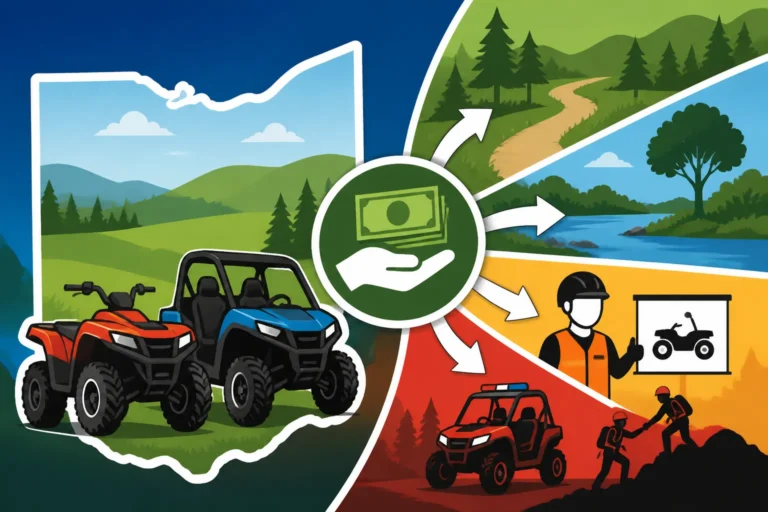
From Ohio's perspective, every APV on its public trails should contribute to the upkeep and management of those trails, or at least be clearly identifiable for safety and enforcement reasons. Think about it: those ruts, the erosion control, the signage, the bridges over creeks – all of that costs money and requires regular attention. Ohio doesn't charge a separate "trail fee" for its state forest trails, unlike some other states, because the registration fee itself is designed to cover these costs. [Where Ohio APV Registration Money Goes]
This means that whether you're here for two days or two years, the state needs a way to account for your machine and ensure it's playing by the rules. It's less about a revenue grab and more about a sustainable system for keeping our riding areas in good shape. Your compliance, even for a brief visit, directly impacts the quality of the trails you're here to enjoy. It’s a shared responsibility that keeps the whole system running smoothly for all of us.
Understanding the All-Purpose Vehicle Definition
First things first, let's clear up what Ohio considers an APV. It's not just a fancy term; it's the legal classification that determines what rules apply to your machine. [How Ohio Law Defines an APV] Basically, if it's an off-highway motorcycle, an all-terrain vehicle (ATV), or a utility vehicle (UTV), Ohio generally lumps it under the "APV" banner. This definition is crucial because it dictates whether you need a title, registration, or any special permits.
For most casual riders visiting for a short stay, your typical quad or side-by-side will fall squarely into this category. The specific details of [The New Vocabulary Ohio Law Uses for UTVs] are often discussed, but for now, the "APV" term is what you'll encounter on forms and in legal language. Knowing this helps you understand why certain permits or processes are necessary, even for what seems like a quick trip.
The Ohio Nonresident Temporary Permit: Your Gateway to Ohio Trails
For many out-of-state riders, especially those from states that don't have their own reciprocal APV registration system with Ohio, the Ohio Nonresident Temporary Permit is going to be your best friend. This permit is specifically designed for visitors who want to legally ride their machine on Ohio's public trails without going through the full, multi-year registration process that residents undertake.
It’s an acknowledgment that you’re just here for a good time, not a long time, and it provides a straightforward path to compliance. Imagine rolling up to a trailhead, eager to hit the dirt, only to be turned away because you didn't know about this permit. That would be a huge bummer! Luckily, getting one is relatively simple, and it saves you a lot of potential headaches.
What is the Ohio Nonresident Temporary Permit?
Simply put, this is a short-term authorization sticker issued by the State of Ohio that allows your out-of-state registered APV to be legally operated on Ohio's public lands for a limited period. It's essentially Ohio saying, "Welcome! Thanks for contributing to our trail system, and enjoy your ride." It’s a distinct decal, separate from any plate or sticker you might already have from your home state.
This permit isn't just a suggestion; it's a requirement for certain visitors. If your home state's registration isn't recognized by Ohio through a reciprocity agreement, or if your home state doesn't even have APV registration, then this permit becomes absolutely essential. Without it, you could be cited for operating an unregistered APV, which nobody wants. It’s a small step that makes a big difference in ensuring a worry-free ride. You can find more details about its purpose in [Ohio's Nonresident Temporary Permit].
Who Needs This Permit?
This is where it can get a little nuanced. You'll likely need an Ohio Nonresident Temporary Permit if:
- Your home state does not require APV registration. Some states don't have a statewide registration system for ATVs or UTVs used off-road. If you're coming from one of these states, your machine technically has no "registration" for Ohio to recognize, so you'll need the Ohio permit. [Do You Need Ohio Registration If Your State Has None?]
- Your home state does require registration, but Ohio does not have a reciprocity agreement with it. Not all state registrations are equal in the eyes of Ohio law. While Ohio recognizes registration from several neighboring states, there are still many others where this isn't the case.
- You're only visiting for a short period and don't want to deal with the full Ohio registration process. This permit is explicitly for short stays, making it ideal for weekend warriors or vacationing riders.
If you're unsure, it's always safer to assume you need the permit or to check directly with the Ohio Bureau of Motor Vehicles (BMV) or the Ohio Department of Natural Resources (ODNR). It’s better to be over-prepared than under-prepared when it comes to legalities.
How Long Does It Last and What Does It Cost?
The Ohio Nonresident Temporary Permit is designed for exactly what its name suggests: a temporary stay. It's typically valid for a period of about fifteen days, giving you ample time to enjoy a multi-day trip or a couple of weekend visits within that timeframe. This duration is quite generous for most recreational riders passing through.
As for the cost, it's a relatively modest fee, certainly much less than the full three-year registration for residents. While specific figures can fluctuate, you can expect it to be a minor expense, often in the shape of a single or low double-digit dollar amount. This fee helps support the administrative costs and, importantly, contributes to the recreational vehicle fund that maintains Ohio's trails. To get the most current information, you'll want to check the official Ohio BMV website or inquire at the point of purchase. For a general idea of the costs involved, you might refer to [What Ohio's Nonresident Permit Costs].
Riding in Wayne National Forest: Additional Permit Requirements
If your Ohio adventure takes you to the stunning Wayne National Forest, which boasts some of the most popular and extensive public riding trails in the state, you need to be aware of an additional permit requirement. The Wayne National Forest is managed by the U.S. Forest Service (a federal entity), not the State of Ohio, and they have their own rules regarding trail access. This often catches out-of-state riders by surprise, as they might have secured their Ohio Nonresident Temporary Permit, only to find another hurdle at the Wayne's gate.
It's a crucial distinction: your Ohio state permit (or reciprocal home-state registration) covers your machine's legality for state lands and general operation within Ohio, but the Wayne National Forest requires a separate permit for trail access. Think of it like needing a state park entrance fee and a fishing license – two different authorities, two different permits.
The Wayne National Forest OHV Permit
To ride on the designated OHV trails within Wayne National Forest (like the popular Monday Creek, Hanging Rock, or Pine Creek systems), every rider and passenger aged 16 or older must possess a valid Wayne National Forest OHV Permit. This is not tied to your machine; it's tied to the individual. So, if you're riding a side-by-side with a passenger, both of you (if 16+) need your own permit. [Do Passengers Need a Wayne Forest Permit?]
This permit typically comes in two forms: a three-day permit or an annual permit. For a short stay, the three-day permit is usually the most practical and cost-effective option. It gives you enough flexibility for a solid weekend of riding without committing to a full year pass. The funds collected from these permits go directly back into maintaining the Wayne National Forest's OHV trail system, ensuring the trails remain safe and enjoyable for everyone.
How and Where to Get Your Wayne National Forest Permit
The Wayne National Forest OHV Permits can be purchased at several locations, making it fairly convenient for visitors. You can often buy them at:
- Ranger District Offices: Visiting a ranger station within or near the forest is a reliable way to get your permit.
- Local Vendors: Many gas stations, general stores, and outfitters in towns surrounding the Wayne National Forest sell these permits. It's always a good idea to call ahead to confirm availability.
- Online: In some cases, permits might be available for purchase online through the relevant federal recreation pass websites, though it's always wise to check the official Wayne National Forest website for the most current purchasing options.
It's highly recommended to purchase your permit before you get to the trailhead, as you might not find sales points right at the trail entrances, and cell service can be spotty in certain areas. Imagine arriving, geared up, only to have to drive back to town for a permit! Plan ahead for a smooth experience. You can learn more about its specific cost in [Wayne National Forest OHV Permit Cost].
Combining Permits: State vs. National
It’s important to understand how these permits interact. If you are an out-of-state rider whose home state does not have reciprocity with Ohio, or if your home state doesn't even have an APV registration, then for a short stay in Ohio's state forests (like Maumee or Perry State Forest), you would only need the Ohio Nonresident Temporary Permit for your machine. However, if you plan to ride in the Wayne National Forest, you would need both the Ohio Nonresident Temporary Permit for your machine and a Wayne National Forest OHV Permit for each eligible rider.
This dual requirement might seem like a lot, but each permit serves a different purpose and funds a different land management agency. The Ohio permit is for your machine's legality within the state, while the Wayne permit is for your individual access to the federal trails. Always carry all necessary documentation with you while riding, as officials from either state or federal agencies may request to see them. [Ohio Rules for Riding a National Forest] provides further context on what to expect.
Reciprocity: When Your Home State's Registration is Enough
Here's some good news for many of our neighboring riders: Ohio does offer reciprocity with certain states. This means that if your APV is legally registered in one of these recognized states, you might not need to purchase an Ohio Nonresident Temporary Permit. Your home-state registration acts as your legal pass to ride on Ohio's state forest trails.
However, a huge caveat here: everyone riding in the Wayne National Forest still needs a Wayne National Forest OHV Permit, regardless of their state of residence or how their machine is registered. Reciprocity usually applies to the state registration requirement, not federal land use permits.
What Reciprocity Means for Your Ride
Reciprocity is essentially a handshake agreement between states, recognizing each other's APV registration systems as equivalent. It's designed to make interstate travel and trail riding easier for enthusiasts. If your state has this agreement with Ohio, it means Ohio honors your machine's existing registration, saving you the hassle and cost of obtaining a temporary Ohio permit.
This is a fantastic benefit for riders living close to the Ohio border, as it streamlines the process significantly. It underscores the importance of checking current regulations, because these agreements can sometimes change. Knowing whether your home state is on the reciprocity list is the first step in planning your short Ohio stay.
Which States Offer Reciprocity with Ohio?
Ohio typically has reciprocity agreements with several bordering states and a few others. For instance, [Ohio Reciprocity With Pennsylvania] and [Ohio Reciprocity With West Virginia] are common examples of neighboring states whose APV registrations Ohio often recognizes. However, specific agreements can change, and it's vital to confirm the current status before you plan your trip.
The best way to confirm is to check the official Ohio BMV or ODNR websites. Do not rely on old forums or anecdotal evidence. A quick call or a check of the most up-to-date online resources can save you a world of trouble. Remember, while your state's registration might be enough for the machine on state trails, it doesn't exempt you from federal permits if you're riding in the Wayne National Forest.
What Documentation to Carry (Even with Reciprocity)
Even if your home state's registration is recognized by Ohio, you still need to carry proof of that registration with you whenever you ride. This typically means your physical registration card. It's also a good idea to have some form of personal identification, like your driver's license. [Ohio APV Registration Paperwork] is something you should always have on hand.
A good rule of thumb is to always be prepared to show documentation if asked by a law enforcement officer or forest ranger. They are simply doing their job to ensure everyone is riding legally and safely. Having your paperwork organized, perhaps in a waterproof bag in your storage box, makes these interactions quick and stress-free. Using a resource like LawDepot can help you generate any necessary personal forms, such as a bill of sale if you recently acquired your machine and are still waiting on official title documents, ensuring you have a record of ownership even if it's not a registration form.
What to Carry and What to Expect on Ohio Trails
So, you've done your homework, figured out which permits you need, and you're ready to hit the trails! Fantastic. But before you unload your machine, let's talk about what you should have with you and what to expect when you're out there enjoying Ohio's beautiful landscapes. Preparedness isn't just about having the right permits; it's about being ready for the ride itself.
Remember, even for a short stay, you're a guest on Ohio's trails. Showing respect for the rules, the land, and other riders ensures a positive experience for everyone. This includes understanding [Ohio State Forest Riding Hours] and sticking to them, as well as keeping an eye out for any specific trail closures or conditions that might pop up.
Essential Paperwork and Safety Gear
Beyond your Ohio Nonresident Temporary Permit (if needed) and your Wayne National Forest OHV Permit (if needed), always carry your driver's license or state ID. If you're relying on reciprocity, have your home-state APV registration readily accessible. Consider keeping digital copies on your phone, but always have physical copies, as technology can fail, and cell service is not guaranteed on all trails.
Safety gear is non-negotiable. Ohio has specific helmet laws, especially for younger riders, and eye protection is generally a smart move for everyone. Don't skimp on a good DOT-approved helmet, gloves, sturdy boots, and long pants/sleeves. A small first-aid kit, some basic tools, and water are also excellent ideas. Being prepared for a minor breakdown or injury allows you to enjoy your ride with greater peace of mind.
Understanding Trail Rules and Enforcement
Each riding area, whether it's a state forest or the Wayne National Forest, will have its own specific rules posted at trailheads or available online. These rules cover everything from width restrictions ([Ohio's 62-Inch State Forest Width Limit]), to environmental protection, to noise limits. Take a moment to read them. These rules are in place for safety, conservation, and to ensure everyone has an enjoyable experience.
You should also expect that forest rangers, local deputies, or other law enforcement personnel may be patrolling the trails. They are there to help ensure compliance and safety. If you are stopped, be polite, cooperative, and have your documents ready. They might check your permits, ensure you're wearing appropriate safety gear, and remind you of any specific trail etiquette. For an idea of what an officer might check, refer to [What an Ohio Deputy Checks Roadside].
The consequences of riding without the proper registration or permits can include fines and potentially having your ride cut short. These tickets are often much more expensive than the permits themselves, so it truly pays to be prepared. If you're a first-time visitor, considering a template from LawDepot for a liability waiver if you're riding with a group on private land (with permission, of course) can also be a savvy move, although it doesn't replace state or federal permits for public trails.
Comparison of Permit Needs for Visiting Riders
Here’s a quick overview to help clarify the permit situation for out-of-state visitors:
| Visitor Type | Riding on Ohio State Forest Trails (e.g., Maumee, Perry) | Riding in Wayne National Forest OHV Trails |
|---|---|---|
| From Ohio Reciprocity State (Machine Registered) | Carry home-state registration card. | Carry home-state registration card AND individual Wayne NF OHV Permit for each rider (16+). |
| From State with NO APV Registration (Machine Unregistered) | Purchase Ohio Nonresident Temporary Permit. | Purchase Ohio Nonresident Temporary Permit AND individual Wayne NF OHV Permit for each rider (16+). |
| From State with APV Registration (NO Reciprocity) | Purchase Ohio Nonresident Temporary Permit. | Purchase Ohio Nonresident Temporary Permit AND individual Wayne NF OHV Permit for each rider (16+). |
Remember, this table is a general guide, and it's always best to verify the latest information with official Ohio BMV and Wayne National Forest resources. A minimal cost for a temporary permit or a Wayne pass is a small price to pay for peace of mind and knowing you're supporting the trails you love to ride. Make sure all your paperwork is in order, perhaps organized in a portable file you can even create using a service like LawDepot for other personal documents.
Disclaimer
This article is for general informational purposes only and does not constitute professional advice. Laws, prices and regulations vary by location and change over time. Consult a qualified professional for guidance on your specific situation.