Ohio Trails With Mud
Ohio’s southern hills can turn from firm gravel to slick clay after a night of rain, and a trail that looked manageable at the staging area may feel very different a mile in. This guide explains where to look for muddy ATV and UTV rides in Ohio, how to judge conditions, and how to avoid turning a fun outing into a stuck-machine or trail-damage problem.
Where to Find Muddy ATV and UTV Trails in Ohio
Mud is part of riding in Ohio, especially on the wooded and reclaimed ground of the southeast. But there is a difference between a marked trail that happens to be muddy and a route that is closed, badly eroded, or being damaged by riders. Start with established riding areas and confirm that your chosen trails are open before unloading.
Wayne National Forest riding areas
The Wayne National Forest’s Ohio riding systems are popular choices for riders looking for wooded trails, hills, and changing surface conditions. The area around Monday Creek, near Nelsonville, can offer a full day of riding through the Hocking region. Hanging Rock and Pine Creek, farther south, provide other options in the forest’s trail network. For an overview of the systems, see Wayne National Forest's Three Ohio Systems and Ohio's Four State Forest APV Areas.
Expect conditions to vary from one section to the next. A shaded hollow can stay soft after exposed ground dries, while a ridge may have loose dirt, gravel, or ruts rather than deep mud. Some routes also pass through reclaimed mining ground, where the terrain can change quickly and water may collect in low spots. Riders who are looking specifically for that mix of terrain may want to read Riding Ohio's Reclaimed Strip Mines.
The Wayne National Forest is not a license to ride wherever the land looks open. Stay on marked routes, follow posted closures, and check the rules for the specific riding area. Forest access can involve a separate permit, and individual riders may have requirements that differ from those for Ohio state forest trails. Confirm the details before your trip with [How the Wayne National Forest OHV Permit Works].
Ohio state forest trails and nearby options
Ohio’s state forest APV areas can also be muddy, particularly after a stretch of rain. Monday Creek, Hanging Rock, and Pine Creek are familiar names to riders, but conditions are not interchangeable across the systems. A trail may be wet and still rideable, or it may be closed to protect the trail surface. Check the posted status rather than relying on a report from a different forest or a different day.
Private riding parks are another option when you want a managed destination and a clear place to check access rules. Their terrain, opening policies, and facilities vary, so contact the park before hauling a machine there. A private park may be a better fit for a group that wants varied terrain in one location, while a forest trail may appeal to riders who prefer a longer route through a larger natural area. Compare the experience in [Riding a Private Park Instead of a State Forest].
| Riding option | What you may encounter | What to check before leaving home |
|---|---|---|
| Wayne National Forest systems | Wooded routes, hills, and changing soil conditions | Current route access, forest rules, permits, and trailhead details |
| Ohio state forest APV trails | Marked trails with conditions that can shift after rain | Whether the trail is open, machine-width rules, registration, and riding hours |
| Private riding park | Park-specific loops and terrain, which may include muddy sections | Operating status, admission rules, permitted machines, and current conditions |
| Unmarked or informal route | Unknown surface, access, and land status | Do not assume it is legal or open; use marked, authorized routes instead |
How Rain Changes Ohio Trail Conditions
A muddy trail is not automatically a good mud trail. Rain can make clay slick, deepen existing ruts, conceal obstacles, and turn a manageable incline into a difficult climb. On narrow routes, one machine’s struggle can also block the trail for everyone behind it.
Clay, shale, and reclaimed ground
Ohio’s southern riding areas include a mix of soils and terrain. Clay can become greasy when wet, making tires lose grip even when the mud does not look especially deep. Shale can be loose under the surface, and reclaimed ground may include steep slopes, uneven benches, or water collecting in disturbed areas. A route that feels easy in dry weather may require much more care after a storm.
Watch for signs that the trail is getting beyond your comfort level: fresh, deep ruts; water obscuring the route; a steep muddy climb with no safe turnaround; or repeated wheel spin in the same spot. Spinning tires can dig the trail deeper without moving the machine forward. If you find yourself needing repeated aggressive attempts to clear a section, pause and consider turning back rather than making the damage worse.
A first-time visitor may be tempted to follow tire tracks into a muddy side route, especially if the main trail looks crowded. Resist that urge. Tracks do not prove that a route is authorized or safe. Keep to the marked system and review [Ohio Rules for Riding Off a Marked Trail] before exploring unfamiliar ground.
When to postpone a ride
After heavy rain, some trails may be temporarily closed or simply too soft for responsible riding. A closure is not a suggestion to find a way around a gate. It helps protect the surface and may prevent damage that takes much longer to repair than the rain took to create. Conditions can also vary within a single system, so a recent post about one trailhead may not describe the route you plan to ride.
Look for current notices from the managing agency or park, and call if the status is unclear. Maps and social posts can help you understand where a route is, but they should not replace official access information. Riders checking a digital map, including onX Offroad, should compare mapped routes with current posted information before heading out. The same is true for a ride report from a friend: useful context, but not confirmation that a trail is open today.
For a more practical pre-ride checklist, see Ohio Trail Conditions Before You Ride and Ohio Trails After Heavy Rain. If a system is closed or too wet, postpone the trip or choose a different legal riding area rather than trying to find an unofficial way through.
How to Prepare for a Muddy Ohio Ride
Good preparation is less about packing every accessory and more about preventing a small problem from becoming a long, cold day on the trail. Before setting out, think about the route, weather, machine, and group—not just tire choice.
Check access, maps, and group plans
Confirm which riding area you are visiting, where you will stage, and what permits or registration documents are required. Ohio’s public riding areas have rules that can differ by land manager. Check machine-width limits, hours, age and supervision requirements, and any restrictions that apply to your route. A side-by-side that is comfortable on a broad private trail may not be suitable for a narrower forest route. Ohio's 62-Inch State Forest Width Limit explains why measuring your machine matters.
Use a current map to understand the trail layout, but do not treat a line on a screen as permission to ride it. onX Offroad can be one tool for reviewing routes and planning a general area, while official trailhead signs and agency updates should guide decisions about access. Download or save the information you need before entering areas with weak cell coverage. Tell someone where you plan to ride and when you expect to be back.
Set a turnaround point before the group starts. For example, if the first several miles are already slick and the forecast calls for more rain, agree that the group will shorten the loop rather than push deeper into difficult conditions. That conversation is much easier to have at the staging area than after one machine is stuck on a hill and daylight is fading.
Pack for traction problems and changing weather
Bring recovery and safety gear suited to your machine and the kind of ride you expect. A winch can help in some situations, but it does not make every slope or mud hole safe. Carry basic tools, a first-aid kit, water, suitable clothing, and a way to communicate if phones lose signal. Secure loose gear so it does not shift when the machine bounces over ruts.
Before the ride, inspect tires, brakes, steering, lights, and recovery points. Check that your winch line and controls work if you plan to rely on them. A machine with a slow tire leak or weak battery can turn a short muddy loop into a recovery problem. On the trail, maintain enough distance between machines to avoid crowding a rider who is negotiating an obstacle.
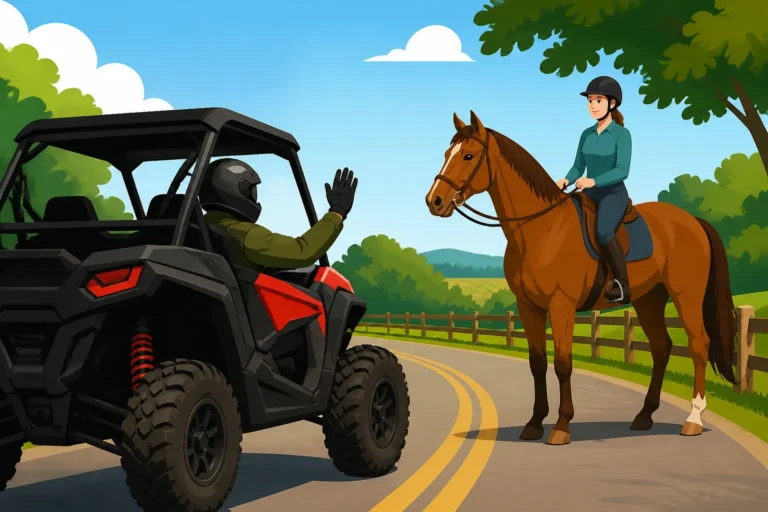
Mud can hide rocks, branches, deep holes, and abrupt changes in the trail. Approach unfamiliar sections slowly, look for a safe route, and avoid entering water when you cannot judge its depth or the ground beneath it. When riders encounter a horse, another group, or trail workers, slow down and give them room. Ohio Trail Etiquette on Narrow Trails covers the shared-trail habits that make a difficult day safer for everyone.
Riding Mud Responsibly and Choosing the Right Route
The best muddy ride is not necessarily the one with the deepest holes. A good route lets you enjoy changing terrain without risking injury, damaging a trail, or getting a machine stuck where recovery would be hazardous.
Keep to marked trails and protect the surface
Stay within marked routes and obey signs, gates, and closures. Do not widen a trail to go around a rut or puddle. That can create a new track, damage vegetation, and make the route harder to maintain. If a section is too wet or difficult, stop somewhere safe and decide whether to continue, turn around, or use an approved alternate route.
Avoid spinning tires in place. If a machine loses traction, reduce wheel spin and reassess rather than repeatedly digging at the same spot. Ask the group for help only when it is safe to do so, and keep people away from a loaded winch line or a machine that could move unexpectedly. If conditions are deteriorating, turning back is a sound riding decision—not a failure to complete the loop.
After the ride, clean the machine without washing mud into a storm drain or waterway. Check underneath for packed mud around the radiator, brakes, suspension, and other components. Mud left in place can hide damage or interfere with cooling and moving parts. Give the machine a careful inspection before the next trip.
Match the ride to your machine and experience
A stock quad, a youth machine, and a wide side-by-side do not all have the same safe options. Before choosing a route, consider machine width, ground clearance, tires, passenger load, and the least experienced rider in the group. If you are new to Ohio trails, choose a route with a straightforward return option and avoid making a challenging muddy climb your first test.
Families should be especially cautious about choosing trails based on what an adult rider can handle. Young riders may have less experience judging slippery slopes or changing conditions. Keep the group together, set simple communication rules, and choose terrain that matches the youngest rider’s skill and machine. Riders looking for a narrower-machine route can also review Ohio Trails That Suit a Dirt Bike, while side-by-side owners should check route dimensions and local rules before unloading.
Use onX Offroad or another mapping tool to help plan where you intend to go, then verify the route with the land manager. A phone map can help with orientation, but it cannot tell you whether a trail has closed after rain or whether a muddy section is safe for your particular machine. Leave room in your plan for changing conditions, and treat a posted closure or unsafe stretch as the end of that day’s route.
Disclaimer
This article is for general informational purposes only and does not constitute professional advice. Laws, prices and regulations vary by location and change over time. Consult a qualified professional for guidance on your specific situation.