Proof of Insurance on an Ohio Road
Ohio law requires ATV and UTV drivers operating on public roads to maintain liability insurance and carry proof.
Legal here, illegal one county over.
What each state allows, the mirrors, horn and signals a conversion requires, and the county and city overrides that quietly change the answer.

Ohio law requires ATV and UTV drivers operating on public roads to maintain liability insurance and carry proof.
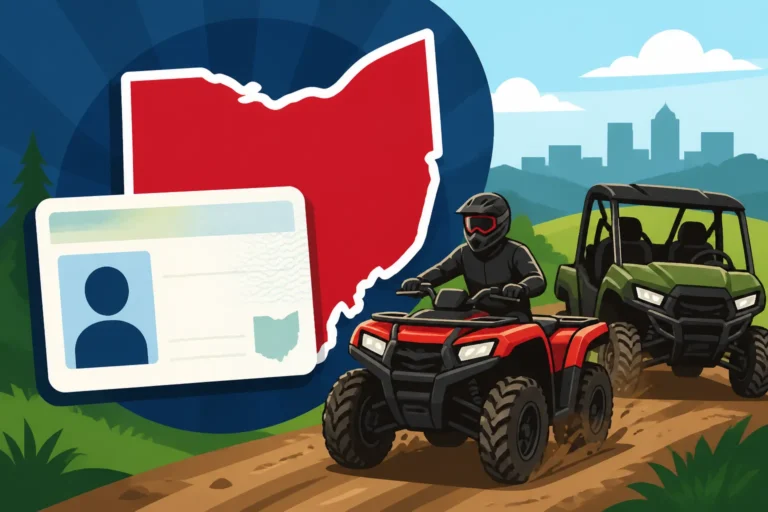
Ohio requires a valid driver’s license to operate an all-purpose vehicle on an open public road, even for a short stretch, and defines such vehicles by law.

Ohio UTV road laws require safety glass windshields and operating wiper systems to ensure clear visibility and public road legality.

Ohio law requires specific turn signals and mirrors for a UTV to pass BMV inspection and operate legally on roads.
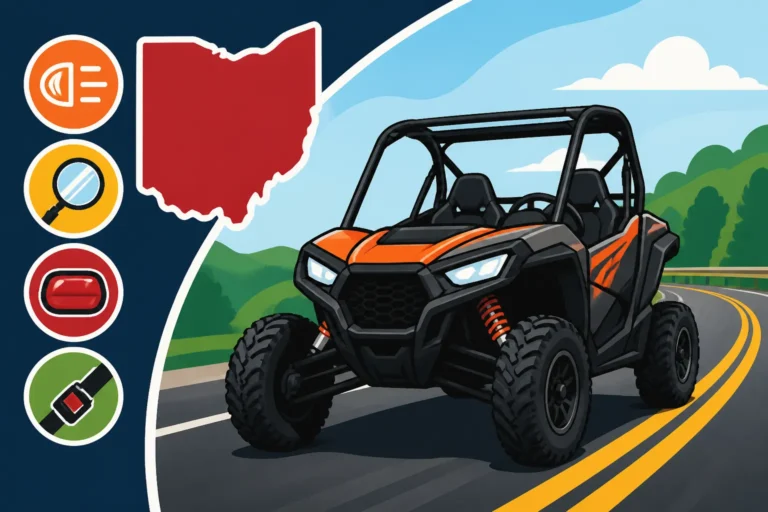
Ohio UTV equipment rules and local ordinances determine how side-by-sides meet legal standards for public road use.
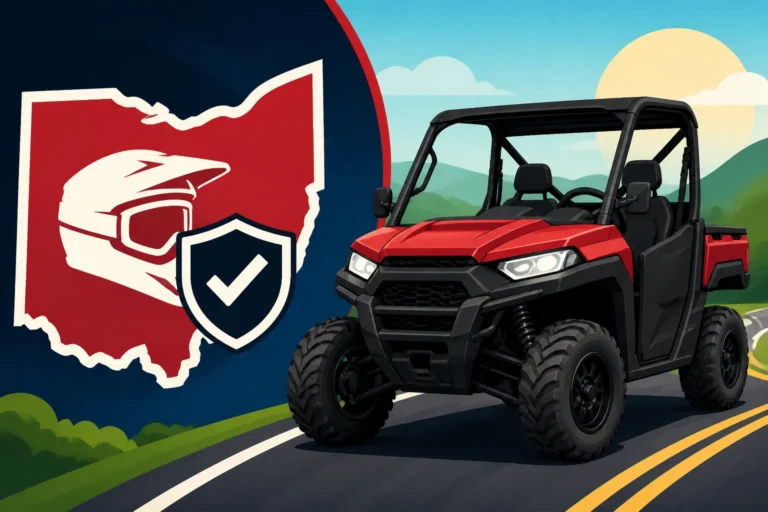
Ohio equipment rules for all-purpose vehicles explain specific requirements needed to make an ATV or UTV street legal.
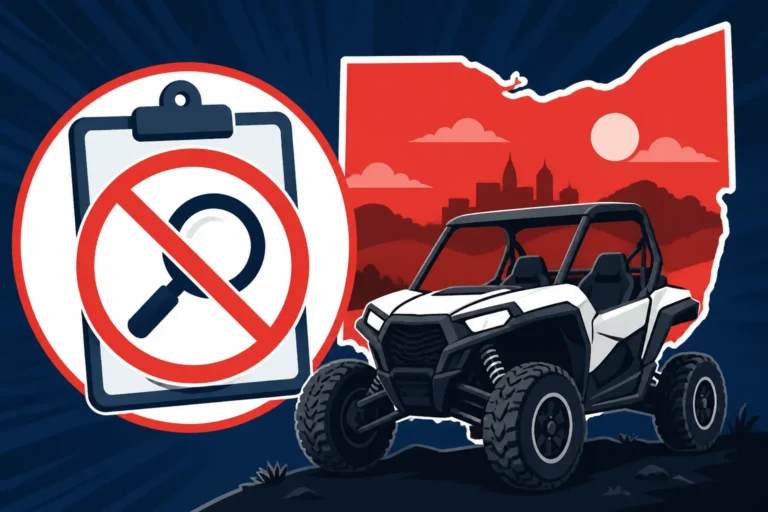
Ohio vehicle law exempts all-purpose vehicles from roadworthiness inspections because they are designed for off-highway use.
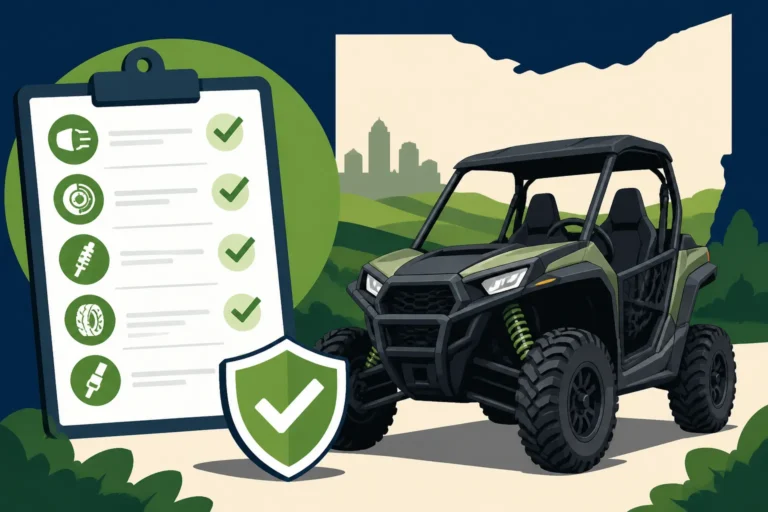
The Ohio UTV inspection details safety standards, required equipment, and legal steps to register side-by-side vehicles for public roads.

Ohio APV speed limits on unposted county and township roads default to fifty five miles per hour under state laws.
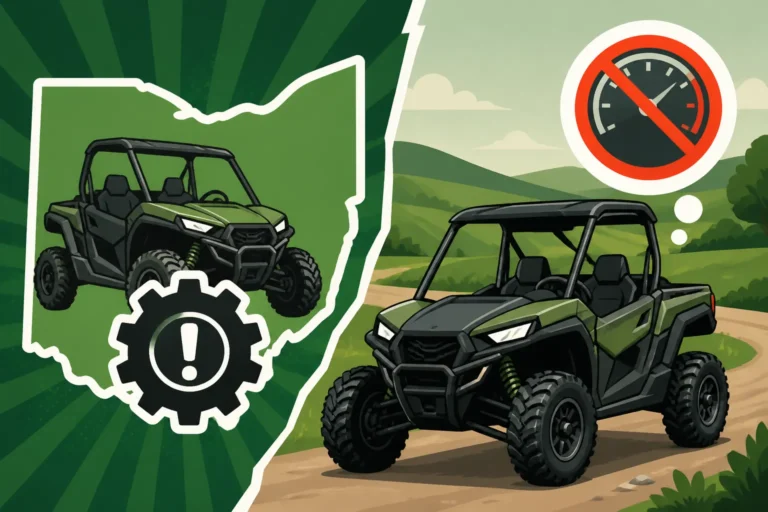
Ohio law restricts certain utility vehicle speeds and road access through specific equipment and registration requirements.