Ohio’s 62 Inch State Forest Limit
Ohio’s 62-inch state forest limit can decide whether your ATV or UTV is allowed on a marked riding trail at all. The tricky part is that a machine’s advertised width, its width with accessories, and the measurement an officer checks may not match. Here’s how to assess your machine, avoid buying parts that leave it too wide, and find a suitable place to ride if it exceeds the limit.
What the 62-inch limit means
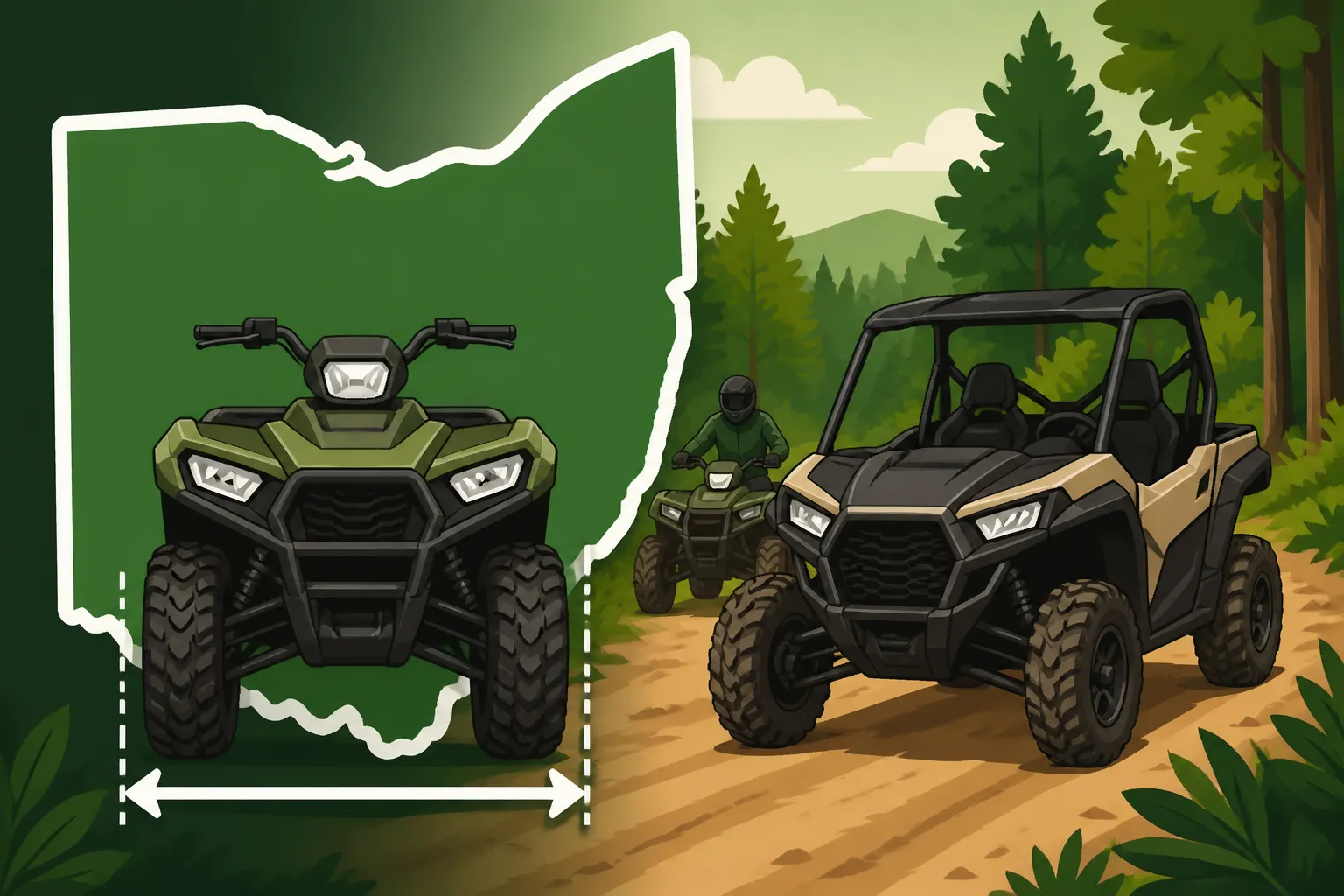
Ohio limits the width of machines used on its state forest APV trails. In practical terms, the vehicle must be no wider than 62 inches to fit the state forest trail requirement. A machine that exceeds the limit may be barred from those trails even if it is registered, insured, well maintained, and otherwise ready to ride.
The limit is about the machine, not the width of a particular section of trail. Finding a wide clearing or a trail that looks spacious does not make an over-width machine eligible. Nor should you assume a machine is acceptable simply because it fits through the gate or because you have seen a similar model on the trail.
Ohio commonly uses the term all-purpose vehicle, or APV, in its rules and registration materials. The 62-inch restriction is a state forest riding-area condition, not a general rule that says every machine wider than 62 inches is illegal everywhere in Ohio. A wider UTV may be suitable for private property or a riding park that allows its dimensions, while being unsuitable for state forest trails. For the broader rules that apply on state forest land, see Ohio Rules for Riding State Forest Land.
The limit matters most to UTV buyers. Many side-by-sides are wider than a traditional quad, and width can vary substantially between models and trims. Some UTVs fit within the state forest limit; others do not. A machine’s name or class is not enough to tell. Check the measurements for the exact model and configuration you plan to ride.
| Your machine’s width | What it means for Ohio state forest trails |
|---|---|
| Less than 62 inches | It may meet the width requirement, but you still need to confirm the current rules, machine eligibility, and trail access. |
| Exactly 62 inches | It is at the stated maximum, so verify the measurement carefully and leave no doubt about how the width is assessed. |
| More than 62 inches | Do not plan to ride it on state forest APV trails. Look for an area that expressly accepts its width. |
| Width unknown or changed by accessories | Measure the machine as it will be ridden and confirm the applicable measurement method before you travel. |
Width is only one condition. It does not replace registration requirements, safety equipment rules, age restrictions, trail closures, or any permit requirement that applies to your destination. Start with Ohio APV Permits Explained and check the current information for the specific forest before loading your machine.
How to check your machine’s width
A brochure figure is a good starting point, not a complete answer. Manufacturers may publish an overall width for a standard configuration, while the machine in your garage has different tires, wheels, spacers, fenders, a plow, or other equipment. Even without modifications, listings can describe measurements differently.
Find the specification for the exact model
Look for the manufacturer’s specification for the precise year, model, trim, and factory configuration. Do not rely on a broad listing for a model family if that family includes versions with different tires or bodywork. A base model and a wider special edition may look similar in a photo but have different dimensions.
If you are shopping, ask the seller to show you the specification sheet or confirm the exact model number. A dealership listing, owner’s manual, and manufacturer material may each use different labels for width, so note how the figure is described. If the number is close to the limit, treat it as a prompt to investigate rather than proof that the machine qualifies.
Online marketplace descriptions can be useful for locating a specification, but they are not the authority on trail eligibility. For example, an Amazon listing for an accessory or replacement part may repeat a width figure without clarifying whether it refers to the vehicle, tire, or packaging. Verify important dimensions with the manufacturer or by measuring the machine itself.
Measure the machine as it is set up to ride
Use a tape measure on level ground and measure across the vehicle’s widest relevant points. Check both the manufacturer’s stated width and the machine’s actual configuration. If the rule or agency guidance specifies a particular method, follow that method; if you cannot confirm it, contact the forest office or the relevant state agency rather than guessing.
For a practical conservative check, look at the outside edges of the tires and any bodywork or accessories that extend farther. Also check handlebars, mirrors, bumpers, fender flares, wheel spacers, plow equipment, and other added parts. The widest point can depend on the design, and it is safer to identify it than to assume the tires are always the widest part.
A long tape measure is handy for this job. You can use one from a hardware store or order one through Amazon, but the brand of tape does not matter; keeping the measure straight and level does. Have another person help hold the tape if the widest points are difficult to reach alone.
Write down the measurement and the points you used. If your result is close to 62 inches, measure again. Check that the machine is sitting level, the tires are properly inflated, and the tape is not angled or pulled around a curved surface. A small measurement error can matter when you are at the maximum.
Account for changes made after purchase
A stock machine’s stated width may no longer describe it after modifications. Wider tires, different wheels, wheel spacers, fender extensions, or a bumper can change the overall dimension. A modification advertised as improving stability may make the machine too wide for state forest trails.
Accessories can also create confusion because a product listing may give the part’s own dimensions rather than how far it extends once installed. If you find a wider tire or wheel set on Amazon or another marketplace, ask the seller for the actual fitted width and compare it with the machine’s original setup. Do not assume a part will fit within the limit because it is described as an ATV accessory.
Before making a change, consider the places you actually ride. A setup that works well for a farm, hunting property, or wide private trail might reduce the number of public trail systems available to you. For a closer look at the practical effect of size, see Why Machine Width Decides Where You Ride in Ohio.
What to do if your machine is close to or over the limit
If your measurement is comfortably below 62 inches, keep a record of the model and configuration and still verify current trail rules before riding. If it is exactly at the maximum or only slightly below it, be more careful. Published dimensions may be rounded, and an accessory or different tire setup can push the actual machine over the line.
Do not rely on a casual estimate
A quick look at a UTV is not a reliable measurement. Two machines with similar body shapes can differ in width, and an owner’s recollection of a dealer conversation is not the same as a specification. If you are buying a used machine, ask to measure it in person. If you cannot do that, get a written specification for the exact model and confirm what it measures.
When you ask an agency or forest office for guidance, give specific details: make, model, year, trim, tire setup, and any width-changing modifications. “Will this UTV fit?” is less useful than asking whether a particular configuration meets the current state forest width requirement and what measurement method applies.
Be cautious with proposed modifications
Narrower tires or a different wheel setup might reduce width, but changing parts is not a guaranteed solution. Confirm that any change is compatible with the vehicle and safe for the way you ride. Wheel fitment, handling, clearance, load capacity, and manufacturer guidance all matter. A change that makes the machine narrower could also affect stability or performance.
Do not remove a component that is required for safe operation or legal equipment simply to reach a measurement. And do not plan to remove a part at the trailhead unless you have confirmed that the machine will then meet the applicable requirement and can be operated safely in that configuration.
If the machine remains over the limit, do not try to argue that a narrow trail section is wide enough, or that you intend to ride slowly. The practical answer is to use a riding area that accepts the vehicle’s dimensions. Where to Ride a Side-by-Side Over 62 Inches Wide can help you think through alternatives.
Check the whole vehicle, not just the tires
Owners often focus on tires because they are easy to measure, but width can come from other parts. Aftermarket fender flares, bumpers, mirrors, and cargo or plow equipment may project beyond the tires. Look from the front and rear and identify the outermost points before you decide that a machine is within the limit.
Also check whether the machine has been altered by a previous owner. A used UTV may have spacers, non-stock wheels, or body modifications that are not obvious from the sales description. Ask what has been changed and compare the actual vehicle against the standard specification.
This check is especially useful before paying for a used machine. If state forest riding is a priority, treat width as part of your purchase inspection, alongside title, condition, service records, and VIN verification. The article Checking a Used Machine in Ohio covers other checks worth making before you buy.
Where the limit applies and where it does not
The key distinction is between state forest APV trails and other places where riding may be allowed. The 62-inch state forest limit should not be treated as a universal Ohio width rule for every private parcel, commercial riding park, or other off-road setting. But neither should a machine’s registration be treated as permission to ride anywhere.
Each location has its own access rules. A private park may set its own vehicle-width restrictions, and a landowner can decide what machines are welcome on private property. Public land rules can differ by managing agency and by trail system. Confirm the rules for the exact destination instead of transferring one location’s requirements to another.
Ohio’s state forest systems commonly discussed for APV riding include Maumee, Perry, Pike, and Richland Furnace. A trail area’s name alone does not establish that it is open on the day you plan to ride or that every route is available. Conditions, seasonal closures, maintenance work, and other restrictions can affect access. Check official information before departure.
A wide UTV may still have useful riding options, but it makes trip planning more important. Search for facilities that explicitly state their accepted vehicle widths. If a park’s website or staff cannot confirm that your machine is allowed, ask before paying an entry fee or towing a long distance. A general statement that a place is “UTV friendly” does not necessarily mean it accepts every UTV.
If you want to ride Ohio state forest trails, width is one part of your preparation. You may also need an Ohio registration plate or accepted out-of-state registration, depending on your situation. The plate serves an important access function on state forest trails; read Why the Ohio Plate Is the Trail Permit for how registration and trail access relate. Visitors should also check Ohio Reciprocity for Out-of-State Machines rather than assuming that a home-state tag automatically meets every Ohio requirement.
A pre-ride checklist for staying within the limit
A few checks before you leave can prevent a frustrating trip and reduce the chance of riding somewhere your machine is not eligible. Use this list when buying, modifying, or transporting an ATV or UTV.
- Confirm the exact machine. Record the make, model, year, trim, and any factory package that affects the dimensions.
- Find the manufacturer’s width specification. Note whether it describes overall vehicle width or another measurement.
- Inspect for changes. Check wheels, tires, spacers, flares, bumpers, mirrors, plows, and other accessories.
- Measure the actual setup. Use a level surface and a straight tape measure. Identify the widest points instead of measuring only where it is convenient.
- Treat a borderline result cautiously. Repeat the measurement and confirm the official measurement method with the relevant agency if needed.
- Verify the destination’s current rules. Confirm that the specific trail system is open and that your machine meets its width and other requirements.
- Check registration and reciprocity. Make sure the paperwork you carry is acceptable for the ride you are planning.
- Keep the information with your trip notes. A photo of the machine’s specification label or a written measurement can help you avoid relying on memory.
If you are still selecting a machine, decide where you want to ride before choosing a model. A narrower machine may open access to more state forest trails, while a wider model may be a better fit for private property, utility work, hauling, or other uses. Neither choice is automatically right; the trade-off is about matching the vehicle to the places and tasks that matter to you.
When comparing machines, do not focus only on the advertised width. Consider passenger capacity, handling, turning room, trail conditions, storage, and whether you can transport the machine comfortably. Then make width one of the first items you verify, not a detail you discover after buying. For a practical comparison of machines suited to Ohio’s public trails, see Ohio Trails for a Wide Machine and Measuring Against the 62 Inch Limit.
The short version: measure the machine you will actually ride, not just the model name on a brochure. If it exceeds 62 inches, do not plan to use Ohio state forest APV trails unless current official guidance confirms otherwise. Confirm the destination’s rules, registration requirements, and any applicable reciprocity before you load up.
Disclaimer
This article is for general informational purposes only and does not constitute professional advice. Laws, prices and regulations vary by location and change over time. Consult a qualified professional for guidance on your specific situation.