Acid Drainage and Orange Water
Orange water beside an Ohio ATV trail can look like harmless rust, but it may signal mine drainage, disturbed soil, or another water-quality problem. The color alone cannot tell you what is in the water. This guide explains what orange runoff may mean, how to ride responsibly around it, and what to do if your machine or gear gets splashed.
Why water turns orange near Ohio riding areas
Acid mine drainage and iron deposits
Parts of southeastern Ohio have a long history of coal mining. When exposed mine materials react with air and water, drainage from the area can become acidic and carry dissolved metals. As the water flows and conditions change, iron may settle out as an orange or reddish coating. People often call this “orange water,” but the visible color is usually a deposit rather than a reliable measure of what else the water contains.
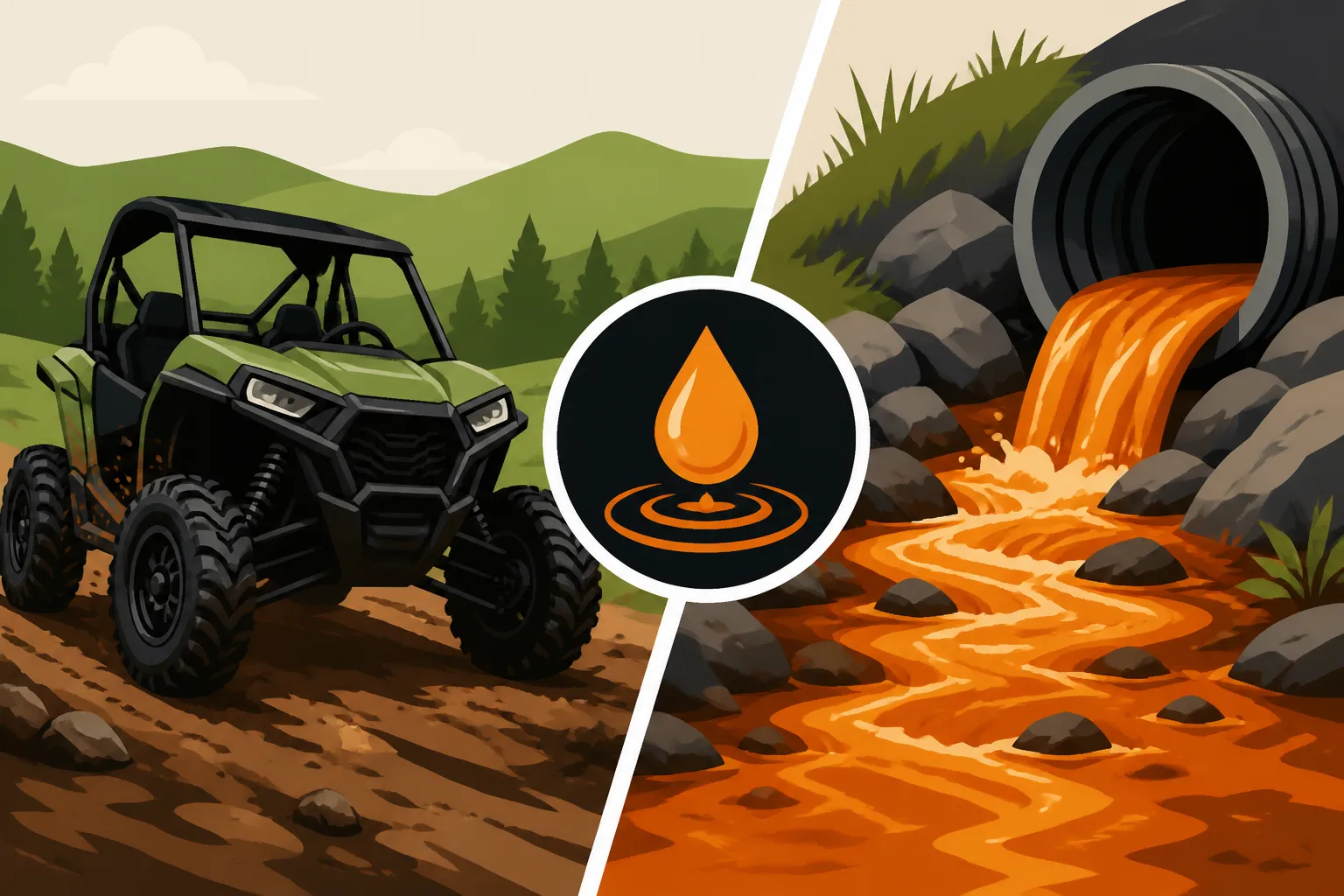
The problem can be subtle. You might see orange sludge on a streambed, a rusty film along the bank, or water trickling from a hillside or drainage pipe. In coal-country landscapes near places such as Nelsonville and the Hocking Hills, old mine features and altered ground are part of the region’s history. That does not mean every discolored puddle or creek near a trail is mine drainage, or that a particular trail is contaminated. It does mean riders should avoid treating an unusual-looking water source as safe just because it is shallow or familiar.
Orange color alone cannot confirm acid mine drainage. Iron-rich sediment, disturbed soil, or iron-related bacteria can also create rusty-looking water or coatings. The appearance is a reason to be cautious, not a field test. If you want more background on how mining has shaped local riding landscapes, [Riding an Old Coal Bench] and [Spoil Piles and Steep Climbs] provide useful context.
Other causes of orange or rusty-looking water
A trail puddle may turn orange after heavy rain washes exposed soil into a low spot. Construction, erosion, a failing culvert, or recent trail work can also send sediment into runoff. In some cases, orange-brown material forms where iron in groundwater meets air. The color can look similar to mine drainage even when the cause is different.
That uncertainty matters because a quick glance cannot tell you whether water is acidic, whether metals are present, or whether the source is temporary. Nor does clear water automatically mean safe water. Do not taste it, splash it deliberately, or let children or pets play in it. If the water is flowing through a marked trail crossing, stop and look for a safe, authorized alternative rather than assuming the crossing is harmless.
| What you notice | What it might indicate | A sensible rider response |
|---|---|---|
| Orange coating on rocks or stream edges | Iron deposits, mine drainage, or another iron-rich source | Keep out of the water and avoid disturbing the coating |
| Cloudy orange runoff after rain | Sediment, erosion, or drainage from disturbed ground | Do not create a new route around it; follow posted trail directions |
| A strong or unusual odor, dead vegetation, or an unexpected discharge | A possible water-quality or drainage concern | Keep back and report the location to the land manager |
| Clear water near old mine ground | No reliable conclusion from appearance alone | Avoid drinking or playing in it unless an authorized source is identified |
How to ride around discolored water
Do not use the water as a shortcut
A tempting shortcut can cause more damage than a slow, muddy detour. Riding directly through a wet area can churn sediment, widen an existing rut, and carry material onto tires, footrests, and underbody panels. If the water is connected to a creek or drainage channel, the machine can also disturb the bank or streambed.
Stay on the marked route and obey any closure signs or barriers. Do not cut around a puddle by riding through vegetation, across a bank, or onto an unmarked slope. That can turn one small wet spot into a wider area of erosion, and it may put you on private or restricted land. Ohio trails can change after rain, so check [Ohio Trails After Heavy Rain] and [Ohio Trail Conditions Before You Ride] when wet weather may affect the route.
If a crossing looks questionable, pause before entering. Look for a posted detour, an approved bypass, or guidance from the trail operator. When there is no safe, permitted way through, turning back is better than improvising a new path. A mapping tool such as onX Offroad may help you keep track of your planned route, but it does not replace signs, closures, or instructions from the land manager.
Keep people, pets, and gear out of the runoff
Avoid direct contact with orange water, wet sediment, and material coating nearby rocks. Keep hands away from mud and rinse off any accidental splash as soon as practical, especially before eating or drinking. If a child or pet has contact with questionable water, wash exposed skin and seek appropriate medical or veterinary advice if irritation or illness develops.
Pay attention to where you park and stop, too. A machine can pick up wet sediment even without crossing a stream, particularly if you pull onto a muddy shoulder or ride over a drainage channel. Do not wash mud from the ATV or UTV into a creek, ditch, storm drain, or wetland. If you need to clean the machine, choose a location where runoff will not flow into surface water and follow any site rules.
A route-planning app such as onX Offroad can be useful for keeping your group oriented when you decide to turn around or take an authorized route back. Before the ride, make sure everyone understands that navigation information is a planning aid, not permission to leave a marked trail. For more practical guidance on wet surfaces, see [Clay That Turns to Grease] and [Riding After a Week of Rain].
What to do if your machine gets splashed
Clean the machine without spreading mud
If a tire or lower panel gets splashed, avoid carrying wet soil onto another trail, campground, or water crossing. Remove visible mud in a place where the rinse water can soak into an appropriate ground area rather than running directly into a drain or waterway. Follow any trailhead or facility instructions about washing machines; some sites may not allow it.
Use a careful rinse rather than blasting the area so forcefully that sediment sprays into nearby vegetation or water. Pay attention to the tires, wheel wells, skid plates, and other places where mud can collect. If the machine was in unusually colored water, clean footwear and tools as well. Do not use the creek or puddle itself as a wash station.
After the ride, check the machine for packed mud around moving parts and inspect it according to the owner’s manual. A rinse does not tell you whether the water contained contaminants, and it should not be treated as a substitute for avoiding contact in the first place. If someone has a persistent skin or eye reaction after exposure, contact a qualified health professional and describe where and how the contact occurred.
Decide whether the route needs to be reported
A small, ordinary puddle does not necessarily require an emergency report. But a new discharge, a sudden change in water color, a strong unusual odor, dead plants near a flow, or a visible stream of orange material coming from a pipe or slope may be worth reporting to the trail operator or land manager. Share the location as precisely as you can, along with the date, recent weather, and what you observed.
Take a photo from a safe distance if doing so does not require stepping into the water or leaving the route. Do not collect a sample, touch the sediment, or investigate a mine opening yourself. Old mine features can be unstable, and the water may be only one part of a broader hazard.
If you are riding in a state forest or another managed area, use the contact information posted at the trailhead or on the managing agency’s official materials. The right contact depends on who manages that land. A map app such as onX Offroad can help you note your approximate position, but verify the location against posted trail signs or an official map when you make a report. [Ohio Trail Closures to Check First] and [Calling a Ranger District Before You Load] can help you plan around changing conditions and find the appropriate point of contact.
Plan ahead for a safer Ohio trail ride
Check the route and conditions before unloading
Before heading to southeastern Ohio riding areas, confirm that the trail system is open and that the route suits your machine. Seasonal conditions, recent rain, maintenance work, and temporary closures can all affect access. Do not assume a road, drainage crossing, or old mine route is open to ATVs or UTVs simply because it appears on a map or has tire tracks.
Use a current official trail map and follow signs at the entrance and along the route. onX Offroad can be one tool for keeping your planned route organized, especially when a group needs to retrace its path after turning around. Still, posted closures and the land manager’s rules take priority over any digital track.
It also helps to agree on a group plan before anyone rides ahead. Choose a meeting point, identify who will lead and sweep, and tell everyone that an uncertain water crossing is a reason to stop. If the trail is muddy or visibility is poor, reduce speed and leave enough distance to respond without sliding into a rut or crossing.
Leave the area as you found it
Riders help protect access by staying on approved routes, not widening muddy sections, and carrying out litter. Avoid digging channels to drain a puddle or moving barriers to get around a closure. Those actions can worsen erosion and create hazards for the next group.
When you encounter orange water, treat it as a reason to take care rather than a reason to panic. Keep your machine and group out of the water, avoid disturbing the bank, and report a suspicious new discharge to the responsible land manager. If you are uncertain whether a trail crosses sensitive ground, stop and check official guidance instead of guessing.
Good trail habits matter across Ohio, whether you are riding near reclaimed mine land or on a wooded route farther north. Review [Ohio Trail Etiquette on Narrow Trails] and [Ohio Trail Closures to Check First] before your next trip, and make the conservative choice when water or ground conditions are unclear.
Disclaimer
This article is for general informational purposes only and does not constitute professional advice. Laws, prices and regulations vary by location and change over time. Consult a qualified professional for guidance on your specific situation.