Riding a Private Park in Winter
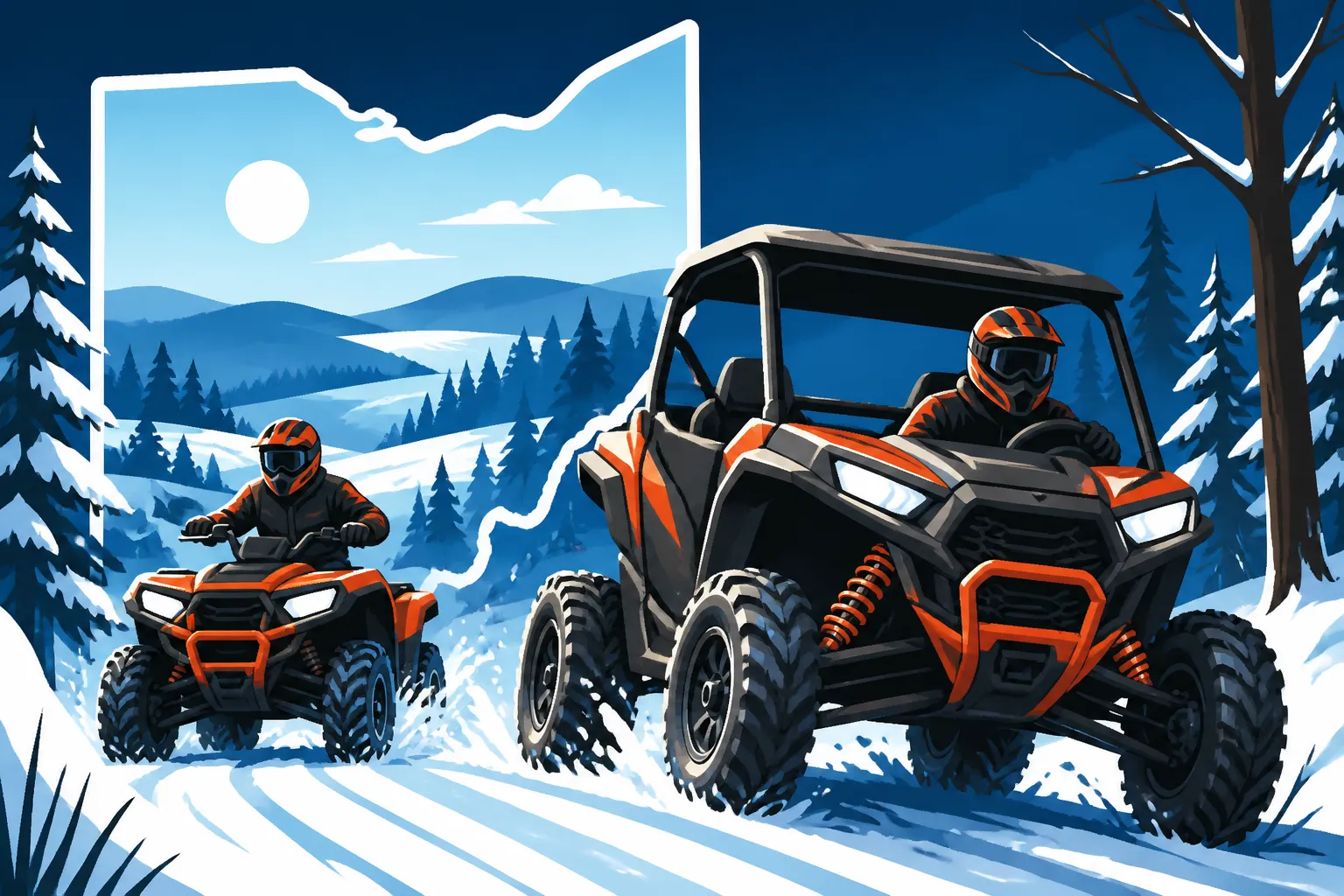
Winter riding at an Ohio private ATV or UTV park can mean quiet trails and crisp air—or a closed gate, slick clay, and a long trip home. The key is not assuming that a park open in summer stays open in winter. This guide explains how to confirm access, judge conditions, prepare your machine, and ride responsibly when temperatures drop.
Confirm the park is open before you leave
Check the park’s winter schedule directly
Private parks set their own calendars and operating rules. Some may offer winter riding on selected dates; others may close for the season, pause operations after heavy rain, or open only when staff can safely manage the property. A map showing a trail or an old social media post is not confirmation that you can ride there today.
Check the park’s own current notices, then contact the office or operator before loading your ATV. Ask specifically whether the park is open on your planned date, which trails are available, and whether weather could change the schedule. If you are driving from another part of Ohio, ask whether the entrance road and staging area are usable after snow or freezing rain. A park can be technically open while access roads remain a problem for a trailer.
It also helps to ask what “open” means. The park may permit riding but keep certain loops, hills, or wooded sections closed because of mud, ice, maintenance, or limited staffing. Ask whether you need to register ahead, what payment methods are accepted, whether the park has fuel nearby, and whether overnight parking or camping is allowed. Policies vary, so avoid relying on another rider’s experience from a previous season.
Winter visits are easier to plan when you know what kind of property you are choosing. A private riding park may offer terrain and access rules that differ from a state forest system, but that does not mean every private trail is open or suitable for every machine. For a broader look at the trade-offs, see Riding a Private Park Instead of a State Forest.
Verify the conditions, not just the calendar
A cold forecast does not automatically mean firm, dry trails. Ohio winter weather can swing between thawing afternoons, overnight freezes, rain, and snow. In southern Ohio’s hill country, clay can become slick and cling heavily to tires and undercarriages. A trail that looked manageable earlier in the day may turn into a series of ruts after repeated passes, or become hard and uneven once temperatures fall again.
Ask the park operator what the ground is like, not only whether the gate is open. Useful questions include: Are the trails frozen, muddy, snow-covered, or icy? Are steep sections closed? Are there detours? Has recent rain affected the staging area? Is the park limiting machine types or trail access to protect the property? If the answer is uncertain, consider postponing rather than treating a marginal day as a test of your winch.
Mapping tools can help you understand the general area and keep track of a route, but they do not replace the park’s current operating information. Riders who use onX Offroad can review mapped routes and plan around the area they expect to ride; still, confirm access and closures with the park itself. For more on checking conditions before a trip, read Ohio Trail Conditions Before You Ride.
Match the ride to winter terrain and daylight
Expect changing traction from one section to the next
Winter trail conditions are rarely uniform. A shaded hollow may stay icy while an exposed ridge thaws. Leaves can conceal roots, rocks, and shallow ruts, and packed snow can hide changes in trail width. Water crossing a low spot may freeze into a slick surface, while a sunny stretch nearby feels nearly dry. Slow down when the terrain changes rather than assuming the next bend will behave like the last one.
Mud deserves particular attention. Tires can lose grip suddenly in clay, and deep ruts may steer the machine in a direction you did not intend. A side-by-side can feel stable until one wheel drops into a rut or slides toward a soft shoulder. On an ATV, standing or shifting your weight may help you respond to terrain, but do not make abrupt movements on slick ground. Keep extra space between riders so you have time to react if the machine ahead stops or slides.
Treat snow and ice as hazards, not as a guarantee of easier riding. Snow can cover holes, branches, and trail edges; ice can make braking and turning unpredictable. If you cannot see the trail surface clearly, reduce speed and avoid steep slopes, water crossings, and unfamiliar routes. Turning around is a reasonable choice when the surface is beyond your comfort level. A ride does not become safer because you have already driven a long way to get there.
Plan around short winter days
Winter daylight leaves less room for a late start, slow travel, or an unexpected repair. Build a conservative route that gets you back to the staging area well before dark. Tell someone where you are going and when you expect to return, especially if cell service is unreliable in the area. Do not assume that a phone’s map will work offline unless you have prepared it in advance.
A route-planning app such as onX Offroad may help you review mapped routes and think through a ride before arriving. Download or save what you need ahead of time, and carry a backup way to navigate, such as a paper map or written directions from the park. Maps can be incomplete or out of date, so follow posted signs and staff instructions over a digital route. Avoid using a mapped line as permission to ride beyond the park’s authorized area.
Check the park’s hours and the time the gate or staging area closes. Private properties may have their own schedule, and you should not assume the riding hours used on public land apply there. If you are comparing public-land hours or seasonal access, see Ohio State Forest Riding Hours and Ohio Trails Closed in Spring. Those rules and calendars are not a substitute for a private park’s own instructions.
| Winter condition | What it can mean for a ride | A sensible response |
|---|---|---|
| Frozen, uneven ground | Ruts and bumps may be hard to see under snow or leaves | Slow down and avoid unfamiliar steep sections |
| Thawing clay | Tires may lose traction and deepen existing ruts | Stay on permitted routes and turn back if the surface deteriorates |
| Ice in shaded areas | Braking and steering may become unpredictable | Avoid the section if you cannot ride it comfortably |
| Recent rain | Low areas and staging roads may be soft or slippery | Ask the operator about closures and access before traveling |
| Short daylight | A small delay can leave you returning near dark | Choose a shorter route and set a firm turnaround time |
Prepare your ATV or UTV for cold-weather riding
Check the machine and gear before loading
Cold temperatures can expose weaknesses that are easy to overlook in mild weather. Check tire condition and pressure using the manufacturer’s guidance, inspect the battery and electrical connections, and make sure lights work if the ride could run close to dusk. Look over brakes, steering, throttle operation, belts, and fluid levels. If the machine has been stored for a while, a short test in a safe area before the trip can reveal a weak battery or other problem before you are far from the trailer.
Mud and slush can collect around moving parts and cooling areas. Before leaving home, confirm that guards, winch equipment, and recovery points are secure. Carry basic tools suited to your machine, along with recovery gear you know how to use. A winch is not a substitute for safe judgment: pulling from a poor anchor point or recovering a machine on an unstable slope can create a second problem. If the park has rules about recovery or trail use, follow them.
Dress for the time you will spend moving slowly, stopping, or waiting—not only for the temperature shown in the morning forecast. Use layers that allow you to adjust without becoming chilled when you stop. Bring gloves that preserve enough control to operate the machine, eye protection, and weather-appropriate outerwear. Pack water and food where they will not freeze or become difficult to reach. For helmet and other trail requirements, review Helmets and Eye Protection on Ohio Forest Trails, while checking the private park’s own rules as well.
Carry a practical winter kit
A small, organized kit can make a cold-weather delay much less stressful. Bring a charged phone, a backup battery kept warm, a basic first-aid kit, water, snacks, a light source, and warm dry layers. If you ride with a group, agree on a meeting point and a plan for a machine that becomes disabled. Keep essential items in a dry bag or another protected place rather than loose in a cargo bed where mud and water can reach them.
Recovery gear should match the machine and the terrain. A tow strap or winch line can be useful, but only when used with suitable attachment points and safe spacing. Keep hands and clothing away from moving lines, and do not stand in the path of a tensioned strap or cable. If you are unsure how to recover a machine safely, ask the park staff about their procedures before heading out. Some parks may restrict recovery methods to protect trails or property.
Think about what happens after the ride, too. Mud and road salt can sit on components during the drive home, and a wet machine parked in a cold garage may be difficult to inspect later. Bring tie-downs in good condition and secure the machine for transport. Once home, clean off accumulated mud, check for damage, and look over the tires, brakes, and undercarriage before the next ride. That post-ride check is especially helpful after a winter outing, when grime can hide a loose part or fresh scrape.
Ride within the park’s rules and protect the trails
Stay on authorized routes and respect closures
A private park’s boundary does not mean every visible track is open to visitors. Some routes may be for staff, maintenance, emergency access, or a different type of machine. Follow signs, marked routes, and instructions from the operator. Do not ride around a gate or take an unofficial shortcut because a trail looks passable. In winter, a closed route may be protecting soft ground from damage or keeping riders away from a hazardous section.
Keep a safe gap between machines, especially on narrow trails where snowbanks, trees, or deep ruts can reduce room to pass. Stop in a place where you are visible and do not block an intersection or trail entrance. If you meet another group, slow down and communicate clearly before passing. These habits matter even more when helmets, hoods, and cold-weather gear make it harder to hear each other. For additional trail-sharing guidance, see Ohio Trail Etiquette on Narrow Trails.
Noise and equipment rules can also apply on private land. Do not assume that a machine accepted at one park will meet another park’s requirements. Ask whether the operator has restrictions on exhaust, spark arresters, passengers, machine width, or safety equipment. A private park’s permission to ride does not automatically change other applicable requirements for transporting or operating your machine. For related Ohio trail guidance, see Ohio Spark Arrester Rules for Trails.
Confirm paperwork and access requirements
Before leaving, make sure you understand what the park expects each rider to bring. That may include identification, a signed waiver, proof of payment, registration documents, or other information required by that operator. If you are visiting from another state, do not assume your home registration automatically satisfies every Ohio trail or park requirement. Check the rules that apply to your situation and ask the park what documentation it requires at the gate. The topic is covered in more detail in Ohio APV Reciprocity With Other States.
Riders traveling with children should check age, supervision, passenger, and machine-size rules before the trip. Private park policies may be stricter than the rules a rider has encountered elsewhere. Make sure each person understands the route plan, where to stop, and what to do if the group becomes separated. A quick conversation in the parking area is more useful than trying to explain the plan in the middle of a cold, muddy trail.
When the park’s instructions and a map do not appear to match, pause and ask staff rather than improvising. onX Offroad or another navigation tool can help you orient yourself, but neither establishes permission to use a road, trail, or parcel. Follow posted park boundaries and current directions from the operator. For general help comparing Ohio riding locations and access types, see Where to Ride an ATV in Ohio.
Disclaimer
This article is for general informational purposes only and does not constitute professional advice. Laws, prices and regulations vary by location and change over time. Consult a qualified professional for guidance on your specific situation.