Ohio Trails That Fill Up on Weekends
A Saturday ride can start with a packed staging lot, slow-moving groups, and more waiting than riding—especially when everyone arrives at the same popular Ohio trailhead. This guide explains why weekend trails get busy, how to choose a better time or place to ride, and how to plan around crowds without sacrificing safety, trail etiquette, or the kind of ride you came for.
Why Ohio ATV trails get crowded on weekends
The same narrow riding window brings everyone out
For many riders, Saturday and Sunday are the easiest days to get to the trail. A workweek, school schedules, family commitments, and travel time can leave little room for a weekday ride. When the weather turns pleasant or a trail system reopens after a seasonal closure, that shared window gets even narrower. The result is often a rush of trailers and machines arriving within the same few hours.
Crowds usually build around convenient starting points, not uniformly across every trail. A popular staging area with clear access, ample parking, and a familiar trail network may draw riders who have never visited before, as well as regulars who know exactly where they want to go. Even if the trail system itself covers a large area, several groups can bunch up at the same entrance, junction, or narrow section.
A busy lot does not always mean every trail will feel packed. Groups spread out at different speeds, take different routes, and stop for breaks in different places. Still, expect more encounters on a weekend than you might on a quieter weekday. If your ideal outing means long stretches with no one ahead, plan for a less popular time, choose a different starting point where permitted, or consider a private riding park with its own layout and admission rules. [Ohio Trail Conditions Before You Ride]
Season openings, weather, and special outings affect traffic
The calendar can matter as much as the day of the week. Spring openings, fall color, holiday weekends, and the last stretch before a seasonal closure can all encourage riders to make the most of a limited riding window. When the forecast looks dry after a period of rain, people who postponed earlier outings may choose the same sunny weekend.
Weather also changes how riders move around a trail system. After rain, some people delay their trip because conditions may be muddy or routes may be closed to protect the trail. Others arrive as soon as the ground firms up. In hot weather, riders may start earlier or take longer breaks, while a cold but clear weekend can still attract people who enjoy winter riding. Conditions differ by location, so check the specific rules and notices for your destination rather than assuming every trail is open or suitable. [Ohio Trail Closures to Check First]
The practical takeaway is to watch for combinations that concentrate demand: a reopening weekend, a forecast that suddenly improves, a holiday, or a seasonal event nearby. If your schedule is flexible, choosing a weekend without those extra draws may make a noticeable difference. If it is not, a little preparation—arriving early, checking the access point, and picking a route that suits your group—can make a crowded day feel more manageable.
Choose a trail and starting point with your group in mind
Match the trail to the machine, experience, and pace
A busy trail is more stressful when the route is a poor match for the people riding it. A newer rider may feel pressured if a faster group catches up on a tight section. A wide side-by-side may have fewer suitable route choices than a narrow quad. Families may need frequent stops, while experienced riders may want a longer loop. Before choosing a destination, consider the group’s machine sizes, comfort levels, and expectations for the day.
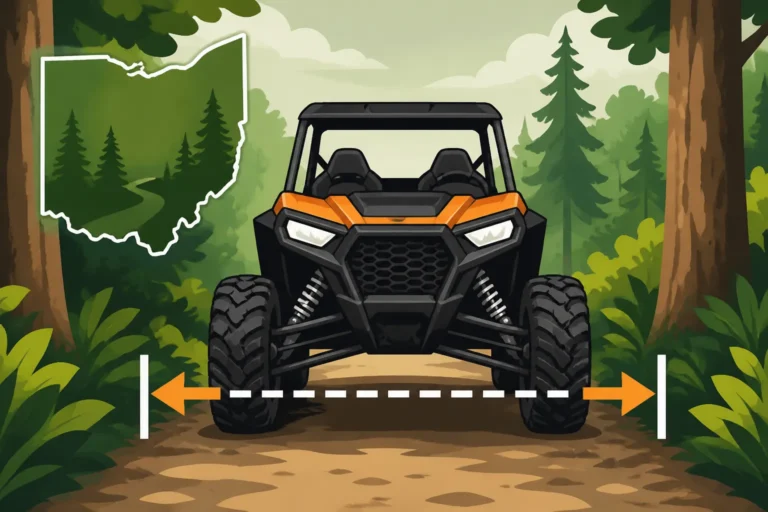
Ohio riding areas have different access rules, seasonal schedules, and trail characteristics. Some routes may have width restrictions or other limits, and a machine that fits one trail system may not fit another. Check the specific system’s current rules before loading the trailer, especially if you ride a wider UTV. [Ohio Trails That Suit a Wide Machine] can help you think through that choice, but confirm requirements for the exact place you intend to ride.
It is also worth being honest about pace. If your group includes children or first-time riders, a crowded weekend may not be the best day to tackle a route that already feels challenging. Look for a location and loop that allow you to ride comfortably, stop without blocking others, and turn back if the group is tired. For family planning, see [Ohio Trails Good for Kids] and review the trail system’s age and supervision rules before you go.
Compare popular trailheads with less hectic alternatives
A familiar trailhead is convenient, but convenience is part of what makes it popular. When a main lot tends to fill early, investigate whether the riding area has other authorized staging locations. Never assume that a nearby pull-off, private driveway, or unmarked access point is a legal place to park or unload. Verify the site’s permitted access and parking details before changing your plan.
Some riders prefer a private riding park when public trailheads are crowded. Private parks may offer a different mix of trails, facilities, and riding experiences, but they have their own admission, operating, vehicle, and safety rules. Check whether the park requires advance arrangements, what machines it allows, and whether amenities such as fuel, food, or lodging are available. [Ohio Private Trail Parks] offers a useful starting point for comparing that option with a public riding area.
A map can help you understand distances and identify possible routes, but it cannot replace official notices or posted restrictions. onX Offroad can be useful for reviewing mapped routes and planning how a ride might fit together, particularly when a group wants to avoid making decisions at a crowded junction. Check that the route is open and authorized before following it; a line on a map is not, by itself, permission to ride there. [Ohio Trail Maps From ODNR]
| Planning choice | What it can help with | What to check before leaving |
|---|---|---|
| Arrive early | May make parking and unloading less stressful | Gate or trail operating hours and overnight parking rules |
| Pick a quieter date | Can reduce pressure at popular access points | Seasonal opening, closure, and weather notices |
| Use an alternate staging area | May spread out arrival traffic | Whether the access point is official and open to your machine |
| Choose a private park | Offers a different setting from public trail systems | Admission arrangements, park rules, and machine restrictions |
| Ride a shorter loop | Makes it easier to regroup or return if conditions are busy | Route length, difficulty, and approved trail connections |
Plan your timing to reduce waiting and congestion
Make arrival and departure part of the ride plan
On a busy weekend, the ride can feel crowded before the engine starts. Several trailers may arrive together, people may need time to unload, and groups may be sorting out gear or deciding on a route in the same small area. Arriving earlier can help you avoid part of that rush, but only if the trail system is open at that time. Some riding areas have defined operating hours, and access rules can vary.
Give your group a simple unloading plan before you reach the lot. Decide who will park the tow vehicle, who will help younger riders, and where everyone should wait while machines are being unloaded. Keep equipment and trailers within the marked parking area, leave room for other users, and do not block gates or access lanes. A few minutes of coordination can prevent a cramped staging area from becoming a bottleneck.
Think about the end of the day, too. If everyone heads back at once, the unloading area can become congested again. Set a regroup point away from trail entrances where permitted, and make sure every rider knows how to contact the group if separated. Avoid riding faster just to beat the crowd back. A calm, predictable return is better than an anxious sprint through a busy trail system.
Build a flexible itinerary instead of chasing a perfect loop
A rigid schedule is easy to upset when a trail is busy. A junction might have several groups waiting, a rider may need a break, or an unexpected closure may require a route change. Build in extra time and identify a shorter alternative before you leave. That gives the group permission to adjust without feeling that the whole day has gone wrong.
Use maps as planning tools, not as a substitute for signage. onX Offroad may help riders visualize a route and keep track of where they are, especially when several people are traveling together. Still, posted signs and official trail information should guide decisions about access. Do not ride around a closure, onto an unmarked path, or onto private land just because a map suggests a connection.
Before the trip, pick a clear regrouping routine. For example, agree that riders will wait at designated junctions, not at blind corners or narrow trail entrances. If the group gets spread out, pause somewhere safe and visible rather than sending one rider back through traffic to search. This matters even more on a crowded day, when another group may come around a bend before your riders expect them.
Ride considerately when trails are busy
Keep moving safely and communicate early
On narrow trails, faster and slower groups will meet. The safest response is not to treat the trail like a road or assume that the other group will immediately know what you intend to do. Reduce speed when approaching others, give them space, and follow posted passing rules. Avoid stopping where sightlines are limited, on steep or unstable ground, or where your machine blocks the route.
Good communication can prevent a small delay from turning tense. Make eye contact when practical, use a calm voice, and be clear about who is moving first. If your group needs to stop, pull over only where the trail is wide and visibility is adequate. Riders behind you may not be able to see a stopped machine around a bend, so do not gather in the middle of a narrow section.
Trail etiquette becomes especially important when different experience levels share the same route. A beginner should not feel pushed into riding beyond their comfort zone just because someone is waiting. A more experienced group can give space and wait for a safe opportunity to pass rather than tailgating. Review [Ohio Trail Etiquette on Narrow Trails] before heading out with a group that may encounter mixed traffic.
Leave room for other trail users and protect the route
Busy days place more pressure on trail surfaces and shared spaces. Stay on marked routes, avoid cutting corners, and do not widen a trail by riding around mud or obstacles. Going off the established path can damage vegetation, disturb land, and create new tracks that other riders may assume are permitted. If a route is closed or visibly in poor condition, respect the closure rather than trying to find a way around it.
Not every person at a trailhead is riding an ATV or UTV. Depending on the location, you may encounter staff, maintenance crews, hikers, equestrians, hunters, or other permitted users. Slow down, give them room, and follow the local rules for shared roads and trails. In a crowded setting, extra dust, noise, and sudden movements can make an encounter feel more intimidating than it needs to be.
Pack out your trash, secure loose items, and leave the staging area as you found it. A busy lot can fill with discarded packaging, broken straps, and spilled fluids if riders assume someone else will clean up. Responsible behavior helps protect access and makes the day better for the next group arriving behind you. [Ohio's Four State Forest APV Areas]
Prepare for a crowded weekend before you load
Check conditions, access, and equipment
A quick check the night before can prevent a long drive to a closed or unsuitable trail. Review official information for operating dates, access restrictions, trail conditions, and notices affecting your planned area. Conditions can vary from one system to another, so a report about one riding area should not be treated as a guarantee about another. If information is unclear, contact the managing office or ranger district before traveling.
Check your machine and trailer with the same care. Make sure tires, brakes, lights, tie-downs, and essential controls are in working order. Bring appropriate protective equipment, water, food, basic tools, and any documents or permits required for the location. Crowds can slow down access to parking or assistance, so it is sensible to arrive prepared rather than relying on quick help from someone nearby.
Agree on a backup plan. If the lot is full, the trail is closed, or the conditions are not right for your group, know whether you will wait, go somewhere else, or head home. Do not park illegally or unload in a way that blocks traffic just to salvage the trip. A disappointing change of plan is safer than creating a problem for other visitors or riding where access is not allowed.
Make decisions as a group, not in the middle of the trail
Before departure, make sure every rider knows the destination, planned route, regroup points, and basic signals or communication method. If someone gets separated, they should know where to wait and whom to contact. This is particularly helpful when cell service is unreliable or a group includes riders who do not know the area well.
Some riders use onX Offroad to help keep a shared sense of direction, but phones can lose battery, coverage, or visibility in poor conditions. Carry a backup navigation option where appropriate, keep devices protected, and make sure at least one person understands the route without depending entirely on a screen. Follow signs and official directions even when they differ from a planned track.
Finally, agree on a conservative response to fatigue, weather changes, or machine trouble. A rider who is tired may need a break before the group reaches the next loop. If the trail becomes too busy or difficult, turning around is a sensible choice—not a failure. A good weekend ride is one where everyone gets home safely, even if the group changes its plan along the way.
Disclaimer
This article is for general informational purposes only and does not constitute professional advice. Laws, prices and regulations vary by location and change over time. Consult a qualified professional for guidance on your specific situation.