Why Maumee Stays Open Year Round in Ohio
Maumee State Forest is the unusual Ohio riding option that stays open when other state forest trails close for winter. That does not mean every trail is always rideable, or that weather and trail rules stop mattering. This guide explains the year-round exception, what it means in practice, and how to plan a responsible ride near Toledo.
What year-round access at Maumee actually means
Maumee is an exception to the usual seasonal schedule
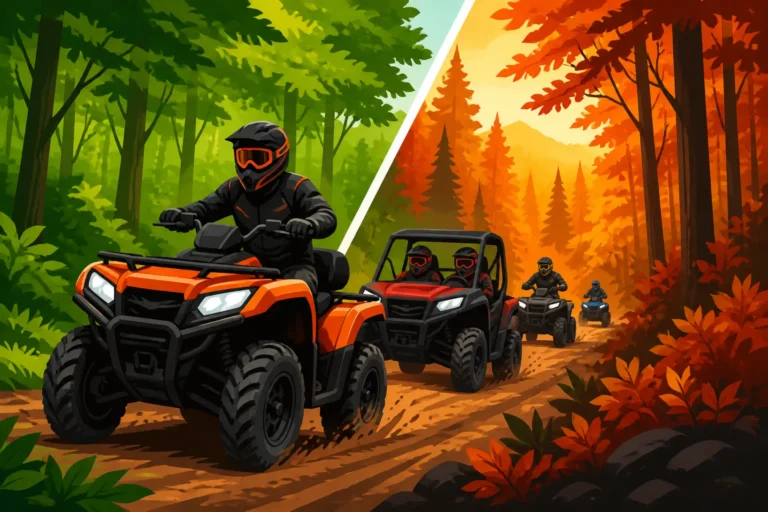
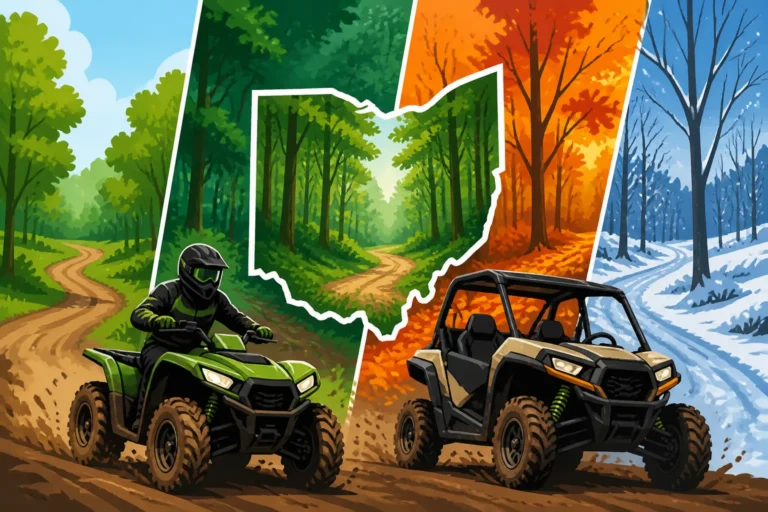
Many Ohio state forest riding areas follow a seasonal calendar: they typically open on the first Friday in April and close on the second Monday in December. Maumee State Forest is the notable exception, with its designated off-highway vehicle trail open year-round. That makes it an option for riders hoping to get out during months when other forest systems are closed.
The phrase “open year-round” describes the riding opportunity, not an unlimited invitation to ride anywhere in the forest. You still need to stay on authorized routes and follow posted signs, closures, and operating rules. A gate, notice, or temporary trail closure takes precedence over a general calendar description.
It also helps to separate the trail’s open season from the day’s conditions. A trail can be open on the calendar but unpleasant or unsafe after heavy rain, a freeze-thaw cycle, or other weather that affects traction. Before loading your machine, check [Ohio's Trail Season by Forest] and the latest agency notices for the specific area.
The trail network is modest in size
Maumee is not a sprawling trail system. Its roughly eight miles of riding make it a compact destination rather than a place to expect an all-day network of connected loops. The short mileage can be a benefit if you want a manageable outing, but it also means expectations matter: this is not a substitute for a large system when you are planning a long weekend of varied routes.
That compact scale makes planning practical. You can think through travel time, unloading, a few laps, and the return trip without having to map a complex route across many trail segments. For a newer rider or a family looking for a shorter ride, a limited network may feel less overwhelming than a large trail system. Still, a short route deserves the same attention to equipment, safety, and access rules as a longer one.
For a more focused overview of the system, see [Maumee State Forest's 8 Miles]. It is also worth checking an official trail map before you go. A planning app such as onX Offroad can help you orient yourself and organize a trip, but use official notices and posted signs to confirm which routes are authorized and open.
Why Maumee is different from other Ohio forest trails
A longer season is not the same as a different set of rules
Maumee’s year-round schedule changes when riders may be able to visit; it does not automatically change what they may ride or what their machine must meet. Access still depends on using designated routes and complying with state forest requirements. A year-round opening should never be read as permission to ride closed roads, create a new route around a barrier, or cross land that is not part of the authorized system.
This distinction is easy to miss when you are comparing trail areas. One forest’s winter closure may be about its seasonal operating schedule, while Maumee’s trail remains available under its own designation. Neither situation means riders can disregard an on-the-ground closure or ignore conditions. When a sign or agency update conflicts with an older map, follow the current direction.
If you are comparing Maumee with other destinations, [Closing the Second Monday in December in Ohio] and [Reopening the First Friday in April] explain the seasonal pattern elsewhere. They can help you avoid assuming that every Ohio forest follows the same calendar—or that Maumee’s exception applies to other locations.
Northwest Ohio’s landscape calls for a different kind of preparation
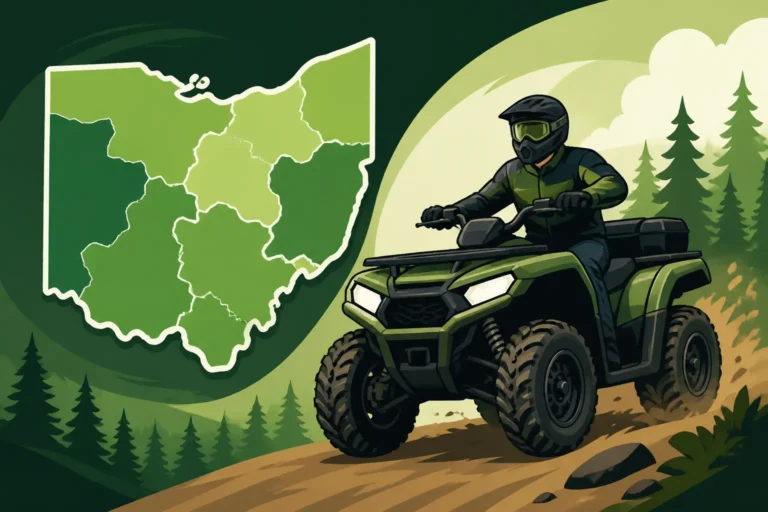
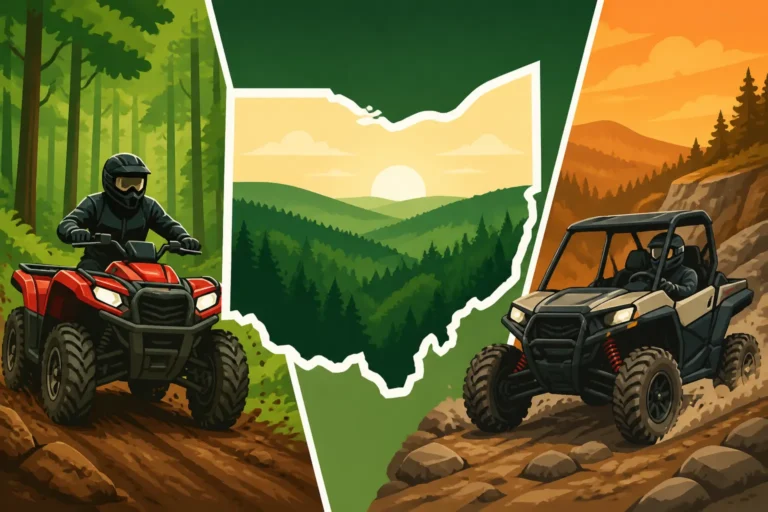
Maumee sits in northwest Ohio’s Oak Openings region, west of Toledo. That landscape differs from the hillier terrain riders may picture when they think of southern Ohio forest trails. The riding experience here is shaped by a different setting, so it is sensible to plan for the local route rather than assume it will feel like a southern forest system.
Terrain and weather interact. A trail that seems firm in one season can still change after rain, snowmelt, or repeated freeze-thaw cycles. Sand, soil, leaf cover, and low spots can affect traction and visibility in ways that are not obvious from a broad regional map. The practical approach is to check current conditions, ride at a pace that leaves room to respond, and turn around if the trail is deteriorating.
Map tools are useful for context, not as a guarantee of trail conditions. You can use onX Offroad to prepare a general route plan, then compare that plan with official maps, current notices, and signs at the trailhead. For a broader checklist, [Ohio Trail Conditions Before You Ride] covers the kinds of details worth checking before setting out.
| Planning question | Why it matters at Maumee | What to do |
|---|---|---|
| Is the trail currently open? | Year-round access does not rule out temporary closures. | Check official notices and trailhead signs before riding. |
| Is the surface suitable today? | Rain, snowmelt, and freeze-thaw conditions can change traction. | Review conditions and be willing to postpone. |
| Is my machine permitted? | State forest routes have equipment and access requirements. | Confirm the applicable width and registration rules. |
| Am I using an authorized route? | A map or GPS line is not permission to leave the designated trail. | Follow official maps, signs, and barriers. |
| Is my trip plan realistic? | The trail network is relatively short. | Set expectations for a compact ride and plan travel time accordingly. |
How to plan a ride in every season
Check access before you leave home
The most useful pre-trip habit is confirming that the trail is open on the day you intend to ride. “Open year-round” is a general seasonal distinction, not a promise that there will never be a temporary closure. Maintenance, weather, safety concerns, or other land-management needs can affect access. Check current official updates shortly before departure, then read any signs at the entrance when you arrive.
A map is an important planning aid, but it can become outdated or show nearby roads and features that are not part of the riding route. onX Offroad may help you review your trip and understand the surrounding area, but do not treat an app display as authority to pass a gate or ride beyond a marked route. If an official notice and your phone map disagree, use the official notice.
Give yourself a backup plan. If conditions are poor or the trail is temporarily closed, a long drive can make it tempting to ride anyway or look for an unofficial way in. Decide in advance that you will not bypass a closure. Checking [Ohio Trail Closures to Check First] before setting out can help you avoid arriving with no workable plan.
Match the season to your equipment and riding style
Winter access can be appealing, but cold-weather riding asks more of both rider and machine. Dress in layers, protect exposed skin, and plan for reduced daylight and cold hands that can make controls harder to use. Check your machine before leaving, pay attention to battery condition, and be ready for a slower ride if the surface is slippery or visibility is limited.
Spring and fall can bring changing surfaces. After rain or a thaw, a route may feel very different from the last time you rode it. In warmer weather, dust, heat, hydration, and the condition of your tires and brakes deserve attention. Whatever the season, a compact trail does not eliminate the need to carry basic supplies and tell someone where you are going.
It can help to keep a simple seasonal checklist: forecast, trail status, machine inspection, protective gear, and a realistic turnaround time. For a January visit, [Riding Maumee in January] is a useful companion topic. The same preparation mindset applies in other months: a trail being open is only one part of deciding whether today is a good day to ride.
Rules and responsibilities to keep in mind
Confirm your machine and registration meet the requirements
Before riding on an Ohio state forest trail, make sure your ATV or UTV is eligible for that route and that its registration and required equipment are in order. State forest access rules can include a width limit, so do not assume a machine that fits on a private trail or farm lane will fit the same system. Check the applicable rules for your vehicle rather than relying on a seller’s description or a friend’s recollection.
Width is especially important for side-by-sides. A machine that is too wide for the designated state forest trail may leave you with no legal route to ride there, even if it is otherwise in good condition. Measure the machine as required by the applicable rule and confirm the limit before traveling. [Ohio's 62-Inch State Forest Width Limit] explains why this detail can determine where a machine may be used.
Registration and other access requirements are separate from the seasonal question. Maumee’s year-round status does not waive them. If you are bringing a machine from outside Ohio, or are unsure whether its paperwork qualifies, check the relevant Ohio requirements before your trip rather than trying to resolve the issue at the trailhead.
Stay on the marked route and share the area thoughtfully
Use only designated riding routes. Cutting a corner, going around a barrier, or following an unmarked track because it appears rideable can damage the land and create access problems for everyone. It can also place you outside the area where riding is permitted. A trail map is a guide to authorized access, not permission to explore every visible path.
On a narrow route, give other users time and space. Slow down when visibility is limited, approach blind bends cautiously, and be prepared to stop. If you meet another rider or a person using the forest in a different way, avoid crowding them and follow posted instructions. Keep noise and speed under control, and leave the area as you found it.
A short ride can still affect a sensitive place. Avoid spinning tires unnecessarily, do not ride through closures or damaged sections, and pack out anything you bring in. Those habits matter especially when a trail remains available during seasons when other systems are closed. Year-round access is most valuable when riders help keep the route in good condition.
Making the most of a compact, year-round riding area
Set expectations before choosing Maumee
Maumee makes the most sense when its size and location match what you want from the day. Riders near Toledo and northwest Ohio may appreciate having a forest trail option that is not governed by the usual winter closure schedule. Someone traveling a long distance for a full weekend of varied routes may find the roughly eight miles limiting and may prefer to compare other destinations before committing.
Think about what a successful outing means to your group. For one rider, it might be a brief winter ride close to home. For another, it could be a low-pressure first outing with a newer rider. If your group expects long loops, extensive elevation changes, or a full day of new terrain, make sure the route mileage and riding style fit those expectations.
A useful planning routine is to check the map, confirm the current status, estimate travel and riding time, and decide what you will do if weather changes. Use an app such as onX Offroad to organize your planning if it helps, while treating official trail information as the final word on access. This combination keeps the convenience of a digital plan without mistaking it for an official closure or permission notice.
Use the year-round opening as an opportunity, not a guarantee
The main benefit of Maumee’s calendar is flexibility. If a suitable day opens up outside the standard state forest season, riders may have a legal destination to consider. That flexibility is especially useful for people who cannot always schedule a ride in spring, summer, or fall. It gives you another option, not a reason to ignore conditions or rush out when the trail is unsuitable.
For a successful visit, keep the plan simple: confirm the trail is open, make sure your machine qualifies, bring appropriate gear, follow signs, and be willing to change plans. If you arrive and find a closure or conditions that feel unsafe, turning around is the right call. A short ride is not worth damaging the trail or putting your group at risk.
Maumee’s year-round status is best understood as a distinct seasonal access arrangement for a relatively small designated trail system in northwest Ohio. It offers a useful alternative when many other state forest routes are between seasons, while the same basic responsibilities still apply. Check current information, ride only where allowed, and let the day’s conditions guide your decision.
Disclaimer
This article is for general informational purposes only and does not constitute professional advice. Laws, prices and regulations vary by location and change over time. Consult a qualified professional for guidance on your specific situation.