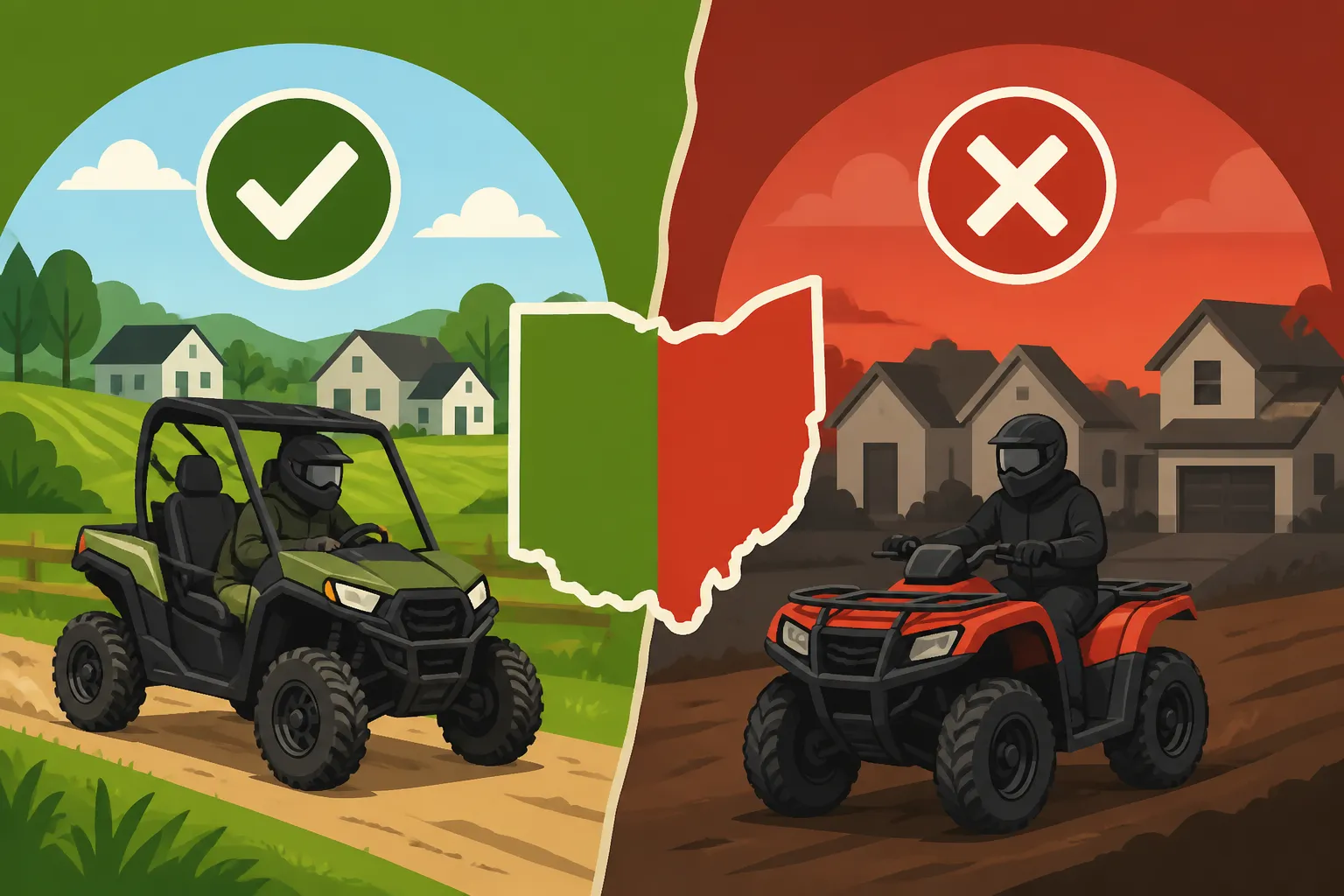
Why One Township Says Yes and the Next Says No
It's incredibly frustrating, isn't it? You see other folks cruising down a country road on their side-by-sides or ATVs, and then you hear stories of people getting pulled over just a few miles away. This inconsistent landscape of "yes, you can ride here" and "absolutely not, that's illegal" can make anyone hesitant to even think about taking their machine off the trail. This guide is here to untangle that web of confusion, explaining why some Ohio townships welcome all-purpose vehicles on their roads while others staunchly refuse, and what you need to know to stay on the right side of the law.
The Patchwork of Ohio Road Legality for APVs
Ohio doesn't have a simple, statewide "yes" or "no" answer when it comes to riding your all-purpose vehicle (APV), like an ATV or UTV, on public roads. This lack of a clear, universal directive is often the root of rider confusion and frustration. Instead of a single blanket rule, what we have is a complex tapestry woven from state law and local ordinance, leading to a highly localized and often bewildering situation for enthusiasts. You might be able to legally ride your UTV down a township road in one county, only to cross an invisible line into the next township or county and suddenly find yourself in violation of local statutes. It's not about being street-legal statewide; it's about being street-legal locally.
Understanding Ohio's APV Road Law Framework
At its core, Ohio law generally restricts APVs from operating on public roads. The default position is that these machines are designed for off-road use, and their presence on paved or gravel roads is prohibited unless specific exceptions are made. However, the same state law that sets this general prohibition also carves out the possibility for local jurisdictions to create those exceptions. This means that while the Ohio Revised Code defines what an all-purpose vehicle is, and broadly dictates its use, it also empowers local governments to decide if and where these vehicles can share the road with cars and trucks. For a deeper dive into the specific language, you might want to look into [How Ohio Law Defines an APV]. This framework creates the decentralized decision-making process that often leaves riders scratching their heads.
The state's approach is a recognition that Ohio is incredibly diverse, from bustling urban centers to vast agricultural expanses and heavily forested recreational areas. A one-size-fits-all rule simply wouldn't make sense. For example, a rural township where farming is the primary industry might have a very different perspective on UTVs being used to access fields or transport equipment than a densely populated suburban area where the roads are narrow and traffic is heavy. The state essentially says, "Here are the rules, but you, the local government, know your community best, so you can make adjustments." This legislative nuance is critical to understanding why the rules vary so dramatically from one community to the next.
The Role of Local Government in Opening Roads
The power to permit APV road use in Ohio rests firmly with local elected officials: the county commissioners at the county level, and the township trustees for townships. These are the folks who, through formal resolutions or ordinances, can vote to open certain public roads under their jurisdiction to APV traffic. It's a democratic process, driven by local concerns, input from residents, and often intense debate. For example, you might find that [How County Commissioners Vote to Open Roads to APVs] involves public hearings and careful consideration of safety, while [How Township Trustees Open Their Roads to APV Riders] might be a more direct response to community needs or a push from local riding groups.
When county commissioners or township trustees consider such a resolution, they're not just flipping a coin. They're weighing a multitude of factors, including local sentiment, potential economic benefits (such as attracting ATV/UTV tourism), public safety implications, and the condition of their road infrastructure. A resolution might open all township roads, or it might be highly specific, allowing APVs only on certain designated routes, during particular hours, or for specific purposes. This granularity in local decision-making explains why two adjacent townships, seemingly similar, can have vastly different rules. It truly comes down to the individual boards and their understanding of their constituents' needs and concerns.
Why Local Decisions Differ: Factors at Play
The reasons behind a township's decision to either open its roads to APVs or keep them closed are as varied as the communities themselves. It's rarely a simple choice; rather, it's the culmination of local culture, economic pressures, safety analyses, and even the personalities of the elected officials. This confluence of factors creates the inconsistent landscape that riders often find bewildering. Understanding these underlying drivers can help you anticipate how a particular area might lean, though there's no substitute for direct research.
Community Character and Economic Drivers
One of the most significant factors influencing a township's decision is its fundamental character. Rural townships, particularly those with a strong agricultural base or a burgeoning outdoor recreation industry, are often more inclined to open their roads. In these areas, UTVs might be seen as essential farm equipment, used daily to traverse fields or move between properties. For example, a farmer might use their UTV to check fences, transport feed, or even run quick errands to a local store without having to load it onto a trailer. Recognizing this practical utility, many agricultural communities see road access as a benefit to their local economy and way of life.
Beyond farming, townships that actively promote outdoor tourism, especially for activities like hunting, fishing, or accessing natural areas, might also be more open to APV use. Allowing street-legal (in their jurisdiction) APVs can make it easier for visitors to access trailheads, local businesses, or campsites, potentially boosting local revenue. On the other hand, townships that are more suburban or residential in nature, or those focused on preserving a quiet, family-oriented atmosphere, might be far less enthusiastic. Residents in these areas might prioritize minimizing noise, traffic, and perceived safety risks over the recreational or utilitarian benefits of APV road use. The perception of what constitutes a "nuisance" often plays a critical role, pitting the desire for quiet against the freedom of recreational riders.
Safety Concerns and Infrastructure Limitations
Public safety is, understandably, a paramount concern for any local government. This often becomes the primary hurdle for opening roads to APVs. Township trustees and county commissioners frequently worry about the speed differential between APVs and traditional vehicles, the potential for accidents, and the safety of riders who may be less protected than occupants in a car. Roads that are narrow, lack shoulders, or have numerous blind curves can significantly heighten these concerns. Imagine a two-lane road with no berm, winding through hills – introducing slower-moving, open-air vehicles like ATVs could be seen as an unacceptable risk by some officials and residents.
Another aspect of safety involves existing road infrastructure. Many township roads were simply not designed with APV traffic in mind. Issues like pavement condition, signage, and the presence of bike lanes or pedestrian walkways all factor into the safety assessment. A township with well-maintained, wider roads might feel more comfortable, while one with older, deteriorating infrastructure might cite the need for costly upgrades as a reason to decline APV access. Furthermore, the sheer volume of traffic can be a deterrent. A quiet, rarely traveled gravel road is a different proposition than a main thoroughfare used by commuters. Local officials have to consider not just the possibility of APVs on roads, but the impact they would have on the existing flow and safety of all road users. This is where [Ohio Rules for Riding a County Road] and [Ohio Rules for Riding a Township Road] come into play, often dictating speed limits or specific areas of travel even if roads are opened.
Practicalities for Riders: How to Find Out and What to Expect
So, you're an APV owner in Ohio, and you're tired of the guesswork. How do you actually figure out if a particular township or county allows you to ride on their roads, and what does that mean for your machine and your riding habits? It's not always as simple as looking for a sign, and taking the time to do your homework beforehand can save you a lot of headache, and potentially, a hefty citation. The key is proactive research, understanding that the burden of knowing the law falls squarely on the rider.
Researching Local Ordinances and Resolutions
The most reliable way to determine if APVs are allowed on local roads is to go straight to the source: the local government itself. This means looking up the specific township or county where you intend to ride. Start by checking their official websites; many local governments will post their resolutions, ordinances, or minutes from trustee or commissioner meetings online. Look for terms like "all-purpose vehicle," "ATV," "UTV," or "off-highway vehicle" within their legal documents. You're specifically searching for a resolution that opens roads to APVs. Without such a resolution, the general state prohibition remains in effect.
If you can't find clear information online, don't hesitate to reach out to the township clerk or the county commissioners' office. They are the keepers of these records and can often provide direct answers or point you to the relevant documents. A simple phone call can clarify a lot of confusion. Local sheriff's offices or police departments in the area might also be knowledgeable, though their primary role is enforcement, so always try to get the original legislative document if possible. Keep in mind that not all townships have taken action one way or another. If no resolution explicitly opens roads, then they are closed. For general guidance on this process, see [Finding Out Which Roads Are Open] and [Calling a Township Clerk About APVs]. For a real-world example of what such a resolution might look like, you could research something like [Washington County Resolution 2024-1114].
Equipment and Rider Requirements for Permitted Roads
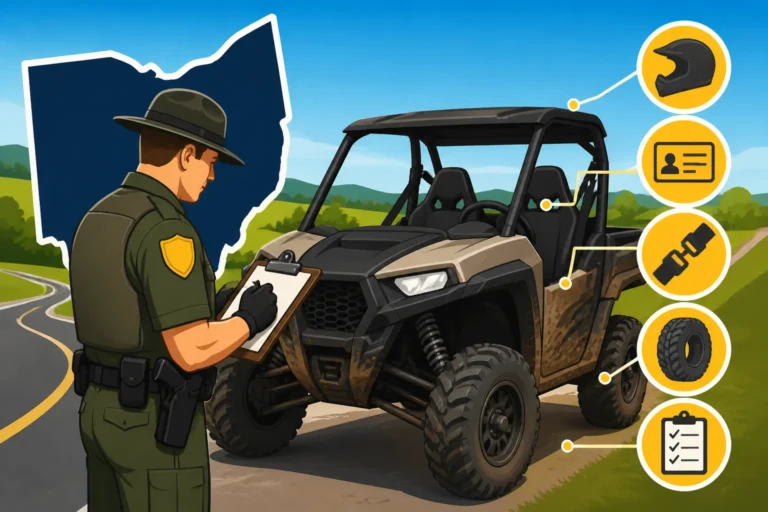
Even when a township or county does open its roads to APVs, it's never a free-for-all. There will almost certainly be specific requirements that your machine must meet, as well as rules for the rider. These requirements are typically outlined in the same resolution that permits road use, and they are crucial for both safety and legal compliance. For UTVs, for example, the requirements can be quite extensive, often mirroring those for low-speed vehicles. You might need working headlights and taillights, turn signals, brake lights, mirrors (often one on each side and a rearview), and a horn. Many townships also require a windshield made of safety glass and even working wipers for UTVs. This means that your trail-ready side-by-side might need some upgrades to be road-legal in an "open" area. Many riders turn to aftermarket providers like SuperATV for these compliance parts, ensuring their machines meet the local standards for mirrors, turn signals, and robust windshields.
For all APVs, you'll need a valid Ohio APV registration and plate, which serves as your permit to ride on designated trails and, in some cases, local roads. Riders will also need a valid driver's license (not just a permit), and proof of insurance is often a requirement for any APV operating on public roads, just as it is for cars. Always carry these documents with you. Furthermore, speed limits are almost always imposed, often requiring APVs to travel at or below a certain speed, such as 35 mph, even if the posted limit for cars is higher. Ignoring these requirements can lead to fines, even if you're on an "open" road. Make sure you understand the specifics of [Ohio Equipment Rules for an APV on a Road] and [Ohio Equipment Rules for a UTV on a Road].
Navigating the Open Roads and Staying Legal
Once you've done your homework and confirmed that a specific township or county allows APVs on its roads, your responsibility doesn't end there. Knowing the rules and adhering to them is paramount for both your safety and maintaining the privilege of riding. The goal is to be a responsible, courteous operator who helps build a positive image for the APV community, rather than contributing to reasons why a township might reconsider its "yes."
Understanding Road Designations and Restrictions
Even in areas where APVs are generally permitted on local roads, there are almost always distinctions to be made about which roads are open. A common restriction is that state routes (those designated with a numeric highway shield, like State Route 37 or 550) and certainly interstate highways are typically off-limits to APVs. Local resolutions generally only apply to roads maintained by the county or township, not state or federal roads. This is a critical distinction, as attempting to cross or ride on a state route, even for a short distance, can result in a citation. It's important to understand [Why State Routes Stay Closed in Ohio] and [Why Interstates Stay Closed in Ohio], as these are consistent statewide prohibitions that local ordinances cannot override.
Furthermore, within the local road network, there might be specific speed limits for APVs. For instance, a township might allow APVs on roads where the posted speed limit is 35 miles per hour or less, but prohibit them on faster county roads. This means you need to pay close attention to posted speed limits. While a car might legally travel 55 mph on an unposted rural road, an APV might be restricted to 35 mph or even prohibited altogether if the road's default limit is too high for APV use. For more details on these speed-based distinctions, refer to [An Ohio Road Posted Thirty-Five or Less]. Always be on the lookout for signage that specifically permits or prohibits APV use, as this can change abruptly from one road segment to the next.
Being a Responsible Rider in Open Road Areas
Operating an APV on public roads, even those that are legally open to you, requires a heightened sense of responsibility and situational awareness. You are sharing the road with various types of traffic, from passenger cars to large agricultural machinery and semi-trucks. Your smaller, often slower, and more exposed vehicle makes defensive riding absolutely essential. Always assume other drivers might not see you, especially when making turns or entering intersections. Use your turn signals (if equipped, and they should be if you're road legal!), maintain proper following distances, and be predictable in your movements.
It's also crucial to remember that your legal right to ride can be easily revoked if the APV community as a whole doesn't act responsibly. Excessive noise, littering, reckless operation, or disrespect for private property can quickly lead to local officials reconsidering their ordinances. Therefore, obey all traffic laws, respect private landowners, and keep your machine properly registered and insured. Your Ohio APV plate is your ticket to legal operation, and carrying proof of insurance is often required for road use. Familiarize yourself with all the requirements, including [Ohio APV Registration and Insurance Proof] and [Ohio Registration for a Side-by-Side], to ensure you're fully compliant and can ride with confidence, knowing you've done your part to maintain the privilege.
Disclaimer
This article is for general informational purposes only and does not constitute professional advice. Laws, prices and regulations vary by location and change over time. Consult a qualified professional for guidance on your specific situation.