Riding the Berm Beside an Ohio Lane
It’s a common sight in rural Ohio: a wide, grassy stretch next to a paved or gravel road, just begging to be ridden. For many ATV and UTV enthusiasts, this "berm" or shoulder seems like a safe, logical place to operate their machines, especially when trying to connect trails or access private property. However, the reality of riding alongside an Ohio lane is far more nuanced and fraught with potential legal pitfalls than many realize. This guide will meticulously break down the rules, practicalities, and critical safety considerations for riding the berm beside an Ohio lane, helping you avoid fines and keep your adventure legal.
Understanding What "Riding the Berm" Means in Ohio
When we talk about "riding the berm" with your ATV or UTV in Ohio, what exactly are we referring to? It’s not just about finding a little extra space next to the asphalt. In the context of Ohio law and off-road vehicle use, the "berm" generally means the shoulder of a road – that undeveloped, often grassy or gravelly strip immediately adjacent to the paved or traveled portion of the highway. It’s distinct from the ditch line, private property, or the actual traffic lane itself.
The Legal Definition of a Berm or Shoulder
Ohio Revised Code often refers to the "berm or shoulder" as the part of the roadway contiguous with the traveled portion and used for stopping, parking, or accommodating disabled vehicles. For all-purpose vehicles (APVs), which include ATVs and UTVs, the law specifically addresses their operation "alongside the roadway on the berm or shoulder." This language is critical because it acknowledges the berm as a permissible (under specific circumstances) area for APV travel, but it doesn't grant universal access. You can't just assume any berm is fair game. [How Ohio Law Defines an APV] is important context here.
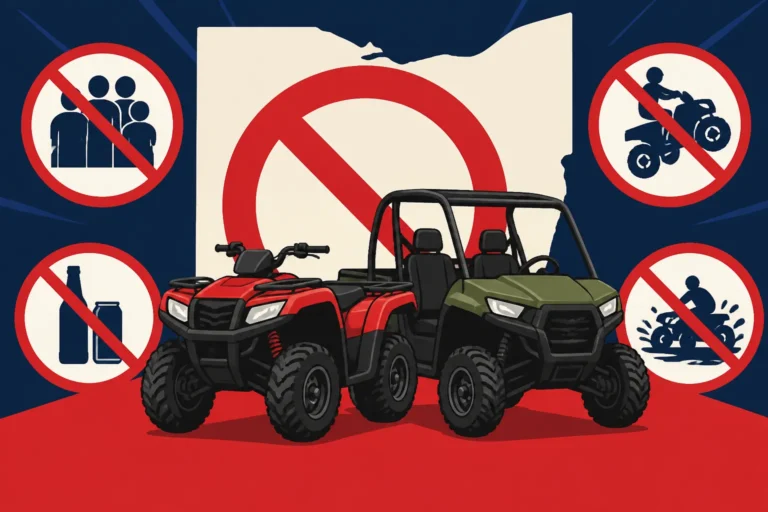
The key frustration for riders often stems from this distinction. You might see a beautifully wide, well-maintained berm in a rural area and think it’s perfect for your side-by-side. However, the condition of the berm itself doesn't dictate its legality for APV use. Its legal status is intrinsically linked to the road it borders and whether that road has been officially opened to APVs. If the road itself is closed to APVs, then riding its berm is also prohibited. Think of it this way: the berm is part of the road right-of-way, and if the road isn't open for APVs, neither is its shoulder.
Why Berm Riding Isn't Always Allowed
Many riders mistakenly believe that as long as they stay off the paved portion of the road, they’re in the clear. This is a dangerous misconception that can lead to costly citations. The reason berm riding isn't universally allowed comes down to two main factors: local control and safety. Ohio law grants counties and townships the authority to open their roads to APV use, and this decision is made through official resolutions by county commissioners or township trustees. If no such resolution exists for a particular road, then APVs are generally restricted from that road, and by extension, its berm.
Furthermore, even on roads where APVs are permitted, there are often specific stipulations about how they must be operated, including rules about riding the berm. These rules are designed with safety in mind – not just for the APV rider, but for other motorists, pedestrians, and property owners. A berm might be too narrow, too soft, or obscured in a way that makes riding it unsafe. The potential for unexpected obstacles, hidden culverts, or encounters with pedestrians means that even a seemingly perfect berm can pose risks. Understanding [Ohio Fines for Illegal APV Road Use] can really drive home the importance of knowing these rules.
When and Where Riding the Berm is Permitted in Ohio
The freedom to ride your ATV or UTV on the berm beside an Ohio lane is not a blanket right; it’s a privilege granted under very specific conditions, almost always tied to local government decisions. Understanding these conditions is paramount to legal and safe operation.
The Role of Local Resolutions in Opening Roads
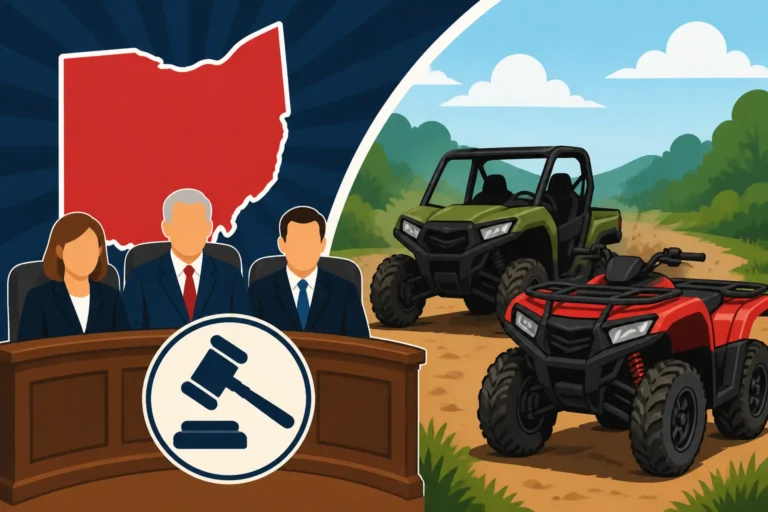
In Ohio, the power to permit APVs on local roads lies primarily with county commissioners for county roads and township trustees for township roads. They achieve this by passing official resolutions that designate specific roads or entire road systems as open for APV use. Without such a resolution, most roads remain closed to APVs, regardless of how suitable their berms might appear. This is why you simply cannot assume any road is open to you. For a deeper dive into this, check out [How County Commissioners Vote to Open Roads to APVs] and [How Township Trustees Open Their Roads to APV Riders].
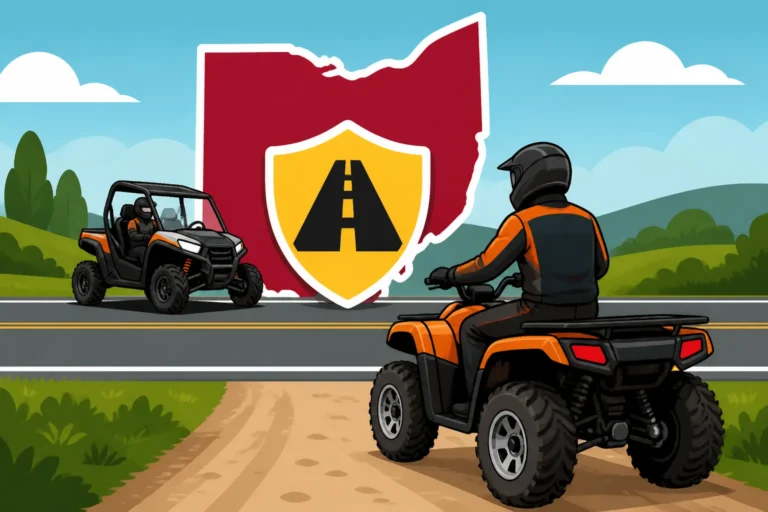
When a county or township does open its roads, the resolution will often specify how APVs are to be operated. This is where "riding the berm" comes into play. Many resolutions explicitly state that APVs must be operated on the extreme right side of the road, on the berm or shoulder, when practicable. This means you’re not meant to be in the main traffic lane, but rather utilizing the available space alongside it. However, "when practicable" is a crucial qualifier – if the berm is too narrow, too soft, or otherwise unsafe, you may have to briefly enter the traveled portion of the lane, assuming the road itself is open and you follow all other traffic laws.
Navigating Different Road Types and Their Berms
The rules for riding the berm can vary slightly depending on the type of road you're on:
- Township Roads: These are the most common roads to be opened for APV use in Ohio. If a township has passed a resolution, you’ll typically be allowed to ride the berm, staying as far right as possible. Examples include [Riding Muskingum Township Roads] or [Riding Newport Township Roads], where local resolutions dictate access. Always [Finding Out Which Roads Are Open] is your first step.
- County Roads: Similar to township roads, county roads can be opened by county commissioner resolution. These might include main thoroughfares that connect smaller townships or provide access to trail systems. The same principles apply: stick to the berm, extreme right, and only where the road is officially open.
- State Routes: This is where it gets tricky, and generally, these roads remain closed to APVs. State routes, identified by numbers like US-33 or OH-550, are under the jurisdiction of the Ohio Department of Transportation (ODOT), not local authorities. As such, you typically cannot ride your APV, or its berm, on a state route, even if the surrounding township roads are open. There are very limited exceptions, such as crossing a state route at an intersection, but even then, riding the berm for any significant distance is almost universally prohibited. [Ohio Rules for Crossing a State Route] explains this further.
- Private Roads/Farm Lanes: If you have explicit permission from the landowner, riding on private farm lanes or driveways is generally fine, and these often have natural berms. However, this is strictly private land and doesn't extend to public road berms.
Table: Berm Riding Scenarios on Ohio Roads
| Road Type | APV Use on Berm | Key Consideration |
|---|---|---|
| Township Road | Permitted if township resolution opens the road. | Must ride on extreme right, on berm/shoulder, if practicable. |
| County Road | Permitted if county resolution opens the road. | Must ride on extreme right, on berm/shoulder, if practicable. |
| State Route | Generally Prohibited. Exceptions only for crossing. | Berms on State Routes are NOT typically open for APV travel. |
| Private Lane | Permitted with landowner permission. | Not subject to public road APV laws, but respect property rights. |
Crossing Highways and Roads
Even if a road system is open, there will be times you need to cross a closed road, like a state route, to get to another section of open roads or trails. Ohio law generally allows APVs to cross a highway, provided the crossing is made at a ninety-degree angle to the highway, at an intersection, and after yielding to all oncoming traffic. You cannot ride down the berm of a closed state route to find a better crossing point; you must cross directly. The moment your wheels touch the pavement of a closed road (or its berm, for that matter), you could be violating the law. This is a common point of confusion and a frequent source of citations.
Practical Considerations and Safety Tips for Berm Riding
Even where it's legally permitted, riding the berm beside an Ohio lane comes with its own set of challenges and safety considerations. You're sharing the road corridor with much larger, faster vehicles, and the terrain can be unpredictable. Being prepared and vigilant is essential.
Assessing Berm Conditions and Terrain
Before you even think about riding a berm, you need to assess its condition. Not all berms are created equal. Some might be wide and relatively smooth, offering a decent riding surface. Others could be narrow, riddled with ruts, potholes, hidden rocks, or even exposed culvert pipes. A common problem is that berms, especially after rain, can become extremely soft and muddy, making them difficult and dangerous to navigate. Deep mud can cause you to lose control, get stuck, or even flip your machine.
Consider the width of your machine. While many ATVs fit comfortably on most berms, wider side-by-sides might find themselves constantly flirting with the edge of the paved lane, or even needing to enter it where the berm narrows. This can lead to increased risk and potential violations. [Ohio Rules for a Machine Over 62 Inches] is very relevant here, as wider machines have fewer legal riding options. Always err on the side of caution. If the berm looks unsafe, too narrow, or too soft, find an alternative route or consider walking your machine if it's a very short, unavoidable stretch.
Enhancing Visibility for Berm Riding
Visibility is your best friend when riding alongside traffic. Cars and trucks are often not looking for an APV on the shoulder, especially in rural areas where speeds can be high. You need to make yourself as conspicuous as possible.
- Lighting: Ensure your APV's headlights and taillights are functioning perfectly. For daytime riding, consider adding bright LED light bars or auxiliary lights. If you're riding near dawn, dusk, or in foggy conditions, good lighting is non-negotiable. [Ohio Lighting Requirements for APVs] are critical to know.
- Reflectors and Reflective Gear: Add reflective tape to your machine and wear bright, reflective clothing, especially blaze orange or neon colors. This is not just for hunting season; it makes you stand out against natural backdrops.
- Mirrors: While not always strictly required for ATVs, side-by-sides often have them, and they are invaluable for berm riding. Wide-view mirrors, like those available from SuperATV, can significantly improve your situational awareness, allowing you to see traffic approaching from behind without constantly turning your head. This is crucial for making safe decisions, such as pulling over further or pausing before crossing a driveway.
- Turn Signals (for UTVs): If your UTV is equipped with turn signals (often an aftermarket addition for conditional road legality), use them diligently. Clearly signaling your intentions, like turning into a driveway or preparing to cross a road, is vital for communicating with other drivers. SuperATV offers comprehensive turn signal kits that can integrate seamlessly into many UTV models, making your machine much safer for any road-adjacent travel.
Staying Safe and Alert
Riding the berm demands your full attention. You’re navigating uneven terrain while simultaneously being acutely aware of vehicle traffic.
- Maintain Control: Keep both hands on the handlebars/steering wheel. Avoid distractions. The berm can change quickly, from smooth gravel to soft dirt or sudden ruts.
- Scan Constantly: Look ahead for obstacles, check your mirrors frequently for approaching vehicles, and be aware of driveways or side roads where vehicles might pull out.
- Yield to Traffic: Always assume cars and trucks have the right-of-way. Be prepared to pull further off the road or stop if a vehicle needs more space, especially large agricultural equipment or semis.
- Be Predictable: Ride in a straight, consistent line. Avoid sudden swerving or erratic movements that could confuse other drivers.
- Know Your Exit: Always have a plan for where you’ll exit the berm, whether it's turning onto a private drive, entering an open trail, or crossing a road.
- Helmet and Eye Protection: Ohio law requires riders under 18 to wear a helmet on public lands, and it's always a smart idea for everyone, especially when riding near traffic. Eye protection is also highly recommended to shield from dust, debris, and glare. Consider [Ohio Helmet Rules for APV Riders] for specifics.
- Don't Rush: Take your time. Berm riding is not about speed. It’s about safely connecting from one point to another.
Navigating the Reality: Challenges and Enforcement
Even with the best intentions and thorough knowledge, riding the berm in Ohio can present challenges. Law enforcement officers have a duty to enforce the laws as written, and sometimes, the interpretation or specifics of a local resolution might not be immediately clear to every rider or even every deputy.
Dealing with Ambiguity and Enforcement
One of the biggest frustrations for Ohio riders is the patchwork nature of APV road laws. A township might open all its roads, but the adjacent county might not have. Or, a resolution might be vague about what "berm or shoulder" actually entails in certain situations. This ambiguity can sometimes lead to misunderstandings with law enforcement.
- Carry Your Paperwork: Always carry proof of your APV registration, insurance (if applicable for road use), and driver's license. If you're on a road opened by a resolution, it’s not a bad idea to have a copy of that resolution on your phone or printed out, though it's not strictly required. A deputy will want to see [Ohio APV Registration and Insurance Proof].
- Be Courteous and Cooperative: If you are stopped, remain calm and respectful. Present your documents clearly and answer any questions truthfully. Arguing about the law roadside is rarely productive.
- Know Your Local Laws: Your best defense is a good offense—meaning, proactive knowledge. Before you ride in an unfamiliar area, contact the local county sheriff's office or township clerk to inquire about specific APV road resolutions. [What an Ohio Deputy Checks Roadside] can give you an idea of what they're looking for.
When the Berm Ends or Becomes Impassable
What happens if you're legally riding the berm, but it suddenly disappears, becomes too narrow, or turns into an impassable bog? This is a common real-world dilemma.
- Briefly Enter the Lane (Carefully): If the road is open to APVs and the berm becomes absolutely impassable, you might need to briefly and cautiously enter the traveled portion of the lane. You must treat your APV as a vehicle operating on the road, following all traffic laws, including signaling, maintaining speed (if safe to do so), and staying as far right as possible. This should be a momentary transition, not an extended period of riding in the lane.
- Pull Over and Assess: If the situation seems too dangerous or you’re unsure, pull off the road entirely (if safe to do so) and stop. Re-evaluate your route. Sometimes, walking your machine through a very short, difficult section might be the safest and most legal option.
- Turn Around: There's no shame in turning back if a route becomes too risky or clearly illegal. Your safety and legal standing are more important than pushing through. Remember that some townships, even when opening roads, still have restrictions, such as those mentioned in [An Ohio Road Posted Thirty-Five or Less], which means some roads might be off-limits based on speed limits.
The Importance of Proper Equipment and Maintenance
Your machine needs to be in top shape for safe berm riding. This isn't just about fun; it’s about safety and legality.
- Tires: Ensure your tires are in good condition and properly inflated for the mixed terrain of berms and occasional pavement.
- Brakes: Test your brakes before each ride. You need reliable stopping power, especially when sharing space with vehicles.
- Steering and Suspension: Make sure your steering is tight and responsive, and your suspension is capable of handling uneven ground without causing instability.
- Muffler and Spark Arrester: Ohio law requires an adequate muffler and a spark arrester on APVs, particularly on public lands and for trail riding. This isn’t just for noise control; it prevents wildfires, which is always important. [Ohio Muffler Requirements for APVs] gives you the details.
Riding the berm beside an Ohio lane can be a legitimate and convenient way to connect your riding adventures. However, it's a privilege that comes with significant responsibility. By understanding the specific laws, being hyper-aware of your surroundings, utilizing safety enhancements like those from SuperATV, and maintaining your machine, you can navigate Ohio’s varied terrain legally and enjoyably. Always remember: when in doubt, find out. Your peace of mind and your wallet will thank you.
Disclaimer
This article is for general informational purposes only and does not constitute professional advice. Laws, prices and regulations vary by location and change over time. Consult a qualified professional for guidance on your specific situation.