What an Ohio Deputy Checks Roadside
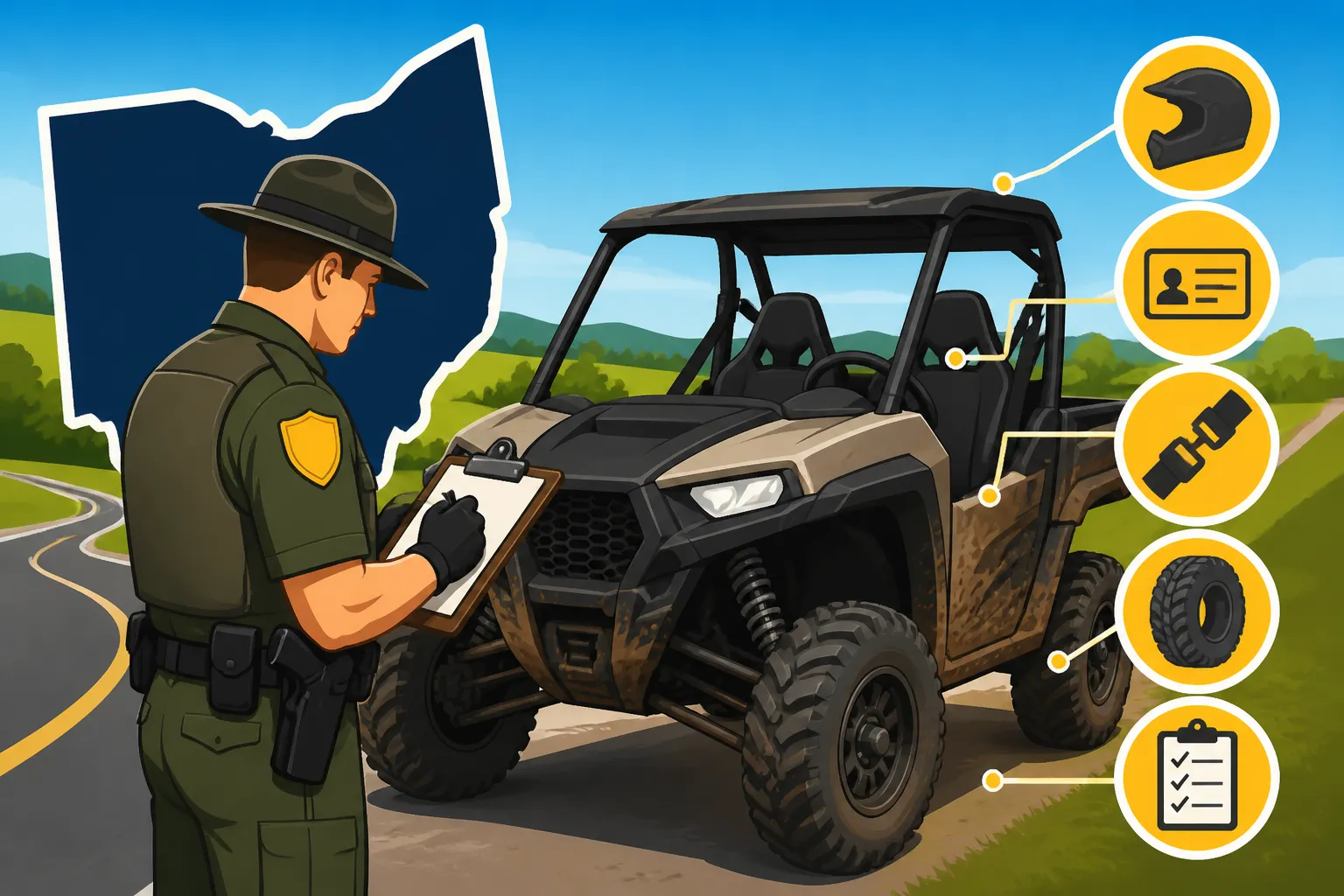
Picture this: You’re out enjoying a ride on your ATV or UTV, cruising along a country road where you think you're allowed to be, when suddenly, flashing lights appear in your rearview. That sinking feeling in your stomach is all too real for many Ohio off-road enthusiasts. This guide is here to shed light on exactly what an Ohio deputy will be looking for if you get pulled over, helping you prepare and understand your rights and responsibilities when operating your all-purpose vehicle (APV) on public roads.
The Initial Encounter: Why You Might Be Stopped
Getting pulled over can be a jarring experience, especially when you're on a machine often associated with trails, not public roads. It's natural to wonder what caught the deputy's eye in the first place. Understanding the common reasons for a stop can help you avoid them and reduce your anxiety on the road.
Observable Violations Leading to a Stop
Sometimes, a stop isn't about you doing anything inherently wrong, but rather an observable issue that signals to law enforcement that something might be amiss. Perhaps your machine doesn't have a visible [Ohio APV Plates and Validation Stickers], or it's simply missing outright. This immediately flags you as potentially unregistered, which is a major violation on any public thoroughfare. Deputies are also trained to spot obvious equipment issues, like a headlight that’s out, a non-functional brake light, or tires that are dangerously worn. These aren't just minor inconveniences; they’re safety concerns that can lead to a roadside interaction.
Beyond equipment, riding in areas explicitly prohibited for APVs is a surefire way to get pulled over. If you’re on a state route that hasn’t been specifically opened to APVs, or if you stray onto private land without permission, you're inviting a stop. Erratic operation, such as swerving, speeding excessively for the conditions, or riding in a way that suggests impaired judgment, will also draw immediate attention. It’s frustrating when you feel singled out, but these visible cues are often what deputies are looking for to ensure public safety and adherence to the law.
General Traffic Stops and APVs
It’s easy to think that because you’re on an APV, you're somehow exempt from general traffic laws, but that's a dangerous misconception, especially when riding on open public roads. When an Ohio county or township opens its roads to APVs, it means those machines must largely abide by the same rules as cars and trucks. This includes speed limits, stop signs, traffic signals, and yielding the right of way. If you’re speeding down a township road or fail to stop at a four-way intersection, a deputy has every right to pull you over for those standard traffic infractions, just as they would any other vehicle.
Consider a scenario where you're happily navigating a permitted county road, but your tail light is out, or you make a sudden, unsignaled turn that nearly causes an accident. These aren't specific "APV violations" in the sense of registration or helmet laws, but rather universal rules of the road. Deputies are tasked with enforcing all traffic laws, regardless of the vehicle type. So, while you might be legally on the road, operating safely and ensuring your machine is in good working order is paramount to avoiding an unwanted conversation with law enforcement.
Essential Documentation: What the Deputy Will Ask For
Once a deputy has pulled you over, the first thing they’ll typically ask for is your paperwork. This isn't just a formality; it's how they verify that both you and your machine are legally permitted to be on the road. Being prepared with the correct, current documentation can make a significant difference in the outcome of the stop.
Proof of Registration and Title
The cornerstone of legal APV operation in Ohio is proper registration. The deputy will absolutely be looking for your current [Ohio APV Plates and Validation Stickers]. Not only must the plate be affixed to the rear of your machine and clearly visible, but it also needs to have the current validation sticker, signifying that your registration is up to date. Many riders make the mistake of assuming the plate itself is enough, but law enforcement often asks for the physical registration card that should be carried on your person or in a secure compartment on your machine. This card acts as concrete proof that the plate belongs to your specific APV.
While the title isn't typically required to be carried with you, the deputy might ask about it or run a check based on your registration. It's important to understand the distinction: [Titling an APV at an Ohio Clerk of Courts] is a one-time process that establishes ownership, whereas registration is the recurring fee paid to legally operate the machine. If there's any doubt about ownership or if the machine appears to be stolen or modified significantly, the title information becomes critical. Always ensure your registration is current and readily available, as riding an unregistered APV on public land or roads can lead to significant fines.
Driver's License and Insurance Proof
Just like any other vehicle on Ohio's roads, operating an APV requires a valid driver's license. This isn't a "special" APV license; it's your standard operator's license (Class D, motorcycle endorsement, etc.). The deputy will ask to see it to confirm you are legally permitted to drive. It's a common oversight for some riders, particularly those who might only operate their machines on private property or trails, to forget that road access comes with this fundamental requirement. Without a valid license, you could face charges for driving without a license, in addition to any other infractions.
Furthermore, if you're operating your APV on a public road in Ohio, you are required to have insurance. This isn't just good practice; it's the law. The deputy will ask for proof of [Ohio APV Insurance Requirement], typically an insurance card or declaration page that shows current coverage. This insurance must meet Ohio's minimum liability requirements, protecting against damages or injuries you might cause to others. Many assume trail riding doesn't require insurance, but once you hit those open roads, the rules change. Having your insurance card handy and ensuring it's current will save you a lot of hassle and potential fines during a roadside stop.
Equipment Compliance: Is Your Machine Road-Ready?
When you venture onto Ohio's public roads with your APV, it's not just about having the right paperwork; your machine itself needs to be properly equipped to meet specific safety standards. Deputies are well-versed in these requirements and will visually inspect your vehicle to ensure it adheres to state and local regulations. This is where many off-road machines, especially UTVs, require some upgrades from their stock configurations.
Specific UTV Road Equipment Requirements
For side-by-sides (UTVs) to be road-legal in Ohio, they need a specific suite of equipment that often goes beyond what's needed for trail riding. The deputy will be checking for functional headlights, tail lights, and brake lights, which are pretty standard. But beyond that, they'll be looking for turn signals on both the front and rear of the machine, as well as mirrors (at least one rearview mirror, typically on the left, though two are always better for visibility). A functioning horn is also a must-have for warning others.
Perhaps the most significant addition for many UTV owners is a windshield. If your UTV has a windshield, it generally needs to be made of safety glass, and you'll need functional wipers. This often means upgrading from a common recreational polycarbonate windshield to a more robust, road-legal option. Companies like SuperATV offer a range of aftermarket accessories, including DOT-approved glass windshields and complete turn signal kits, that help UTV owners meet these demanding [Ohio UTV Road Equipment List] requirements. The deputy is essentially ensuring your UTV can safely integrate with regular traffic, and without these items, you'll be quickly cited. It's worth noting that [The Ohio Inspection a UTV Must Pass] specifically verifies these items before your UTV can even be registered for road use, so if you've passed that, you should be in good shape.
General APV Equipment and Safety
While UTVs have a longer list of road equipment, all APVs operating on Ohio roads must meet general safety and equipment standards. This includes a properly functioning muffler system designed to limit noise, and a spark arrester, which is critical for preventing wildfires, especially when riding off-road or near flammable vegetation. During a roadside stop, a deputy will likely give your machine a quick once-over to ensure these basic items are present and in good working order. Any excessive noise or visible emissions could trigger a closer inspection.
Furthermore, proper lighting is essential, especially if you're operating your APV during specific hours. [Ohio Rules for Riding After Dark] mandate functional headlights and taillights for visibility. Beyond the specific legal requirements, the deputy will also assess the overall safety of your machine. This can include checking tire condition for adequate tread and proper inflation, ensuring brakes are functional, and verifying that there are no dangerously loose or broken parts. While a deputy might not perform a full mechanical inspection, obvious safety hazards will certainly catch their eye. Aftermarket parts, like those from SuperATV, can often enhance both the safety and compliance of your machine for both road and trail adventures, but always ensure they meet the specific letter of the law for road use.
Rider Safety and Conduct: What the Deputy Observes About You
Beyond the machine itself, a deputy will be keenly observing the rider – you! Your conduct, adherence to safety gear rules, and fitness to operate the vehicle are all crucial elements of a roadside stop. These factors directly impact public safety and are strictly enforced, particularly when an APV is interacting with other traffic.
Helmet and Eye Protection Rules
Personal safety gear is a non-negotiable for APV riders on Ohio roads. The deputy will immediately check for proper headgear. [Ohio Helmet Law for APV Riders] on public roads generally mandates helmets for all riders, regardless of age. This isn't just about protecting your head; it’s a visible sign that you're taking safety seriously and complying with the law. A helmet must be DOT-compliant, meaning it meets specific safety standards. A novelty helmet that doesn't offer real protection won't cut it and will likely lead to a citation.
In addition to a helmet, [Ohio Eye Protection Requirement] dictates that you must have adequate eye protection. This usually means goggles or a face shield on your helmet. Dust, debris, and insects can severely impair your vision, making riding extremely dangerous. The deputy isn't just being particular; they're ensuring you have clear, unobstructed vision to safely operate your machine. If you're wearing sunglasses, they must provide sufficient protection, but dedicated riding goggles or a full face shield are always the safest and most compliant option.
Age and Supervision Requirements
Ohio has clear regulations regarding who can operate an APV, especially on public roads, and this is a significant area of focus for law enforcement. The deputy will assess the age of the operator. [Ohio Minimum Age to Ride an APV] on public roads is typically 16, and the rider must possess a valid driver's license. If the operator is under this age, or doesn't have a license, it immediately raises red flags. This isn't a minor infraction; it can lead to charges for unlawful operation and potentially for the adult who allowed the minor to ride.
Furthermore, [Ohio Supervision Rules for Minors] become critical when younger riders are involved, even in situations where they might technically be permitted to ride on certain private lands under supervision. On public roads, if a minor is operating an APV, even if they're close to the age limit, the deputy will be verifying proper supervision by a licensed adult, if that specific situation is even allowed by local ordinance. The rules are designed to prevent inexperienced or underage riders from posing a danger to themselves or others in a mixed-traffic environment. A deputy will take these violations very seriously, as they directly pertain to the safety of vulnerable individuals.
Impairment and Reckless Operation
Perhaps the most severe infractions a deputy will check for are signs of impairment or reckless operation. Operating an APV under the influence of alcohol or drugs is strictly prohibited and carries the same severe penalties as a DUI in a car. [Ohio DUI Rules for APV Riders] are clear: if you’re impaired, you cannot operate any motor vehicle, including an APV, on public roads or trails. A deputy will be looking for signs of impairment such as slurred speech, unsteady gait, bloodshot eyes, and the smell of alcohol or cannabis. Refusal to submit to sobriety tests can also lead to immediate penalties.
Beyond impairment, reckless operation is a broad category that encompasses dangerous or careless riding that endangers others. This could include excessive speeding for the conditions, intentionally swerving, performing stunts, or generally disregarding traffic laws and the safety of other road users. A deputy will observe your riding style and behavior closely. Even if you're not impaired, operating an APV in a reckless manner on a public road can lead to citations, fines, and even the impoundment of your machine. The goal is always to ensure that everyone sharing the road can do so safely, and reckless APV operation undermines that safety.
Legal Road Use: Are You Even Supposed to Be Here?
One of the most complex aspects of APV operation in Ohio is knowing where you can legally ride. Unlike cars, APVs don't have a blanket right to use all public roads. Deputies are acutely aware of these limitations and will often stop riders primarily to verify they are on an authorized route. This critical distinction can determine whether your ride continues or ends with a citation.
Authorized Roads and Posted Limits
In Ohio, the legality of riding your APV on a public road isn't statewide; it's determined at the county and township level. This means a deputy will check to see if you are riding on a road that has been specifically opened to APVs. [Ohio Counties That Allow APVs on Roads] and [Ohio Townships That Allow APVs on Roads] are the exception, not the rule. It's absolutely crucial for riders to research local ordinances before heading out. Just because you see one APV on a road doesn't mean all roads in that area are open to them. A deputy will confirm whether the specific road you are on falls under an enabling resolution.
Even on authorized roads, there are often specific conditions and posted limits. Many ordinances restrict APVs to roads with a speed limit of [Why an Ohio UTV Stops at Thirty-Five] miles per hour or less. If you're caught on a 45 mph or 55 mph road, even if other roads in the township are open, you could be cited. The deputy will be looking for proper signage indicating open roads, or they'll be relying on their knowledge of local resolutions. Ignorance of the law is generally not a defense, so understanding precisely which routes are permissible is entirely your responsibility.
Prohibited Areas and Trespass
While some county and township roads may be open, there are vast stretches of public land and road that remain off-limits to APVs, and deputies actively patrol these areas. State routes (marked with a white shield with "Ohio" on top) and interstates are almost universally prohibited for APV use, except for very limited crossing at intersections. Riding on these major thoroughfares will almost certainly result in a stop and a citation. The deputy's check will quickly establish if you're on such a prohibited state-controlled road.
Another major area of concern is private property. [Ohio Trespass Rules for Riders] are clear: you cannot operate your APV on private land without the express permission of the landowner. Deputies frequently respond to calls from property owners reporting trespassers. If you're found riding on someone else's property without permission, you could face criminal trespass charges in addition to any APV-related citations. The deputy will investigate whether you have permission and, if not, the consequences can be severe. Always err on the side of caution and assume land is private unless clearly marked otherwise, or you have explicit permission.
Here’s a quick summary of what an Ohio deputy might check during a roadside stop for an APV:
| Category | Specific Check | Required Item/Action | Potential Consequence of Non-Compliance |
|---|---|---|---|
| Documentation | Current Registration & Plate | Visible plate, current sticker, registration card | Fines, impoundment |
| Valid Driver's License | State-issued driver's license (Class D or higher) | Driving without a license charges, fines | |
| Proof of Insurance | Current insurance card meeting state minimums | Fines, suspension of driving privileges | |
| Equipment | Headlights, Tail Lights, Brake Lights | All functional, proper illumination | Fines, safety hazard, ordered off road |
| Turn Signals (UTVs) | Functional front and rear signals | Fines, safety hazard, ordered off road | |
| Mirrors (UTVs) | At least one functional rearview mirror | Fines, safety hazard, ordered off road | |
| Windshield & Wipers (UTVs) | Safety glass windshield, functional wipers (if equipped) | Fines, safety hazard, ordered off road | |
| Horn | Functional audible warning device | Fines, safety hazard | |
| Muffler & Spark Arrester | Present, functional, meets noise limits | Fines, ordered off road | |
| Rider Safety | Helmet (All Riders on Road) | DOT-compliant helmet | Fines, safety hazard |
| Eye Protection (All Riders on Road) | Goggles or face shield | Fines, safety hazard | |
| Rider Age & Supervision | 16+ with valid license, or proper minor supervision | Fines, unlawful operation, charges against adult | |
| Location | Authorized Road Use | Road opened by county/township resolution | Fines, trespass, impoundment |
| Speed Limit Compliance | Riding on roads 35 MPH or less (typically) | Speeding ticket, fines | |
| No Trespassing | On public roads or private land with permission | Criminal trespass charges, fines, impoundment | |
| Conduct | No Impairment (DUI) | Sober operation | DUI charges, license suspension, jail time, heavy fines |
| No Reckless Operation | Safe, non-aggressive riding, obeying traffic laws | Reckless operation charges, fines, impoundment |
Disclaimer
This article is for general informational purposes only and does not constitute professional advice. Laws, prices and regulations vary by location and change over time. Consult a qualified professional for guidance on your specific situation.