Ohio Equipment Rules for an APV on a Road
You’ve heard the whispers, seen a neighbor cruising their side-by-side down a county road, and maybe even spotted an ATV pulling a small trailer on a quiet township lane. It makes you wonder, "Can my all-purpose vehicle be street legal in Ohio?" The short answer is often "yes," but it's not as simple as slapping on a license plate. This guide is going to meticulously break down the specific equipment requirements your APV needs to meet if you ever hope to legally roll off the dirt and onto Ohio's permissible roadways, saving you from potential fines and confusion.
The Nuance of Ohio's APV Equipment Laws
Ohio law, in its wisdom, categorizes "all-purpose vehicles" pretty broadly, but when it comes to riding them on public roads, it starts getting particular. The biggest distinction often boils down to the difference between a traditional ATV (like a quad) and a UTV (side-by-side). While both are APVs, the equipment required for road use can vary significantly, which can be a real headache if you don't know what you're looking for. It's not a one-size-fits-all situation, and understanding these subtle but critical differences is your first step to legal road operation.
Why Equipment Rules Vary Between Quads and Side-by-Sides
It can feel a bit unfair sometimes, right? Your buddy's quad seems to need less to hit the asphalt than your enclosed side-by-side. This isn't an accident; it's by design in Ohio law. Traditional ATVs, often designed for a single rider or perhaps a small passenger, typically have a more basic set of requirements because they're generally seen as having a more limited road presence, often restricted to crossing roads or short distances. They're less likely to be confused with standard automobiles.
On the flip side, UTVs, or side-by-sides, with their steering wheels, bench seats, and often enclosed cabs, look much more like mini-cars. Because of this visual similarity and their potential for carrying multiple passengers at higher speeds, the state of Ohio places a much stricter set of equipment demands on them. The intention is to bring them closer to the safety and visibility standards of traditional vehicles when they venture onto shared public thoroughfares, minimizing risks for everyone. This distinction is crucial, so don't assume what works for an ATV will work for your UTV, or vice versa.
The Local Control Factor: How Roads Get Opened
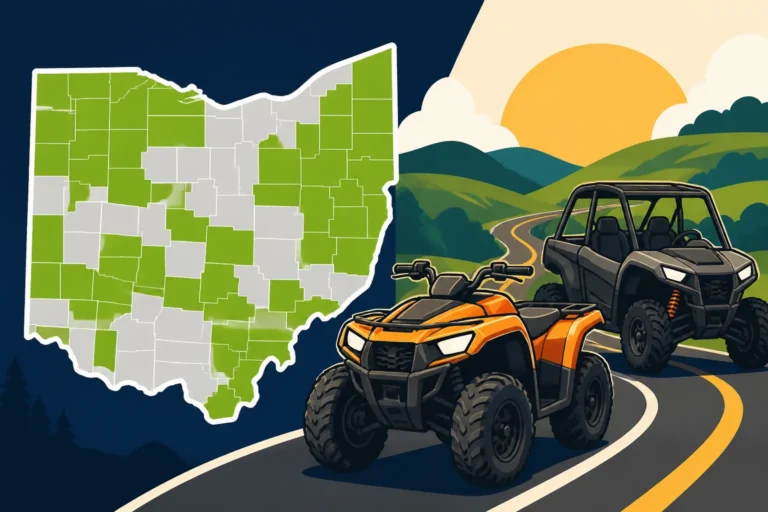
Even with all the right equipment, your APV isn't automatically welcome on every road in Ohio. This is one of the most frustrating aspects for many riders: the patchwork of local rules. Ohio state law doesn't grant a blanket "street legal" status to APVs. Instead, it delegates that authority to local jurisdictions—county commissioners for county roads, and township trustees for township roads. This means that an APV, even one fully equipped, can only operate on roads specifically designated as open for APV use by a local resolution.
This local control means that you might be perfectly legal riding on a township road in Washington County, but cross into the next township, or even a neighboring county, and suddenly you're breaking the law if they haven't passed their own resolution. It's a system that forces riders to do their homework, checking with local authorities like the county or township clerk before planning a route. Equipping your machine is only half the battle; knowing where you can actually ride it is the other. [How an Ohio Township Opens Its Roads] can give you a better idea of how this process works.
Essential Equipment for Any Road-Legal APV
Whether you're riding a quad or a side-by-side, there are a few foundational pieces of equipment that every road-legal APV in Ohio must have. These are the non-negotiables, the bare minimum to ensure you're visible and can safely control your machine when sharing the road with other vehicles. Think of these as your entry ticket to the pavement; without them, you're not even in the running for road legality.
Lighting Up the Road: Headlights, Taillights, and Brake Lights
Visibility is paramount, especially when you're sharing the road with cars and trucks. Ohio law requires that any APV operating on a road must be equipped with at least one headlight that illuminates the road ahead for a specified distance and at least one taillight visible from the rear. These aren't just for looking cool; they're essential safety features. You'll need to ensure your headlight offers both a high and a low beam option, just like a car, allowing you to dim them for oncoming traffic. A single, fixed-beam light won't cut it.
Furthermore, a functional brake light that illuminates when you apply the brakes is a non-negotiable. This tells drivers behind you that you're slowing down or stopping, preventing potential rear-end collisions. Many off-the-shelf ATVs might have basic lights for trail riding, but they often lack the brightness, beam pattern, or high/low beam functionality required for safe and legal road use. If your machine doesn't have them, aftermarket solutions are plentiful, and it’s a critical upgrade. [Ohio Lighting Requirements for APVs] provides more detail.
Stopping Power and Sound Control: Brakes, Mufflers, and Spark Arresters
Having the ability to stop your machine reliably and predictably is just as important as being seen. Your APV must have working brakes capable of stopping the vehicle within a reasonable distance. This typically means front and rear brakes in good working order, with sufficient pad life and fluid levels. A quick check before each ride should confirm your brakes are responsive and effective. Don't skimp on brake maintenance; it could save your life on the road.
Beyond stopping, sound control is also a key legal requirement. All APVs on Ohio roads must have a muffler in good working order that prevents excessive or unusual noise. This isn't just about being a good neighbor; it's about compliance with noise ordinances. That loud, performance exhaust you love on the trails? It might be too noisy for legal road use. Additionally, a spark arrester is required. This device prevents sparks from escaping the exhaust system, which is critical for preventing wildfires, especially in dry conditions or when riding near fields and forests. These two components work together to ensure your machine is operating responsibly and safely for the environment and others.
Keeping It Safe: Tires and Basic Maintenance
While not always explicitly detailed in equipment lists for road use, having appropriate tires in good condition is absolutely critical. Knobby, aggressive off-road tires are fantastic for mud and loose terrain, but they can handle poorly on asphalt, especially at higher speeds. They wear out quickly, reduce braking efficiency, and can make your APV feel unstable on pavement. While Ohio law doesn't specify road-specific tires for APVs, common sense and safety dictate that tires with adequate tread, free from significant wear, cracks, or damage, are essential.
Beyond tires, basic overall maintenance plays a huge role in road legality. Your steering should be tight, your suspension shouldn't be bottoming out, and all moving parts should be properly lubricated and in good repair. A broken axle, loose tie rod, or worn-out wheel bearing might be an inconvenience on the trail, but it could be a catastrophic failure at road speeds. The general expectation is that your vehicle is mechanically sound and safe to operate alongside other traffic.
UTV-Specific Equipment Requirements
Side-by-sides often blur the lines between off-road vehicles and small cars, and Ohio law reflects this by imposing additional equipment requirements compared to ATVs. If you're planning to take your UTV onto permissible public roads, you'll need to pay close attention to these specifics. These additions significantly increase the safety and visibility profile of your machine, bringing it closer to conventional vehicle standards. This is where you might find yourself needing to install aftermarket parts or kits.
Vision and Visibility: Windshields, Wipers, and Mirrors
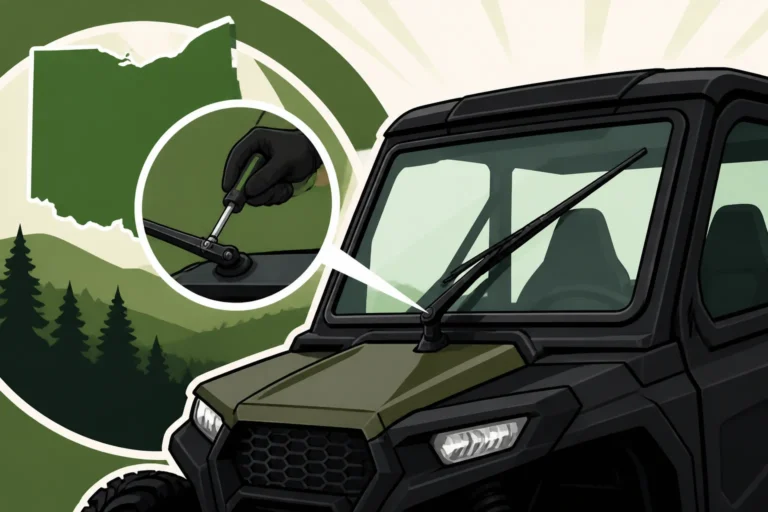
One of the most significant distinctions for UTVs on Ohio roads is the requirement for a windshield. This isn't just any piece of plastic; it must be made of safety glass or a similar shatter-resistant material. Plexiglass or thin plastic panels won't meet the grade. This windshield needs to be in good condition, free from cracks that obstruct vision. And what goes with a windshield? Wipers! Your UTV must have at least one functional windshield wiper to clear rain, snow, or mud, ensuring clear visibility in inclement weather. This is a common upgrade for trail-focused machines. Companies like SuperATV offer robust windshield options that often include wiper kits, making it easier to meet this specific requirement.
Beyond forward vision, side-by-sides also need mirrors. You must have at least one rearview mirror mounted on the left side of the vehicle, offering a clear view to the rear. Many riders choose to install both a left and right side mirror for enhanced safety, giving them better situational awareness of traffic approaching from behind. These additions are about ensuring you can see and be seen, crucial for safe road sharing. [Ohio UTV Road Equipment List] outlines these in detail.
Signaling Your Intentions: Turn Signals and Horns
Imagine trying to navigate a four-way stop in your UTV without turn signals – it would be a guessing game for everyone else. That's why Ohio mandates functional turn signals on both the front and rear of your side-by-side for road use. These need to be visible from a certain distance, clearly indicating your intention to turn left or right. Many UTVs don't come stock with turn signals, making this a common aftermarket addition. You can find comprehensive kits that integrate seamlessly into your UTV's electrical system, often including a horn.
Speaking of horns, a working horn is also required. This isn't just for greeting fellow riders; it's a vital safety device for alerting pedestrians or other drivers to your presence, especially in situations where they might not see you. It needs to be audible from a reasonable distance, much like a car horn. These signaling devices are about communication, ensuring your intentions are clear to everyone else on the road, which prevents confusion and potential accidents.
Passenger Safety: Roll Cages and Seatbelts
With their multi-passenger capability, UTVs inherently carry more risk when operating on roads. To mitigate this, Ohio law requires that any UTV used on public roads must be equipped with a rollover protective structure (ROPS), commonly known as a roll cage. This structure must be securely mounted and in good condition, designed to protect occupants in the event of a rollover. Most modern UTVs come with a factory-installed ROPS, but it's important to ensure it hasn't been damaged or modified in a way that compromises its integrity.
In conjunction with the roll cage, seatbelts are mandatory for all seating positions. Each passenger, and the driver, must be secured by a functioning seatbelt. This means ensuring all seatbelts are present, in good condition, and used by everyone in the vehicle. The combination of a strong roll cage and properly worn seatbelts forms a critical layer of protection for occupants, making your UTV safer when it encounters the higher speeds and harder surfaces of public roads.
What Ohio Doesn't Require on All APVs
Sometimes, what isn't required can be just as surprising as what is. Ohio law, while specific, also has some notable omissions or differences in requirements for APVs compared to standard automobiles. Understanding these can help clarify what modifications you might not need to make, potentially saving you time and money. However, always remember that even if it's not legally required, additional safety measures are always a good idea.
The Missing Inspection for Quads (and why UTVs have one)
Here's a point of differentiation that often catches riders off guard: In Ohio, a UTV that wishes to gain road-legal status must pass a physical inspection. This is the moment where an official checks off all those UTV-specific equipment requirements we just talked about – windshield, wipers, turn signals, horn, mirrors, and so on. This inspection ensures your side-by-side truly meets the safety standards before it gets its plate and permission to hit the road. [Ohio UTV Inspection Requirements] provides further information.
However, for a traditional ATV (quad), no such physical inspection is mandated. You are still required to have the basic equipment (headlights, taillights, brake lights, muffler, spark arrester), and you're certifying that your machine meets these by registering it. But a formal, hands-on inspection by the state or a licensed mechanic isn't part of the process for quads. This difference highlights the state's view that UTVs, being closer in form and function to cars, need an extra layer of scrutiny before being allowed on shared roadways.
What About Speedometers and Odometers?
For many conventional vehicles, a speedometer and odometer are standard equipment, often required for registration or emissions testing. But for APVs in Ohio seeking road access, neither a speedometer nor an odometer is explicitly listed as a mandatory piece of equipment. This can be a relief for some riders, as many basic off-road machines, especially older quads, might not have had these features from the factory.
However, just because it's not legally required doesn't mean it's not useful. Knowing your speed is crucial for complying with posted speed limits on roads, which are often much higher than typical trail speeds. An aftermarket speedometer can be a wise investment for safety and compliance, even if the law doesn't force your hand. The absence of an odometer also means that tracking mileage for maintenance or resale might be trickier without a separate system.
No Statewide Helmet Law for Road Use (but always recommended)
This is another area where Ohio's APV laws diverge from what many might expect, especially if you're familiar with motorcycle laws. While helmets are generally a good idea whenever you're on any kind of motorized two- or four-wheeler, Ohio does not enforce a statewide helmet law for APV riders operating on public roads. This means that if you're an adult rider, you're not legally mandated to wear a helmet when riding your APV on a county or township road that has been opened to APV traffic.
However, and this is a HUGE caveat, helmet requirements do exist for specific areas, such as Ohio's State Forest APV trails, where DOT-compliant helmets are required for all riders. [Ohio Helmet Law on State Forest Trails] explains this further. Additionally, for riders under the age of 18, helmets are generally required regardless of location. Even if not legally mandated for you, wearing a DOT-compliant helmet, along with eye protection, is a fundamental safety practice that greatly reduces the risk of serious injury in the event of an accident. It's a personal choice on open roads, but a highly recommended one.
Pre-Ride Checks and Maintaining Road-Legal Equipment
Having the right equipment installed is one thing; ensuring it's always in proper working order is another. Just like with any vehicle you drive on public roads, your road-legal APV needs regular attention and a solid pre-ride routine. Neglecting maintenance or failing to check your gear can not only lead to mechanical issues but also leave you vulnerable to citations if a law enforcement officer finds your equipment deficient.
Your Checklist Before Hitting the Pavement
Before you even think about putting a tire on a county or township road, it’s smart to develop a quick pre-ride checklist. This isn't just about safety; it's about staying legal. Run through these points:
- Lights: Are your headlights (high and low beam), taillights, and brake lights all working and bright? Clean off any mud or dirt that could obscure them.
- Turn Signals (UTV): Do all four turn signals flash clearly when activated? Check both left and right.
- Horn (UTV): Does it give a clear, audible sound?
- Mirrors (UTV): Are they securely mounted and free from cracks, providing a clear view to the rear?
- Windshield & Wipers (UTV): Is the windshield clean, clear, and free of damage? Does the wiper (or wipers) move freely and clear the glass effectively?
- Brakes: Do both front and rear brakes engage firmly and stop the machine effectively? Check fluid levels if applicable.
- Tires: Are they properly inflated, with good tread depth and no signs of damage?
- Muffler & Spark Arrester: Is your exhaust system intact, not excessively loud, and does it have a spark arrester?
- Roll Cage & Seatbelts (UTV): Is the roll cage intact, and are all seatbelts functional and ready for use by all occupants?
Making this a routine will not only keep you compliant with Ohio's laws but also significantly enhance your safety and confidence when sharing the road.
Upgrading for Compliance: Aftermarket Solutions
If your APV didn't roll off the showroom floor ready for Ohio's roads, don't despair! The aftermarket industry is a huge asset for riders looking to achieve road legality. Many manufacturers, including companies like SuperATV, specialize in producing high-quality kits and individual components designed specifically for this purpose. You can find everything from universal turn signal kits and DOT-approved safety glass windshields to side mirrors, horns, and even wiring harnesses that simplify the installation process.
When looking at aftermarket upgrades, prioritize quality and ensure the parts are designed to meet or exceed regulatory standards where applicable. For example, a "shatter-resistant" windshield needs to actually be shatter-resistant. Reading reviews, checking product specifications, and even consulting with experienced mechanics or dealers can help you choose the right components. Investing in good quality aftermarket parts is often a more cost-effective solution than buying a new, factory-road-legal machine, and it allows you to customize your existing APV for dual-purpose use.
Routine Maintenance for Road Worthiness
Beyond the pre-ride checks, regular, diligent maintenance is crucial for keeping your APV road-worthy. Road riding places different stresses on your machine than pure off-road trail riding. For instance, consistent braking on hard surfaces can wear brake pads more quickly. Higher sustained speeds can put more strain on engine components, cooling systems, and drivelines.
Regular oil changes, checking and topping off all fluids, inspecting belts and chains, and ensuring all suspension and steering components are tight and free from excessive wear are paramount. Keep your tires properly inflated for road use, which might be a different pressure than you'd use for off-road conditions. Clean your air filter regularly, especially if you're riding dusty gravel roads. Think of your APV as needing the same level of care you'd give to any car you drive on public roads; neglecting it could lead to breakdowns, safety hazards, and potentially, legal trouble if a deficiency is spotted by an officer.
Common Pitfalls and How to Avoid Them
Even with the best intentions, it's easy to make mistakes when navigating the complex world of APV road legality in Ohio. Many riders, excited to hit the open road, might overlook crucial details or misunderstand certain requirements. Being aware of these common pitfalls can help you avoid costly fines, frustrating breakdowns, and dangerous situations.
Assuming Trail Gear Is Road Gear
This is perhaps the most common mistake riders make: assuming that because their machine is fully equipped for intense trail riding, it automatically meets road standards. The reality is, trail equipment and road equipment have different priorities. A powerful LED light bar that illuminates the entire forest floor at night might be dazzling on the trail, but it's likely illegal and dangerously blinding for oncoming traffic on the road. Aggressive knobby tires, while perfect for gripping mud, can be noisy, unstable, and wear rapidly on pavement, reducing handling and braking efficiency.
Similarly, an exhaust system optimized for maximum horsepower on the track might exceed noise limits on a quiet residential street. Ohio's road laws are about public safety and integration with existing traffic, not just your personal riding experience. Always review the specific equipment requirements for road use and compare them to your current setup. Don't assume; verify.
The Dangers of Incomplete Modifications
Attempting to make your APV road-legal on a budget or without full understanding can lead to incomplete modifications, which are just as bad, if not worse, than having no modifications at all. For example, installing turn signals but neglecting the horn, or adding a windshield without wipers. An officer stopping you will check for all required equipment, and if even one item is missing or non-functional, you could face a citation for operating an improperly equipped vehicle.
Beyond the legal aspect, incomplete modifications are a safety hazard. What good is a windshield if you can't see through it in the rain? What use are brake lights if your headlights are out? Each required piece of equipment plays a role in your safety and the safety of others on the road. Take the time, do it right, or consult with a professional who understands Ohio's APV road laws to ensure every modification is completed thoroughly and correctly.
Staying Informed About Local Ordinances
As we touched on earlier, one of the biggest challenges for Ohio APV riders is the localized nature of road access. Just because your machine is perfectly equipped doesn't mean you can ride it everywhere. Relying on outdated information or hearsay about which roads are open can land you in serious trouble. A county or township might pass a resolution today, but repeal it tomorrow, or add new restrictions.
It is your responsibility as a rider to know and abide by the specific resolutions of the county and township you're riding in. Before any road ride, make it a habit to check the relevant local government websites, or even call the county commissioners' office or township clerk's office directly. Ask specifically for information on APV road access resolutions. [How to Find an Ohio Township Resolution] can walk you through that process. This vigilance prevents unintentional trespassing or illegal operation, ensuring your equipped APV adventure stays fun and compliant.
Table of Key Ohio APV Road Equipment Differences
To help simplify the distinction between what's typically needed for an ATV versus a UTV to be considered road-legal in Ohio, here's a quick comparison. Remember, this is a general guide, and specific conditions may vary.
| Equipment Feature | Ohio ATV (Quad) Road Requirement | Ohio UTV (Side-by-Side) Road Requirement |
|---|---|---|
| Headlights | At least one, with high/low beam capability | At least one, with high/low beam capability |
| Taillights | At least one, visible from rear | At least one, visible from rear |
| Brake Lights | Functional, illuminates when brakes applied | Functional, illuminates when brakes applied |
| Muffler & Spark Arrester | Required, must be in good working order | Required, must be in good working order |
| Brakes | Functional, capable of stopping machine | Functional, capable of stopping machine |
| Windshield | Not typically required | Required (safety glass or equivalent) |
| Windshield Wipers | Not typically required | Required (at least one, functional) |
| Rearview Mirrors | Not typically required | Required (at least one on left side, clear view) |
| Turn Signals | Not typically required | Required (front and rear, functional) |
| Horn | Not typically required | Required (audible from distance) |
| Rollover Protective Structure (ROPS) | Not typically required | Required (factory or equivalent, intact) |
| Seatbelts | Not typically required (unless for factory-designated passenger) | Required for all seating positions |
| Physical Inspection | Not required for registration | Required before registration/titling for road use |
This table highlights that while some basic safety features are universal, UTVs face a significantly more stringent set of equipment mandates to gain road access in Ohio.
Disclaimer
This article is for general informational purposes only and does not constitute professional advice. Laws, prices and regulations vary by location and change over time. Consult a qualified professional for guidance on your specific situation.