How an Ohio County Opens Its Roads
It’s a scenario many of us have faced in Ohio: you’ve got your trusty ATV or UTV, you’re eager to explore, and you just want to get from Point A to Point B, perhaps connecting to a trail system or visiting a friend a few miles down the road. But the rules around riding these machines on public roads can feel like a confusing labyrinth, especially when it comes to county roads. This guide aims to demystify the process of how an Ohio county opens its roads, giving you a clear roadmap to understanding the regulations and advocating for more access.
The Frustration of Fragmented Road Access for APVs
Let’s be honest, it’s maddening. You see other states where ATVs and UTVs cruise along country roads, sometimes even through small towns, and you wonder why Ohio feels so different. The core issue is that Ohio law generally presumes roads are closed to all-purpose vehicles (APVs) unless a specific legislative body – be it a township or a county – votes to open them. This patchwork approach means what’s legal in one county might be strictly prohibited just across the border, leading to immense frustration for riders simply trying to understand where they can and cannot legally operate their machines. It's not just about convenience; it's about safety, avoiding citations, and making the most of your investment in your off-road vehicle.
Why State Routes Remain Off-Limits
First and foremost, it's crucial to understand that major state routes, U.S. routes, and interstate highways are almost universally off-limits to APVs in Ohio. This isn't something a county can change. State law provides a blanket prohibition for these higher-speed, higher-traffic roadways, and for good reason. The difference in speed, braking capability, and overall vehicle dynamics between a typical APV and a passenger car or truck makes these roads incredibly dangerous environments for off-road vehicles.
Imagine trying to navigate a busy state route on your UTV, where traffic flows at 55 mph or more, and large trucks are common. The risk of a serious accident is exponentially higher than on a quieter rural road. While some riders might argue for limited access, such as crossing a state route at an intersection, the state's position is firmly rooted in safety. This is why you won't find any county resolution attempting to open a state route; that authority simply doesn't exist at the local level. These routes are under the jurisdiction of the Ohio Department of Transportation, and they enforce strict rules to maintain traffic flow and minimize hazards.
The Default Position: Closed Roads
When it comes to county roads, the default position under Ohio law is that they are closed to APVs. This can be a tough pill to swallow for riders who live in rural areas and simply want to drive their machine from their driveway to a neighbor’s property a mile down the road, or to reach a nearby gas station for fuel. Unless a county’s Board of Commissioners has passed a specific resolution to open certain roads, operating your ATV or UTV on them is considered illegal.
This default-closed stance puts the onus on the local governing body to actively permit APV use, rather than restricting it only where necessary. It means that without a formal vote and a clearly defined ordinance, you cannot assume any county road is open, even if it's a quiet, unpaved lane. This often leads to situations where riders unknowingly violate the law, perhaps having ridden on similar roads in a neighboring state where the rules are different. The responsibility ultimately falls on the rider to know the specific regulations for the county they are operating in.
Understanding the "All-Purpose Vehicle" Designation
In Ohio, the term "All-Purpose Vehicle," or APV, is the legal umbrella under which ATVs, UTVs, and similar off-highway vehicles are categorized. This designation is critical because it's the term state law uses to define these machines, and therefore, it's the term that county resolutions will use when discussing road access. It specifically includes vehicles like quad bikes, side-by-sides, and even dirt bikes when they are primarily used for off-road recreation.
This terminology is important because it distinguishes these machines from "low-speed vehicles" or "golf carts," which have different sets of regulations for street legality. When you see discussions about opening roads to "APVs," it directly refers to the machines you're probably thinking of: your Can-Am Commander, Polaris RZR, or Yamaha Grizzly. Understanding [Why Ohio Says All-Purpose Vehicle] helps clarify the legal framework. This consistent terminology ensures that any resolution passed by a county applies uniformly to the range of vehicles the state intends to regulate for off-road use, even if riders commonly use different names for their machines.
The Legal Framework for Opening County Roads
So, how does a county actually go about opening its roads? It's not a casual decision; it's a formal process rooted in state law, specifically the Ohio Revised Code. Understanding this legal framework is crucial for any rider hoping to see more roads opened in their area or to properly understand the rules once they are. It emphasizes that these decisions are made by elected officials and require a public process.
The Power of the County Commissioners
The key players in opening county roads are the County Commissioners. Each county in Ohio has a Board of County Commissioners, typically composed of three elected officials. It is this board that holds the statutory authority, granted by the Ohio Revised Code, to pass resolutions that either open or close county roads to APVs. Their power is derived from specific sections of the law that empower local governments to regulate traffic and vehicle use on roads under their jurisdiction.
This means that individual county engineers, sheriffs, or even county prosecutors don't have the power to unilaterally open roads; the decision rests solely with the Commissioners. They represent the executive and legislative functions at the county level, making decisions that affect everything from budgets to land use and, crucially for us, road access. When riders want to advocate for road access, the County Commissioners are the audience they need to reach, as they are the only ones with the legal standing to enact such changes.
The Resolution Process
When County Commissioners decide to open roads to APVs, they do so by passing a formal "resolution." This isn't just a casual conversation or an informal agreement; it's a legally binding document. The process typically involves several steps, starting with the introduction of a proposed resolution. This might be initiated by a Commissioner, a county department, or even at the behest of local citizens and riding clubs who have lobbied for the change.
Once introduced, the resolution will usually go through public review. This often includes public hearings where residents, law enforcement, and other stakeholders can voice their opinions, concerns, and support. The Commissioners will weigh these inputs, often consulting with the county engineer's office, sheriff's department, and other relevant agencies to assess potential impacts on safety, maintenance, and enforcement. After due consideration, the Commissioners will vote on the resolution. For it to pass, it generally requires a majority vote of the board. If passed, the resolution is officially recorded and becomes county law, legally opening the specified roads to APVs.
Key Elements of an Opening Resolution
A county resolution opening roads to APVs isn't just a simple "all roads open" declaration. It's a detailed document that specifies how and under what conditions APVs can be operated. These resolutions are carefully crafted to balance rider access with public safety and road preservation. Typically, a resolution will include several key elements:
- Designated Roads: It will clearly list which specific county roads or types of roads (e.g., all unpaved county roads, or specific numbered routes) are being opened. It will also specify which roads remain closed, especially state routes.
- Speed Limits: Often, lower speed limits are imposed for APVs on these roads, usually 25 mph or 35 mph, even if the posted limit for cars is higher. This is a critical safety measure recognizing the different handling characteristics of APVs.
- Hours of Operation: Some resolutions may restrict APV use to daylight hours, or specific days of the week, to minimize noise disturbance in residential areas or improve safety.
- Required Equipment: This is where safety truly comes into play. Resolutions will mandate specific safety equipment beyond what might be required for trail use. This often includes headlights, taillights, brake lights, turn signals, mirrors, a horn, and possibly a windshield and working wipers. Companies like SuperATV offer a wide range of aftermarket parts that can help riders meet these requirements, ensuring their machine is road-ready.
- Driver and Passenger Requirements: The resolution will typically reiterate state law regarding driver's licenses (a valid driver's license is required for road use), minimum age for operators, and helmet requirements. [Ohio Driver's License Rules for APVs] and [Ohio Helmet Rules for APV Riders] are directly relevant here.
- Insurance Requirements: Proof of liability insurance is almost always a requirement for operating an APV on public roads, reflecting the same standard as other motor vehicles.
These detailed provisions ensure that APV use is regulated and that riders understand their responsibilities when operating on public thoroughfares.
The Role of Community and Advocacy in Opening Roads
While the County Commissioners hold the legal power, they don't operate in a vacuum. The momentum to open roads often comes from the ground up, driven by passionate riders, local businesses, and community members who see the potential benefits. Advocacy is key, and it requires more than just a casual mention; it demands organized effort and clear communication.
Gathering Community Support
The first step in advocating for open county roads is to rally support within the community. This means connecting with other riders, forming local clubs, and engaging with landowners, small business owners, and local tourism boards. Showing a unified front demonstrates to the Commissioners that there is significant public interest and not just a handful of individuals making requests.
Consider organizing meetings, creating online groups, and collecting signatures on petitions. Personal stories from riders about wanting safer access to trails, or how they currently have to trailer their machine for short distances, can be very impactful. When a diverse group of citizens—not just APV owners—expresses support, it carries more weight. Local businesses, for example, might be keen to support initiatives that bring more visitors and spending to their area, such as gas stations, restaurants, and local shops that cater to outdoor enthusiasts.
Presenting the Case to Commissioners
Once community support is established, the next critical phase is to formally present the case to the County Commissioners. This isn't about simply showing up and demanding action; it's about making a well-reasoned, data-supported argument. Riders and advocates should be prepared to address several key points:
- Economic Benefits: Highlight the potential for increased tourism, revenue for local businesses (gas, food, lodging), and even property value increases for homes with direct trail access. Emphasize that riders spend money.
- Recreational Opportunities: Stress the value of providing safe and legal recreational opportunities for residents and visitors, especially in counties with natural beauty or existing trail networks.
- Safety and Responsible Riding: Underscore that opening designated roads actually promotes safety by channeling riders onto appropriate routes, rather than having them risk illegal operation on closed roads. Present information on rider safety courses, proper equipment, and responsible riding practices.
- Comparisons to Other Counties/States: If other Ohio counties or nearby states have successfully opened roads, provide examples of how it has worked without significant issues. For example, Washington County has taken the lead with [Washington County Resolution 2024-1114].
- Addressing Concerns Proactively: Be prepared to address common concerns such as noise, environmental impact, property damage, and safety risks. Offer solutions, like advocating for muffler requirements or promoting "tread lightly" principles.
A well-organized presentation, perhaps with maps showing proposed routes and testimonials from residents, can significantly influence Commissioners who are trying to make informed decisions for their constituents.
Addressing Concerns and Misconceptions
It’s inevitable that opening county roads to APVs will generate concerns, sometimes based on valid points, and other times on misconceptions. Advocates must be prepared to address these head-on with facts and a willingness to compromise. For instance, some residents might worry about excessive noise. A good response would be to emphasize the existing state noise regulations for vehicles and the importance of factory-installed exhaust systems.
Another common concern is damage to roads. Explain that APVs typically have much lighter footprints than agricultural equipment or logging trucks that regularly use these roads, and that responsible riding minimizes impact. Furthermore, many APV owners are eager to volunteer for trail maintenance or road cleanup efforts, demonstrating their commitment to being good stewards of the land. Concerns about safety can be addressed by highlighting the strict equipment requirements (turn signals, lights, mirrors, etc.) and driver licensing mandates. Show that the riding community is committed to safety, perhaps even organizing local safety clinics. By anticipating and thoughtfully addressing these points, advocates can build trust and reduce opposition, paving the way for a more successful outcome.
Navigating the Specifics of a County Resolution
When a county moves forward with opening roads, the details within the resolution itself are paramount. These aren't just legal formalities; they dictate the everyday reality of riding an APV on those roads. Riders need to pore over these specifics to ensure they are compliant and to understand the limitations.
Road Classification and Speed Limits
County roads are not all created equal. Some are paved, others are gravel, and some are barely more than improved dirt tracks. A resolution will often distinguish between these classifications. For instance, a county might open all unpaved county roads, or perhaps only paved county roads with a speed limit of 35 mph or less. It is highly unlikely that any county would open its roads to APVs where the speed limit is 55 mph or higher, as the risk is simply too great. Understanding [Can You Ride an APV on an Unposted Ohio Road?] becomes crucial if no explicit speed limit is mentioned.
The most common speed restriction for APVs on county roads is often 25 mph or 35 mph, regardless of the posted speed limit for cars. This is a critical safety measure. Imagine trying to stop a UTV at 55 mph if an unexpected obstacle appears compared to 35 mph. The difference in stopping distance and maneuverability is significant. Riders must always adhere to the lower APV speed limit, even if cars are flying by at 50 mph. This requires constant vigilance and a clear understanding of the specific speed rules outlined in the county’s resolution. Always check the resolution for the most current information.
Equipment Requirements for Road-Legal APVs
This is where many stock APVs fall short of road legality. A county resolution will typically mandate a list of equipment that must be present and fully functional on your ATV or UTV when operating on opened county roads. These requirements are almost always more stringent than what's needed for off-road trail riding. Common requirements include:
- Headlights and Taillights: Must be functional and illuminated when required by law (e.g., half an hour before sunrise to half an hour after sunset, or during inclement weather).
- Brake Lights: Essential for signaling stops to other drivers.
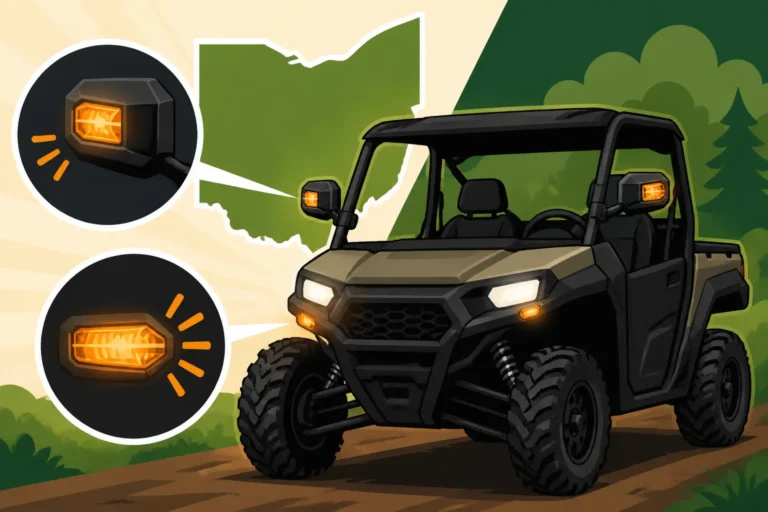
- Turn Signals: Required for indicating turns, just like a car. Many APVs do not come standard with turn signals, so aftermarket kits are often necessary. Companies like SuperATV specialize in these types of kits, providing everything from full street-legal conversion kits to individual turn signal components.
- Mirrors: Typically, at least one rearview mirror is required, allowing the operator to see traffic approaching from behind. Some resolutions may require two side mirrors.
- Horn: A functional horn is needed for signaling in hazardous situations.
- Windshield and Wipers: For UTVs, a windshield made of safety glass is often required, along with functional wipers, especially for machines intended for road use. [Why a Road-Legal UTV Windshield Must Be Safety Glass] explains this in more detail. ATVs typically don't have windshields, so this usually applies more to side-by-sides.
- Fenders/Mudflaps: To prevent throwing debris onto other vehicles or pedestrians.
Before you even think about riding on an open county road, you need to meticulously inspect your machine and potentially install upgrades. Failing to meet these equipment requirements can result in a citation, even if you are on an otherwise legal road. Many riders choose aftermarket solutions from reputable brands like SuperATV to ensure their machine is fully compliant and safe for road operation.
Understanding Hours of Operation and Seasonal Restrictions
While some resolutions might allow year-round, 24/7 access (within the half-hour before sunrise and half-hour after sunset rules for lighting), others may impose specific limitations on when APVs can use county roads. These restrictions are often a compromise to address concerns from residents regarding noise, safety, or environmental impact.
For example, a county might restrict APV use to specific daylight hours, such as 7 AM to 9 PM, to minimize noise disturbance during quiet evening hours. Other resolutions might prohibit APV use during certain seasons, such as winter months when road conditions are more hazardous due to snow and ice, or during specific hunting seasons to avoid conflicts with hunters. It is also possible that restrictions might be placed on roads that are prone to heavy mudding or erosion during wet seasons. Riders must carefully review the specific county resolution to understand any such temporal or seasonal limitations. Riding outside of the permitted hours or seasons, even on an otherwise open road, would constitute a violation and could lead to fines or other penalties. These details are important for planning your rides and ensuring you remain compliant with local ordinances.
What Happens After a County Road Is Opened?
Once a county resolution is passed, the work isn't entirely done. The county has a responsibility to inform the public, and riders have an ongoing responsibility to follow the new rules and help ensure the success of the program. It’s an ongoing partnership between local government and the riding community.
Signage and Communication
After a resolution is passed, effective communication is vital. Counties that open their roads to APVs should ideally implement clear signage to inform both APV operators and other motorists about the new rules. This might include signs at county borders, on individual roads, or at trailheads indicating which roads are open, what the speed limits are for APVs, and any other pertinent regulations. This ensures clarity and reduces the chance of accidental violations.
However, it's important not to rely solely on signage. Riders should always proactively check the county's official website or contact the County Commissioners' office to obtain a copy of the actual resolution. This ensures you have the most up-to-date and complete information directly from the source. Misinterpreting signage or assuming a road is open without verification can lead to costly citations. Furthermore, local APV clubs and advocacy groups often play a crucial role in disseminating this information within the riding community, translating legal jargon into practical riding advice.
Enforcement and Rider Responsibility
With newly opened roads comes the responsibility of enforcement. Local law enforcement, primarily the County Sheriff's Office, will be tasked with ensuring compliance with the resolution. This means deputies will be looking for APVs that are either on closed roads, exceeding speed limits, or lacking the required safety equipment. They are not simply there to issue tickets, but to ensure the safety of all road users.
Riders have a profound responsibility to adhere to all aspects of the resolution. Every time an APV rider is cited for a violation—whether it's for lacking turn signals, speeding, or riding on a closed road—it can reflect poorly on the entire riding community and potentially jeopardize future road access. Responsible riding includes:
- Obeying all traffic laws: This means yielding, stopping at stop signs, and riding defensively.
- Maintaining proper equipment: Ensuring all required lights, mirrors, and signals are functional.
- Carrying required documentation: Always have your driver's license, [Ohio APV Registration and Insurance Proof], and potentially a copy of the county resolution with you.
- Respecting other road users: Being courteous to drivers of cars, bicycles, and pedestrians.
- Minimizing noise: Operating machines with factory-compliant exhaust systems and avoiding excessive revving.
The future of county road access largely depends on the responsible behavior of the riding community. When riders consistently demonstrate respect for the law and other citizens, it builds goodwill and helps maintain or even expand APV access.
The Evolving Landscape of Road Access
A county resolution is not necessarily set in stone forever. Just as Commissioners can vote to open roads, they can also vote to amend or even rescind a resolution if significant problems arise or public sentiment shifts. This is why ongoing rider education and advocacy are so important. If there's an increase in accidents, noise complaints, or property damage linked to APV use, Commissioners might face pressure to reconsider their decision.
This evolving landscape means that the riding community must remain engaged. This isn't just about celebrating when roads open; it's about actively promoting responsible riding, reporting illegal activity by other riders, and maintaining open lines of communication with county officials. If a county has opened roads and sees a consistent pattern of safe, respectful use, it might encourage other counties to follow suit. Conversely, widespread issues could lead to a rollback of access, affecting everyone. Understanding this delicate balance is crucial for long-term enjoyment of county road riding.
Practical Considerations for Riding on Open County Roads
Beyond the legal framework and resolutions, there are many practical elements every rider needs to consider before hitting those newly opened county roads. This is about being prepared, safe, and respectful.
Essential Paperwork: Registration, Title, and Insurance
Just like with any other motor vehicle, operating an APV on Ohio's county roads requires proper documentation. This isn't just a suggestion; it's a legal mandate. You must have:
- Ohio APV Registration: Your machine needs to be properly registered with the Ohio Bureau of Motor Vehicles (BMV) and display a valid Ohio APV license plate. This is a three-year registration cycle, and the plate itself serves as your permit for designated trails. You'll want to ensure you understand [Ohio APV Plates and Validation Stickers].
- APV Title: In Ohio, all APVs generally require a title. When you buy a machine, whether new or used, the title must be properly transferred into your name. [Titling an APV at an Ohio Clerk of Courts] is the place to start. This proves ownership and is a one-time process for the life of the machine in your possession.
- Proof of Insurance: Liability insurance is a non-negotiable requirement for operating an APV on any public road in Ohio that has been opened to APVs. This protects you financially in case of an accident where you are at fault. The specific coverage limits will vary, but you must carry at least the state minimum liability coverage. Always have your insurance card or proof of coverage readily accessible, as law enforcement will ask for it during a stop.
Failing to have any of these documents can lead to significant fines, points on your license, or even impoundment of your vehicle. Keep copies of your registration and insurance in a waterproof bag on your machine, or even a photo on your phone, though a physical copy is always best. [What Happens If You Ride Without Your Registration Card] highlights the risks.
Safety Gear and Operating Standards
While the specific requirements for helmets and other gear can sometimes vary slightly between state forests and local roads, a good rule of thumb is to always prioritize safety.
- Helmets: For APVs on Ohio public roads, a helmet is generally required for all riders, regardless of age, unless specifically exempted by a county resolution (which is rare). Make sure your helmet is DOT-compliant ([DOT FMVSS218 Helmets in Ohio]). This is not just about avoiding a ticket; it's about protecting your brain.
- Eye Protection: Goggles or a face shield are also typically required to protect your eyes from dust, debris, and insects, which can be a serious hazard, especially at speed.
- Protective Clothing: While not always legally mandated, wearing long pants, long sleeves, gloves, and over-the-ankle boots is highly recommended. These provide crucial protection against scrapes, impacts, and exhaust burns in case of a fall or collision.
- Responsible Operation: Always operate your APV responsibly. This means no stunt riding, no excessive speed, no reckless maneuvers, and absolutely no impaired driving. Treat your APV as a legitimate vehicle on the road and follow all traffic laws, just as you would in a car. This also includes adhering to any passenger rules; generally, APVs are designed for a specific number of passengers, and exceeding that limit is illegal and unsafe.
Remember, the goal is to enjoy the ride safely and to represent the APV community positively.
Respecting Local Residents and the Environment
Riding on open county roads means you're sharing the space with residents, their homes, and their properties. Maintaining a respectful attitude is paramount to ensuring continued access.
- Noise Control: While APVs can be noisy, operating them responsibly can mitigate this. Avoid excessive revving, especially near homes, and ensure your machine has a properly functioning muffler. Loud, aftermarket exhausts often lead to complaints and can prompt officials to reconsider road access.
- Dust and Mud: Be mindful of kicking up excessive dust or mud, especially near homes or other vehicles. Slow down on gravel roads near residences. If the roads are particularly muddy after rain, consider whether riding is truly appropriate or if it might be better to wait for drier conditions to avoid tearing up the road or spraying mud onto property.
- Private Property: Absolutely respect private property. Do not venture off the opened roads onto private land without explicit permission from the landowner. Trespassing is illegal and severely damages the reputation of all riders. Observe and obey all "No Trespassing" signs. [Ohio Trespass Rules for Riders] are clear on this.
- Waste and Litter: Pack out everything you pack in. Leave no trace. Littering along county roads is not only illegal but also reflects poorly on the entire riding community.
Being a good neighbor and a responsible environmental steward goes a long way in building positive relationships within the community and ensuring that opened roads remain open for future enjoyment.
Comparing County Roads to Other Riding Options
While gaining access to county roads is a fantastic step for many Ohio riders, it's important to understand how this option fits into the broader landscape of APV riding in the state. Each type of riding environment has its own rules, benefits, and challenges.
Township Roads: A Different Process
Just as counties can open roads, so too can townships. The process for how [How an Ohio Township Opens Its Roads] is similar in principle to counties, but the authority rests with the Township Trustees rather than County Commissioners. Township roads are typically smaller, more local routes than county roads, often serving only a few residences or connecting to farmlands. This can make them ideal candidates for APV access due to lower traffic volumes and slower speeds.
However, the fragmented nature means that one township might have open roads, while the adjacent township does not. This creates a similar patchwork of access, but at an even more localized level. Riders often find themselves navigating a complex web of permissions, crossing from open township roads to closed township roads, or connecting to an open county road. It requires diligent research into each specific township's ordinances, in addition to county rules.
State Forests and National Forests
Ohio also offers designated trail systems in state forests and the Wayne National Forest. These areas are specifically designed for off-road recreation and offer a very different riding experience compared to county roads.
- Ohio State Forests: Forests like Monday Creek, Hanging Rock, and Pike State Forest have miles of marked trails specifically for APVs. These trails are generally more technical, winding, and challenging, with varied terrain including hills, mud, and rocks. They typically have a [Ohio's 62-Inch State Forest Width Limit], which means wider side-by-sides might not be permitted on all trails. Riders need to understand [Ohio APV Permits Explained] for these areas.
- Wayne National Forest: As a federal land, Wayne National Forest operates under slightly different rules, requiring a separate permit (often called an OHV permit) to ride its trails. [The $20 Three-Day Wayne National Forest Pass] or a season pass provides access to its extensive trail systems.
The key distinction is that these are dedicated trail systems, not public roads. While they offer excellent riding, they are not designed for transportation or connecting communities in the same way open county roads might be. They also have specific operating seasons and hours.
Private Riding Parks
Finally, private riding parks offer another popular option for APV enthusiasts in Ohio. These are privately owned and operated facilities that provide designated trails, obstacle courses, and often amenities like campgrounds, wash stations, and sometimes even rentals.
- Controlled Environment: Private parks often have their own rules regarding helmets, age limits, and machine types, but these rules can be more flexible than state or county regulations. They often cater to a wider variety of machines, including those that exceed the [Ohio Trails for a Wide Machine] width limits for state forests.
- Entry Fees: These parks typically charge an entry fee, either per day or per weekend, to cover operational costs, insurance, and trail maintenance. [Ohio ATV Park Day Rates] can vary widely.
- Year-Round Access: Many private parks offer year-round riding, even when state forests are closed for the winter or other seasons.
- Variety of Terrain: They can range from beginner-friendly loops to extreme rock crawling or mud pits, offering something for every skill level.
Private parks are an excellent choice for riders looking for a dedicated, managed riding experience without the complexities of public road laws. While they offer fantastic opportunities, they don't solve the desire for integrated road access that many rural residents seek.
By understanding the differences between these various riding environments, Ohio APV owners can make informed decisions about where and how to enjoy their machines safely and legally, appreciating the unique advantages each option provides.
Comparative Overview of Road Opening Authorities in Ohio
To help clarify the differences between how roads are opened in Ohio, here's a table summarizing the key aspects:
| Feature | State Routes (Ohio Department of Transportation) | County Roads (County Commissioners) | Township Roads (Township Trustees) |
|---|---|---|---|
| Authority | Ohio Revised Code, ODOT | Ohio Revised Code, County Commissioners | Ohio Revised Code, Township Trustees |
| Default Status | CLOSED to APVs | CLOSED to APVs | CLOSED to APVs |
| How Roads Open | Generally NOT opened to APVs | By formal County Resolution | By formal Township Resolution |
| Typical APV Speed Limit | N/A (closed) | Often 25-35 mph (regardless of posted limit) | Often 25-35 mph (regardless of posted limit) |
| Equipment Requirements | N/A (closed) | Strict (lights, signals, mirrors, horn, etc.) | Strict (lights, signals, mirrors, horn, etc.) |
| Driver's License Required | N/A (closed) | Yes | Yes |
| Helmet Required | N/A (closed) | Generally Yes (DOT-compliant) | Generally Yes (DOT-compliant) |
| Insurance Required | N/A (closed) | Yes (liability minimums) | Yes (liability minimums) |
| Jurisdiction Extent | Statewide major arteries | Roads within county, outside townships/cities | Roads within township, outside villages/cities |
| Advocacy Target | None (no pathway to open) | County Commissioners | Township Trustees |
Disclaimer
This article is for general informational purposes only and does not constitute professional advice. Laws, prices and regulations vary by location and change over time. Consult a qualified professional for guidance on your specific situation.