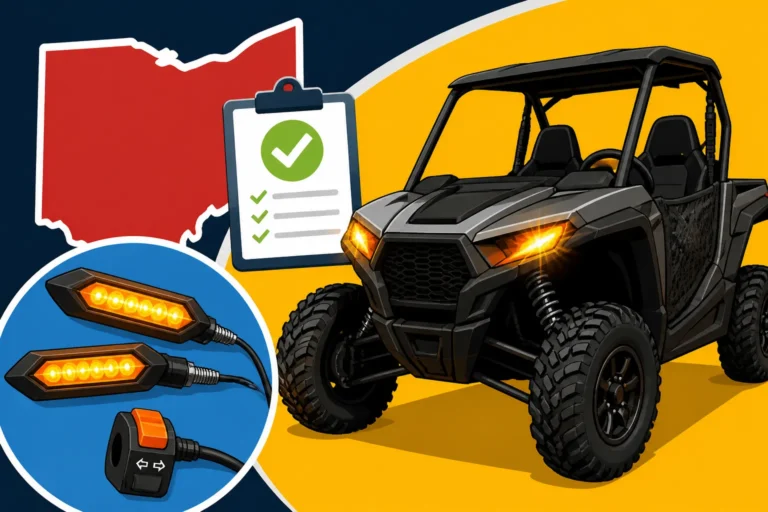
How an Ohio Township Opens Its Roads
It's incredibly frustrating, isn't it? You've invested in an amazing all-purpose vehicle (APV), maybe a rugged side-by-side or a nimble ATV, and all you want to do is connect a few trails, or perhaps run down the road to a neighbor's house, only to be met with a confusing patchwork of "can I or can't I?" rules. Ohio's laws around riding APVs on public roads aren't always clear-cut, and it often feels like you need a law degree just to figure out where you're allowed to go. This guide is here to untangle that knot, specifically focusing on how your local township trustees can, and often do, open their roads for APV use, giving you clearer paths to ride.
Understanding Ohio's APV Road Laws
When you look at the big picture of Ohio law regarding APVs on roads, it can feel pretty restrictive. Many riders assume that because their machine isn't a car, it's automatically banned from all public thoroughfares. While the state does have some overarching rules, the real action, and often the real confusion, happens at the local level. It's a system designed to give communities control, but it means riders need to be much more informed about their specific area.
The Statewide Default: Roads Are Closed
Let's start with the baseline, because it's crucial for understanding everything else. In Ohio, the default position for any APV on a public road is that it's not allowed. Unless a specific law or local ordinance explicitly permits it, your ATV or UTV is generally considered off-limits for road use. This isn't about targeting riders; it's about the fundamental legal classification of these machines. They're designed primarily for off-road use, and the state's initial stance reflects that. This can be a bitter pill to swallow for riders who see their UTVs as perfectly capable of handling a gravel lane, but it's the legal reality from which all other permissions stem. You can't just assume a road is open because you don't see a "no ATVs" sign. The absence of a prohibition doesn't equal permission in this context. For many, this is the biggest hurdle to overcome mentally: the burden of proof is on the rider to know where their machine is allowed, not just where it's not.
Why Ohio Law Delegates to Local Authorities
So, if the state defaults to "no APVs on roads," why do we see so many signs in various counties and townships permitting them? The answer lies in Ohio's statutory framework, which gives considerable power to local governing bodies. The state legislature wisely recognized that a one-size-fits-all approach wouldn't work across Ohio's diverse landscape. What makes sense for a dense urban area like Columbus or Cleveland certainly doesn't apply to the sprawling rural townships of Appalachia Ohio, where machines might be essential for farm work or simply a way to traverse properties without having to trailer.
Because of this, Ohio Revised Code (ORC) allows local authorities – specifically county commissioners and township trustees – the ability to pass resolutions or ordinances that permit APV use on roads under their jurisdiction. This delegation acknowledges the unique needs and desires of individual communities. It means that while the state sets the general framework, it's your local elected officials who hold the keys to opening up those roads, allowing communities to tailor regulations to their specific conditions. This is why you might find one township enthusiastically embracing APV use while its immediate neighbor remains firmly closed. It's a local control issue, through and through. [Where Ohio Law Allows APVs on Roads] delves deeper into the legal specifics.
The Difference Between State, County, and Township Roads
Understanding which roads fall under whose jurisdiction is absolutely vital for any APV rider in Ohio. You can't just assume that because one local road is open, all of them are. There are three main classifications of public roads in Ohio, and each is governed by a different authority:
- State Routes: These are designated with a "SR" or a shield symbol (e.g., SR-32, SR-50). They are maintained by the Ohio Department of Transportation (ODOT) and are generally the backbone of the state's transportation network. Crucially, state routes are almost universally off-limits to APVs in Ohio. Local townships and counties cannot, under current law, open state routes for APV use. If you're on a state route, assume you shouldn't be there with your ATV or UTV unless it's a specific, designated crossing point, and even then, there are strict rules. This is a common mistake riders make, thinking that if their township opens its roads, it includes everything. It rarely does.
- County Roads: These roads are maintained by the county engineer's office and are usually identified by smaller, often blue or green signs, sometimes just with a number or name. County roads fall under the authority of the Board of County Commissioners. Like townships, county commissioners can pass resolutions to permit APV use on roads under their control. The process is similar to that of townships but involves a different set of elected officials. [How an Ohio County Opens Its Roads] explains this process in detail.
- Township Roads: These are the smallest arteries, often connecting rural properties, or serving as local neighborhood streets. They are maintained by the township trustees. These are the roads we're primarily focusing on in this guide. Township trustees have the authority to open these specific roads for APV use. They are generally unnumbered, marked by local road signs, or simply known by local residents.
The table below illustrates this hierarchy of control:
| Road Type | Governing Body | Ability to Open for APVs | Notes |
|---|---|---|---|
| State Route | Ohio Department of Transportation (ODOT) | Generally No | Critical for statewide travel; local control does not extend here. |
| County Road | County Commissioners | Yes, via Resolution | Governed at the county level; requires a specific county decision. |
| Township Road | Township Trustees | Yes, via Resolution | Governed at the most local level; subject to township decisions. |
Knowing this distinction is paramount. Just because you're riding legally on a township road doesn't mean you can hop onto a state route that crosses it. Always know the classification of the road you're on.
The Role of Township Trustees in Road Decisions
Township trustees are the unsung heroes, or sometimes the quiet gatekeepers, of local governance in rural and suburban Ohio. They are community members, often farmers, small business owners, or retirees, who are deeply connected to the pulse of their area. When it comes to opening roads for APVs, these three elected officials hold significant power and responsibility. Their decisions directly impact how you and your neighbors can use your machines.
What Authority Township Trustees Possess
In Ohio, townships are statutory subdivisions of a county, meaning their powers are specifically granted by state law. Township trustees, usually three elected officials, along with a fiscal officer, govern the township. Their duties are broad, encompassing everything from road maintenance to fire and EMS services, and importantly, local zoning and traffic control on township roads. When it comes to APVs, the Ohio Revised Code explicitly grants township trustees the authority to adopt a resolution permitting the operation of APVs on any public roads or highways under their jurisdiction. This means they have the legal standing to change the default "closed" status of their township roads to "open," provided they follow the correct procedures.
This isn't a power they take lightly. Opening roads to APVs can be a contentious issue, balancing the recreational desires of some residents against the safety concerns and noise complaints of others. The trustees are tasked with representing the collective will and best interests of their community, which often means navigating these competing viewpoints. Their authority is localized, meaning a resolution passed by Smith Township's trustees has no bearing on the roads in Jones Township next door. It’s a very hyper-local decision-making process.
The Township Meeting and Public Input
Most township governance in Ohio happens at public meetings, typically held monthly, sometimes bi-monthly. These meetings are where trustees discuss township business, hear from residents, and make official decisions, including those related to APV road access. If you're a rider interested in seeing your township roads opened, or if you're a resident with concerns, attending these meetings is your primary avenue for engagement.
During these meetings, there's usually a time set aside for public comment. This is your chance to voice your opinion, share your experiences, or present your case directly to the trustees. It's not enough for a few riders to grumble amongst themselves; trustees need to hear directly from their constituents. Riders can highlight the economic benefits of tourism, the convenience for accessing properties, or the safe, responsible ways they intend to use their machines. Conversely, residents with concerns about noise, safety, or property values can also present their perspective. Trustees are often swayed by well-reasoned arguments, evidence from other townships, and a clear demonstration of community support (or opposition). The process is democratic, and your voice truly matters in shaping these local ordinances.
How a Township Trustees' Resolution in Ohio Comes to Be
The process of opening township roads to APVs isn't as simple as a trustee saying, "Sure, go for it!" It requires a formal legal process. It typically begins when an individual or group of residents approaches the trustees with a request. This might be a petition, a presentation at a public meeting, or simply a series of conversations. The trustees will then consider the request, often tasking the township administrator or legal counsel to research the relevant sections of the Ohio Revised Code.
Once they decide to move forward, a draft resolution is prepared. This document outlines the specific roads that will be opened (often all roads under township jurisdiction, but sometimes exceptions are made), the conditions under which APVs can be operated (e.g., speed limits, times of day, equipment requirements), and any prohibitions. This draft is then presented at a public meeting, allowing for further discussion and potential amendments based on public input. Finally, to pass a [Township Trustees' Resolution in Ohio], it typically requires a majority vote of the trustees. Once passed, the resolution is formally recorded and becomes legally binding for that township. It's a structured, legal journey from idea to enforceable law.
The Process of Opening Township Roads
The path to getting your local township roads open for APV use is a structured one, demanding careful consideration and community engagement. It’s not a quick fix, but a deliberate process that ensures all voices are heard and potential impacts are assessed. Understanding each step can help riders advocate effectively and residents understand the decisions being made.
Researching Existing Ordinances and Safety Concerns
Before even drafting a new resolution, township trustees will almost certainly conduct thorough research. This isn't just about looking at the Ohio Revised Code; it's also about examining what other townships and counties have done successfully – and sometimes, what has gone wrong. They might reach out to neighboring communities that have opened their roads to learn from their experiences. What kind of signage did they use? What specific equipment requirements did they include? How did they address public safety concerns?
Part of this initial research also involves assessing the unique characteristics of their township. Are there narrow, winding roads with limited visibility? Are there high-traffic areas, or roads that connect directly to state routes where APVs are forbidden? What is the general traffic volume like? They will also consider potential safety concerns, such as the speed of APVs relative to other vehicles, the experience level of local riders, and the potential for increased accidents. This fact-finding mission forms the bedrock of any subsequent decision, aiming to create an ordinance that is both practical and safe for everyone on the road.
Drafting a Proposed Resolution
Once the research is complete and there's a general consensus among the trustees to move forward, the next step is to draft the actual resolution. This isn't a casual memo; it's a formal legal document. The draft will articulate the specific permissions and restrictions for APV use on township roads. It usually includes:
- Designated Roads: Often, townships will open all roads under their jurisdiction, making it simpler for riders and enforcement. However, some might exclude specific roads for safety reasons, like those adjacent to schools or particularly busy intersections.
- Operating Conditions: This is where the specifics come in. The resolution will often stipulate things like:
- Times of Day: Are APVs allowed 24/7, or only during daylight hours, or perhaps between dawn and dusk? [Ohio Rules for Riding After Dark] often come into play here.
- Speed Limits: While APVs must generally adhere to posted speed limits, townships might set a maximum speed for APVs even if the road's posted limit is higher (e.g., "APVs not to exceed 35 mph"). [Why an Ohio UTV Stops at Thirty-Five] is a common restriction.
- Equipment Requirements: This is critical. The resolution will mandate safety equipment that APVs must have to be road-legal. This often includes headlights, taillights, brake lights, mirrors, a horn, and often a visible Ohio APV plate. UTVs might have additional requirements, which are often discussed under [Ohio UTV Inspection Requirements]. Some townships might specify a [Ohio UTV Road Equipment List].
- Driver Requirements: The resolution will likely reiterate state law regarding driver's licenses (often a valid driver's license for road use) and insurance. [A Driver's License on an Ohio Road] and [Proof of Insurance on an Ohio Road] are non-negotiables for road riding.
- Enforcement and Penalties: The resolution will also touch upon how it will be enforced by local law enforcement and what penalties (fines, citations) might apply for violations, echoing [Ohio Fines for Illegal APV Road Use].
This draft is meticulously reviewed to ensure it aligns with state law and addresses local concerns. The clarity and comprehensiveness of this document are key to its effectiveness.
Public Hearings and Community Feedback
Once a draft resolution is ready, it's typically brought before the public for review and feedback. This often happens during one or more public hearings, which are formally advertised in local newspapers and posted at the township office. These hearings are an essential part of the democratic process, providing a final opportunity for residents to express their support, opposition, or offer suggestions for modification.
During these hearings, trustees listen intently. Riders might present compelling arguments for why the roads should be opened, perhaps citing the difficulty of accessing farming fields or the desire for recreational connectivity. They might bring examples from nearby townships that have successfully implemented similar ordinances. On the other hand, residents concerned about noise pollution, increased traffic, or safety hazards for children might voice strong objections. They might worry about machines tearing up roadsides or excessive speed.
It’s a balancing act, and the trustees’ job is to weigh all these inputs. Sometimes, feedback leads to amendments in the resolution – perhaps stricter speed limits in certain areas, or specific hours of operation. The goal is to reach a consensus or, failing that, to make a decision that the trustees believe best serves the overall township community, even if it doesn't satisfy every individual.
The Vote and Official Enactment
After all the research, drafting, and public input, the resolution finally comes to a vote by the township trustees. This is a formal action taken during a regularly scheduled public meeting. A majority vote of the three trustees is typically required for the resolution to pass. If it passes, it is officially recorded in the township's minutes and becomes a legal ordinance for that specific township.
Once enacted, the township usually takes steps to inform the public. This might include posting notices at the township hall, publishing the resolution in a local paper, or even installing signage on the roads themselves. The new ordinance gives local law enforcement, like the county sheriff or local deputies, the authority to enforce the rules regarding APV use on those specific township roads. It’s a culmination of a lengthy process, transforming a community's discussion into a binding law.
Key Considerations for Township Ordinances
When township trustees are weighing the decision to open roads to APVs, they're not just thinking about fun rides. They're grappling with a complex set of factors that affect public safety, infrastructure, and the overall quality of life for their residents. These considerations are what shape the specific rules and limitations you'll find in any township ordinance.
Safety Concerns and Traffic Impact
The number one concern for any governing body, be it state, county, or township, is always public safety. Opening roads to APVs introduces new variables into the existing traffic ecosystem. Trustees will scrutinize potential impacts on:
- Accident Risk: How will the presence of ATVs and UTVs, which handle differently than cars and often have less protection, affect the likelihood of collisions? They'll consider sight lines, road widths, and speed differentials.
- Pedestrian and Cyclist Safety: In areas where residents often walk or bike along rural roads, trustees must ensure that APVs don't create undue hazards for these vulnerable road users.
- Emergency Response: Will APV traffic impede emergency vehicles? While unlikely in most rural settings, it's a question that might arise.
- Traffic Volume: While most township roads are lightly traveled, an influx of recreational APV traffic on weekends could create congestion or unexpected hazards where previously there were none.
To mitigate these concerns, townships often include specific safety provisions in their resolutions. This might involve setting lower speed limits for APVs, restricting road use to daylight hours, or even designating specific roads as off-limits if they present unique dangers. The balance is always between providing recreational or practical access and ensuring the safety of all road users.
Speed Limits and Road Types
Closely tied to safety are the considerations around speed limits and the characteristics of the roads themselves. As mentioned, APVs must adhere to posted speed limits, but townships often impose a maximum allowable speed for APVs that is lower than the regular road limit. For example, a rural township road might have a posted speed limit of 55 mph, but the APV ordinance might state that APVs cannot exceed 35 mph on any township road. This is largely due to the differing handling characteristics of APVs compared to traditional vehicles, especially on paved or gravel surfaces at higher speeds. [Can You Ride an APV on an Unposted Ohio Road?] explores how default speed limits affect APVs.
The type of road also plays a role. Are they mostly gravel and dirt, which APVs are well-suited for? Or are there significant stretches of asphalt? Paved roads can be harder on APV tires and suspension designed for off-road use, and faster speeds on pavement can make control more challenging. Townships might also consider whether roads are heavily winding, hilly, or have blind curves, which could warrant stricter speed controls or even exclusion. The goal is to match the machine's capabilities and the rider's safety to the specific road conditions.
Required Equipment for Road Use
One of the most significant aspects of any township ordinance permitting APV road use will be the list of mandatory equipment. Simply owning an ATV or UTV isn't enough; it must be properly outfitted to meet road-legal standards. This ensures visibility, signaling capability, and general safety for both the APV operator and other drivers. Common requirements often include:
- Headlights and Taillights: Operational headlights (often required to be on even during the day) and taillights are crucial for visibility, especially during dawn, dusk, or adverse weather. [Ohio Lighting Requirements for APVs] usually outlines these.
- Brake Lights: Clearly visible brake lights are essential for signaling deceleration to following vehicles.
- Mirrors: At least one rearview mirror, and often two (side mirrors), are usually required to provide the operator with adequate visibility of surrounding traffic. [Mirrors Before a Road Ride] is a common requirement.
- Horn: A working horn is necessary for signaling and alerting other drivers or pedestrians. [Does a Road-Legal APV Need a Horn?] Often, yes.
- Turn Signals: While some ATVs may not come stock with turn signals, many UTVs do. Some ordinances may require them for road use, especially where state law for low-speed vehicles is referenced. [Adding Turn Signals for an Ohio Inspection] might be necessary.
- Muffler and Spark Arrester: To control noise and prevent wildfires, a working muffler and a US Forest Service approved spark arrester are usually mandated. [Ohio Muffler Requirements for APVs] and [Ohio Spark Arrester Requirement] are often included.
- Registration Plate: Any APV on a public road in Ohio must be registered with the Ohio BMV and display a valid APV plate and sticker. This isn't a township rule but a state law. [Ohio APV Plates and Validation Stickers] explains this.
Riders looking to use township roads should budget for any necessary modifications or accessory purchases, such as a full windshield or specific tires, especially if they own a UTV and anticipate an [Ohio UTV Inspection Before Registration]. Many SuperATV products are designed to meet or exceed these types of equipment requirements, offering everything from full windshields to turn signal kits, making it easier for riders to get their machines road-ready and compliant with local ordinances.
Insurance and Driver's License Requirements
Beyond the machine itself, the operator also has responsibilities, namely holding a valid driver's license and having appropriate insurance.
- Driver's License: Almost universally, any person operating an APV on a public road in Ohio must possess a valid driver's license. This isn't a special "APV license" but a standard motor vehicle operator's license. The age requirements and licensing standards for operating a car apply here. This is explicitly stated in [A Driver's License on an Ohio Road].
- Insurance: While not always required for off-road use, proof of financial responsibility (i.e., insurance) is typically mandated for APVs operating on public roads, just as it is for cars. This usually involves liability coverage to protect against damages or injuries you might cause to others. [Proof of Insurance on an Ohio Road] is essential to carry with you.
These requirements protect not just the public but also the rider. Accidents can happen, and having the proper licensing and insurance ensures that everyone involved is covered, preventing significant financial burdens. Townships will almost always include these state-mandated operator requirements in their local resolutions.
Finding Out Which Township Roads Are Open
So, your township might have the authority to open its roads, but how do you, as a rider, actually figure out if they have? This is where many riders get stuck, navigating a maze of local government offices and online searches. It takes a bit of legwork, but knowing how to find this crucial information is key to riding legally and avoiding citations.
Checking with the Township Clerk About APVs
Your first and most reliable point of contact for information about APV road access in a specific township is the township clerk or fiscal officer. Every township has one, and their office is the official repository for all township resolutions and ordinances. They are the go-to person for official records.
You can usually find the township office's contact information (phone number and address) on the township's official website, or by doing a quick online search for "[Township Name] Ohio Township Office." When you call or visit, simply state your purpose: "I'm calling to inquire about resolutions regarding All-Purpose Vehicle (APV) use on township roads." They should be able to tell you definitively whether such a resolution exists, when it was passed, and what its key provisions are. They might even be able to provide you with a copy of the resolution. This direct approach often saves a lot of guesswork and ensures you're getting information from the official source. Don't rely on hearsay from a neighbor or a social media post; get it from the clerk.
Looking for Posted Signs and Official Notifications
While the township clerk is the definitive source, you might also find physical indicators that roads are open. Some townships that have passed resolutions permitting APV use will install signage. These signs might be placed at key entry points into the township, or along specific roads that are part of the APV network. These signs often state something to the effect of "APV Use Permitted on Township Roads" and may list specific conditions or a reference to the local ordinance.
However, it's important to remember that not all townships proactively post such signs, especially in very rural areas. The absence of a sign indicating permission does not mean the roads are closed, just as the absence of a "no ATVs" sign doesn't mean they're open (remember the statewide default!). Always verify with the township clerk. Additionally, when a resolution is passed, it's often published in a local newspaper of general circulation, though finding these old notices can be challenging. Checking the township's official website is also a good idea, as many townships will post their resolutions online.
Navigating Different Rules Between Adjoining Townships
Here's where it gets truly tricky, and why understanding the "local control" aspect is so vital. You might be legally riding your APV on a township road in Muskingum Township, enjoying the scenery, only to cross an invisible boundary into Newport Township where APV road use is strictly prohibited. The rules can change literally from one property line to the next.
This creates a patchwork system that requires riders to be constantly aware of their location. Before embarking on a ride that crosses township lines, you absolutely must research the ordinances of every township you plan to traverse. A good GPS unit or mapping app can help you identify township boundaries. Imagine the frustration of getting a citation just because you crossed an invisible line! This scenario, where [Why One Township Says Yes and the Next Says No], is a common reality in Ohio. It's incumbent upon the rider to know the rules for the specific area they are in.
Riding Legally on Township Roads Once Opened
So, you've done your homework, confirmed that your township has opened its roads to APVs, and you're ready to hit the pavement (or gravel!). But holding a valid Ohio APV registration and having a local ordinance on your side isn't the end of the story. There are still crucial steps to ensure you're riding legally, safely, and respectfully within the established rules.
Ohio APV Registration and Plate Requirements
This is non-negotiable and applies statewide, regardless of whether a township has opened its roads. Any APV operated on public roads or highways in Ohio, including township roads, must be properly registered with the Ohio Bureau of Motor Vehicles (BMV). This process involves titling your machine (if it requires one, which most do) and then registering it. You'll receive an official [Ohio APV Plates and Validation Stickers] that must be displayed prominently on your machine.
Without a current registration plate and validation sticker, you are operating an unregistered vehicle on a public road, which can lead to a citation and fines. The registration fee helps fund the state's recreational vehicle fund, which contributes to trail maintenance and safety programs. Even if you only ride your machine on your own private property, the moment those tires touch a public township road, that valid Ohio APV plate needs to be affixed. Don't leave home without it, and always ensure it's current. If you need to know more about the process, check out [Ohio APV Registration Paperwork].
Adhering to Local Equipment and Safety Rules
We've touched on this in the drafting section, but it bears repeating: once the roads are open, you must adhere to all equipment and safety rules specified in the township's resolution. This isn't just a suggestion; it's the law within that township's boundaries. If the ordinance requires turn signals, and your ATV doesn't have them, you could be cited even if the roads are technically "open."
This means doing a pre-ride check before heading out. Are your headlights and taillights working? Is your horn operational? Are your mirrors properly adjusted? Is your exhaust system fitted with a spark arrester? For UTVs, are you meeting any specific requirements like a windshield or wipers? These rules are put in place for everyone's safety, including yours. Ignore them at your peril, not just legally but also for your own well-being. Think of the resolution as your rider's manual for that specific township. Many riders turn to aftermarket accessories from companies like SuperATV to ensure their machines are fully compliant, adding items like DOT-approved windshields, side mirrors, and robust turn signal kits, which enhance safety and adherence to local laws.
Understanding Speed Limits and Time Restrictions
It's tempting, when you finally get your APV on a road, to open it up a bit. But resisting that urge, especially on township roads, is crucial for both legality and safety. As discussed, townships often impose a maximum speed limit for APVs that can be considerably lower than the posted speed limit for cars. For example, a township might allow APVs on roads with a 55 mph speed limit but mandate that APVs cannot exceed 35 mph. You must adhere to the APV-specific speed limit.
Similarly, be mindful of any time restrictions. Some townships only permit APV road use during daylight hours, from a half-hour before sunrise to a half-hour after sunset. This is particularly common in areas with less street lighting, as APVs, even with working lights, can be less visible than cars in the dark. Always know the operating hours permitted by the township's resolution. Riding after dark when it's prohibited is an easy way to get a ticket.
Penalties for Non-Compliance on Township Roads
Ignoring the rules, even on roads that are technically "open" to APVs, can lead to unpleasant consequences. Law enforcement, typically the county sheriff's department or local police (if the township has its own), will enforce these local ordinances. Common infractions that can lead to citations include:
- No Current Registration/Plate: This is a straightforward violation and will almost certainly result in a ticket. You can review [Ohio Fines for an Unregistered APV] for a sense of what to expect.
- Operating Without Required Equipment: If the resolution mandates specific equipment (e.g., mirrors, turn signals) and your machine lacks it, or it's not working, you can be cited.
- Exceeding APV Speed Limits: Even if you're below the general road speed limit, exceeding the APV-specific limit is a violation.
- Operating Outside Permitted Hours: Riding after dark when the ordinance specifies daylight-only operation.
- No Valid Driver's License or Insurance: These are serious offenses that can lead to significant fines, points on your license, and potentially the impoundment of your machine. [Ohio APV Registration and Insurance Proof] is vital.
The specific penalties (fines, court appearances, etc.) will vary depending on the severity of the infraction and the local jurisdiction. However, the message is clear: the privilege of riding on township roads comes with the responsibility of strict adherence to all rules. The aim of these laws is to integrate APVs safely into the road network, not to create a free-for-all. Be a responsible rider, and you'll help ensure that these valuable local access points remain open for everyone.
Disclaimer
This article is for general informational purposes only and does not constitute professional advice. Laws, prices and regulations vary by location and change over time. Consult a qualified professional for guidance on your specific situation.