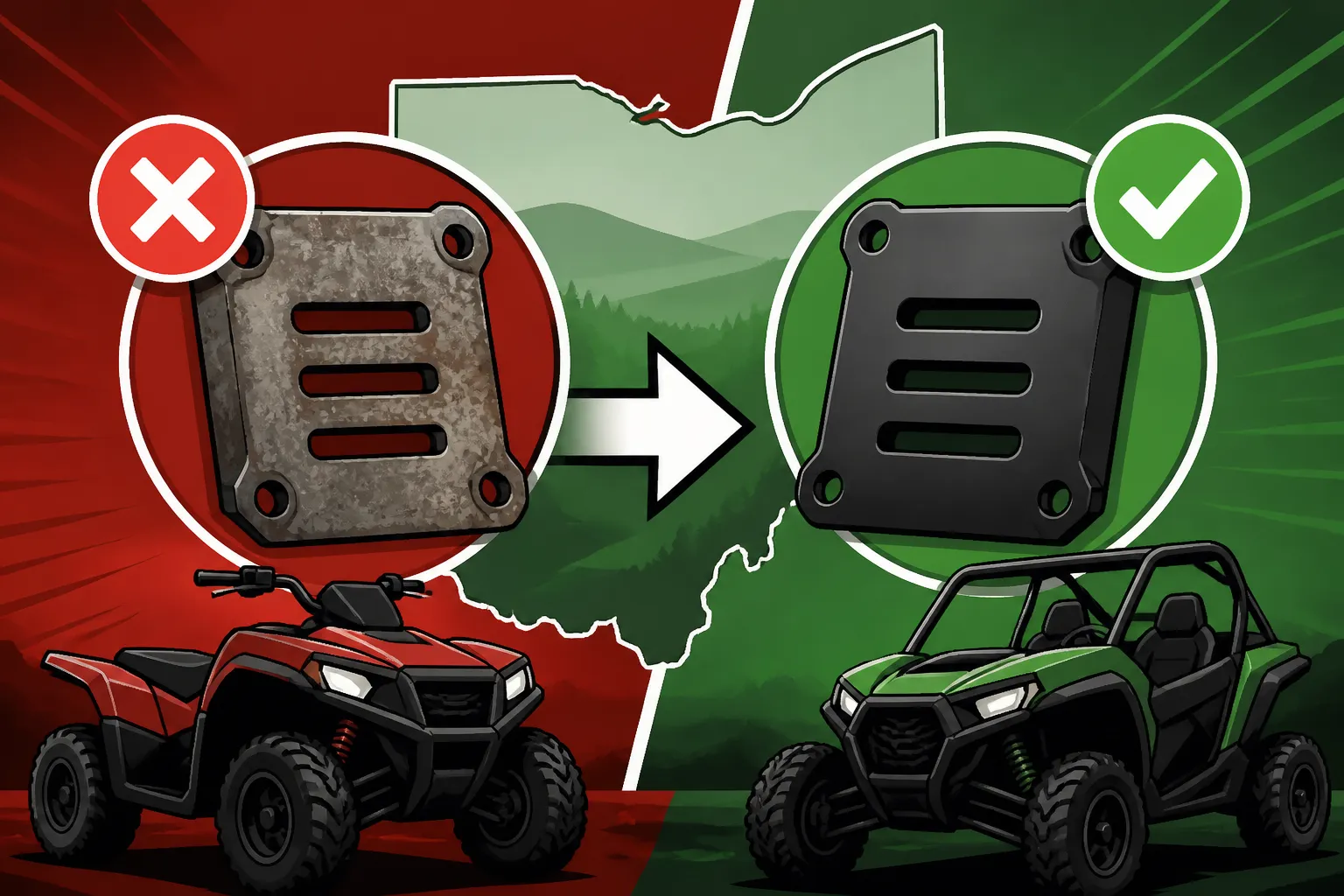
When a Faded APV Plate Has to Be Replaced
You've been out on the trails, enjoying the breathtaking Ohio scenery, perhaps splashing through a creek or climbing a rocky hill, and then you notice it: your trusty APV plate is looking less like a beacon of identification and more like a ghost of its former self. The numbers and letters are faded, the color washed out, making it hard to read. It's a common frustration, especially for machines that see a lot of sun and mud, and it leaves you wondering if you're even compliant anymore. This guide is here to walk you through exactly when that faded plate crosses the line into needing replacement and how to get a shiny new one back on your machine, ensuring you stay legal and visible on all your adventures.
Why Your APV Plate Might Fade Over Time
It's easy to think a license plate is built to last forever, but the reality is, they're exposed to a lot of harsh conditions, especially on an all-purpose vehicle. From relentless sun exposure to gritty trail dust and frequent cleanings, your APV plate takes a beating. Understanding why they fade can help you appreciate that it's often an inevitable part of ownership, not a sign you've done something wrong.
Environmental Factors That Degrade Plates
The most significant culprit behind a faded plate is undoubtedly the sun's ultraviolet (UV) rays. Just like direct sunlight can fade the paint on your machine or the colors on your gear, it slowly but surely breaks down the pigments in the reflective coating and printed characters on your APV plate. If your machine spends a lot of time parked outdoors, even under a partial cover, it's still getting a dose of those rays year after year. Think about how many sunny days we get here in Ohio; each one contributes to that gradual fading.
Beyond the sun, weather extremes play a role. The freezing and thawing cycles common to Ohio winters, coupled with the intense heat of summer, can cause the plate material to expand and contract, potentially leading to microscopic cracks in the reflective film. Rain, sleet, and even humidity can then seep into these tiny fissures, accelerating the degradation. It's a slow process, but over the course of the [Ohio's Three-Year APV Registration] cycle, these environmental assaults really add up.
Everyday Wear and Tear from Riding and Maintenance
It's not just the elements; how we use and care for our APVs also impacts the plate. Imagine all the mud, dust, and grime that gets kicked up during a ride through Wayne National Forest or a local trail system. While you might diligently clean your machine afterward, the abrasive nature of these particles, even when simply wiping the plate clean, can contribute to wear. Using harsh cleaning chemicals or scrub brushes can also inadvertently strip away the reflective layers or printed ink over time, especially if done vigorously.
Consider also the physical impacts a plate might endure. A minor bump from a branch on a narrow trail, the jostling from a trailer while heading to your favorite riding spot, or even vibrations from the engine can all put stress on the plate. While these might not cause immediate damage, they contribute to the overall wear and tear that makes a plate more susceptible to fading. It's truly a testament to the rugged life our APVs lead that their plates hold up as well as they do!
Why a Readable Plate is Non-Negotiable in Ohio
A faded plate isn't just an aesthetic issue; it's a legal and safety concern. Ohio law is quite clear that all registered all-purpose vehicles must display a clearly visible and readable license plate. Ignoring a faded plate can lead to complications during a routine stop or even create safety hazards on the trail. It's all about ensuring proper identification, whether you're dealing with law enforcement or simply helping fellow riders identify you.
Legal Requirements for APV Plate Visibility
In Ohio, your APV plate serves as your official identification, much like the license plate on your car. Law enforcement officers, whether from the local sheriff's department or the Ohio Department of Natural Resources (ODNR), rely on that plate to quickly identify your machine and verify its registration status. If the numbers and letters are so faded they're illegible, it's essentially the same as not having a plate at all in the eyes of the law. You can certainly get pulled over or stopped on a trail for it.
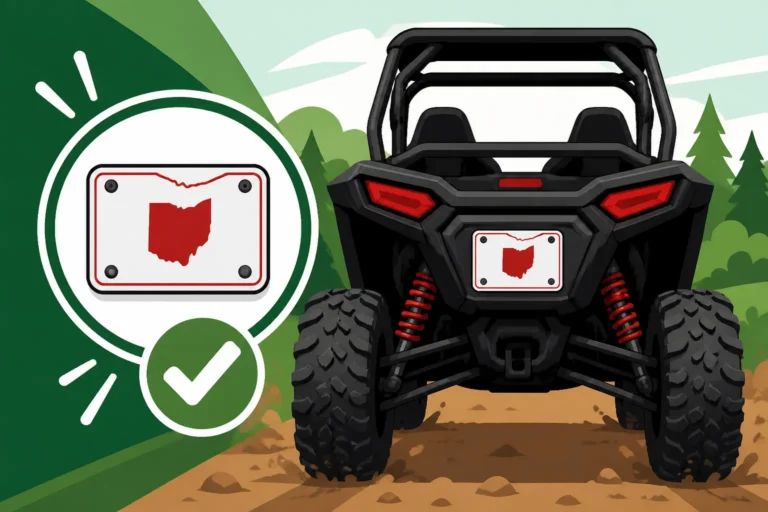
The Ohio Revised Code specifies that plates must be "securely fastened to the rear of the all-purpose vehicle, in plain view, and to be maintained free from grease, rust, dust, or other material that obscures the plate and free from any covering that obstructs the legibility of the plate." While it doesn't explicitly mention "fading," an illegible plate due to sun damage falls squarely under obstructing its legibility. You could face a citation for an [Ohio Fines for an Unregistered APV] equivalent offense, even if your registration is current, simply because the plate itself isn't readable. It’s an easy fix to avoid unnecessary hassle.
Safety and Identification on Trails and Roads
Beyond legal compliance, a readable plate is crucial for practical reasons. Imagine a scenario on a busy trail where an incident occurs. If your plate is clear, it's easy for others to report the situation, provide assistance, or identify you if you've become separated from your group. On the flip side, if someone needs to identify your machine, perhaps to report reckless riding or simply to offer help, a clear plate is invaluable.
For those rare instances where your APV might be operated on a county or township road (where permitted by local resolution), the plate becomes even more critical for identification by other drivers and law enforcement. Having a distinct, visible plate, as discussed in [Keeping an Ohio Plate Distinctly Visible], ensures that your machine is properly identified as a registered vehicle, making everyone's experience safer. It's a small detail that contributes significantly to responsible riding and public safety.
How to Get a Replacement for Your Faded Ohio APV Plate
Okay, so you've assessed your plate, and it's definitely time for a new one. The good news is that replacing a faded APV plate in Ohio is a relatively straightforward process. It's similar to replacing a lost or stolen plate, and it typically involves a visit to your local Deputy Registrar's office. Let's break down what you'll need and what to expect.
Gathering Your Necessary Information and Documents
Before you head out, make sure you have everything in order. You'll need proof of ownership and identification. Specifically, gather the following:
- Your Current APV Registration: This document confirms that your machine is already registered in Ohio. Even if the plate itself is faded, your paper registration card should be clear.
- Your Ohio APV Title: While not always strictly required for a plate replacement, it's always a good idea to have your title on hand, especially if there are any discrepancies or questions about ownership. Services that help you draft or organize legal forms, such as LawDepot, can be useful for other aspects of ownership beyond just plate replacement, ensuring you have all your ducks in a row for other scenarios.
- Proof of Identity: A valid Ohio driver's license or state ID card.
- The Faded Plate Itself: In many cases, you'll need to surrender the faded plate. Do not dispose of it beforehand.
Having these documents ready will make the process much smoother and prevent any unnecessary trips. It's surprising how often people forget a crucial piece of paper, leading to delays and frustration.
Where to Go and What to Expect at the Deputy Registrar
To replace your faded APV plate, you'll need to visit a Deputy Registrar's office. While the Bureau of Motor Vehicles (BMV) technically oversees vehicle registrations, the day-to-day transactions are handled by these independent contractors. You cannot generally replace a plate through the main BMV office or online. You'll find Deputy Registrar offices conveniently located across every county in Ohio.
Once you arrive, you'll typically fill out a simple form requesting a replacement plate. This form will ask for your vehicle information (VIN, make, model) and your personal details. The clerk will then process your request, verify your documentation, and collect any applicable fees. There will be a fee for the replacement plate itself, often a nominal charge, plus the standard [Ohio's $3.50 Deputy Registrar Fee] for their service. Remember that these are often cash or check-only transactions, so it's wise to call ahead or check their website for accepted payment methods.
Receiving and Displaying Your New Plate
After your transaction is complete, the Deputy Registrar's office will typically issue you a new plate on the spot. Unlike car plates that might be mailed, APV plates are often immediately available, which is a huge convenience! They'll also provide you with a new registration card and validation sticker. Make sure to attach the new [Ohio APV Plates and Validation Stickers] correctly to your new plate before securing it to your machine.
Once you have your new, shiny, and perfectly readable plate in hand, make sure to attach it securely to the rear of your APV. Ensure it's mounted properly so it's clearly visible and not obstructed by any cargo or accessories. With your new plate in place, you can ride with confidence, knowing you're fully compliant with Ohio law and ready for whatever the trails throw your way. If you ever need to specifically [Ordering a Replacement Plate in Ohio] for a lost or stolen item, the process is very similar, so these steps will serve you well.
Proactive Tips for Plate Longevity and What to Do While You Wait
Getting a new plate is great, but wouldn't it be even better if you could extend the life of your next one? A few simple habits can help prevent premature fading. And what about that awkward period between realizing your plate is unreadable and getting a new one? There are steps you can take to minimize potential issues.
Practical Steps to Prevent Future Fading
While complete prevention of fading might be impossible given Ohio's weather, you can certainly slow the process down. Consider these tips:
- Parking Smart: Whenever possible, park your APV in a shaded area, a garage, or under a cover when it's not in use. Minimizing direct UV exposure is the most effective way to prevent fading. Even a simple tarp can make a difference if you don't have indoor storage.
- Gentle Cleaning: When cleaning your plate, use mild soap and water with a soft cloth or sponge. Avoid abrasive brushes, harsh detergents, or high-pressure washers directly on the plate, as these can strip away the reflective layers and printed characters over time.
- Plate Protectors: There are clear, plastic plate covers available that can offer an additional layer of UV protection and physical shielding from trail debris. Just ensure any cover you use is clear and doesn't distort or obscure the plate in any way, as that could also be deemed illegal. Some covers, for example, have tints or designs that could get you into trouble.
By being mindful of these small details, you can significantly extend the readability and lifespan of your APV plate, saving you the hassle of early replacement.
What to Do If Your Plate is Faded and You're Awaiting a New One
Let's say you've noticed your plate is unreadable, but you can't get to the Deputy Registrar until next week. What should you do in the interim, especially if you plan to ride?
First and foremost, avoid riding on public roads or designated trails if your plate is truly illegible. It's just not worth the risk of a citation. If you must transport your machine, ensure it's on a trailer and the trailer itself has a visible, valid plate.
If you are riding on private land where a visible plate isn't strictly necessary for compliance but you want to be prepared, keep your current, valid paper registration card with you. If you happen to be stopped and questioned, being able to present your valid registration and explain that you are in the process of replacing a faded plate demonstrates good faith. Some riders might even print a clear, large copy of their registration number on paper and temporarily tape it to the machine, though this is not a legal substitute for an official plate and should only be considered for very temporary, short-term use on private property while awaiting the real replacement. The best course of action, however, is to simply avoid riding until your new plate is properly affixed, particularly in areas where a visible plate is mandatory, like state forest APV areas. For information on replacing a lost one, check out [Replacing a Lost Ohio APV Plate].
Document Replacement Checklist
To ensure a smooth process when replacing your faded Ohio APV plate, here's a handy checklist of items to bring with you to the Deputy Registrar's office:
| Document/Item | Purpose | Notes |
|---|---|---|
| Current APV Registration | Proof of existing, valid registration | Your paper card, even if the plate itself is faded. |
| Ohio APV Title | Proof of ownership, helpful for verification | Always good to have on hand, though sometimes not strictly required. |
| Valid Photo ID | Your Ohio Driver's License or State ID | Essential for identity verification. |
| The Faded Plate Itself | Will often need to be surrendered | Do not throw it away before your visit! |
| Payment for Fees | For the replacement plate and Deputy Registrar service | Call ahead for accepted payment methods (cash/check often preferred). |
Disclaimer
This article is for general informational purposes only and does not constitute professional advice. Laws, prices and regulations vary by location and change over time. Consult a qualified professional for guidance on your specific situation.