Registering an Out-of-State Machine in Ohio
Moving to Ohio or bringing in a new-to-you all-purpose vehicle (APV) from another state can feel like navigating a maze blindfolded. You've got your machine, you're ready to hit the trails or tackle farm chores, but then the paperwork monster rears its head. "Does my old state's title work here? What if my state didn't even have titles for these things?" It's a valid headache, and you're not alone in feeling overwhelmed. This comprehensive guide is here to untangle the Ohio registration and titling process specifically for machines coming in from out of state, ensuring you get on the trail legally and smoothly.
Understanding Ohio's Definition of an All-Purpose Vehicle (APV)
Before we dive into the nitty-gritty of titles and registrations, it’s crucial to understand what Ohio considers an "All-Purpose Vehicle," or APV. This term might be different from what you're used to, and it's the foundation for all the rules that follow. Many states have specific classifications for ATVs, UTVs, side-by-sides, and dirt bikes, but Ohio bundles them under this one umbrella for a clear legal framework.
What Qualifies as an APV in Ohio?
Ohio law has a very specific way of defining an APV, and it generally covers what most of us know as ATVs, UTVs, side-by-sides, and even off-road motorcycles (dirt bikes). Essentially, if it’s designed for off-highway use, has handlebars or a steering wheel, and isn't primarily built for public road travel, it’s likely an APV in Ohio. This means your quad, your roaring side-by-side with its roll cage, or your nimble dirt bike all fall into this category. The specific measurements—like width and weight—are part of the legal definition, which differentiates them from other vehicles like golf carts or low-speed vehicles. It's easy to get confused, especially if your previous state had separate categories or didn't even regulate these machines as stringently. You might have called your machine a "four-wheeler" or a "utility vehicle" back home, but here in Ohio, it's an APV for official purposes.
The critical takeaway is that this broad classification means all these machines generally follow the same titling and registration rules once they're brought into the Buckeye State. Don't worry if your machine doesn't perfectly fit a common description; as long as it aligns with Ohio's legal parameters for an APV, the process described here applies. This uniform approach simplifies things somewhat, preventing you from needing to learn entirely different sets of rules for different types of off-road equipment. But it does mean letting go of some of the old lingo you might be used to.
Why the Term "APV" Matters for Out-of-State Owners
For those of us bringing a machine in from Pennsylvania, Michigan, or even farther afield, understanding Ohio's APV definition is the first hurdle. Many states have different naming conventions and, more importantly, different regulatory approaches. You might be coming from a state where your dirt bike didn't require a title at all, or where your UTV was registered as a "recreational vehicle" with entirely separate rules. This discrepancy can be a massive source of frustration and confusion when you first move to Ohio. Trying to apply your old state's logic will only lead to dead ends at the local Deputy Registrar.
Ohio's use of "APV" means that regardless of what your machine was called or how it was regulated elsewhere, it will be treated under this specific set of laws here. This uniform classification streamlines the process but also demands that you adapt to Ohio's specific requirements, regardless of your machine's past. It's about shedding the old assumptions and embracing the Ohio way. Getting this foundational understanding right from the start will save you a lot of backtracking and headaches down the road. If you're wondering how Ohio legally defines one, you can always look up [How Ohio Law Defines an APV] for the precise wording.
The Essential First Step: Titling Your Out-of-State Machine in Ohio
You’ve got your out-of-state APV, and you’re probably itching to get it registered and hit the trails. But pump the brakes for just a moment! In Ohio, the very first, non-negotiable step is to get your machine titled in the state. This isn't just a formality; it's the legal proof of ownership that Ohio demands before it will even consider registering your APV. Think of it like getting a deed for a house – you need that ownership document before you can start paying property taxes or setting up utilities.
Why Titling Precedes Registration
Ohio is what's known as a "title-first" state for APVs. This means you cannot register your off-road machine until you have a valid Ohio title for it, or at least have applied for one. This can be a significant point of confusion for folks coming from states where ATVs or UTVs might not have required a title at all, or where registration was the primary form of identification. The logic here is that Ohio wants a clear, undeniable record of who owns the machine before it issues a license plate and allows it to be operated within its borders. Without that title, there's no official proof of ownership, which could lead to complications with theft, sales, or even disputes over who the rightful owner truly is.
Imagine you bought a machine from a private seller in a state that didn't issue titles for APVs. You might only have a bill of sale. While a bill of sale is critical, Ohio needs that state-issued title as the ultimate legal document. It provides a chain of custody and protects buyers and sellers alike. The state sees the title as the cornerstone of vehicle ownership, and APVs are no exception. So, even if your machine never had a title in its previous home, Ohio will require one to be issued now. This step can feel like an extra hoop to jump through, but it's a necessary one in Ohio's system. To get a handle on what this specific document costs, you might want to look at [What an Ohio APV Title Costs].
Gathering Your Out-of-State Ownership Documents
The process of titling an out-of-state APV starts with gathering every piece of ownership documentation you possess from its previous life. This is where attention to detail really pays off. Your previous state’s title, if one was issued, is the gold standard. Make sure it's signed over correctly to you, with no alterations or missing information. If the machine is relatively new and you bought it from a dealer in another state, you might have a Manufacturer's Certificate of Origin (MCO or MSO) instead of a title; this document also works for a first-time title application. Don't forget the bill of sale, especially if you purchased it from a private party. Even if your previous state had a title, an accurate [An Ohio Bill of Sale for an APV] provides crucial transactional details.
What if you don't have a title because your previous state didn't require one for APVs? This is a common scenario and can feel daunting. In such cases, you’ll typically need a comprehensive bill of sale from the previous owner, along with any other documentation that proves a legitimate chain of ownership, such as old registration cards or dealer invoices. Sometimes, a VIN inspection might be required to verify the machine's identity and ensure it hasn't been stolen. If you're in the tricky situation of [Buying a Quad With No Title] or even [Buying From a Seller Who Never Transferred the Title], you'll need to work closely with the title office, possibly presenting affidavits or additional evidence to establish clear ownership. The more documentation you can provide, the smoother this process will be.
Where to Get Your APV Titled in Ohio
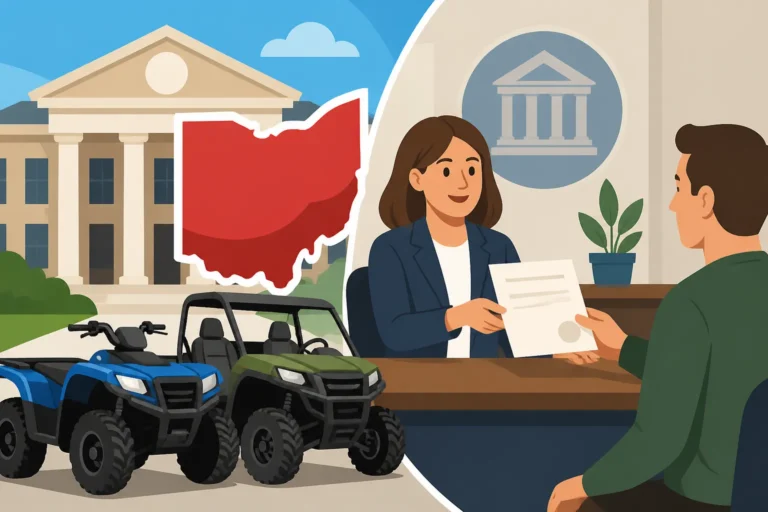
Unlike vehicle registration, which typically happens at a Deputy Registrar (the local BMV office), titling your APV in Ohio is handled exclusively by the County Clerk of Courts Title Office. It's a common misconception to try and do both at the same counter, but these are two distinct government agencies with different responsibilities. The Clerk of Courts Title Office is where official records of ownership are created and maintained. When you walk in, you'll need to bring all your gathered ownership documents, your proof of identity, and the required fees. They will review your paperwork, process the application for an Ohio title, and if all is in order, issue you a shiny new Ohio title certificate.
This office doesn't issue plates or collect registration fees; their sole focus is on establishing legal ownership. Understanding this distinction is key to avoiding wasted trips and frustration. If you've ever wondered about the difference, [Clerk of Courts or Deputy Registrar: Which Does What] provides a clear breakdown. The staff at the title office are usually well-versed in handling out-of-state transfers, but being prepared with all your documents will significantly speed up the process. Make sure to double-check their hours and specific requirements before you visit, as they can sometimes vary slightly by county. This initial visit to the title office is paramount for anyone bringing an out-of-state machine into Ohio, setting the stage for everything else that follows.
Navigating the Ohio Registration Process for Imported Machines
Once you have your Ohio title in hand, you're halfway there! The next crucial step is to officially register your APV with the state. This is where you get your Ohio license plate and validation sticker, which are essential for legal operation on designated trails and approved roadways. This process is generally more straightforward once the title is sorted, but it has its own unique Ohio quirks you'll need to be aware of, especially if you're used to different systems in other states.
The Three-Year Registration Cycle
One of the most distinctive aspects of registering an APV in Ohio is its three-year registration cycle. Unlike many other states that require annual renewals for recreational vehicles, Ohio's system means you pay once for three full years of registration. This is a fantastic convenience, as it cuts down on yearly paperwork and reminders, allowing you to focus more on riding. However, it also means that when you do register, you're paying for that full three-year period upfront. The registration for all APVs in Ohio expires on December 31st of the third year. So, if you register in 2024, your registration will be valid through December 31, 2026. This consistent expiration date helps streamline the renewal process for the state.
Coming from a state with a yearly sticker system, this three-year plate might feel a bit different. It’s definitely something to budget for, as the upfront cost will be higher than a single year's registration in other places, but it offers long-term savings in both time and money. Knowing that [Ohio's Three-Year APV Registration] is the standard helps you plan your payments and understand when your next renewal will be due. The [Expiring December 31 of the Third Year] date is important to remember, as riding on an expired plate can lead to fines and other penalties.
Required Documents for Registration
With your Ohio title now secured, gathering the documents for registration is relatively simple. You'll need:
- Your Ohio APV Title: This is the primary document proving ownership. The Deputy Registrar will need to see this to verify you are the legal owner.
- Proof of Identity: A valid driver's license or state ID is standard.
- Payment for Fees: Be prepared for the registration fee itself, plus the Deputy Registrar's service charge.
For machines that were purchased used out of state, the process typically follows the same steps once you have that Ohio title. The critical hurdle is always the titling, not the registration, for these machines. The state isn't as concerned with where you bought it once it has an Ohio title; it just wants to ensure it's properly registered to you. Make sure you don't confuse this with the documents needed for titling – registration paperwork is usually much more straightforward once ownership is established. If you want a full run-down of what's needed, check out [Ohio APV Registration Paperwork]. If you've just completed the titling step, you should already have everything you need in order to get your plates!
Where to Complete Your APV Registration
Once you have your Ohio title certificate, you can head to any Deputy Registrar agency across the state to complete your APV registration. These are the same offices where people register their cars, trucks, and motorcycles. The Deputy Registrar offices act as agents for the Ohio Bureau of Motor Vehicles (BMV) and handle the day-to-day transactions for vehicle registration. This is different from the Clerk of Courts Title Office, where you just came from for your title. Understanding that you need to visit two different counters for a single machine is one of the key takeaways for Ohio APV owners.
At the Deputy Registrar, you will present your Ohio title, proof of identity, and pay the applicable fees. The fees typically include the state's three-year APV registration charge and a separate Deputy Registrar service fee. This service fee, which is a set amount, covers the cost of the Deputy Registrar agency processing your transaction. It's an additional charge on top of the state registration fee. If you're curious about the specific breakdown, [What Ohio Charges at the Counter Altogether] covers all these fees. The Deputy Registrar will issue you your APV license plate and the corresponding validation sticker on the spot. Once you have these, your out-of-state machine is officially registered and ready to roll in Ohio! For more information on where exactly to go, consult [Where to Register an APV in Ohio].
Special Considerations for Out-of-State APV Owners
Bringing an APV into Ohio from another state isn't always a perfectly linear process. There are nuances and specific situations that frequently trip up new residents or those purchasing machines across state lines. Understanding these potential curveballs upfront can save you considerable time and frustration, helping you navigate the system more effectively.
Machines From Non-Titling or Non-Registering States
One of the biggest hurdles for out-of-state APV owners is when their previous state did not require a title or even registration for their machine. This is a common situation, especially with older ATVs or dirt bikes, or machines from states with very lax off-road vehicle laws. When you arrive at the Ohio County Clerk of Courts Title Office, explaining that your machine "never had a title" can initially be met with a blank stare, but rest assured, there is a process. Ohio still requires a title for every APV, regardless of its origin. In these scenarios, the title office will rely heavily on other forms of proof of ownership.
This usually means you'll need a very thorough and undeniable chain of bills of sale going back as far as possible, preferably to the original purchase from a dealer. If you only have a single bill of sale, it needs to be robust, clearly identifying the machine by VIN, the seller, and the buyer. In some cases, you might be asked to sign an affidavit swearing to ownership. A physical VIN inspection might also be required by a law enforcement officer or another authorized individual to verify the machine's identity and ensure it's not reported stolen. This is crucial for states that don't issue titles, as it's the primary way Ohio can verify legitimacy. Tools like LawDepot might offer generic bill of sale templates or affidavit forms that can help structure your documentation in these situations, though always check with your local Ohio title office for specific requirements.
Temporary Permits for Non-Residents
It's important to clarify the distinction between registering an out-of-state machine in Ohio (meaning you're making Ohio its permanent home) and obtaining a temporary permit for a non-resident visitor. This guide focuses on the former – establishing your APV permanently in Ohio. However, if you're just visiting Ohio with your APV from another state and don't intend to make it a permanent Ohio machine, you might need a [Ohio's Nonresident Temporary Permit].
This temporary permit allows non-residents to operate their APVs on Ohio's designated trails for a short period. It's designed for riders who have their machine titled and registered in their home state but are visiting Ohio for a weekend trip or a longer stay. It is not a substitute for permanently titling and registering your machine in Ohio if you are an Ohio resident or if you plan to keep the machine in Ohio long-term. Confusing these two can lead to issues down the road, so be clear about your intentions for the machine when interacting with the BMV or title office.
Checking for Liens from Previous States
Before you even start the titling process, especially if you bought your APV used from a private seller out of state, performing a thorough lien check is an absolutely crucial step. Just because a title is handed over doesn't mean it's free and clear. A lien means there's an outstanding debt on the machine, and until that debt is paid, the lender (not you) technically has a claim on the APV. This can create significant problems for you down the line, including potentially losing the machine if the original borrower defaults.
You can usually perform a VIN check through various online services or by contacting the motor vehicle department in the state where the machine was previously titled. This check will often reveal any active liens. If a lien does show up, do not proceed with the purchase until you have verifiable proof that the lien has been satisfied and a release has been issued. Sometimes, LawDepot can provide basic forms or information regarding lien releases, which can be useful when dealing with these situations. For more detailed guidance, always refer to [Checking a VIN Before an Ohio Purchase] to protect yourself from inheriting someone else's debt. It's much easier to resolve these issues before you pay for the machine and attempt to title it in Ohio.
Understanding Ohio's Unique APV Plate and Sticker System
Once your out-of-state machine has been successfully titled and registered in Ohio, you'll be issued a physical license plate and a validation sticker. This isn't just a simple decal; Ohio's approach to APV identification is distinct and important to understand, especially if you're accustomed to other states' methods.
Why Ohio Issues a Plate (Not Just a Decal)
Many states treat off-road vehicles with a simple registration decal that sticks directly onto the machine's frame or fender. Ohio, however, takes a more traditional approach by issuing a full-sized license plate for APVs, much like a car or motorcycle. This might seem like an extra step or an unusual requirement if your previous state only used stickers. The reason behind this is that Ohio views APVs as vehicles that require clear, visible identification, especially given the potential for limited road use in certain jurisdictions. A plate provides a more robust and easily identifiable means of tracking and enforcement compared to a smaller decal, which can be easily obscured or damaged.
The plate serves as official proof that your machine is legally registered in the state. It allows law enforcement to quickly verify the registration status of your APV, whether you're on a trail, crossing a road, or simply transporting it. This tangible plate system is a key part of Ohio's regulatory framework for APVs. It makes it easier for officers to see from a distance that your machine is compliant, reducing potential stops and inquiries. If you’re used to just slapping a sticker on, this is a distinct change, but one that emphasizes the state’s commitment to proper identification and accountability. For a deeper dive into this, see [Why Ohio Issues a Plate and Not a Decal].
Proper Placement and Visibility
Once you receive your Ohio APV plate, it’s not enough to just toss it in your toolbox. Ohio law specifies where and how your APV plate must be displayed to ensure it is always visible. The plate must be securely attached to the rear of your APV, ensuring it is clearly visible and not obstructed by mud, equipment, or cargo. This often means finding a suitable flat surface on the back of your ATV or UTV and using bolts or robust zip ties to keep it firmly in place. Remember, these machines are often subjected to rough terrain, so ensuring the plate won't fall off or get bent beyond recognition is crucial.
Along with the physical plate, you will also receive a small validation sticker. This sticker typically indicates the year your registration expires and must be affixed to the upper right corner of the APV license plate. This combination of the plate and sticker provides all the necessary visual proof of your current registration. [Keeping an Ohio Plate Distinctly Visible] is not just a suggestion; it's a legal requirement that can result in a citation if your plate is missing, unreadable, or improperly displayed. Getting this right from the start means fewer headaches when you’re out enjoying your machine. You'll want to ensure both components of [Ohio APV Plates and Validation Stickers] are correctly installed.
Maintaining Your Registration: Renewals
Since Ohio operates on a three-year registration cycle for APVs, your renewal process won't be an annual event, which is a definite bonus! However, it's still essential to keep track of that December 31st expiration date. About 90 days before your registration is set to expire, the Ohio BMV typically sends out a renewal notice as a friendly reminder. This gives you ample time to get your renewal processed without rushing. You can usually renew your registration at any Deputy Registrar agency or, in many cases, online.
When renewing, you'll simply pay the three-year registration fee again, along with the Deputy Registrar service charge. There's no need to retitle your machine unless there has been a change in ownership. Renewing promptly is important because riding an APV with an expired registration can result in fines. The beauty of the three-year cycle is that you can often set it and forget it for a while, but that reminder in the mail is your cue to act. You can even renew [Renewing an Ohio Registration Ninety Days Early] to ensure you're always ahead of the curve. Just mark that December 31st date on your calendar and you'll be set for another three years of adventure.
Potential Roadblocks and How to Overcome Them
Even with the best preparation, bringing an out-of-state APV into Ohio can present a few unique challenges. These aren't insurmountable, but knowing about them beforehand can help you navigate the process with more confidence and less stress. Forewarned is forearmed, as they say, especially when dealing with bureaucracy!
Missing or Incomplete Documentation
This is perhaps the most common roadblock: you arrive at the County Clerk of Courts Title Office, confident you have everything, only to find a crucial piece of paper is missing, or a signature is incorrect. Maybe the bill of sale from the person you bought it from out-of-state is vague, or the previous state's title has a smudge obscuring the VIN. For machines coming from states that didn't title APVs, a lack of a clear, sequential chain of ownership documents can be a major issue. The Ohio title office needs to be absolutely certain you are the rightful owner.
If you encounter this, don't panic. The solution often involves going back to the source. Can you contact the seller for a more detailed bill of sale? Can you get a certified copy of a title from the previous state? Sometimes, if all else fails and you've exhausted other avenues, an affidavit of ownership might be accepted, where you legally attest to the machine's history and your ownership. LawDepot can be a useful resource for finding templates for these kinds of legal forms, but always confirm with your specific Ohio County Clerk of Courts Title Office what they will accept. Being persistent and providing as much supporting evidence as possible, even photos or historical registration cards, can help overcome these documentary gaps.
VIN Verification Requirements
In certain situations, particularly when dealing with an APV from a non-titling state, or if there's any discrepancy or concern about the machine's identity, the Ohio Bureau of Motor Vehicles or the title office might require a VIN verification. This involves a physical inspection of your APV by an authorized individual to confirm that the Vehicle Identification Number on the machine matches the documentation you've provided, and to check for any signs of tampering. This step is in place to prevent theft and ensure that only legitimate machines are registered in Ohio.
Who performs these inspections can vary. It might be a certified VIN inspector at a Deputy Registrar office, a law enforcement officer, or in some cases, a dealership. It's not a common requirement for every out-of-state APV, but it's important to be aware of the possibility. If you're told a VIN verification is needed, ask for clear instructions on where to go and what to expect. Having your machine accessible and the VIN plate easily visible will make the process quicker. This extra layer of scrutiny ensures that machines entering Ohio's registration system are legitimate. For guidance on verifying the VIN, you might consult [Checking a VIN Before an Ohio Purchase].
Common Mistakes Out-of-State Buyers Make
When bringing an APV into Ohio, several common pitfalls often catch new residents or out-of-state buyers off guard. One of the biggest is assuming that the rules from their previous state will apply in Ohio. This simply isn't the case. Ohio has its own unique set of laws for APVs, and they must be followed. Another frequent mistake is not understanding the two-step process: you must title your APV at the County Clerk of Courts Title Office before you can register it and get plates at a Deputy Registrar office. Trying to do both at one counter will inevitably lead to frustration.
Furthermore, many people overlook the sales tax implications. Even if you bought your APV out of state, if you're bringing it into Ohio for permanent use, Ohio sales tax will likely apply to the purchase price, unless you can prove you already paid an equivalent sales tax in another state. This is often collected at the time of titling. It’s a cost many don’t anticipate but is a critical part of the overall expense. Consulting [Ohio APV Registration and Sales Tax] can help you understand this often-overlooked cost. By being aware of these common missteps, you can better prepare yourself and ensure a smoother transition for your out-of-state APV into Ohio’s system.
Costs Involved in Registering an Out-of-State APV
Let's talk about the money side of things. Registering an out-of-state APV in Ohio isn't free, but understanding exactly what you're paying for can help you budget effectively and avoid surprises. The fees are generally straightforward, but they are split between the titling process and the registration process.
Breaking Down the Fees
When you bring an out-of-state APV into Ohio, you'll encounter a few distinct fees:
- Ohio APV Title Fee: This is a one-time fee paid at the County Clerk of Courts Title Office when you first get your Ohio title. It's a standard charge for establishing legal ownership in the state. For the current figure, you'll need to check the BMV's official website or inquire directly at the title office. This fee primarily covers the administrative costs of processing and recording your title.
- Ohio APV Registration Fee: This is the primary fee for the three-year registration cycle. It's paid at the Deputy Registrar office. Again, current rates should be verified directly with the BMV. This fee is a significant portion of what you pay and covers the state's costs for the APV program.
- Deputy Registrar Fee: On top of the state registration fee, there's a small service charge added by the Deputy Registrar for processing your transaction. This fee is standard across all Deputy Registrar offices and helps support their operations. [Ohio's $3.50 Deputy Registrar Fee] is a consistent charge you'll see.
- Sales Tax (if applicable): As mentioned, if you purchased your APV out of state but are bringing it into Ohio, you'll likely owe Ohio sales tax on the purchase price, unless you've already paid sales tax in a reciprocal state. This is typically collected at the time of titling. Ohio's sales tax rate is a state-level percentage, plus any county permissive tax.
It's helpful to remember that you'll be visiting two separate offices, meaning two separate transactions and potentially two separate payments (or one larger payment for sales tax and title at the Clerk of Courts, then another for registration at the Deputy Registrar). For a complete picture of all the potential charges you'll face, refer to [What Ohio Charges at the Counter Altogether].
Understanding the Value for Your Money
While paying fees might never be anyone's favorite part of vehicle ownership, it's worth understanding where your APV registration money actually goes. A significant portion of these fees is directed towards the State Recreational Vehicle Fund. This fund is crucial because it helps finance the development, maintenance, and repair of Ohio's extensive network of public APV trails and recreational areas. So, when you pay your registration fees, you're directly contributing to the very trails you'll be riding.
This funding is essential for keeping trails safe, accessible, and enjoyable for all riders. It helps pay for trail signage, erosion control, bridge construction, and general upkeep that ensures sustainable riding opportunities across the state. Without these funds, many of Ohio's fantastic riding areas would simply not be maintained to the same standard, or might not even exist. So, beyond the legal necessity, your registration fees are an investment in the Ohio APV community and the future of off-road riding in the state. It’s not just a payment; it’s a contribution to the very infrastructure that makes your APV adventures possible. You can explore [Where Ohio APV Registration Money Goes] to learn more about this important funding.
Summary of Out-of-State APV Registration Steps
To make things a little clearer, here’s a simplified checklist comparing the key aspects of bringing an out-of-state APV into Ohio's system. This table distills the core actions and documents needed, helping you visualize the process from start to finish.
| Step | Action | Where to Go | Key Documents Needed |
|---|---|---|---|
| 1. Ownership Verification & Titling | Ensure you have solid proof of ownership; apply for an Ohio APV Title. This is the first essential step. | County Clerk of Courts Title Office (your county) | Previous state's title (if applicable), Bill of Sale, MCO/MSO (if new), ID, VIN Inspection (if required) |
| 2. Registration Application | Register your newly titled Ohio APV to receive your license plate and validation sticker. | Any Ohio Deputy Registrar (BMV agency) | Ohio APV Title, Proof of Identity, Payment |
| 3. Display & Maintain | Properly display your Ohio APV plate and sticker; remember the three-year renewal cycle. | Your APV | Ohio APV Plate, Validation Sticker |
This table highlights that while there are two primary government entities involved (Title Office and Deputy Registrar), each has a distinct role, and preparing the right documents for each step is crucial for a smooth process.
Disclaimer
This article is for general informational purposes only and does not constitute professional advice. Laws, prices and regulations vary by location and change over time. Consult a qualified professional for guidance on your specific situation.