Ohio Registration for a Youth Machine
As a parent, getting your child started in the exciting world of off-road riding in Ohio can be a blast, but navigating the rules for youth machines often feels like trying to follow a trail map drawn by a toddler. You want to do things right, ensure their safety, and stay legal, but figuring out if that junior quad or pint-sized dirt bike needs a title or registration can be a real head-scratcher. This comprehensive guide is here to untangle that confusion, breaking down everything you need to know about titling and registering a youth machine in Ohio, from the paperwork to the actual riding rules.
Understanding Ohio's Definition of a Youth Machine
Before diving into the nitty-gritty of paperwork, it's crucial to understand how Ohio law views these smaller, kid-friendly off-road vehicles. It might seem obvious that a machine designed for a child is different from one for an adult, but for legal and registration purposes, the distinctions can sometimes blur or be less significant than you'd expect.
What Ohio Law Considers an All-Purpose Vehicle APV
In Ohio, the legal umbrella that covers most recreational off-road vehicles is "All-Purpose Vehicle" or APV. This term is pretty broad, encompassing everything from your full-sized ATV or side-by-side to dirt bikes and, yes, even many youth-sized machines. The law doesn't generally differentiate APVs based on engine size or rider age when it comes to the fundamental requirement for titling and registration. If it's designed for off-highway use, has a motor (gas or electric), and isn't solely for competition or farm work (with specific exemptions), it's likely considered an APV.
This means that a 90cc quad for a ten-year-old is, in the eyes of the Ohio Bureau of Motor Vehicles (BMV) and the Clerk of Courts, just as much an APV as a 700cc beast for an adult. This can be a source of confusion for parents who might think smaller machines are exempt. The intent here isn't to make things harder, but to ensure a consistent framework for ownership and trail access, no matter the machine's scale. So, while your child's machine might be physically smaller, legally it carries similar responsibilities to its larger counterparts.
Differentiating Youth Machines from Toys
One common question parents have is whether a really small electric quad or a mini-bike is just a toy or if it crosses the line into being a registrable APV. This distinction is important because you wouldn't title your child's Power Wheels, right? The key lies in the design and intended use. Genuine "toys" are typically low-powered, have limited speed, and are clearly not designed for aggressive off-road terrain or sustained trail riding. They're meant for yard play, often on paved surfaces or very flat ground, and usually lack features like proper suspension, off-road tires, or durable frames found on even entry-level youth APVs.
Youth machines classified as APVs, on the other hand, are miniature versions of their full-sized counterparts. They feature engines (whether gas or more powerful electric motors), robust frames, suspension systems, and tires designed for dirt, gravel, and light trails. These are built for legitimate off-road recreation, not just driveway cruising. If a machine has a Vehicle Identification Number (VIN) from the manufacturer, it’s almost certainly an APV and not merely a toy. When in doubt, always err on the side of caution and check with your local Deputy Registrar or the Clerk of Courts. They can help you determine if your machine falls under the APV classification, ensuring you're compliant before you ever hit the trails.
Does a Youth Machine Need an Ohio Title?
This is where a lot of parents get hung up, and it's completely understandable. It seems counterintuitive to title a machine meant for a child, especially if it's not going to be ridden on public roads. But in Ohio, the rules are clear: if it's an APV, it almost certainly needs a title.
The Titling Requirement for Ohio APVs
Yes, your child's youth machine, if it's classified as an All-Purpose Vehicle, absolutely needs an Ohio title. This is a crucial step that many parents overlook, often assuming that because it's for a child or is relatively inexpensive, it's exempt. Unfortunately, that's not the case. The title serves as the ultimate proof of ownership for the machine. Without it, you could run into a host of problems down the line, from proving it belongs to you if it's stolen to having difficulty selling it or even just registering it for trail use.
Think of it like buying a car; you wouldn't dream of driving it off the lot without getting the title transferred into your name. While an APV won't be on public roads in the same way, the principle of legal ownership is identical. The Clerk of Courts in your county is the agency responsible for issuing and transferring titles for APVs. This is a one-time process for each machine, establishing the legal owner. You'll find more details on what's required in [Ohio APV Title Requirements].
Titling a New Youth Machine
When you purchase a brand-new youth machine from a licensed dealer in Ohio, the titling process usually starts with a document called a Manufacturer's Certificate of Origin (MCO) or Manufacturer's Statement of Origin (MSO). This is essentially the birth certificate for your APV, proving it's new and hasn't been titled before. The dealer will typically provide this to you, along with a bill of sale. Your next step is to take these documents to your local County Clerk of Courts Title Office.
At the Clerk of Courts, you'll present the MCO/MSO, your bill of sale, and a valid photo ID. The title will be issued in the name of the adult who is the legal owner – a minor cannot hold a title in Ohio. This is an important distinction; you, as the parent or guardian, will be the legal owner, even though the machine is intended for your child. Make sure all the information is correct before you leave the office. They'll collect the title fee, and you'll walk out with an official Ohio Certificate of Title. For a deeper dive into this specific process, check out [Titling a New Quad With a Certificate of Origin].
Titling a Used Youth Machine
Buying a used youth machine, whether from a private seller or an auction, comes with its own set of considerations for titling. The golden rule here is: never buy a used APV without a clear Ohio title signed over to you by the previous owner. If a seller tells you they never titled it because "it's just a kid's machine," walk away. You'll inherit their problem, and it will be incredibly difficult, if not impossible, to get a title in your name.
When purchasing a used youth machine, you and the seller should ideally meet at the Clerk of Courts Title Office. This allows you to verify the title's authenticity, ensure it's free of liens, and have the transfer processed on the spot. The seller will sign the existing title over to you, and you'll then apply for a new title in your name. You'll also need a bill of sale to document the transaction, which is good practice even if not always strictly required by the Clerk of Courts. A reputable resource like LawDepot can provide a straightforward bill of sale template to ensure you have proper documentation. For more tips on what to look for, read our guide on [Buying a Used APV in Ohio].
Registering a Youth Machine in Ohio
Once your youth machine has a title, the next step is often registration. While titling establishes ownership, registration is what permits the machine to be operated on public lands and trails in Ohio. Again, it's a common area of misunderstanding for parents.
The APV Registration Mandate
After successfully titling your youth machine, the next crucial step is getting it registered with the state of Ohio if you plan to ride it on any public lands, including designated state forest trails or national forest systems like the Wayne National Forest. This isn't just a suggestion; it's a legal requirement. Many parents mistakenly believe that because it's a youth machine, it's exempt from registration, especially if they only plan to use it occasionally. However, just like a full-sized ATV, your child's registered APV contributes to funding the very trails they'll be riding.
Registration is handled by a Deputy Registrar, which is different from the Clerk of Courts where you obtained the title. It's an ongoing, renewable requirement, typically lasting for three years in Ohio. This process ensures that all APVs using public resources are accounted for and that their operation is lawful. Skipping registration, even for a youth machine, can lead to fines and citations if caught riding on public property. For a complete overview of the process, see [Registering an APV in Ohio].
The Registration Process for a Youth Machine
Registering a youth machine in Ohio is a fairly straightforward process once you have your title in hand. You'll need to visit a Deputy Registrar's office, which is a common place to handle vehicle registrations and driver's licenses. It’s a good idea to call ahead or check their website to confirm their hours and what documents they require, but generally, you'll need a few key items.
Bring your official Ohio Certificate of Title for the youth machine, your valid driver's license or state ID, and the completed [Ohio Form BMV 3722 Explained], which you can often get at the Deputy Registrar's office or sometimes print online beforehand. This form collects basic information about you and the APV. You'll fill out the details, pay the registration fee and the Deputy Registrar's service charge, and in return, you'll receive your APV registration card, a validation sticker, and an Ohio APV license plate. It's a quick and efficient process when you're prepared.
What the Ohio APV Plate and Sticker Mean for a Youth Machine
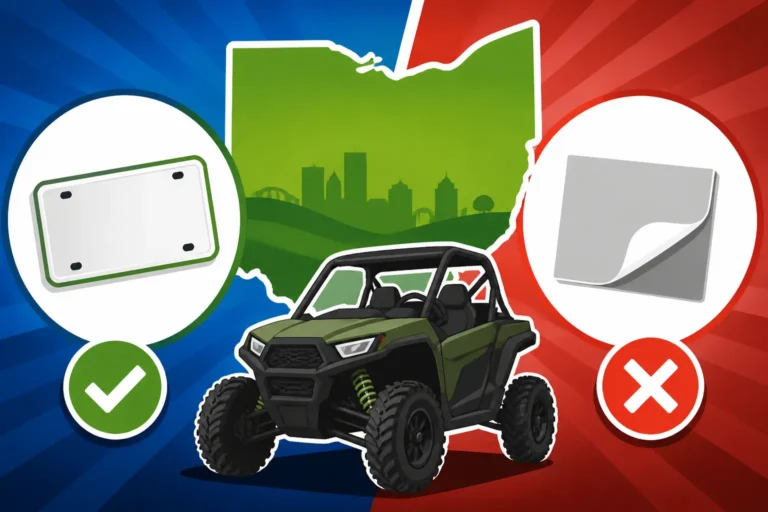
Once you've completed the registration process at the Deputy Registrar, you'll receive a distinctive Ohio APV license plate and a validation sticker. For a youth machine, just like an adult machine, this plate serves as its official identification. The plate is issued to the machine, not the rider. It must be securely affixed to the rear of the APV in a clearly visible location, as specified by Ohio law. The validation sticker, which indicates the current registration period, will typically be placed on this plate.
This physical plate and sticker are your proof that the youth machine is legally registered to operate on Ohio's public lands and trails. Without it, you're essentially operating an unregistered vehicle, which can lead to legal issues. So, even though it's a smaller machine for a younger rider, making sure that plate is properly displayed and the sticker is current is just as important as it would be on a full-sized side-by-side. Our guide on [Ohio APV Plates and Validation Stickers] goes into more detail about proper display.
Age and Supervision Rules for Youth Riders on Ohio Trails
While titling and registration are about the machine, ensuring safe and legal riding for your child involves understanding the rules that apply to the rider. Ohio has specific regulations concerning the age of riders and the necessity of adult supervision on public lands. This is critical information for any parent of a young enthusiast.
Ohio's Minimum Age for Riding State Forest Land
This is a really important one for parents to understand: simply having a registered youth machine doesn't automatically mean your child can ride it anywhere they want. Ohio has specific age restrictions for operating APVs on state forest lands and other public trails. For example, many Ohio Department of Natural Resources (ODNR) managed state forest trails have a minimum age requirement of 12 years old for riders. This means that if your child is younger than 12, they generally cannot legally operate an APV on these specific trails, even if the machine itself is perfectly sized for them and registered.
It's a common misconception that if a machine is designed for a 6-year-old, then a 6-year-old can ride it wherever. However, these age restrictions are in place for safety and responsibility reasons, acknowledging the cognitive and physical development required to safely navigate trails. Always check the specific rules for the riding area you plan to visit, as regulations can vary. For more information on this, refer to [Ohio Minimum Age for State Forest Trails] and [Ohio Rules for a Rider Aged 12].
The Role of Adult Supervision for Young Riders
Beyond minimum age requirements, Ohio law often mandates adult supervision for younger APV riders, especially those under the age of 16. This isn't just a suggestion for safety; it's a legal requirement designed to ensure that minors are operating these machines responsibly and under the watchful eye of a capable adult. Typically, the supervising adult must be at least 18 years old, possess a valid driver's license, and be actively supervising the minor, which usually means riding alongside them on a separate APV, not just being somewhere in the general vicinity.
This rule emphasizes that the responsibility for safe operation ultimately rests with the adult. It's about providing guidance, intervening if necessary, and setting a good example for trail etiquette and safety. Parents need to be prepared to ride with their children and ensure they are within sight and sound at all times. Failure to adhere to supervision rules can result in citations for the supervising adult. To understand the specifics of this requirement, take a look at [Ohio Rules for Riding With a Parent] and [Ohio Supervision Rules on Forest Trails].
Youth Machine Sizes and Ohio Rules
While Ohio's registration process doesn't dictate machine size based on rider age for the purpose of getting a plate, the selection of a youth machine and its appropriate size for your child is paramount for safety and adherence to some riding area rules. Youth machines come in a range of engine sizes (from 50cc to 200cc, sometimes larger for youth UTVs) and physical dimensions, and matching the machine to your child's age, weight, height, and skill level is critical. Organizations like the ATV Safety Institute (ASI) provide guidelines for this, often recommending specific engine sizes for different age groups.
Furthermore, some trail systems might have width restrictions that could impact even youth machines if they are particularly wide, though this is less common for standard youth ATVs and more of a concern for larger youth side-by-sides. While Ohio law doesn't explicitly tie registration to machine size limits for children, local riding areas might. Always research the specific rules of any trail system your child will be using. Ensuring a proper fit and understanding the nuances of [Youth Machine Sizes and Ohio Rules] will contribute significantly to a safer and more enjoyable riding experience for your young one.
Important Documents and Fees for Youth Machine Registration
Navigating the paperwork and understanding the associated costs can sometimes feel like a treasure hunt with no map. But don't worry, with a clear list of what you need and what to expect financially, you can approach the Deputy Registrar and Clerk of Courts with confidence.
Essential Paperwork for the Deputy Registrar
To successfully register your youth machine in Ohio, you'll need to gather a few essential documents before heading to the Deputy Registrar's office. Being prepared with everything in order can save you a lot of time and a frustrating second trip. The primary documents you'll need are:
- Original Ohio Certificate of Title: This is the most critical document. As we discussed, you'll obtain this first from the Clerk of Courts. It proves you are the legal owner of the APV.
- Valid Photo Identification: Your current Ohio driver's license or state ID card is required to verify your identity.
- Completed Ohio Form BMV 3722, "Application for All-Purpose Vehicle Registration": This form can often be obtained and filled out at the Deputy Registrar's office, or you might be able to print it from the BMV website and complete it beforehand. It collects information about the APV and the owner.
Having these documents ready will make the registration process smooth and efficient. It's also a good idea to bring a pen and any questions you might have. For a detailed rundown of all necessary documents, refer to [Ohio APV Registration Paperwork].
Understanding the Costs Involved
When it comes to getting your child's youth machine legally ready for the trails, there are a few distinct fees you'll encounter. It's important to understand that these aren't all paid at the same place or at the same time, which can sometimes add to the confusion for first-time APV owners.
First, there's the Ohio APV Title Cost. This is a one-time fee paid at your County Clerk of Courts Title Office when you originally title the machine. It's a fundamental cost of establishing legal ownership. Separately, you'll pay the Ohio APV Registration Cost at a Deputy Registrar's office. This fee covers the three-year registration period. On top of the registration fee, the Deputy Registrar will charge a small service charge, which compensates their office for processing the transaction. You'll effectively visit [Two Ohio Counters for One Machine] to handle these separate processes.
While I can't provide specific dollar amounts here (as prices can change), it's always best to check the official Ohio BMV website or call your local Clerk of Courts and Deputy Registrar for the most current fee schedules. Budgeting for these separate costs upfront will help you avoid any surprises and ensure you're fully prepared to cover everything required to get your child's machine legally titled and registered.
The Multi-Year Ohio Registration Cycle
One aspect of Ohio's APV registration that's particularly helpful for parents and riders is its multi-year cycle. Unlike some other vehicle registrations that might be annual, Ohio's APV registration is valid for a full three-year period. This means you don't have to worry about renewing it every single year, giving you more time to enjoy the trails and less time at the BMV.
However, it's crucial to remember that all Ohio APV registrations expire on December 31st of the third year of the cycle, regardless of when you initially registered it within that cycle. For instance, if you register your youth machine in July 2024, it will expire on December 31, 2026. This consistent expiration date helps simplify renewals across the state. You'll typically receive a renewal notice in the mail well in advance, giving you ample time to get it renewed before the deadline. Knowing this cycle, detailed in [Ohio's Three-Year APV Registration] and [Expiring December 31 of the Third Year], allows you to budget and plan your renewals effectively, avoiding any last-minute scramble or the risk of riding on an expired registration.
Common Scenarios and Troubleshooting for Parents
Even with all the rules laid out, real-life situations can throw a curveball. What if your child's machine was a gift? What if you lose a document? These are common concerns, and knowing how to navigate them can save a lot of headaches.
What If the Youth Machine Was a Gift or Homemade?
Sometimes, a youth machine isn't bought new from a dealer or even used from a stranger; it might be a gift from a grandparent or even a labor of love that's been homemade in the garage. These situations can introduce unique challenges to the titling and registration process.
If the machine was a gift, and it was previously titled to someone else, the giver should properly sign over their existing Ohio title to you. Just like a private sale, you'll then take that signed title to the Clerk of Courts to transfer it into your name. Even for gifts, it's a good idea to have a simple bill of sale (which a LawDepot template can easily provide) stating it was a gift, establishing a zero dollar value for sales tax purposes (though you'll still pay the title and registration fees). This helps create a clear paper trail for ownership.
For homemade youth machines, the process is significantly more complex. You won't have an MCO or a previous title. Instead, you'll likely need to go through a process of applying for a VIN assignment through the Ohio BMV, which typically involves an inspection to verify the machine's components and safety. This is a specialized process and you should contact the BMV directly for specific instructions and forms. It's definitely not as straightforward as titling a manufactured APV.
Losing the Title or Plate for a Youth Machine
It happens to the best of us: despite our best efforts to keep important documents safe, sometimes things go missing. If you've lost the Ohio Certificate of Title for your youth machine or if the license plate has been lost, stolen, or damaged, don't panic. There are processes in place to help you get replacements.
If you lose the Ohio Certificate of Title, you'll need to go back to your County Clerk of Courts Title Office. You can apply for a duplicate title there. You'll typically need to fill out a specific form, provide your photo ID, and pay a small fee. They'll then issue a duplicate title. It's important to do this promptly, especially if you plan to sell the machine or if you need the title for any other reason.
For a lost, stolen, or damaged APV license plate, you'll visit a Deputy Registrar's office. You'll need to complete an application for a replacement plate, show your ID, and provide your current registration information. There will be a fee for the replacement plate and sticker. Our guide [Replacing a Lost Ohio APV Plate] provides more detail on this process. In either case, getting replacements promptly is key to staying legally compliant and avoiding potential issues down the trail.
What Happens If You Ride an Unregistered Youth Machine?
It might seem harmless to let your child ride their unregistered youth machine on public trails, especially if you're just "testing it out" or "only going a short distance." However, doing so can lead to real consequences. Operating an unregistered All-Purpose Vehicle on any public land in Ohio is a violation of state law, regardless of the machine's size or the rider's age (though the adult supervising would typically be cited).
If a law enforcement officer, such as an ODNR officer, a sheriff's deputy, or a park ranger, stops you while your child is riding an unregistered machine on public property, you could face a citation and be subject to fines. These fines can be significant and are certainly more costly than simply paying the registration fee in the first place. Beyond the financial penalty, an unregistered machine could be impounded, creating even more hassle and expense. The intent of registration is to ensure accountability and contribute to trail maintenance, so it's taken seriously. For a clearer picture of the penalties, you can consult [Ohio Fines for an Unregistered APV]. It's always best to ensure your child's machine is properly titled and registered before you head out to any public riding area.
Where to Go for Titling and Registration
Navigating the various government offices can feel like a maze, especially when you're dealing with different entities for what seems like a single purpose. Here's a clear breakdown of where you need to go for each step of the youth machine process.
| Service Needed | Office to Visit | What They Do | Key Documents You'll Need |
|---|---|---|---|
| Titling a Youth Machine | County Clerk of Courts Title Office | Issues/transfers legal ownership (Ohio Certificate of Title). | MCO/MSO (new), Existing Title (used), Bill of Sale, Photo ID |
| Registering a Youth Machine | Deputy Registrar (BMV License Agency) | Issues APV plate, validation sticker, and registration card for trail use. | Ohio Certificate of Title, BMV Form 3722, Photo ID, Proof of Funds |
| Replacing a Lost Title | County Clerk of Courts Title Office | Issues a duplicate Ohio Certificate of Title. | Photo ID, Application Form, Payment |
| Replacing a Lost Plate/Sticker | Deputy Registrar (BMV License Agency) | Issues a replacement APV plate and/or validation sticker. | Photo ID, Registration Card, Application Form, Payment |
This table should help clarify which office handles which specific task, minimizing confusion and streamlining your visits. Remember, while both offices deal with your APV, they serve distinct functions in the journey from purchase to legal trail riding.
Disclaimer
This article is for general informational purposes only and does not constitute professional advice. Laws, prices and regulations vary by location and change over time. Consult a qualified professional for guidance on your specific situation.