Getting Permission to Ride a Privately Owned Reclaimed Mine
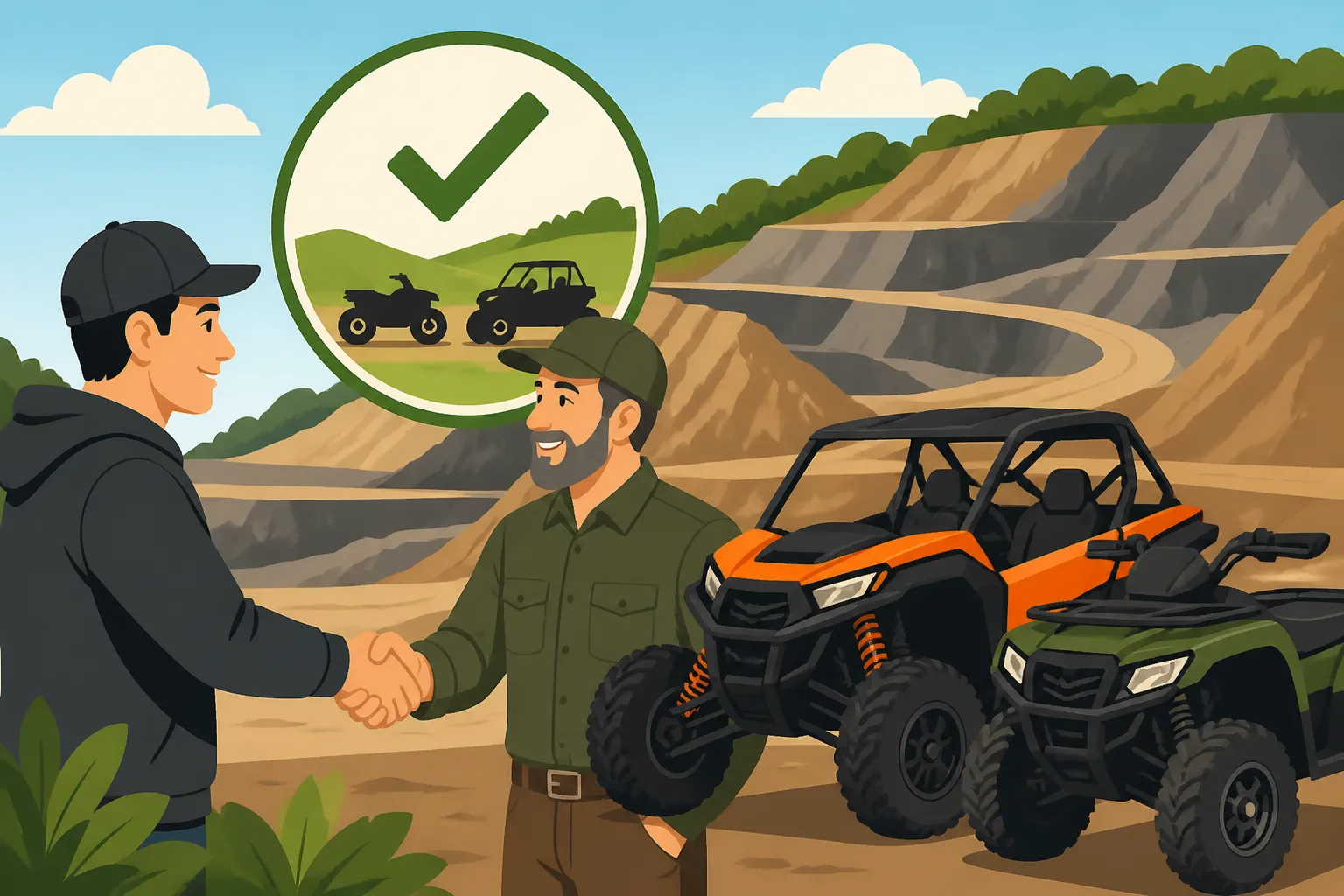
A reclaimed mine can look like open riding country, but its roads, spoil piles, and clearings do not automatically make it public. In Ohio, the practical first step is finding the person or organization with authority to grant access, then agreeing on where and how you may ride. This article explains how to check permission, clarify terms, and prepare for the site.
Reclaimed mine land is not automatically open to riders
Reclamation changes land after mining; it does not, by itself, make the property public or create a right to ride there. A parcel may be privately owned, leased for a particular use, subject to access restrictions, or managed under agreements that limit motorized recreation. Even an old haul road or a well-used path is not proof that riders are welcome.
This matters because reclaimed sites can have a mix of ownership and management. The surface owner may not be the only party with a say in access. A mining company, a later landowner, a lessee, a conservation organization, or another manager may control particular areas or activities. If you cannot tell who has authority, do not assume that a nearby resident, a person who rides there, or someone who maintains a trail can grant permission for the whole site.
Ohio’s rules for privately owned property still matter even when the ground is a former mine. Start with Ohio Rules for Riding Private Property and Ohio Landowner Permission Rules. The key point is simple: permission needs to come from someone entitled to give it, and it applies only within the scope that person authorizes.
A private site may be used for recreation through an arrangement that is not obvious from the road. For example, a club might have permission to ride on a defined route, while individual visitors are not allowed. A landowner might allow a hunting group to access the property but prohibit motorized travel. A gate may be unlocked for another authorized purpose, not for general riding.
Before contacting anyone, keep the difference between these situations clear:
- Privately owned ground: Access depends on permission from the owner or an authorized manager, along with any applicable laws and site rules.
- Club or organized access: A club, leaseholder, or event organizer may have limited rights. Ask whether those rights extend to you as a guest.
- Public land or a designated riding area: Public ownership does not automatically mean motorized riding is allowed. Check the managing agency’s rules and the specific area’s restrictions.
- Land beside a public road or trail: Being able to reach a parcel does not mean you may ride onto it. A route may cross private land, or a visible track may end at a property boundary.
For background on riding mine terrain, see Riding a Reclaimed Strip Mine. The conditions and access rules can differ substantially from one property to another, so general information about reclaimed land is not a substitute for permission at the specific site.
How to find the right person and ask clearly
Begin by identifying the property as accurately as you can. A street address may not be enough for a large former mine, and a trail entrance may be far from the parcel’s legal boundary. Useful details include the nearest road, a map pin, the entrance or gate, and the area or route you hope to use.
You can ask a county auditor or recorder’s office about property records, or contact a local government office if you need help understanding which parcel is involved. Those records can help identify an owner, but they may not answer who manages recreation or whether someone else has authority to approve access. If the first contact directs you to a company, club, or land manager, confirm that the person you speak with can authorize the specific activity.
A clear request is more useful than asking generally, “Can I ride the mine?” Explain what you want to do and ask what the landowner is willing to allow. Include:
- The machines you plan to bring, such as an ATV or side-by-side.
- The number of riders and whether anyone will be under 18.
- The proposed date or general riding period.
- Whether you will arrive with a trailer, park on the property, or use a particular entrance.
- Whether you are asking for a single visit, recurring access, or a group event.
- Whether you plan to invite others, carry passengers, camp, hunt, or bring pets.
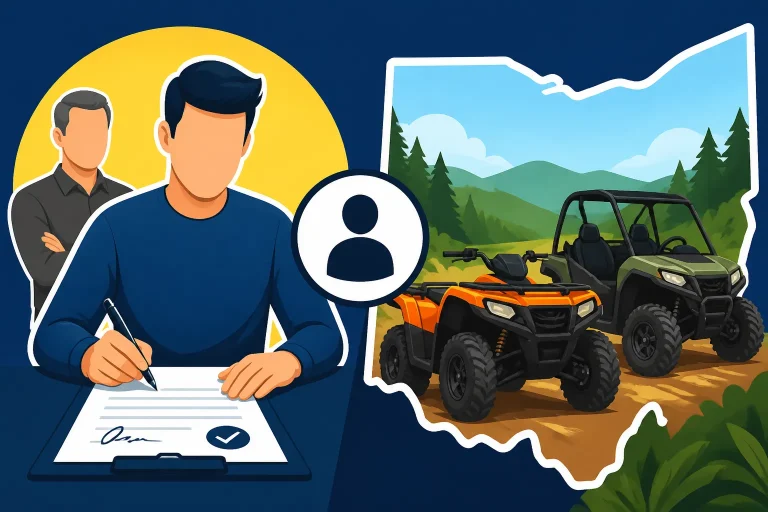
Do not treat silence, a friendly conversation, or someone else’s use as permission. If the owner says yes verbally, ask whether they can confirm the terms in writing. Written Permission From an Ohio Landowner covers why having a clear record is useful. Written confirmation helps both sides remember what was agreed, especially if access is limited to a certain route, date, or group.
| Ask about | Why it matters |
|---|---|
| Who can authorize access | The person you contact may not control the parcel or the activity |
| Exact boundaries and routes | Permission for one area does not necessarily include nearby land |
| Dates, hours, and frequency | A one-time visit may not authorize repeat rides |
| Allowed machines and riders | The site may set limits beyond general state requirements |
| Guests and organized rides | Permission for you may not extend to other riders or events |
| Parking, gates, and entry | The owner may require a particular approach or staging area |
| Closures and hazards | Conditions and access can change after permission is granted |
If a club says it has access, ask whether membership is required, whether guests are permitted, and whether the club’s agreement covers the area you intend to ride. Do not rely on a club member’s assurance alone if the club has not confirmed that it can invite you. For a larger group, a publicized ride, or an event involving fees, get the land manager’s approval for that specific use rather than assuming ordinary personal permission covers it.
Permission should also be specific about what happens if conditions change. A landowner may close a route for repairs, hunting activity, wet ground, fire risk, or other reasons. Agree on how you will receive closure notices and what to do if you arrive and find a closed gate or a posted restriction.
What permission should cover, and what it does not replace
A useful permission agreement identifies the property or riding area, the people allowed to enter, the machines permitted, the approved routes, and the time period. It should also make clear whether passengers, guests, camping, parking, or organized activities are included. If the landowner gives you a map or marked route, follow it; do not extend access to adjacent parcels or unmarked tracks.
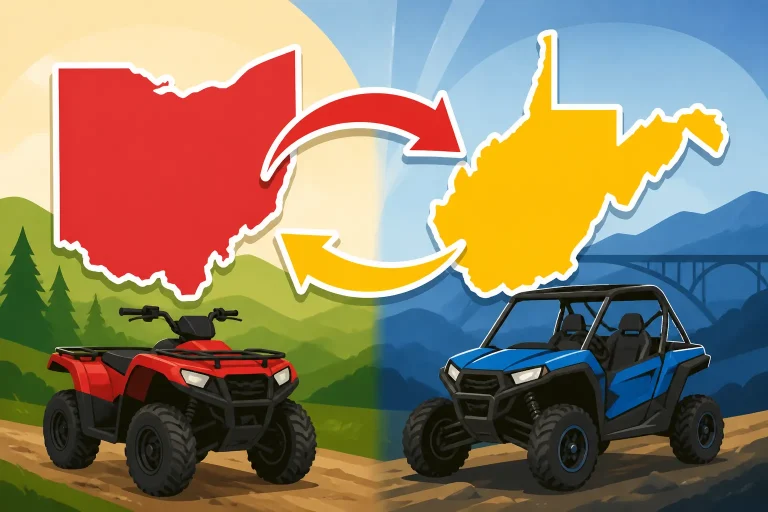
Written permission is not a blanket waiver of other rules. It does not automatically satisfy Ohio registration requirements, trail-specific requirements, local restrictions, or rules that apply to a particular machine or rider. Check the status of your machine and the kind of riding you plan to do. Ohio APV Permits Explained and Ohio APV Registration Paperwork can help you sort out state paperwork and permit questions. If your machine is registered in another state, review Ohio APV Reciprocity With Other States rather than assuming that permission from a private owner settles registration or trail-access requirements.
Likewise, permission from a landowner does not necessarily authorize riding on the public roads used to reach the property. A private parcel may be reachable only by crossing a public route, and road use can have separate rules. Keep the ride on the property unless the route to and from it is legal and authorized.
Ask about insurance and liability before riding. The owner may require proof of coverage, a signed release, a club membership, or other conditions. Read any form before signing and make sure it matches what was discussed. If the owner sets a requirement you cannot meet, do not treat the requirement as optional. For organized access or commercial activity, the landowner may need to approve additional arrangements.
The following checklist can help you confirm the terms before loading your machine:
- Get the name of the owner, manager, or organization authorizing access.
- Confirm the parcel and approved entrance, ideally using a map or written description.
- Record which riders and machines are included.
- Confirm dates, hours, route boundaries, parking, and gate instructions.
- Ask about guests, passengers, minors, events, and any activities beyond riding.
- Check whether insurance, waivers, fees, or club membership apply.
- Ask how closures and changes will be communicated.
- Keep the written approval and any site map available during the visit.
Carry permission in a form you can show if a property manager or law enforcement officer asks why you are there. A saved message or printed note can help, but it should identify the authorized people and place clearly. Do not post or forward the permission as an invitation to others unless the landowner expressly allows that.
Check the site before you ride
Reclaimed mine terrain can be unpredictable. A smooth-looking route may pass near steep slopes, loose material, drainage features, unstable edges, or water-filled excavations. Vegetation can hide ruts, debris, soft ground, or a sudden drop. Do not assume that a route is safe because it is visible on a satellite map or because another rider has used it.
Ask the land manager which areas are off limits and whether any routes have been closed or changed. Stay on approved routes, respect gates and signs, and turn around if conditions do not match what you were told. Avoid riding through reclamation work, planted areas, drainage structures, or equipment zones unless the manager has specifically authorized it.
Weather can change the risk quickly. Rain may soften soil, deepen ruts, and make slopes or clay surfaces difficult to control. A route that was passable on a dry visit may be unsafe after heavy rain. Check with the property contact before setting out if the site’s condition is uncertain, and do not create a new path around a muddy section or barrier. That can damage the property and take you beyond the permission granted.
Plan for basic safety as well as access:
- Ride with a companion where practical, and tell someone where you will be.
- Bring a charged phone, but do not count on reliable service at a remote site.
- Wear appropriate protective gear and use a machine suited to the terrain.
- Keep a safe distance from other riders and from steep edges.
- Carry water and basic supplies, and know how you will leave if a machine breaks down.
- Follow the landowner’s instructions about fire, litter, noise, and leaving the property.
If a site is advertised through a club or informal network, verify that the current access arrangement remains in force before traveling. Old directions or past permission may no longer apply, and a landowner can change access terms. For public forest land, separate permit rules may apply; How to Get a Wayne Forest Special Use Permit is relevant to organized activities on that land, not a substitute for permission to ride a privately owned mine.
The safest approach is to treat each reclaimed mine as a separate property with its own access arrangement. Identify who controls the land, get clear permission for the riders and machines involved, follow the approved routes, and confirm any state or site-specific requirements before unloading. If you cannot verify authority or the boundaries of your permission, wait until you can.
Disclaimer
This article is for general informational purposes only and does not constitute professional advice. Laws, prices and regulations vary by location and change over time. Consult a qualified professional for guidance on your specific situation.