Which Adult Can Supervise an Under-16 Forest Rider
A rider under 16 planning to use an Ohio state forest trail needs more than a willing adult nearby. The supervision rule sets specific requirements for who must accompany the young rider. Here’s who qualifies, where the rule applies, and what else families should check before heading to a forest riding area.
Who can supervise an under-16 rider
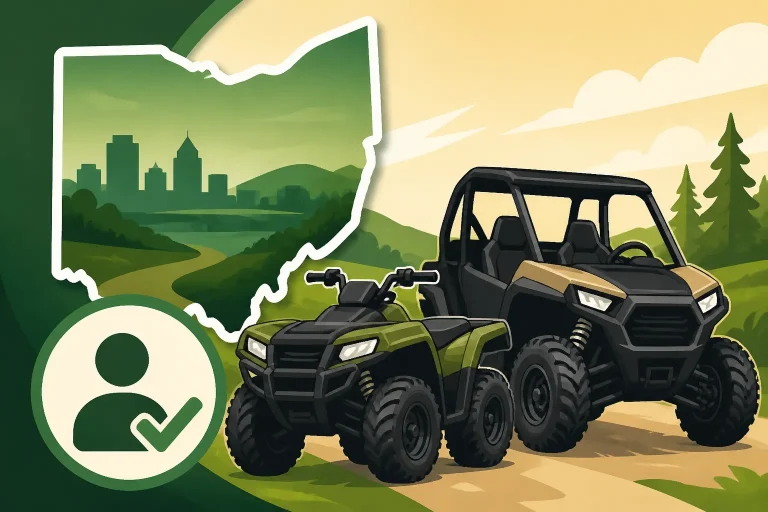
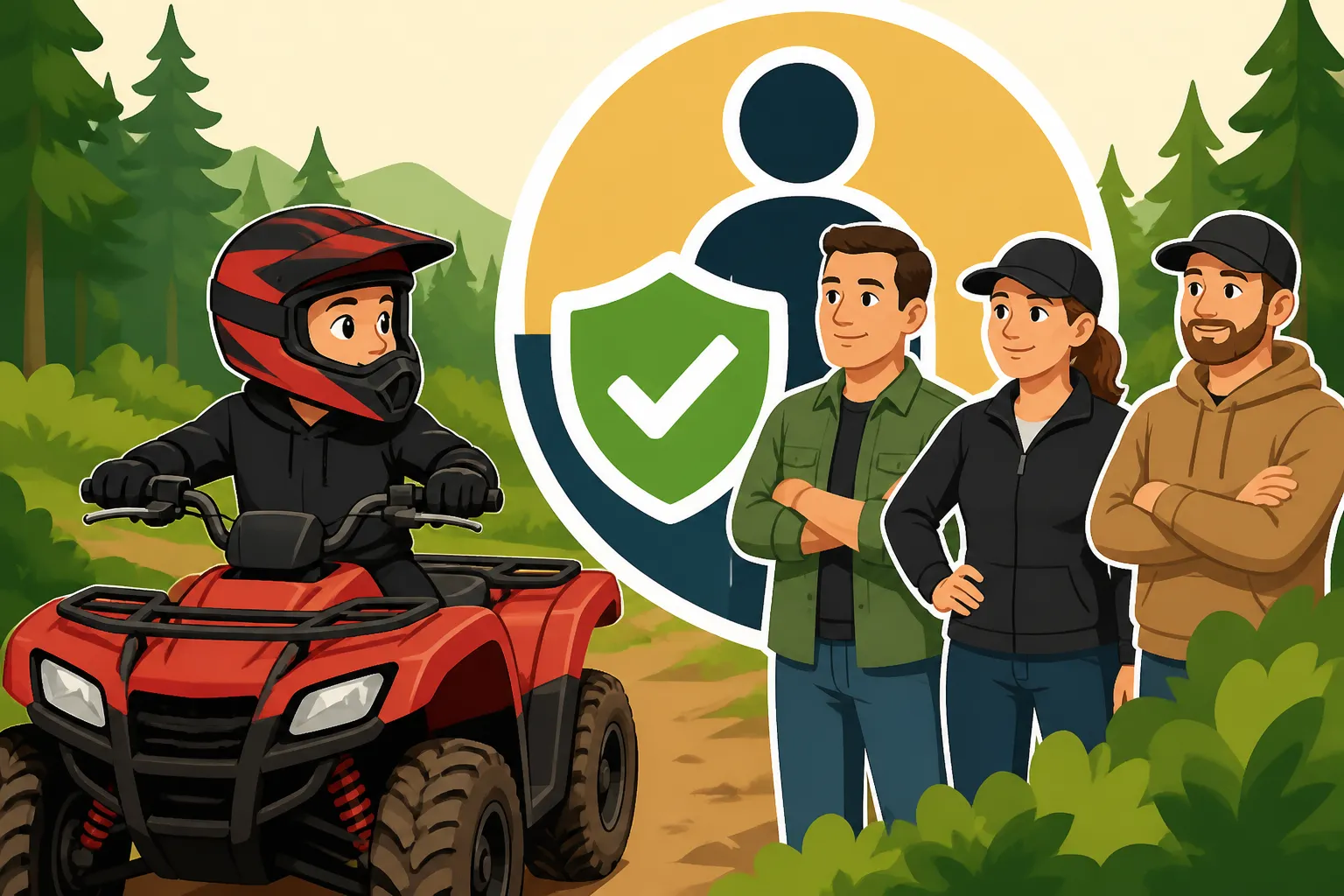
According to the Ohio Revised Code, on state-controlled lands such as state forests, an APV rider under 16 must be accompanied by a parent or guardian who is a licensed driver at least 18 years old. The rule is specific: the accompanying adult must be the rider’s parent or guardian, must hold a driver’s license, and must be 18 or older.
A relative, family friend, coach, or other responsible adult does not automatically qualify just because they are older or experienced. If that person is not the rider’s parent or guardian, the stated rule does not identify them as an eligible supervisor. Likewise, a parent or guardian who is not a licensed driver, or who is younger than 18, does not meet the requirements as written.
“Accompanied by” also matters. Don’t assume that an adult who stays at home, waits at the parking area, or can be reached by phone satisfies the rule. Plan for the qualifying parent or guardian to be with the young rider during the outing. If you are unsure how the requirement applies to a particular trail, machine, or family situation, confirm it with the relevant land manager before riding.
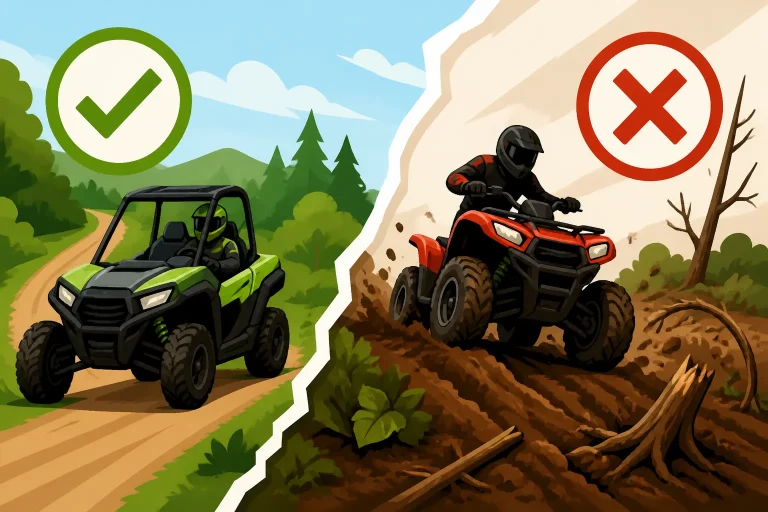
This rule concerns riders under 16 on state-controlled land. It should not be treated as a universal supervision rule for every private riding park, private property, road, or other type of public land. Different settings can have different requirements. For more on the age-related rules for forest riding, see Ohio Forest Access for Riders Under 16 and Ohio Supervision Rules on Forest Trails.
| Adult with the rider | Meets the stated state-land supervision rule? | Why |
|---|---|---|
| Parent or guardian who is a licensed driver and at least 18 | Yes | Meets the stated relationship, license, and age conditions |
| Parent or guardian without a driver’s license | No | The required adult must be a licensed driver |
| Parent or guardian younger than 18 | No | The required adult must be at least 18 |
| Licensed adult relative who is not the parent or guardian | Not under the rule as stated | Being licensed and old enough does not replace the parent-or-guardian requirement |
| Friend or coach who is not the parent or guardian | Not under the rule as stated | The rule identifies a parent or guardian as the qualifying adult |
The table summarizes the rule for state-controlled lands; it does not establish what every private property owner or other riding venue allows. When a trip includes more than one kind of land, check the rules for each location rather than assuming the same supervision standard applies throughout.
Where the rule matters on Ohio forest trails
Ohio has state forest areas with trails accessible to specific off-highway vehicles. The Ohio Department of Natural Resources identifies Maumee, Richland Furnace, Pike, and Perry state forests as having APV areas. That does not mean every road or trail in each forest is open to every machine. Use the designated riding area and confirm current access before setting out. Ohio’s Four State Forest APV Areas offers a related overview of these locations.
The supervision requirement is particularly important because families sometimes mix up state forests with other riding areas. A trail’s being open to the public does not, by itself, mean it is private land or that state-land rules do not apply. If the ride is on state-controlled land, treat the state-land supervision rule as relevant unless the responsible agency confirms otherwise.
Trail access can also depend on the type and size of the machine. According to the Ohio Department of Natural Resources, permitted APVs on designated state forest trails cannot exceed 62 inches in width. Check the machine’s width against the limit before loading it, especially if you are bringing a side-by-side or a modified vehicle. A machine that is too wide may not be suitable for those trails, even if the young rider has a qualified adult with them.
Seasonal access is another part of planning. According to the Ohio Department of Natural Resources, the APV areas and trails at Pike, Perry, and Richland Furnace close annually during the winter season. Maumee’s APV area remains open during winter to allow for snowmobile use. An area’s being open for snowmobile use does not automatically establish that every type of vehicle may ride there at that time; check the current rules for the vehicle you intend to use.
State forest APV areas remain open during regular deer gun season to provide access for people with disabilities, according to the Ohio Department of Natural Resources. That access provision is not a general invitation to ride anywhere in the forest or to ignore trail restrictions. The marked area, permitted vehicle, and other applicable rules still matter.
For a broader look at where forest riding is allowed, see Ohio Rules for Riding State Forest Land. If you are still deciding which riding area fits your machine, Ohio’s 62-Inch State Forest Width Limit explains why vehicle width can affect where you can go.
What the adult and family should check before riding
Qualifying as the supervisor is only one part of a lawful and practical trip. The adult should also confirm that the machine, registration, location, and planned riding times all fit the forest rules.
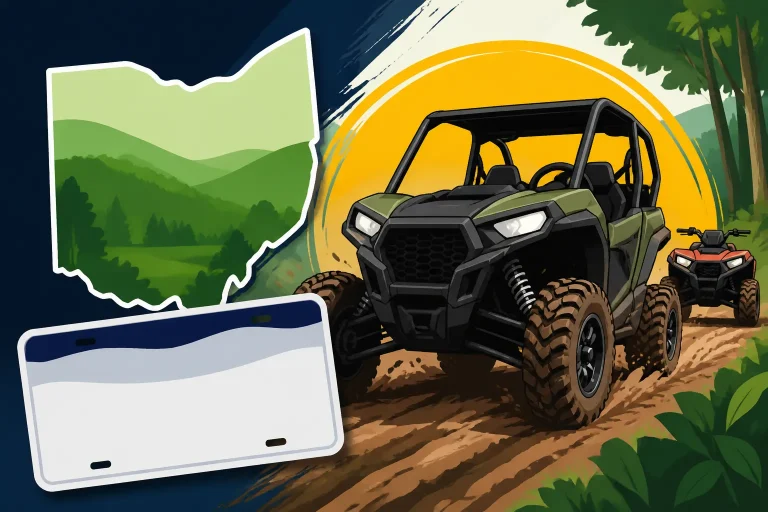
Vehicles in state forest areas require a State Recreational Vehicle Registration with the BMV, according to the Ohio Division of Forestry. If the machine is from out of state, do not assume its home-state registration is enough. The Ohio Department of Natural Resources says riders from states without reciprocity must obtain an annual Temporary Operating Permit from the BMV. Check the applicable registration or permit requirement before leaving home. Ohio APV Reciprocity With Other States and The Ohio Temporary Permit for Visitors can help clarify the visitor side of the question.
The agency information about state forest trails is also important for families trying to verify details online. A page with no trail information is not evidence that a route is open, that supervision rules have been waived, or that a particular vehicle is allowed. When information is missing or unclear, contact the forest office or responsible land manager rather than relying on a map label, an old post, or someone else’s recollection.
Before the trip, use a practical checklist:
- Confirm the riding area is open and intended for the vehicle you are bringing.
- Confirm the machine meets the designated trail’s vehicle requirements, including the width limit where it applies.
- Make sure the under-16 rider will be accompanied by their parent or guardian who is a licensed driver and at least 18.
- Verify that the vehicle has the required State Recreational Vehicle Registration or, where applicable, a Temporary Operating Permit.
- Check operating hours and parking-area rules.
- Review equipment, weapon, and accident-reporting requirements for the area.
- Carry the registration or permit information you may need to show.
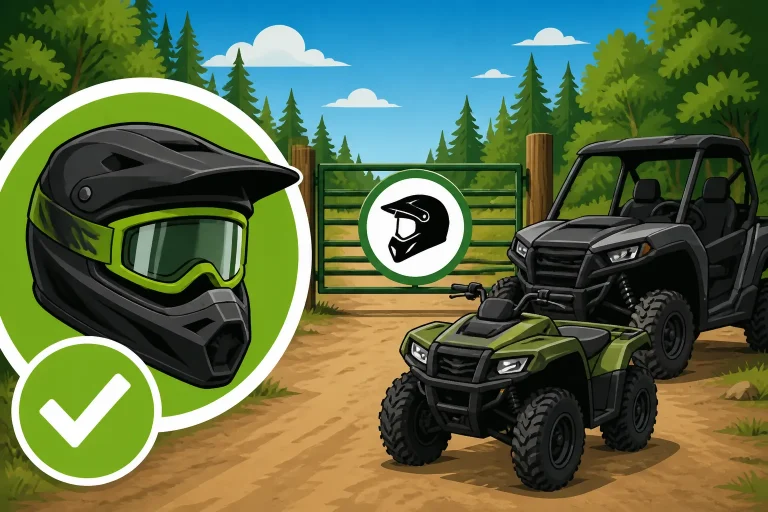
According to the Ohio Department of Natural Resources, state forest APV areas are open for riding during daylight hours, from one-half hour before sunrise until one-half hour after sunset. The parking-area speed limit is 5 mph, and accidents must be reported to the forest headquarters within 24 hours. These requirements are useful reminders that an adult’s role is not only to meet the supervision condition but also to help the group follow the riding-area rules.
The Ohio Division of Forestry says firearms or weapons carried by APV operators in state forest areas must be unloaded and securely encased. That rule is separate from the supervision requirement. A licensed parent or guardian does not make an otherwise prohibited or improperly handled item acceptable.
Families planning a trip around hunting access should avoid confusing the rules for different lands. The Ohio Division of Wildlife says there are 15 designated APV access areas statewide that it manages, and qualified APV permit holders are exempt from the firearm discharge prohibition on designated access roads. Those are wildlife-area provisions, not a replacement for state forest rules. The Division of Wildlife also says qualified permit holders can hunt from an APV on private property. Check the rules for the specific land and activity; a permit or permission that applies in one setting may not apply in another.
Common supervision questions and trip-planning mistakes
A common mistake is to focus only on the adult’s age. The adult must also be the young rider’s parent or guardian and a licensed driver. A capable adult who does not meet those conditions should not be treated as an automatic substitute.
Another mistake is assuming that one family member can supervise a group of young riders simply by being present at the trailhead. The rule says an under-16 rider must be accompanied by the qualifying adult. If several young riders are going, plan the group so that each rider is actually accompanied as required. If you cannot confidently determine whether your plan meets the rule, ask the land manager before the ride.
Families can also confuse supervision with permission to ride. A parent or guardian meeting the adult requirement does not make an unapproved route open, a too-wide machine eligible, or an unregistered vehicle compliant. Check each condition separately. An Under-16 Rider on a Forest Trail and Ohio Minimum Age for State Forest Trails may help with related age and access questions.
The safest approach is to confirm the trip as a whole: which land the route crosses, whether the vehicle is allowed there, whether its registration is accepted, and who will accompany the young rider. This matters especially when a route uses roads or connecting areas beyond a designated forest riding trail. Ohio law allows certain off-highway vehicles to operate on county or township road systems when local authorities permit it, and sets conditions for other road-related movement. Do not infer that forest-trail access means nearby public roads are open to APVs. For local road questions, start with How to Find an Ohio Township Resolution.
Before departure, make sure the young rider understands that the supervising adult’s presence is a legal condition, not just a courtesy. Agree on how the group will stay together, where to stop if separated, and what to do if the route is closed or conditions change. Those are sensible safety steps, not substitutes for the official requirements.
If the adult cannot accompany the rider, the simplest compliant choice is to postpone that forest ride or choose a different activity whose rules the family has checked. Do not try to solve the problem by having an unqualified adult meet the group at the parking lot or by relying on an informal promise to stay nearby. When a question remains, confirm the current requirement with the relevant land manager before riding.
Sources
- Ohio Department of Natural Resources — APV Trails in State Forests (checked November 3, 2026)
- Ohio Division of Wildlife — APV Riding (checked November 3, 2026)
- Ohio General Service / Ohio Revised Code — Section 4519.44 | Driver's license required (checked November 3, 2026)
Disclaimer
This article is for general informational purposes only and does not constitute professional advice. Laws, prices and regulations vary by location and change over time. Consult a qualified professional for guidance on your specific situation.