Goggles Required Alongside a Helmet
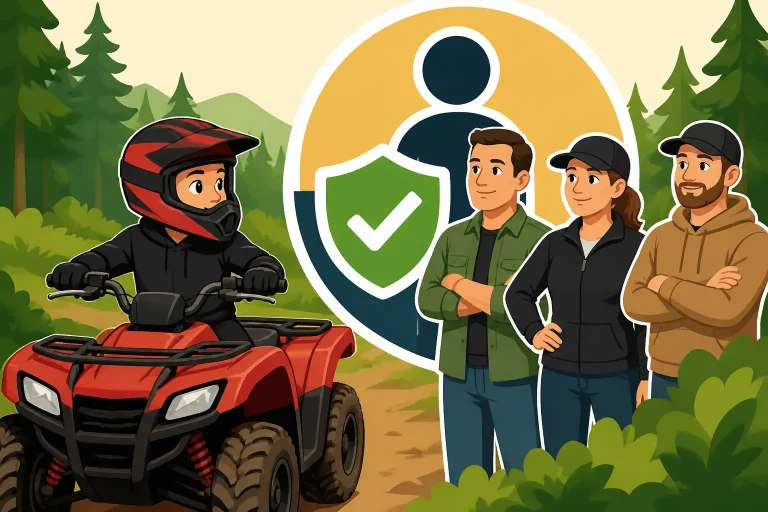
Dust, wind, grit, and low branches can make eye protection as important as a helmet on an off-road ride. Ohio’s rules depend on where you ride: state forest trails and designated public areas require both, while state law does not impose that requirement universally on private property. Here’s how to understand the rule, choose practical goggles, and check what else applies before setting out.
Where Ohio Requires Eye Protection
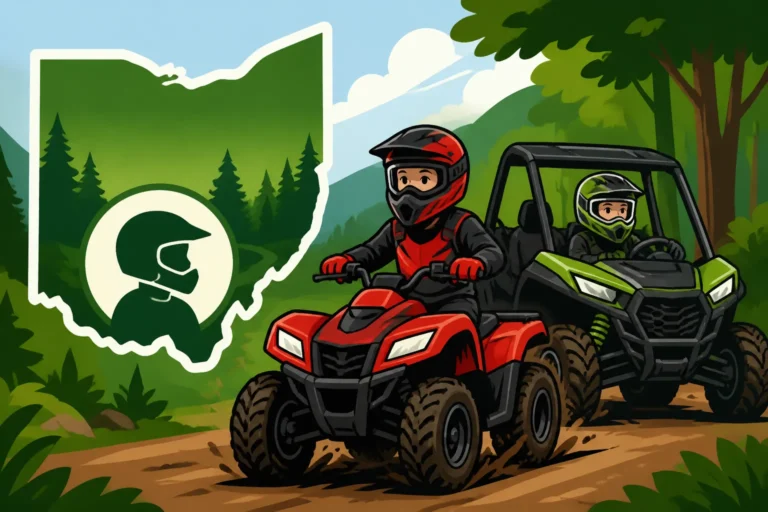
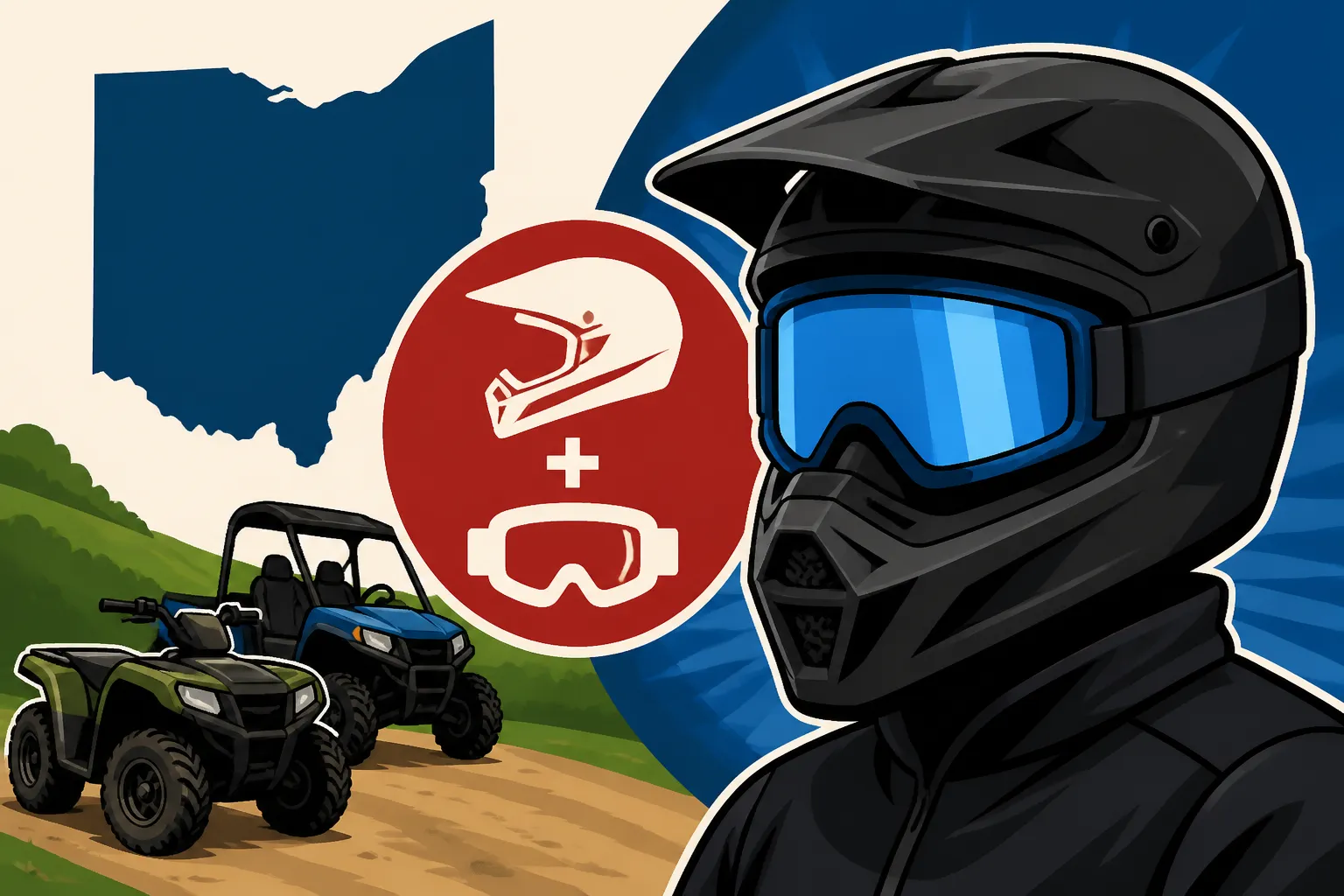
Ohio’s requirement is tied to the riding area, not simply to whether a machine is called an ATV, UTV, or APV. According to the Ohio Department of Natural Resources, operating an APV on state forest trails and designated public areas requires both a protective helmet and eye protection. The rule is not a universal state-level requirement for every APV ride on private property.
That distinction matters. A rider may be legally required to wear eye protection on a state forest trail even if a different rule applies on private land. And an owner’s permission to ride on private property does not, by itself, tell you what rules apply once you leave that property or enter a designated public riding area. Check the requirements for the specific place you plan to ride.
The law calls for eye protection; it does not, in the facts available here, specify that the protection must be goggles. Goggles are one practical option for shielding the eyes from dust, wind, and debris, but don’t assume every product sold as riding eyewear meets the rules for your destination. For more on the distinction, see Ohio Eye Protection Requirement and Ohio Helmet Rules on State Forest Trails.
| Riding location | Helmet and eye protection | What to check |
|---|---|---|
| State forest trails and designated public areas | The Ohio Department of Natural Resources requires both a protective helmet and eye protection for APV operation. | Confirm the current rules for the specific riding area and whether your eyewear is acceptable. |
| Private property | General state-level APV statutes do not universally mandate a helmet or eye protection on private property. | Get the landowner’s permission and check any rules that apply to the property or activity. |
| A route that connects different areas | Requirements may change as you move from one riding area to another. | Check the rules for every place on your planned route rather than relying on the rule at your starting point. |
The table is a starting point, not a substitute for checking local or site-specific requirements. In particular, the phrase “designated public areas” should not be read to mean that every public road, park, or parcel has identical APV access and equipment rules. See Ohio Rules for Riding State Forest Land when planning a forest ride.
Why Goggles Can Be a Practical Choice
Eye protection can help keep flying grit, dust, insects, and wind out of your eyes. On a rough or dusty route, debris can arrive suddenly, leaving little time to react. Goggles that fit securely can help shield the eyes while still allowing you to look around and maintain a clear view of the trail.
The legal requirement and the gear choice are related, but not identical. Ohio’s rule calls for eye protection in the listed areas; it does not name a particular goggle model or spell out a detailed product specification in the facts available here. Check the riding area’s current instructions if you are unsure whether a particular style of eyewear qualifies. Goggles on a Dusty Trail covers the practical side of choosing and using eye protection.
Fit matters for comfort and function. Goggles should sit securely without shifting when you turn your head or move over uneven ground. They should also work with your helmet rather than pushing it out of position or leaving a gap that defeats the protection you want. Try the combination together before a ride, and check that you can see clearly in the conditions you expect.
Think about the environment, too. Dusty trails, wind, and changing light can affect how comfortable a lens feels. Keep the lens clean and use eyewear that gives you a clear view; scratched, dirty, or fogged lenses can make it harder to spot trail features. If you shop for goggles on Amazon, compare the product details with your helmet and the riding area’s requirements instead of choosing by appearance alone.
For more on helmets, see DOT FMVSS218 Helmets in Ohio. That topic can help you understand the helmet-related question separately; it does not replace the eye-protection requirement. A helmet by itself is not a substitute for eye protection where both are required.
Check the Whole Riding Setup, Not Just Your Goggles
Before heading to a state forest, confirm that your machine and paperwork are in order as well as your protective gear. According to the Ohio Division of Forestry, vehicles in state forest areas require a State Recreational Vehicle Registration with the BMV. That registration requirement is separate from wearing a helmet and eye protection.
Out-of-state riders should check reciprocity before traveling. According to the Ohio Department of Natural Resources, riders from states without reciprocity must obtain an annual Temporary Operating Permit from the BMV. A helmet and goggles do not replace a registration or permit, and having paperwork does not replace required protective equipment. See Ohio APV Reciprocity With Other States and Ohio’s Nonresident Temporary Permit for more on those separate requirements.
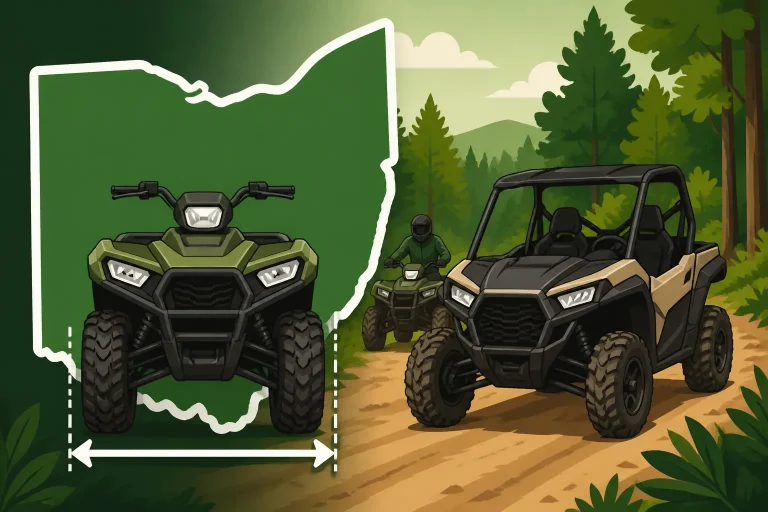
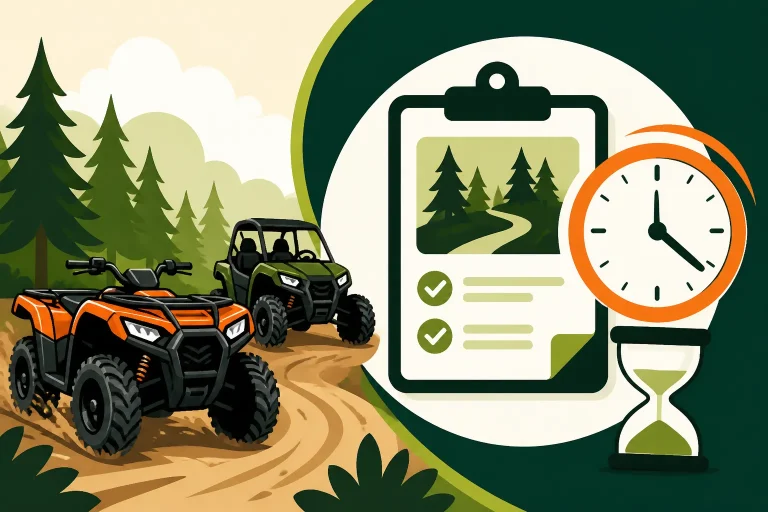
State forest access also has location-specific limits and operating rules. According to the Ohio Department of Natural Resources, the maximum vehicle width for permitted APVs on designated state forest trails is 62 inches. The agency also sets the riding period at daylight hours, from one-half hour before sunrise until one-half hour after sunset. Make sure the route is open to your type of machine and that your vehicle fits the applicable limits before loading up.
The Ohio Department of Natural Resources identifies Maumee, Richland Furnace, Pike, and Perry State Forests as having trails accessible to specific off-highway vehicles. Access and seasonal availability are not identical across those forests: the agency says Pike, Perry, and Richland Furnace APV areas and trails close annually during the winter season, while Maumee’s APV area remains open during winter to allow for snowmobile use. Confirm current conditions and access details for your destination rather than assuming a trail is open because another forest is.
Ohio’s rules can also vary by land type. For example, the Legislative Service Commission says snowmobiles, off-highway motorcycles, and all-purpose vehicles may be operated on county or township road systems when local authorities permit it. Road access is not the same as trail access, and local permission does not establish what gear rules apply on a separate forest trail. If your ride might include roads, check Where Ohio Law Allows APVs on Roads as well as the rules for the riding area.
A little planning helps keep these separate issues straight:
- Identify the land and trail system you plan to ride, including any connecting roads or areas.
- Check whether APVs are allowed there and whether the route is currently open.
- Confirm the machine’s registration or permit requirements, including reciprocity if you are visiting from out of state.
- Pack a protective helmet and eye protection for state forest trails and designated public areas.
- Try the goggles with your helmet and confirm they stay in place and provide a clear view.
A Simple Pre-Ride Check
Use the following questions before you leave home:
- Where will I ride? Confirm whether the route is a state forest trail, another designated public area, private property, or a mix.
- What does that area require? For APV operation on state forest trails and designated public areas, the Ohio Department of Natural Resources requires a protective helmet and eye protection.
- Will these goggles work with my helmet? Check the fit and your visibility before riding. If the area’s instructions do not make clear whether your eyewear qualifies, ask the responsible authority.
- Is my machine permitted and properly registered? Check the rules for the specific riding area, including any out-of-state permit requirements.
- Could the rules change along my route? A private starting point does not guarantee that the same equipment or access rules apply on a public trail or road.
The practical takeaway is straightforward: when riding an APV on Ohio state forest trails or designated public areas, plan to wear both a protective helmet and eye protection. Goggles can be a useful way to protect your eyes from trail conditions, but the law’s wording is broader than the name of a particular product. Check the current rules for your destination, make sure your eyewear works with your helmet, and treat equipment requirements as separate from registration and access permits.
Sources
- Ohio Department of Natural Resources — APV Trails in State Forests (checked November 3, 2026)
Disclaimer
This article is for general informational purposes only and does not constitute professional advice. Laws, prices and regulations vary by location and change over time. Consult a qualified professional for guidance on your specific situation.