Ohio Rules for Night Riding on a Trail
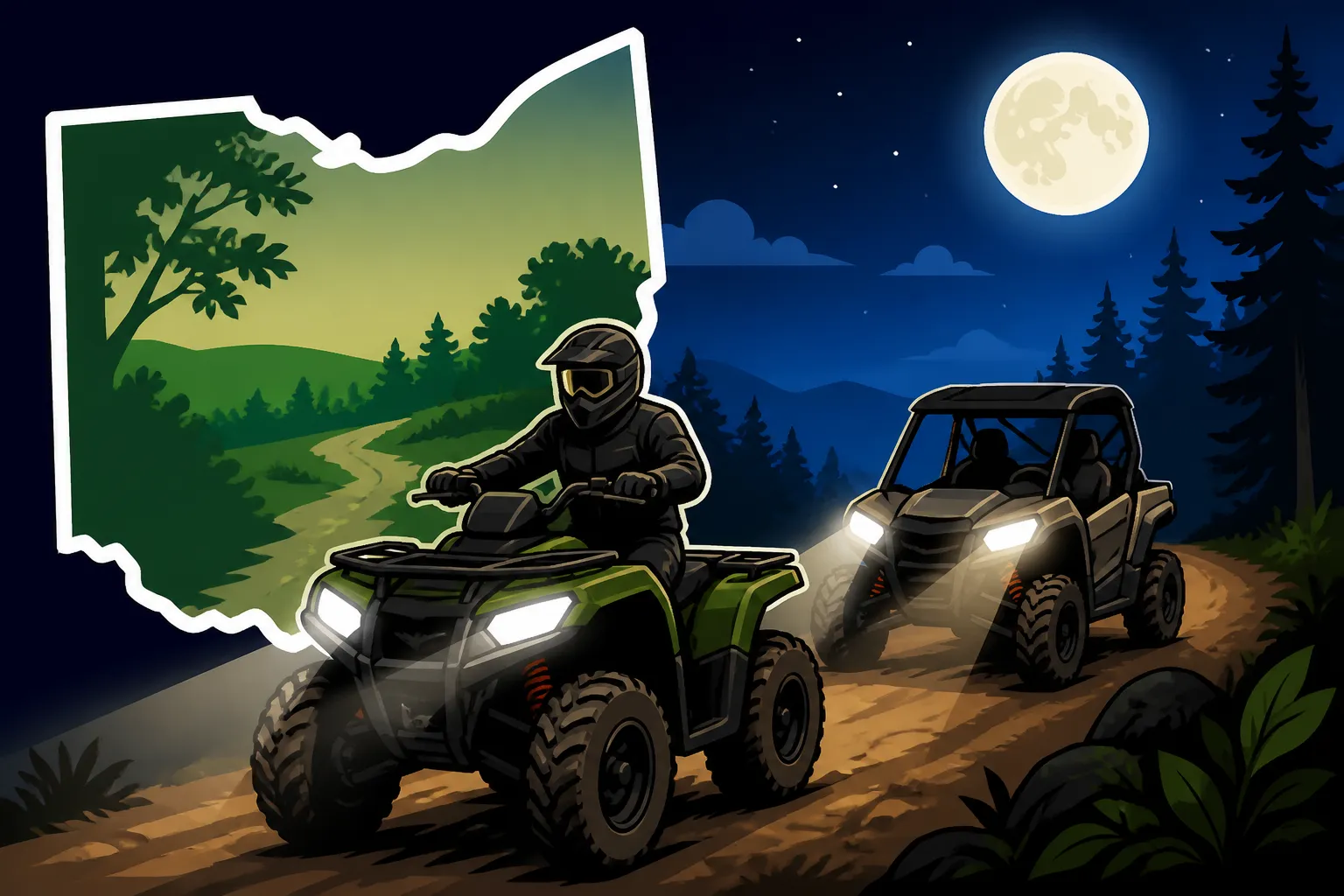
Ohio trail night riding is not a single statewide yes-or-no question. The hours depend on who manages the trail, and working headlights do not override a posted closing time. Before an evening ride, check the rules for the exact riding area, understand what changes after dark, and set a turnaround time that gets you off the trail before it closes.
Start With the Riding Area’s Hours
Ohio has public riding areas, national forest routes and private parks, and each may set its own operating hours. Treat the land manager’s posted schedule as the deciding rule. A machine’s lights, registration or permit do not grant permission to ride after a trail has closed.
On Ohio state forest trails, the published riding hours are generally from half an hour before sunrise until half an hour after sunset. That allows some riding around dusk, but it is not permission to continue through the night. Confirm the hours and any special notices for the specific forest before loading up; closures, trail conditions and local restrictions can affect access. Ohio State Forest Riding Hours explains the timing, while Ohio Rules for Riding a State Forest covers other rules that apply on that land.
Wayne National Forest is managed separately from Ohio’s state forests. Do not assume that a state forest schedule applies there, or that buying a Wayne OHV permit means you can ride at any hour. Check the current hours for the particular Wayne riding area and follow posted signs and ranger instructions. A permit covers the access it is intended for; it does not cancel a closure or extend the riding day. For the permit distinction, see How the Wayne National Forest OHV Permit Works and Ohio Rules for Riding a National Forest.
Private parks set their own schedules, too. Some may offer evening sessions or events, while others close before dark. Confirm the hours directly with the park, including the last time riders may enter the trail system. If you are attending an organized ride, check whether its schedule includes a permitted after-dark portion rather than relying on what other riders say.
| Riding area | What to check before an evening ride | What not to assume |
|---|---|---|
| Ohio state forest trail | Forest-specific hours, closures and posted notices | That a headlight allows riding after the posted closing time |
| Wayne National Forest riding area | Hours and access rules for the specific OHV area | That a permit automatically authorizes night riding |
| Private riding park | The park’s current schedule and event rules | That another park’s evening policy applies |
| Public road or roadside route | Whether APV road use is allowed there and what equipment is required | That a trail rule makes the road open to APVs |
If an area’s hours are unclear, call the land manager or park before traveling. A map can show where a route is, but it may not show current closures or the hours that apply on the day you plan to ride. Ohio Trail Closures to Check First and Ohio Trail Conditions Before You Ride are useful checks before you leave.
Separate Trail Rules From Road Rules
A common point of confusion is the difference between riding after dark on a trail and operating an APV on a road after dark. These are separate questions. A road may be closed to APVs even if the machine has a headlight, and a trail may have a closing time even if it is well lit.
Ohio road-use requirements apply only where the route is legally open to the kind of APV you are operating. Road equipment rules and permission to use the road are not interchangeable: equipment does not make a closed road legal, and a valid registration does not open a closed trail. Check the road’s status and the applicable requirements separately. Where Ohio Law Allows APVs on Roads explains the local access issue, and Ohio Equipment Rules for an APV on a Road covers equipment for lawful road use.
On a trail, do not treat a bright aftermarket light as a substitute for checking the area’s rules. It can help you see and be seen where after-dark riding is allowed, but it cannot override the land manager’s hours. Likewise, a taillight or reflective gear is not permission to keep riding after a posted closure.
Rules can also change when a route crosses different land or road types. A path that seems continuous may pass from a forest trail to a road, private property or another managed area. Each segment can have different access rules. Stay on marked routes, and do not improvise a shortcut to get back to your trailer after dark. Ohio Rules for Riding Off the Trail explains why leaving the designated route can create a separate violation.
If you ride with people visiting from another state, do not assume that their home-state rules carry over to Ohio. Reciprocity concerns registration and access requirements; it does not replace the hours or restrictions set for a particular trail. Visitors can review Ohio APV Reciprocity With Other States before riding.
Prepare for Darkness Even If You Plan to Finish Before Sunset
A ride that starts in daylight can run late because of a wrong turn, a mechanical problem, slow group travel or a trail closure. Preparing for that possibility is sensible, but it should be a backup plan—not a reason to schedule a ride past the allowed hours.
Before unloading, make sure the group knows the trail’s closing time and agrees on a turnaround point. Set the time with enough room to reach the staging area before the deadline, allowing for slower travel on rough ground and delays at intersections. If the group is spread out, choose a regroup point and a simple plan for what to do if someone falls behind.
Check the machine’s lighting before the trip. Look for dim, flickering or damaged lights, inspect wiring and connectors, and clean lenses that may be obscured by mud. For any area where riding after dark is expressly permitted, use lighting suited to the machine and the conditions, and confirm the park’s requirements. Avoid dazzling other riders with poorly aimed auxiliary lights.
A small amount of backup gear can make an unexpected delay safer:
- Carry a charged phone, but do not rely on cell service in remote areas.
- Bring a headlamp or flashlight so you can work on the machine or read a map without holding a phone.
- Pack water, basic first-aid supplies and tools appropriate to the machine.
- Keep warm or rain-resistant layers available; conditions can feel very different after sunset.
- Make sure someone outside the riding group knows where you plan to ride and when you expect to return.
If you buy replacement lamps, wiring or other lighting equipment through a marketplace such as Amazon, check that the parts fit your machine and are appropriate for off-road use. Installation quality matters: loose wiring, an insecure lamp or a light aimed too high can create a hazard. An added light also does not change the area’s permitted riding hours.
A Simple Plan for an Evening Ride
Use this sequence before any ride that could approach dusk:
- Identify the land manager. Confirm whether the route is in a state forest, Wayne National Forest, a private park or another area. Do not base the plan on a nearby trail’s rules.
- Check the current hours and closures. Read the official area information and trailhead signs. Call if the schedule is unclear or if a recent notice may affect access.
- Confirm the route stays open. Check for road crossings, private boundaries and connections to other managed areas. Do not assume a connecting segment shares the same hours.
- Set a conservative turnaround time. Plan to be back at the staging area before closing, with room for a slower return or minor delay.
- Inspect the machine and gear. Verify that lights work, carry basic supplies and make sure riders know the route and regroup plan.
- Turn back when the plan requires it. If a mechanical issue or navigation mistake puts the group behind schedule, use the safest legal route back. Do not continue deeper into the trail system or take an unmarked shortcut.
For group rides, name one person to keep track of time and confirm everyone is accounted for before leaving. A faster rider should not disappear ahead while a slower rider is left to navigate alone in fading light. If someone has a problem, stop in a safe place, communicate the issue and make a decision based on the area’s rules and the group’s ability to return safely.
If darkness arrives unexpectedly, stop and reassess rather than rushing. Use a legal, marked route back if one is available and safe. If continuing would mean entering a closed area, riding off-route or taking a road that does not allow APVs, do not treat that as an acceptable shortcut. Contact the land manager or emergency services if the situation calls for help.
The practical rule is simple: know the hours for the exact area, and plan to finish within them. Lights and emergency supplies help manage risk; they do not extend access. When you cannot verify that night riding is allowed, schedule the ride to end before dark.
Disclaimer
This article is for general informational purposes only and does not constitute professional advice. Laws, prices and regulations vary by location and change over time. Consult a qualified professional for guidance on your specific situation.