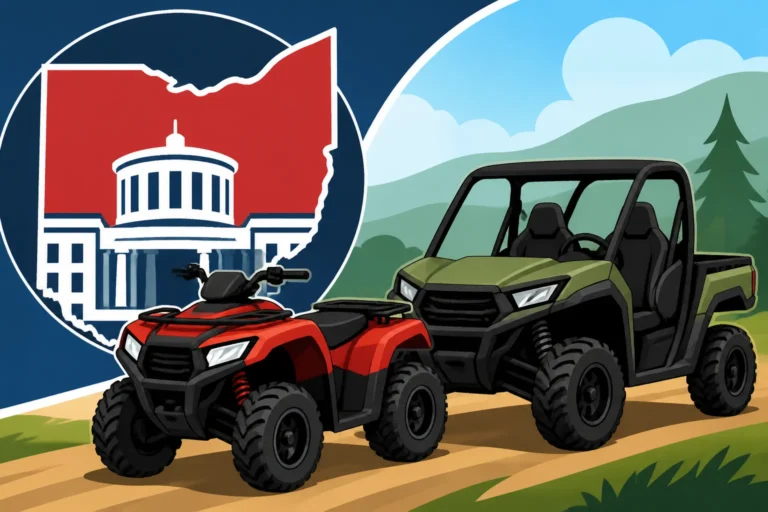
Why Ohio Says All-Purpose Vehicle
If you're an off-road enthusiast in Ohio, or just moving into the state with your ATV or UTV, you've probably encountered a bit of a head-scratcher: why does Ohio insist on calling everything an "All-Purpose Vehicle" (APV)? It can feel like the state is deliberately making things more complicated than they need to be, especially when you're used to the simple terms "ATV" and "UTV" everyone else uses. This guide is here to clear up that confusion, diving deep into Ohio's unique terminology, its legal implications, and what it really means for you as a rider and owner.
Understanding Ohio's Unique Terminology for Off-Road Vehicles
Navigating the world of off-road vehicle regulations can be a maze, and Ohio adds its own layer of complexity with the term "All-Purpose Vehicle," or APV. It's not just a quirky name; it's a deeply ingrained legal definition that shapes everything from how you register your machine to where you can legally ride it. For many riders, the first encounter with this term brings a moment of pause, wondering if their beloved quad or side-by-side even qualifies. The good news is, Ohio's intent is actually to simplify things, or at least to create a comprehensive umbrella under which a wide variety of off-road machines can be regulated uniformly.
What an "All-Purpose Vehicle" (APV) Means in Ohio Law
At its core, Ohio's "All-Purpose Vehicle" (APV) is a broad classification designed to legally define and regulate various types of off-highway vehicles that might otherwise fall through the cracks of more specific categories like ATVs or UTVs. Think of it as a legal catch-all, ensuring that whether you ride a sport quad, a utility side-by-side, or even some custom-built buggy, it operates under a consistent set of rules for registration, titling, and use. This legal framework, enshrined in the [How Ohio Law Defines an APV], aims to provide clarity and prevent confusion that could arise from trying to apply laws meant for street vehicles to machines designed for dirt and trails.
The specific details of the APV definition are critical. Generally, an APV is understood as any self-propelled vehicle designed primarily for use off the highways, having a width not exceeding seventy-two inches, an unladen dry weight not exceeding two thousand four hundred pounds, and traveling on three or more non-highway tires. This definition, while somewhat technical, is designed to capture the vast majority of traditional ATVs and modern UTVs. It clearly delineates these machines from standard cars, trucks, or even motorcycles, emphasizing their off-road nature and unique operational characteristics.
Bridging the Gap: How APV Encompasses ATVs, UTVs, and More
One of the main benefits, from a legislative standpoint, of the APV classification is its ability to bridge the gap between different types of off-road vehicles. Instead of creating separate legislative acts and registration processes for [Registering a Quad in Ohio], [Registering a Side-by-Side in Ohio], and every other variant of off-highway machine, Ohio opted for a single, encompassing term. This means that whether your machine is a compact single-rider ATV or a larger, multi-passenger UTV with a cargo bed, it falls under the same general legal umbrella.
This unified approach streamlines the administrative burden for the state and, theoretically, for riders. You don't have to worry if your specific model fits an "ATV" or "UTV" category; if it meets the general dimensions and purpose of an APV, it's an APV. This consistency helps avoid scenarios where a newer type of off-road vehicle might emerge and require entirely new legislation simply because it doesn't precisely fit an older, narrower definition. For those involved in buying or selling these machines, understanding this broad classification through resources like LawDepot can be helpful for ensuring proper documentation, even if the general terms are used in conversation.
The Rationale Behind a Broader Legal Definition
So, why did Ohio decide to go with "All-Purpose Vehicle" instead of sticking to the more common, internationally recognized terms like ATV (All-Terrain Vehicle) and UTV (Utility Terrain Vehicle)? The primary rationale centers on flexibility and comprehensiveness. When these vehicles first became popular, their designs and uses were rapidly evolving. Legislators likely sought a term that wouldn't quickly become obsolete as manufacturers innovated new types of off-road machines. An "all-purpose" designation allows for this evolution without constantly needing to update the law to include "new" vehicle types.
Furthermore, the term emphasizes the versatile nature of these machines. While many are used purely for recreation on trails, a significant number serve vital roles in agriculture, land management, and various utility tasks. The "all-purpose" aspect acknowledges this wider range of applications, rather than limiting the perception of these vehicles to just recreational toys. This broad scope ensures that the legal framework is adaptable and applicable across the diverse ways Ohioans utilize these vehicles, promoting safety and responsible use, regardless of the machine's specific design or primary function.
Deciphering the Legal Language: How Ohio Defines an APV
Understanding the specific legal definition of an "All-Purpose Vehicle" is crucial for any owner or prospective buyer in Ohio. It's not just about what a vehicle looks like; it's about its technical specifications and intended use as laid out in the Ohio Revised Code. Without grasping these details, you might inadvertently fall out of compliance, leading to potential fines or issues with [Ohio Fines for an Unregistered APV]. The law's language can sometimes feel dry and overly technical, but breaking it down reveals the precise criteria Ohio uses to categorize your off-road machine.
Key Elements of the Ohio Revised Code Definition
The foundational definition for an APV in Ohio is found in the Ohio Revised Code (ORC) Section 4519.01. This statute lays out the precise characteristics that determine if a vehicle is considered an APV. It states that an APV is "any self-propelled vehicle designed primarily for use off the highways, having a width not exceeding seventy-two inches, an unladen dry weight not exceeding two thousand four hundred pounds, and traveling on three or more non-highway tires." Each phrase in this definition carries significant weight and helps to create clear boundaries for what falls under the APV umbrella.
Let's break down some of those key phrases. "Self-propelled" means it has its own engine and doesn't need to be pushed or pulled. "Designed primarily for use off the highways" is vital, as it immediately distinguishes APVs from street-legal vehicles or even golf carts that might share some characteristics but are primarily intended for different environments. The specification of "three or more non-highway tires" means that two-wheeled vehicles like dirt bikes are explicitly excluded from this classification, as are vehicles with standard road tires. These elements work together to form a comprehensive legal description.
Dissecting the Physical Characteristics: Weight, Width, and Use
The physical parameters—width, unladen dry weight, and tire type—are particularly important because they are easily measurable and provide objective criteria. The "width not exceeding seventy-two inches" is a critical measurement, especially as side-by-sides have grown wider over the years. This limit ensures that the APV definition primarily covers machines suited for typical trail systems and minimizes potential road hazards if they were ever granted limited road access. It's a pragmatic limit that reflects the practicalities of trail design and public safety.
The "unladen dry weight not exceeding two thousand four hundred pounds" refers to the vehicle's weight without fuel, fluids, or occupants. This weight restriction helps differentiate APVs from larger, heavier off-road vehicles that might fall into other categories or even require commercial vehicle licensing. Finally, "traveling on three or more non-highway tires" reinforces the off-road nature of the vehicle. These knobby, low-pressure tires are designed for traction on dirt, mud, and uneven terrain, not for highway speeds and conditions. Understanding these characteristics is the first step in confirming your machine's status as an Ohio APV.
Distinguishing APVs from Other Recreational Vehicles
It's equally important to understand what Ohio's APV definition doesn't include, as this helps clarify where other recreational vehicles fit into the state's regulatory framework. For instance, [Why a Snowmobile Gets Decals Instead of a Plate] for registration and is handled under a completely separate chapter of the Ohio Revised Code, despite also being an off-highway recreational vehicle. Snowmobiles have distinct design features and are operated seasonally in specific conditions, warranting their own set of rules.
Similarly, golf carts, even though they are self-propelled and used off main highways (often within communities or private properties), have their own specific set of regulations under Ohio law, particularly regarding limited street use. They don't meet the "non-highway tires" definition in the same way an ATV or UTV does, and their intended speed and purpose are entirely different. This clear distinction prevents regulatory overlap and ensures that each type of recreational vehicle is governed by rules tailored to its unique characteristics and typical operating environments, ultimately contributing to safer and more organized outdoor recreation in the state.
Practical Implications: What Ohio's APV Terminology Means for Riders
The legal term "All-Purpose Vehicle" isn't just bureaucratic jargon; it has direct, tangible implications for every off-road rider in Ohio. From how you get your machine on the trails to whether you can even consider riding on certain roads, this single definition shapes a significant portion of your riding experience. Understanding these practical aspects can save you from legal headaches, unexpected fees, and frustration. It's about empowering you with the knowledge to navigate Ohio's off-road landscape confidently.
Uniform Rules for Diverse Machines: Simplified Regulation
One of the most significant practical implications of the APV definition is the creation of a uniform regulatory environment. Instead of a patchwork of rules for ATVs, separate rules for UTVs, and perhaps even more for other specialized off-road vehicles, the APV classification brings them all under one comprehensive set of guidelines. This means that whether you own a sport quad or a utility side-by-side, the process for [Registering an APV in Ohio] or understanding [Ohio APV Plates and Validation Stickers] is largely the same.
This uniformity simplifies the life of the rider. You don't have to keep track of multiple sets of laws based on the exact configuration of your machine. It also makes enforcement more straightforward for law enforcement officers, who can apply a consistent set of criteria when checking for compliance on trails or in permitted road-use areas. This streamlined approach minimizes confusion and ensures that all applicable off-road vehicles contribute to funding and maintenance efforts through a single, coherent system.
Impact on Registration, Titling, and Trail Access
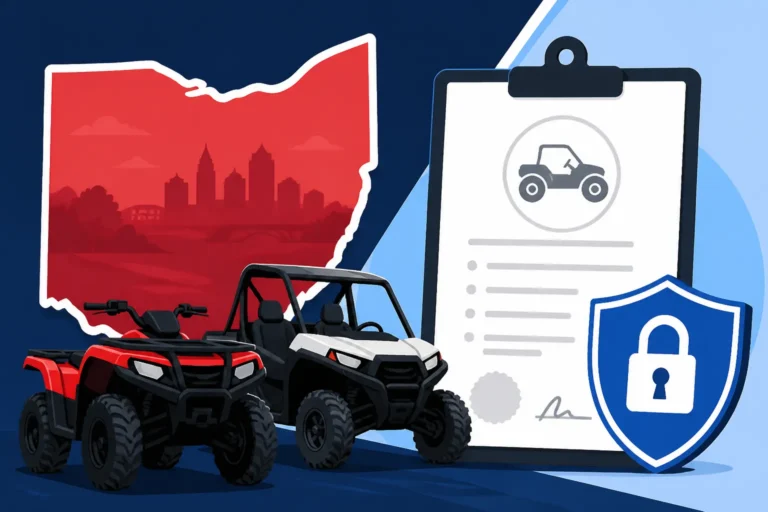
The APV terminology directly impacts the administrative processes you'll undertake as an owner. When you purchase a machine that fits the APV definition, whether new or used, you'll need to go through the Ohio titling and registration system. This involves a unique two-step process: first, obtaining a title from the county Clerk of Courts, and then securing your registration and plate from a Deputy Registrar. This distinction is important for understanding where you go for each step, as detailed in [Clerk of Courts or Deputy Registrar: Which Does What].
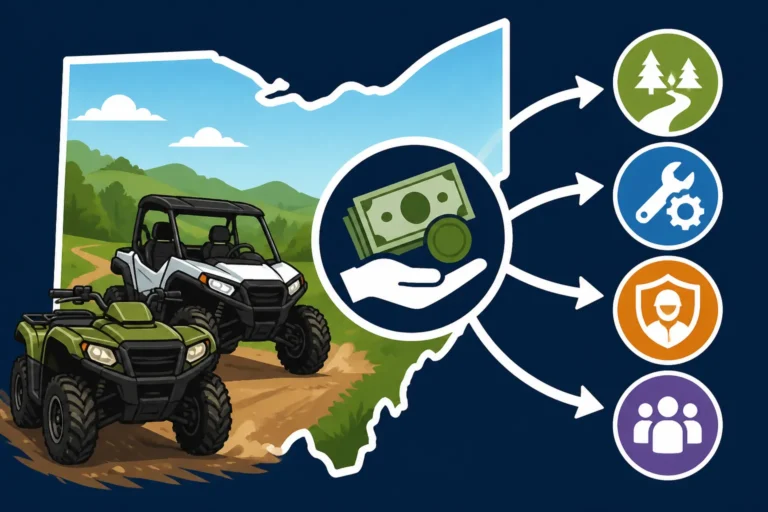
Beyond the paperwork, the APV classification dictates where and how you can access trails. State forest APV areas, for example, have rules and width limits that are designed with APVs in mind. While certain trails might be better suited for narrower ATVs, the overarching regulations for access and permits apply to all vehicles classified as APVs. This consistency ensures that the funds generated from APV registrations are channeled into maintaining and expanding the very trail systems that all APV riders use, fostering a direct link between compliance and improved riding opportunities.
Avoiding Confusion: Why "APV" Helps Clarify Road Use Laws
Perhaps one of the most vital roles of the APV definition is its ability to clarify road use laws, or rather, the general lack thereof for most off-road vehicles. Since APVs are explicitly defined as "designed primarily for use off the highways," this immediately sets them apart from vehicles intended for street travel. This distinction helps to manage public expectations and reduce the dangerous assumption that just because a UTV might look somewhat like a small car, it can legally operate on public roads without specific authorization.
While some Ohio counties and townships do have ordinances allowing limited road access for APVs on certain local roads, these are always the exception, not the rule. The state's foundational definition reinforces that general highway use is prohibited. This clear boundary helps prevent riders from mistakenly assuming they have blanket road privileges, thereby enhancing safety for everyone on Ohio's roads. Any documents you might create to help sell your APV, such as a bill of sale, could refer to your machine as an APV to align with state definitions. Platforms like LawDepot can provide templates for such documents, ensuring legal accuracy.
The Process: Titling and Registering Your Ohio APV
Once you've wrapped your head around the "All-Purpose Vehicle" definition, the next logical step is understanding the practical side of ownership: titling and registration. Ohio has a specific, somewhat unique system for APVs that involves two distinct offices, each playing a crucial role. Missing a step or going to the wrong place can lead to frustration and delays. This process ensures proper record-keeping and contributes to the overall funding for off-road recreation in the state.
The Two-Step Dance: Clerk of Courts and Deputy Registrar
Unlike registering a car, which might feel like a one-stop shop, titling and registering an APV in Ohio is often a two-step process involving two separate county offices. Your first stop is typically the county Clerk of Courts Title Office. This is where you establish legal ownership of your APV. Whether you're titling a brand-new machine with a Manufacturer's Certificate of Origin or transferring an existing title from a private seller, this office handles the official transfer of ownership. The Clerk of Courts ensures the title is clear and accurate, preventing future disputes over ownership.
Once you have a valid title in your name, your next destination is a Deputy Registrar license bureau. This is the office responsible for issuing your physical APV registration and plate. While the Clerk of Courts deals with the definitive proof of ownership, the Deputy Registrar handles the operational permit that allows you to legally operate your APV on designated trails and approved limited-access roads. This separation of duties is key to Ohio's system, and understanding [Where to Register an APV in Ohio] versus [Where to Title an APV in Ohio] is essential for a smooth experience.
Essential Paperwork for Proving Ownership and Residency
Getting your APV titled and registered requires a specific set of documents to prove both your ownership of the machine and your identity and residency in Ohio. For titling, if your APV is brand new, you'll need the Manufacturer's Certificate of Origin (MCO) which serves as the birth certificate for your machine. If you're buying a used APV, you'll need the previous owner's properly assigned title. This is where attention to detail is crucial; ensure all sections are filled out correctly and signatures are present.
For the registration side at the Deputy Registrar, you'll need your newly acquired Ohio APV title, along with proof of your identity (such as a valid driver's license or state ID) and proof of residency if your license doesn't reflect your current address. You'll also fill out specific forms, such as [Ohio Form BMV 3722 Explained], which is the application for titling an off-highway motorcycle or all-purpose vehicle. Having all your paperwork in order, including a properly executed bill of sale (which you might draft using a service like LawDepot), will make both processes much quicker and less stressful.
Understanding the Unique Three-Year Registration Cycle
One distinct feature of Ohio's APV registration is its three-year cycle. Unlike automobiles that typically renew annually, APV registrations are issued for a three-year period, with all registrations expiring on December 31st of the third year. This means that whether you register your APV in January or December of a given year, the registration will still expire on December 31st of the designated third year. This system is designed to create a predictable renewal schedule for all APV owners.
While this three-year cycle might seem unusual at first, it streamlines the renewal process for many riders by reducing the frequency of administrative tasks. It also helps with planning, as you know well in advance when your next renewal will be due. You can even renew your registration up to ninety days early, as highlighted in [Renewing an Ohio Registration Ninety Days Early], giving you ample time to prepare. Knowing [How Long an Ohio APV Registration Lasts] and [When an Ohio APV Registration Expires] is fundamental to staying compliant and avoiding penalties while enjoying Ohio's trails.
From the Past to the Present: The History of Ohio's APV Laws
Understanding why Ohio uses the "All-Purpose Vehicle" designation often involves a look back at how off-road vehicle laws have evolved. Legislation rarely springs fully formed; it typically adapts and changes in response to technological advancements, growing popularity of certain activities, and shifting public safety concerns. The journey from separate vehicle types to a unified APV category reflects Ohio's effort to create a coherent regulatory framework in a dynamic recreational landscape.
Tracing the Evolution of Off-Road Vehicle Legislation
In the early days of off-road vehicle popularity, laws were often reactive and specific to the machines available at the time. As ATVs gained traction, particularly the three-wheelers of the past and later the four-wheelers, states began to grapple with how to regulate them for public safety and environmental protection. Initially, some states might have had separate statutes for different types of recreational vehicles, creating a confusing and potentially inconsistent legal environment. Ohio, like many other states, had to adapt its laws to the increasing number and variety of off-road machines.
The shift towards a broader term like "All-Purpose Vehicle" was likely an intentional move to simplify and consolidate these disparate regulations. Instead of continuously adding new categories for ATVs, UTVs, side-by-sides, and other emerging designs, creating an overarching definition provided a stable framework. This legislative strategy anticipates future innovations in vehicle design, ensuring that new models automatically fall under existing rules without requiring constant legislative updates. It's a forward-thinking approach aimed at long-term regulatory stability.
Adapting to New Machine Types and Riding Trends
The off-road vehicle market has seen tremendous innovation over the decades. What started largely with simple, single-rider ATVs has expanded to include powerful, multi-passenger UTVs with features akin to small cars. These larger, heavier, and often wider machines presented new challenges for trail design, safety standards, and road-use considerations. If Ohio had maintained highly specific definitions for each type, the legal code would have become incredibly complex and quickly outdated.
The APV classification is Ohio's way of adapting to these new machine types and riding trends without constantly redrawing legal lines. It allows for the integration of new vehicles like modern utility-terrain vehicles into the existing regulatory structure, ensuring that as technology advances, the state can continue to manage their use effectively. This adaptability is critical for supporting the recreational vehicle industry while simultaneously protecting public lands and ensuring rider safety across all forms of off-road adventure.
The Steadfast Nature of the "All-Purpose Vehicle" Term
Despite the common use of "ATV" and "UTV" in everyday conversation and marketing, Ohio's official "All-Purpose Vehicle" term has proven remarkably steadfast. This resilience comes from its inherent flexibility and the deep integration of the term into the state's legal and administrative processes. Changing such a fundamental definition would require a significant legislative overhaul, impacting numerous statutes related to registration, titling, road use, and enforcement.
While there are occasional discussions or even legislative attempts to introduce new terminology or refine existing definitions—for example, [The New Vocabulary Ohio Law Uses for UTVs] and [Why the 2025 Ohio Bill Is Not Law] illustrate ongoing dialogue—the APV term remains the bedrock of Ohio's off-road vehicle laws. Its broad scope continues to serve the state's need for a single, comprehensive category that can regulate a diverse and evolving fleet of off-highway machines, providing a consistent framework for both riders and administrators.
What Ohio's APV Classification Excludes and Why
While the "All-Purpose Vehicle" designation in Ohio is broad, it's not all-encompassing. There are specific types of vehicles that, despite their off-road capabilities or recreational use, are explicitly excluded from the APV definition and are regulated under different statutes. Understanding these exclusions is just as important as knowing what an APV is, as it prevents misapplication of laws and ensures you're following the correct rules for your specific machine. These distinctions are made for good reason, often due to unique operational characteristics or primary functions.
Snowmobiles and Golf Carts: Separate Categories, Different Rules
Two of the most common vehicles mistaken for, or confused with, APVs are snowmobiles and golf carts. However, Ohio law treats them as distinct categories, each with its own set of rules and regulations. Snowmobiles, while clearly designed for off-highway recreational use, operate exclusively on snow and ice, a fundamentally different environment than the typical dirt trails for APVs. Their registration and operational guidelines are separate, reflecting these unique requirements. You'll find specific information on [How Snowmobile Decals Differ in Ohio], for instance, illustrating their distinct treatment.
Golf carts, on the other hand, are generally low-speed vehicles designed for golf courses or limited use on specific community roads. While some might be modified for mild off-road use, their primary design and speed limitations differentiate them from robust APVs. They typically do not meet the "non-highway tire" requirement in the same way an APV does, nor are they designed for the same rugged terrains or speeds. Therefore, they fall under different regulations, particularly concerning their limited road-use permissions, which are often governed by local ordinances rather than statewide APV laws.
Street-Legal Kits and the APV Definition
A common area of confusion arises when riders consider adding "street-legal kits" to their ATVs or UTVs. While some kits might add turn signals, mirrors, or a horn, making a machine look more like a road vehicle, these additions do not automatically transform an Ohio APV into a street-legal vehicle under state law. The APV definition explicitly states "designed primarily for use off the highways," and no amount of aftermarket parts can change this fundamental design intent as recognized by the state.
Any limited road use for an APV in Ohio is granted through specific county or township resolutions, and these resolutions often come with strict conditions regarding speed, time of day, and types of roads allowed. They also typically require specific equipment beyond the standard APV definition, such as a driver's license and insurance proof. Simply adding a kit does not override the core APV classification or confer general road-legal status. It's crucial for riders to understand that "street-legal kit" does not equate to a "street-legal vehicle" in Ohio without specific local allowances and compliance with all associated requirements.
Farm-Exempt Vehicles: When an APV Isn't Really an APV for Registration
Another important distinction relates to vehicles used exclusively for agricultural purposes. Ohio law provides certain exemptions for farm machinery. If an ATV or UTV is used solely for farming operations on private land and never on public trails or roads (even those with limited APV access), it might be exempt from APV registration requirements. The key here is "solely for farming operations" and "on private land." Once that machine leaves the farm property or is used for recreational purposes, it typically loses its exemption and would require APV registration and titling.
This exemption recognizes the practical needs of farmers, who rely on these machines as tools for their livelihood. It's a common-sense approach to avoid burdening agricultural producers with recreational vehicle regulations for essential work equipment. However, if a farmer also uses their quad to ride the state forest trails on a weekend, that machine absolutely needs to be titled and registered as an APV. It's the use and location of operation that dictates whether the exemption applies, not just the machine's capabilities.
Looking Ahead: The Future of APV Terminology in Ohio
The world of off-road vehicles is constantly evolving, with new technologies, designs, and rider preferences emerging all the time. While Ohio's "All-Purpose Vehicle" terminology has proven robust and adaptable, it's natural for discussions to arise about potential refinements or changes to the legal language. Keeping an eye on these developments helps riders stay informed about what might be on the horizon and how it could impact their favorite pastime.
Ongoing Legislative Discussions and Proposed Changes
From time to time, legislative bodies in Ohio consider proposals that might alter how off-road vehicles are defined or regulated. These discussions often stem from a desire to address new vehicle types, improve safety, or perhaps align Ohio's terminology more closely with federal guidelines or other states' laws. For instance, there have been efforts to introduce specific definitions for Utility Terrain Vehicles (UTVs) that would differentiate them from traditional ATVs, potentially leading to different regulatory pathways for each.
It's important to remember, however, that a bill being introduced or discussed does not mean it is current law. The legislative process is complex and can take years, with many proposals undergoing significant changes or ultimately failing to pass. For example, [Why the 2025 Ohio Bill Is Not Law] illustrates that even well-intentioned legislative efforts can stall or require further revision before becoming official. Riders should always verify the current legal status of any proposed changes to ensure they are following active laws, not just potential future ones.
Why the Term "All-Purpose Vehicle" Remains Relevant
Despite these ongoing discussions, the "All-Purpose Vehicle" term has demonstrated remarkable staying power in Ohio law. Its continued relevance is largely due to its inherent flexibility and the administrative efficiency it provides. By encompassing a wide variety of off-road machines under a single banner, it reduces the need for constant legislative updates every time a new model or type of vehicle gains popularity. This stability is beneficial for both the state, in terms of managing regulations, and for riders, who benefit from a consistent legal framework.
Furthermore, the "all-purpose" nature accurately reflects the diverse uses of these vehicles in Ohio, from recreational trail riding to vital agricultural and utility work. This broad definition ensures that the state's legal and funding mechanisms (like the State Recreational Vehicle Fund, which benefits from APV registrations) are applied equitably across the entire spectrum of off-highway vehicle use. This foundational term continues to serve as the unifying concept for off-road vehicle regulation in the Buckeye State.
Potential Shifts and Their Impact on the Riding Community
Should Ohio's terminology for off-road vehicles ever undergo a significant shift – for example, by creating distinct legal categories for ATVs and UTVs – it would likely have several impacts on the riding community. On one hand, more granular definitions could allow for more tailored regulations, potentially leading to different road-use rules, equipment requirements, or even registration fees based on vehicle type. This could simplify things for specific groups, while potentially adding complexity for others.
On the other hand, such a change would require a massive update to existing statutes, forms, and administrative procedures, which could create temporary confusion. Any new categories might also have implications for trail access, particularly if new width or weight limits were introduced for specific trails based on the new definitions. For now, however, the "All-Purpose Vehicle" definition remains the consistent legal standard in Ohio, and riders should continue to base their compliance and riding decisions on this established terminology.
Comparative Overview: APV vs. Common Terms
To further clarify Ohio's unique terminology, here's a quick comparison of how "APV" relates to the terms you might hear elsewhere:
| Feature/Term | All-Purpose Vehicle (APV) in Ohio | All-Terrain Vehicle (ATV) – Common Usage | Utility Terrain Vehicle (UTV) – Common Usage |
|---|---|---|---|
| Legal Definition | Ohio-specific, broad statutory term (ORC 4519.01) | General industry term, often refers to specific designs | General industry term, often refers to specific designs |
| Vehicle Type Covered | Encompasses ATVs, UTVs, and similar off-highway vehicles | Typically open-air, straddle-seat, handlebar steering | Typically side-by-side seating, steering wheel, roll cage |
| Registration/Titling | Required for almost all off-highway machines in Ohio | Would fall under APV registration if used in Ohio | Would fall under APV registration if used in Ohio |
| Road Use | Primarily off-highway; limited road use by local resolution only | Primarily off-highway; state laws vary | Primarily off-highway; state laws vary |
| Key Characteristics | Max 72" width, max 2400 lbs dry weight, 3+ non-highway tires | Variable width/weight, 3 or 4 wheels | Variable width/weight, 4+ wheels, usually wider/heavier |
| Purpose | Recreational, utility, agricultural | Recreational, light utility | Utility, recreational, work |
Disclaimer
This article is for general informational purposes only and does not constitute professional advice. Laws, prices and regulations vary by location and change over time. Consult a qualified professional for guidance on your specific situation.