Titling a New Quad With a Certificate of Origin
Congratulations on getting a new quad! There’s nothing quite like the excitement of bringing a fresh machine home, ready to hit the trails or tackle some work around the property. But before you can truly enjoy it, there’s that often-dreaded stack of paperwork to contend with, particularly when it comes to titling your pride and joy. This guide is here to cut through the confusion and walk you through the process of titling your new quad in Ohio, especially when you're starting with that all-important Certificate of Origin.
Understanding the Certificate of Origin COO for Your New Quad
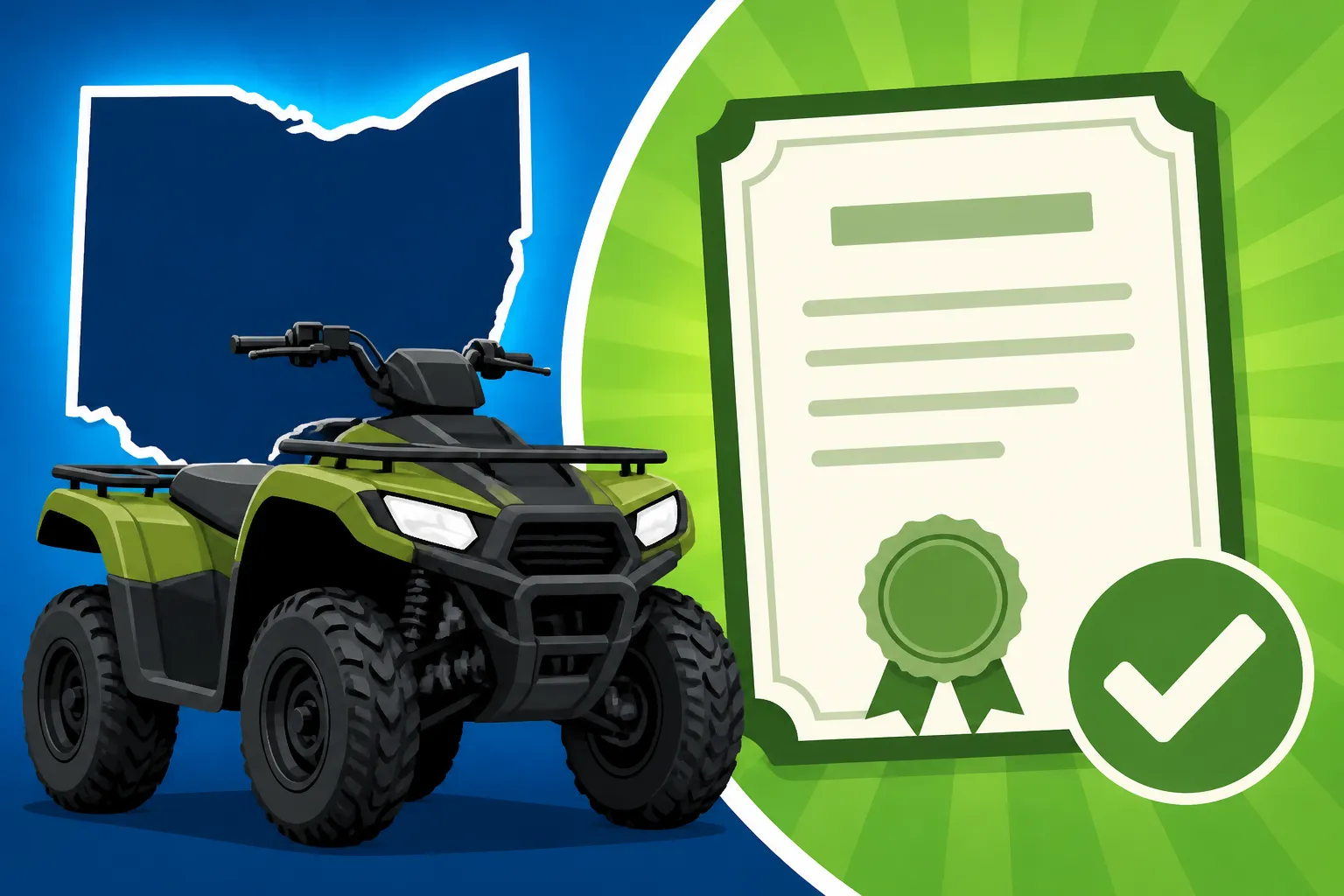
When you buy a brand-new quad or any all-purpose vehicle (APV) from a dealership, it doesn't come with a traditional "title" in the way a used machine or a car would. Instead, it comes with something equally, if not more, important for its first legal owner: a Manufacturer's Certificate of Origin, often just called a COO. This document is your first real proof of ownership and the linchpin for getting your Ohio title.
What Exactly Is a Manufacturer's Certificate of Origin?
Think of the Manufacturer's Certificate of Origin as the "birth certificate" for your new quad. It’s a formal document issued by the manufacturer to the dealership, indicating that the vehicle is new and has never been titled or registered by a consumer before. This document contains all the essential identifying information about your quad: the make, model, year, vehicle identification number (VIN), engine size, and weight, among other details. It also lists the dealership as the first owner or recipient.
The COO is designed specifically for the very first transaction where the vehicle leaves the dealership and enters into private ownership. It's a critical legal paper because it establishes the chain of ownership from the manufacturer, through the dealer, and finally to you. Without this document, proving that your quad is new and that you're its rightful first owner would be nearly impossible, which is why the title office demands to see it.
This document is a one-time use item for titling purposes. Once you use it to obtain your first official Ohio title for the quad, the COO is surrendered to the Clerk of Courts and ceases to be the primary proof of ownership. From that point forward, the state-issued Certificate of Title takes its place, becoming the document you'll need for any future transfers of ownership, much like a car title.
Why the COO is Your Key to an Ohio Title
The Certificate of Origin is absolutely essential because it's the only acceptable proof that your quad is a brand-new machine that has never been titled in any state. The Ohio Bureau of Motor Vehicles (BMV) system relies on this initial document to create a fresh record for your vehicle. Without it, the title office simply cannot process your application for an Ohio title. It’s the official stamp that says, "This vehicle is entering the public record for the first time."
Imagine trying to register a newborn without a birth certificate – it's just not going to happen. The COO serves that same fundamental purpose for your quad. It prevents fraud by ensuring that only genuinely new vehicles get their initial title through this specific process, differentiating them from used machines that would transfer an existing title. When you show up at the County Clerk of Courts Title Office, this document, along with your bill of sale, confirms your status as the first retail purchaser.
What if your COO goes missing or gets damaged? This can create a significant headache. If the original COO is lost, you'll likely need to go back to the dealership you purchased the quad from. They would then have to contact the manufacturer to request a duplicate, a process that can take time and might involve additional fees. This is why it's so important to keep your COO in a safe, secure place from the moment you take possession of your new quad until you present it at the title office.
Step-by-Step: Titling Your New Quad at an Ohio Clerk of Courts
Titling your new quad in Ohio involves a specific process, and it's vital to ensure you have all your ducks in a row before heading to the Clerk of Courts office. This isn't the same place you'd go to renew your driver's license or car tags; it's a dedicated office for vehicle titles. Understanding each step will help you avoid frustrating delays and ensure a smooth experience.
Gathering Your Essential Paperwork
Before you even think about leaving the house, you need to compile a specific set of documents. Having everything ready saves you a trip and ensures your application can be processed without a hitch. First and foremost, you'll need the original Manufacturer's Certificate of Origin (COO) that came with your new quad. This is the star of the show, as we've discussed, proving your vehicle's new status.
Next, you'll need the original bill of sale from the dealership where you bought your quad. Even though the COO effectively proves ownership from the manufacturer to the dealer, the bill of sale confirms the transaction between the dealer and you, the retail buyer. It should clearly state your name, the dealership's name, the quad's VIN, the purchase price, and often includes information about sales tax paid. Make sure the name on the bill of sale exactly matches the name you want on the title. If you need a robust, legally sound bill of sale for any future private sales, resources like LawDepot can help you generate one that meets Ohio's requirements, ensuring clarity and protection for both parties. For additional guidance on what this document should look like, refer to [An Ohio Bill of Sale for an APV].
Finally, don't forget your personal identification. You'll need a valid, government-issued photo ID, such as your Ohio driver's license or state ID card. This is crucial for verifying your identity and ensuring that the title is issued to the correct person. In some cases, proof of Ohio residency might also be requested, though your driver's license usually suffices for this. If you are financing your quad, you may also have documents from your lender, indicating a lien that needs to be recorded on the title.
Navigating the County Title Office
This is a really important distinction for Ohio riders: when it comes to titling your APV, you do not go to a Deputy Registrar's office (which is where you'd typically go for vehicle registration or driver's license services). For title services, you must visit your local County Clerk of Courts Title Office. These offices are specifically designated by the state to handle all vehicle title transactions, from new titles to transfers and corrections. If you're unsure where your closest office is, a quick search for "Ohio Clerk of Courts Title Office [Your County]" will point you in the right direction. For more details on finding the right location, check out [Where to Title an APV in Ohio].
Once you arrive, you'll usually take a number and wait your turn, just like at many other government offices. When called, you'll present your COO, bill of sale, and identification to a clerk. They will review your documents carefully to ensure everything is in order and that the VIN on your paperwork matches the vehicle. You will then be asked to fill out an Application for Certificate of Title. This form asks for basic information about you and your quad, mirroring the details on your COO and bill of sale. It's crucial to fill this out accurately, ensuring all names and addresses are spelled correctly and the VIN is precisely entered.
The clerk will input your information into the state's titling system. They are essentially creating the first official record of your quad's ownership within Ohio. This process ensures that your vehicle is properly documented and linked to you as its owner, paving the way for future legal transactions and registration. Expect this step to take a little time, as accuracy is paramount in title processing.
Paying the Fees and Receiving Your New Title
Once your paperwork has been reviewed and the application filled out, the next step is to pay the necessary fees. There is a specific state-mandated fee for an Ohio title. While specific amounts can change, this fee is generally consistent across all Clerk of Courts offices statewide. You will also typically encounter a small local administrative fee or a clerk's processing fee. If your bill of sale was not notarized by the dealership (which is common for new vehicle purchases), you generally won't need an additional notary fee at the title office for a new quad, as the COO and dealer's bill of sale are usually sufficient.
It’s important to clarify how sales tax is handled. When you purchase a new quad from a licensed Ohio dealership, they are typically responsible for collecting the Ohio sales tax (and any applicable county permissive tax) at the time of sale. This means the sales tax should already be paid and reflected on your bill of sale. You generally will not pay sales tax again at the title office unless you bought the machine from a private seller or an out-of-state dealer who did not collect Ohio sales tax. Always double-check your bill of sale to ensure sales tax was accounted for. For more information on this, you can refer to [Ohio APV Sales Tax Rate].
After all fees are paid, the Clerk of Courts office will process your application. In most cases, you will receive a physical title for your quad either immediately, printed on special tamper-proof paper, or it will be mailed to you within a few weeks. If you financed your quad, the title might be mailed directly to your lienholder, and you'll receive a notification or a copy. Always inspect your new title carefully to ensure all information – your name, address, and the quad's VIN – is perfectly accurate. This is the single most important document for your quad, so keep it safe! For a breakdown of these costs, see [Ohio APV Title Cost].
What to Do After Titling: Registration and Beyond
Titling your new quad is a huge accomplishment and a critical first step, but it's important to understand that the process doesn't end there. In Ohio, getting your title is distinct from getting your machine registered to actually ride. Many new owners mistakenly think they’re all set after leaving the Clerk of Courts, only to realize there’s one more crucial stop to make.
Don't Forget Your Ohio Registration!
This is where the confusion often lies: titling and registration are two separate but equally essential steps in Ohio. Once you have your shiny new Certificate of Title in hand, your next visit should be to an Ohio Bureau of Motor Vehicles (BMV) Deputy Registrar office. This is the place for [Registering an APV in Ohio] and getting your official license plate and validation stickers. You can think of the title as proof of ownership and the registration as permission to operate the vehicle, particularly on public lands or approved roads.
When you go to the Deputy Registrar, you'll need to bring your newly issued Ohio Certificate of Title, your valid driver's license or state ID, and payment for the registration fees. If you plan to ride your quad on any public roads (where permitted), you will also need to provide proof of insurance. The Deputy Registrar will process your registration, collect the fees, and issue you a set of [Ohio APV Plates and Validation Stickers]. Remember, these plates are specific to All-Purpose Vehicles and are distinct from passenger vehicle plates.
Ohio APV registrations are issued for a three-year period, with all registrations expiring on December 31st of the third year of the cycle. This means you'll pay a lump sum for three years of registration. It’s always a good idea to check the current fees, but typically there’s a state registration fee plus a small deputy registrar service fee. This registration process needs to be completed before you can legally operate your quad anywhere beyond private property, so don't delay!
Keeping Your Paperwork Safe and Accessible
Your Ohio Certificate of Title is an incredibly important legal document. It is the ultimate proof of ownership for your quad, and you absolutely must keep it safe. Think of it like the deed to your house – if it's lost, stolen, or damaged, it can create significant complications when you eventually want to sell, gift, or otherwise transfer ownership of your machine. Never, ever store the original title on your quad itself. Accidents happen, theft is a possibility, and moisture can quickly ruin paper documents.
The best practice is to store your original title in a secure location at home, such as a fireproof safe, a locked filing cabinet, or a safety deposit box. It's a smart idea to make a photocopy or even take a clear digital photo of your title and keep it in a separate, secure place. This way, you have a record of the information if something happens to the original, though you'll always need the original for official transfers. For any future private sales of your quad, having a well-prepared bill of sale is also crucial. Tools like LawDepot can assist you in creating legally sound documents for such transactions, protecting you and the buyer.
For your registration card and proof of insurance, it's a good idea to carry copies of these documents with you when you ride, especially if you're on public trails or roads where you might be stopped by law enforcement. Again, keeping the originals at home and carrying copies (or even digital images on your phone) ensures you have proof without risking the critical original documents.
Understanding Ohio's APV Classification
As an Ohio quad owner, it's helpful to have a basic understanding of how the state classifies your machine. Your quad falls under the legal definition of an "All-Purpose Vehicle" or APV in Ohio law. This classification includes not only traditional ATVs (quads) but also side-by-sides (UTVs), dirt bikes, and other off-road machines. [How Ohio Law Defines an APV] is more nuanced than many people realize, impacting everything from registration requirements to where you can legally ride.
This legal definition is why your registration process is specific to APVs and why you receive a dedicated APV license plate. It also influences things like age restrictions for riders, helmet requirements, and where you can or cannot operate your machine. For instance, APVs generally have restricted road access in Ohio, unlike street-legal cars or motorcycles. Knowing that your quad is officially an "All-Purpose Vehicle" helps you understand the specific laws and regulations that apply to your riding activities across the state, whether you're on a public trail or crossing a county road.
Clerk of Courts vs. Deputy Registrar: Key Differences
It's common for new APV owners in Ohio to confuse the roles of the County Clerk of Courts Title Office and the BMV Deputy Registrar. Understanding the distinct services each provides is crucial for navigating the administrative steps after purchasing your quad.
| Service Type | County Clerk of Courts Title Office | BMV Deputy Registrar Office |
|---|---|---|
| Primary Function | Issues and transfers vehicle titles | Handles vehicle registrations, license plates, and driver's licenses |
| Documents Handled | Manufacturer's Certificate of Origin (COO), existing vehicle titles, lien documents | Registration applications, proof of insurance, driver's license renewals |
| Key Output | Official Ohio Certificate of Title | APV license plate, validation stickers, registration card |
| When to Visit | First visit after purchasing a new quad; any time you buy or sell a used APV | After obtaining your title; for initial registration and subsequent renewals |
| Fees Collected | Title fee, administrative/clerk fees, notary fees (if applicable) | Registration fees (three-year cycle), deputy registrar service fee |
| What You Need | COO (for new), Bill of Sale, Photo ID, (sometimes proof of residency) | New Ohio Title (or existing for renewal), Photo ID, Proof of Insurance |
This distinction is fundamental to ensure you go to the correct office for each step. Your new quad will first need a title from the Clerk of Courts. Only after that title is in your hand can you proceed to a Deputy Registrar to obtain your APV registration and plate.
Disclaimer
This article is for general informational purposes only and does not constitute professional advice. Laws, prices and regulations vary by location and change over time. Consult a qualified professional for guidance on your specific situation.