Registering a Borrowed Machine in Ohio
So, your buddy or family member is letting you borrow their all-purpose vehicle (APV) for a weekend of trail riding or to help out around the farm. Awesome! Borrowing a machine can open up a world of adventure or make a chore much easier. But wait—what about registration? Can you legally ride their machine in Ohio without it being registered in your name? This guide will clear up the confusion around registering a borrowed APV in Ohio, ensuring you understand the rules and avoid any unexpected headaches while enjoying your time on the trails or tackling those tasks.
The Core Principle: Ownership vs. Operator Responsibility in Ohio
When it comes to APVs in Ohio, many folks get tangled up in thinking the registration follows the person operating the machine. It's a common misconception, especially with cars, where we're used to seeing the driver's name on insurance and maybe even their personal vehicle. However, with all-purpose vehicles, the rules are a bit different and understanding this core distinction is key to staying legal.
Whose Name Needs to Be on the Registration?
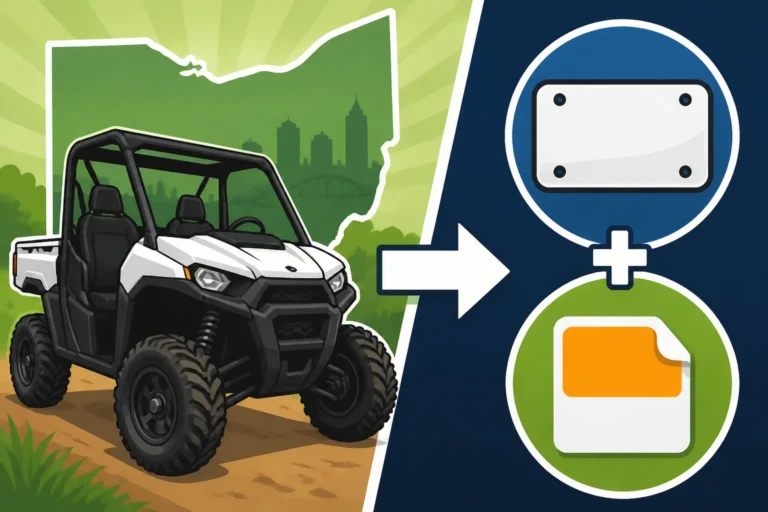
In Ohio, the registration for an all-purpose vehicle is firmly tied to the machine itself and its legal owner. This means that the person who holds the title to the APV is the one responsible for ensuring it's properly registered with the state and displaying a current [Ohio APV Plates and Validation Stickers]. When you borrow an APV, you are not expected—or even able—to register it in your name, because you are not the owner. The state isn't asking you, the temporary operator, to become the registrant. They're looking to the person who legally owns the APV to keep its paperwork in order.
Imagine your friend, Sarah, lends you her quad for a weekend trip to Monday Creek. Sarah, as the owner, is the one who took the machine to the county title office to get it titled, and then to a deputy registrar to get it registered. Her name, or perhaps her and her spouse's names, will be on that registration card. Your job as the borrower isn't to re-register it, but to ensure Sarah has already done her part and that you have the necessary proof to show you're allowed to use it. The responsibility for the initial [Registering an APV in Ohio] and subsequent renewals always falls to the owner.
What Documentation Should You Carry?
Even though you don't need to register the machine in your name, you absolutely need to have some critical paperwork on hand when you're out riding a borrowed APV. This isn't just about being a good borrower; it's about being able to prove to any law enforcement officer that you have permission to operate the vehicle and that the machine itself is legal.
First and foremost, you should have the owner's current APV registration card with you. This card serves as proof that the machine is legally registered in Ohio. It's usually a small paper card that fits easily in a wallet or a waterproof pouch in your toolbox. Second, and equally important, you should carry some form of written permission from the owner. Verbal permission might feel sufficient between friends or family, but in the eyes of a deputy, it's not verifiable. A simple letter stating that you have permission to use their machine for a specific period can save you a lot of hassle and potential questioning. Without this, you could face uncomfortable questions about whether the machine is stolen, even if your intentions are completely innocent. This is where [Ohio APV Registration and Insurance Proof] becomes not just about the machine, but about your legal right to operate it.
Essential Paperwork for Borrowed APVs
Let's dive a little deeper into the specific documents you should have tucked away when you're riding a borrowed APV. Think of this paperwork as your armor against potential misunderstandings or roadside stops. It’s not just about compliance; it’s about peace of mind.
The Owner's Current Ohio Registration
The most fundamental piece of the puzzle is the actual registration of the all-purpose vehicle itself. In Ohio, once an APV is registered, it will be issued an APV license plate and a validation sticker. This plate is uniquely associated with that specific machine and its owner. The plate needs to be securely mounted and kept [Keeping an Ohio Plate Distinctly Visible], usually on the rear of the machine.
Along with the physical plate and sticker, the owner receives a registration card. This card contains vital information: the owner's name, the APV's make, model, VIN (Vehicle Identification Number), and the expiration date of the registration. It's imperative that this registration is current. An expired registration means the machine cannot be legally operated on Ohio's trails or approved roads, regardless of who is riding it. So, before you head out, make sure the owner's registration card is not only present but also valid. If you were stopped by a deputy, they would ask to see this card as proof of the machine's legal status, just as they would for a car.
The Importance of Written Permission
While the owner's registration confirms the APV is legal, written permission confirms that you are legally allowed to operate it. This is where many riders get into trouble, relying solely on a verbal agreement. Picture this: you're enjoying a fantastic ride on a county road that allows APV access, and a local sheriff's deputy pulls you over for a routine check. They ask for your license, insurance, and the machine's registration. You hand over the owner's registration card. Then they ask, "Whose machine is this?" When you say, "It's my friend Bob's," and have no further proof, you might find yourself in a sticky situation.
A simple, dated letter signed by the owner can prevent this. This letter should clearly state:
- The full name and contact information of the APV owner.
- Your full name as the person borrowing the machine.
- The make, model, year, and VIN of the specific APV being borrowed.
- The specific dates or duration for which you have permission to use the machine.
- The purpose for which the machine is being borrowed (e.g., "for recreational trail riding," "for farm use," etc.).
You might find templates for a simple personal property loan agreement or a letter of permission on sites like LawDepot, which can provide a basic framework to ensure all necessary details are covered. Having this document not only proves your authorized use but also offers a layer of protection for the owner, demonstrating they entrusted the machine to you and it wasn't taken without their consent. It’s a small step that provides a lot of assurance for both parties.
Navigating Road Use and Insurance with a Borrowed APV
Borrowing an APV doesn't just mean you need to think about registration; it also brings up crucial considerations regarding where you can ride it and what happens if something goes wrong. Ohio has specific rules for road use and insurance, and these don't magically change because you're borrowing the machine.
Road Use Rules and Your Borrowed Machine
Ohio's approach to APV road use is, to put it mildly, a patchwork. It's not a blanket statewide allowance. Instead, it’s up to individual [Ohio Counties That Allow APVs on Roads] or townships to pass resolutions or ordinances to open their roads. If the APV you've borrowed is typically used for off-road trails, you might not even consider taking it on public roads. However, if you're borrowing a UTV (which is also an APV in Ohio) that the owner has equipped and had inspected for road use, then you need to be acutely aware of the rules.
Even with permission to borrow the machine, you, as the operator, are responsible for knowing and following the local road rules. This includes understanding speed limits for APVs on open roads, adhering to [Ohio Equipment Rules for a UTV on a Road] (like turn signals, mirrors, and appropriate lighting), and possessing a valid driver's license if required for road operation. If the owner's UTV has passed the [Ohio UTV Inspection Before Registration] and is street-legal for certain areas, that status transfers with the machine, not with the driver. But your compliance with driving laws is paramount. Always check local ordinances, whether you're riding in [Washington County Resolution 2024-1114] or other jurisdictions, before putting tires on pavement.
Insurance Considerations for Borrowed APVs
This is perhaps the most critical, and often overlooked, aspect of borrowing an APV. Just because the owner has insurance on their machine doesn't automatically mean you, as the borrower, are fully covered for all situations.
Here's why it's vital to have a conversation with the owner—and ideally, their insurance provider—before you take the keys:
- Owner's Policy Coverage: Most APV insurance policies primarily cover the named insured (the owner) and members of their household. Some policies might extend coverage to "permissive users" (those with the owner's permission), but the extent of this coverage can vary wildly. It might cover damage to the machine itself, or liability if you cause an accident, but often with limitations.
- Your Own Policy: Check your own auto or recreational vehicle insurance policy. Some personal policies might offer "non-owned vehicle" coverage that could kick in if you're operating a borrowed APV and are found at fault in an accident. However, this is not a given and needs to be verified.
- Liability for the Owner: If you get into an accident while operating their APV, the owner's insurance could be impacted, and they could even face legal liability depending on the circumstances. This is why a clear understanding of insurance coverage is non-negotiable.
Don't assume. A quick call to the owner's insurance agent or a review of their policy documents (with their permission, of course) can prevent significant financial and legal headaches down the road. If neither policy provides adequate coverage, it might be worth considering a temporary rider or finding alternative arrangements. [Ohio APV Insurance Requirement] might apply if you intend to use it on public roads.
Common Scenarios and Avoiding Pitfalls
Borrowing an APV often feels like a casual agreement, but adding the layer of state regulations means anticipating potential issues. Let's look at a few common scenarios and how to navigate them effectively.
What If the Owner's Registration is Expired?
This is a non-starter. If the owner's all-purpose vehicle registration is expired, the machine cannot be legally operated on public trails, approved roads, or any other areas that require state registration. It doesn't matter if you have a notarized letter of permission and your best intentions; an unregistered (or expired-registration) APV is simply not allowed to be ridden.
The responsibility for renewal lies solely with the owner. [Ohio's Three-Year APV Registration] means they've got a good window, but it's easy to forget. Before you even consider borrowing the machine, ask the owner to verify their registration is current. If it's not, they'll need to go through the renewal process, which involves paying the fees and getting a new validation sticker. Attempting to ride an APV with an expired registration could lead to fines and a citation for no registration, which would be issued to you as the operator. You certainly don't want to get pulled over and have to explain that your friend "forgot" to renew.
Borrowing an Out-of-State Machine
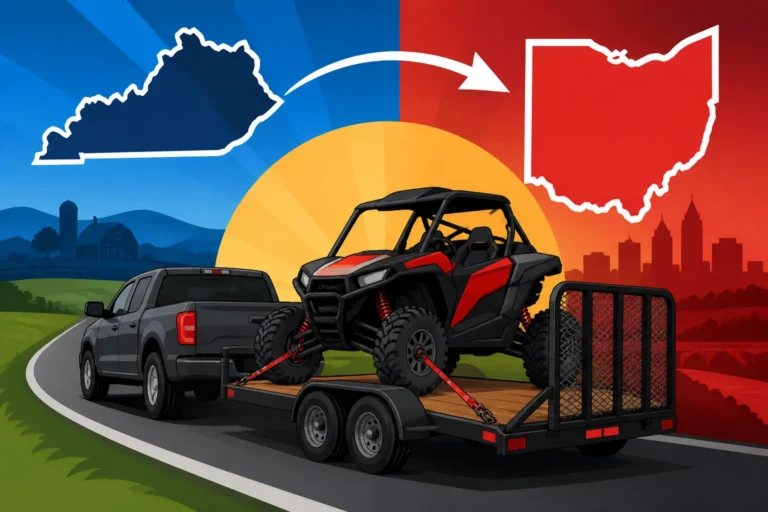
What if your cousin from Kentucky wants to visit Ohio and offers to let you use their quad, which is registered in their home state? This introduces another layer of complexity. Ohio does have reciprocity agreements with some states, meaning if the APV is legally registered in a reciprocal state, it might be permitted to operate on Ohio trails without needing a separate Ohio registration. However, this isn't universal, and the rules vary.
For example, [What Ohio Law Asks of Nonresident Riders] outlines specific conditions. If the machine comes from a state that does not require APV registration, or if there's no reciprocity, the owner would need to acquire an [Ohio's Nonresident Temporary Permit] for the machine to be ridden legally in Ohio. This permit is designed specifically for out-of-state visitors whose home state registration isn't recognized or doesn't exist. Before borrowing an out-of-state machine, verify its registration status in its home state and whether that registration is honored in Ohio. If not, make sure the owner gets that temporary permit first.
When a Borrowed Machine Leads to a Purchase
Sometimes, a borrowed APV isn't just a temporary arrangement; it's a test drive that turns into a permanent fixture. You fall in love with your buddy's side-by-side, and they decide to sell it to you. This is fantastic, but it transitions you from a borrower to a buyer, and the documentation requirements change entirely.
Once you agree to purchase the APV, you'll need a formal transfer of ownership. This involves:
- Bill of Sale: A written agreement detailing the sale, including the buyer's and seller's information, the APV's details (VIN, make, model), the sale price, and the date. This protects both parties. Online services like LawDepot offer templates that can simplify this crucial step.
- Title Transfer: The owner must sign over the existing [Titling an APV at an Ohio Clerk of Courts]. You will then take this signed-over title to a county Clerk of Courts title office to have it transferred into your name. This is a critical step, as you cannot register the APV until you hold a title in your name.
- Registration: Once the title is in your name, you can then proceed to a deputy registrar's office to [Registering an APV in Ohio] under your ownership.
This process ensures you become the legal owner, with all the rights and responsibilities that entails. Don't skip these steps, as riding a machine you've "bought" but not formally titled and registered is just as illegal as riding one you've borrowed without permission.
Here’s a quick overview of what to ensure for a borrowed APV:
| Item | Owner's Responsibility | Borrower's Best Practice |
|---|---|---|
| APV Registration | Ensure machine is currently registered and displays valid plate/sticker. | Verify registration is current. |
| Registration Card | Provide the current registration card to the borrower. | Carry the owner's registration card at all times when riding. |
| Permission | Provide written consent for borrowing the APV. | Carry a written permission letter from the owner. |
| Insurance Coverage | Confirm their policy covers permissive users; communicate limitations. | Clarify insurance coverage with owner; check personal policy for non-owned vehicle coverage. |
| Road Use Legality | Ensure machine is equipped for road use if applicable (UTV inspection). | Know and follow all local road use laws and equipment requirements. |
| Out-of-State Origin | Ensure home state registration is valid or obtain an Ohio temporary permit. | Verify legality for Ohio use; carry temporary permit if needed. |
| Expired Registration | Renew before lending the machine. | Do NOT ride an APV with expired registration. |
Disclaimer
This article is for general informational purposes only and does not constitute professional advice. Laws, prices and regulations vary by location and change over time. Consult a qualified professional for guidance on your specific situation.