Choosing a First Machine for Ohio Trails
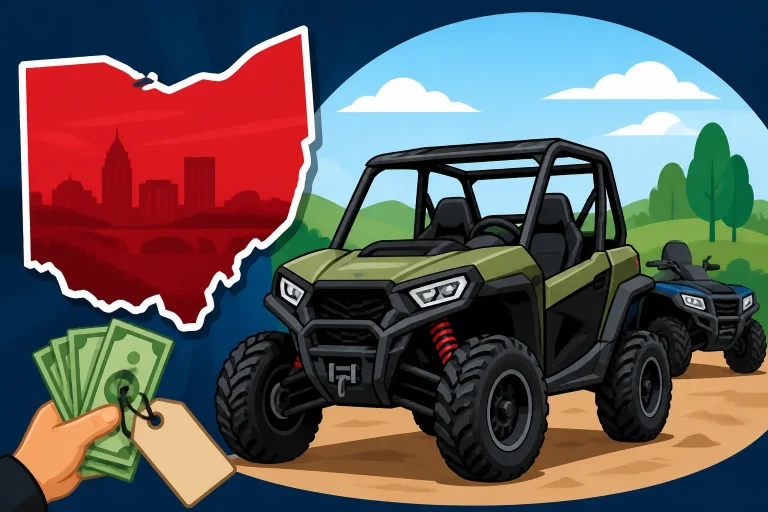
Ohio offers very different riding experiences, from tight forest trails to private parks and work-focused farm routes. Choosing a first machine is less about buying the most powerful ATV or UTV and more about finding one that fits your riders, your budget and the places you can actually ride. Start with trail restrictions, then compare machine types, size and ownership costs.
Start with the places you plan to ride
Before comparing brands or engine sizes, make a short list of places you expect to ride. A machine that works well on a broad private trail system may be too wide for some public trails, and a road-registered machine is not automatically permitted on every road or trail. Your regular riding destination should shape the purchase.
Ohio’s state forest trails have a 62-inch width limit. That makes width a practical screening tool, especially if you are considering a side-by-side. Measure the machine as it will be ridden, including any parts that affect its overall width, and check the rules for each riding area before you buy. A machine that just meets a limit on paper may still be a poor choice for a narrow route, tight turns or a group ride with passing restrictions. For more context, see Ohio’s 62-Inch State Forest Width Limit and Best Machine Width for Ohio Forests.
Width is not the only access question. Trail openings, closures and permitted vehicle types can vary by location. Ohio’s state forest riding areas and Wayne National Forest routes have their own access details, so check current maps and official information before hauling a machine there. Wayne National Forest also uses a separate OHV permit system; an Ohio registration plate does not replace that permit. Confirm what each rider and machine needs, and whether the specific route is open to your vehicle.
Private riding parks can offer a different fit. Some have wider routes, marked difficulty levels, camping or rental options, but each property sets its own rules and charges. Do not assume that a private park allows a machine simply because public forest trails do not, or the reverse. Ask about width, noise, passenger rules, required safety gear, registration and trail conditions before purchasing a pass or making a long drive.
A useful way to compare possible riding areas is to write down their limits before looking at machines:
| What to check | Why it affects your first machine |
|---|---|
| Maximum vehicle width | May rule out a wide side-by-side for some forest trails |
| Vehicle types allowed | An ATV, UTV, dirt bike or youth machine may face different access rules |
| Trail difficulty and surface | Helps match ground clearance, tires and rider experience |
| Seasonal openings and closures | Affects how often you can ride and when maintenance is practical |
| Registration and permits | Determines what paperwork or passes you need |
| Parking and trailhead access | A large machine and trailer need suitable staging space |
| Passenger rules | Matters if you expect to carry another person |
| Local road access | A trail permit does not automatically authorize road riding |
Use this research to rule out a mismatch early. If your preferred trails are narrow, your shortlist should favor machines that comfortably fit them. If your family wants to ride together in a side-by-side, check trail access first rather than hoping a route will accommodate it. If you are unsure how to compare trail surfaces or route difficulty, Ohio Trail Difficulty Ratings can help you think about the kind of riding that suits a new rider.
Also be honest about how often you will use the machine. A low purchase price can feel less attractive if the closest compatible riding area is far away, seasonal, or difficult to reach with your trailer. Conversely, a machine that fits your normal trail system may be worth more to you than one with extra power or features you rarely need.
Choose an ATV or UTV for the job
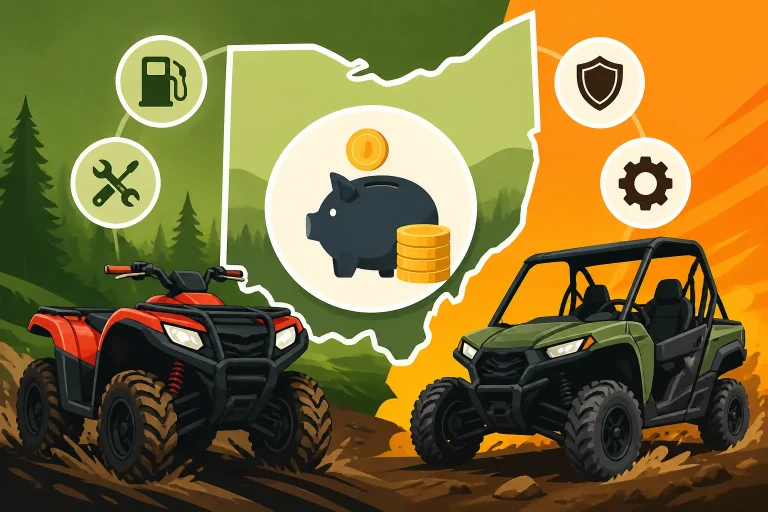
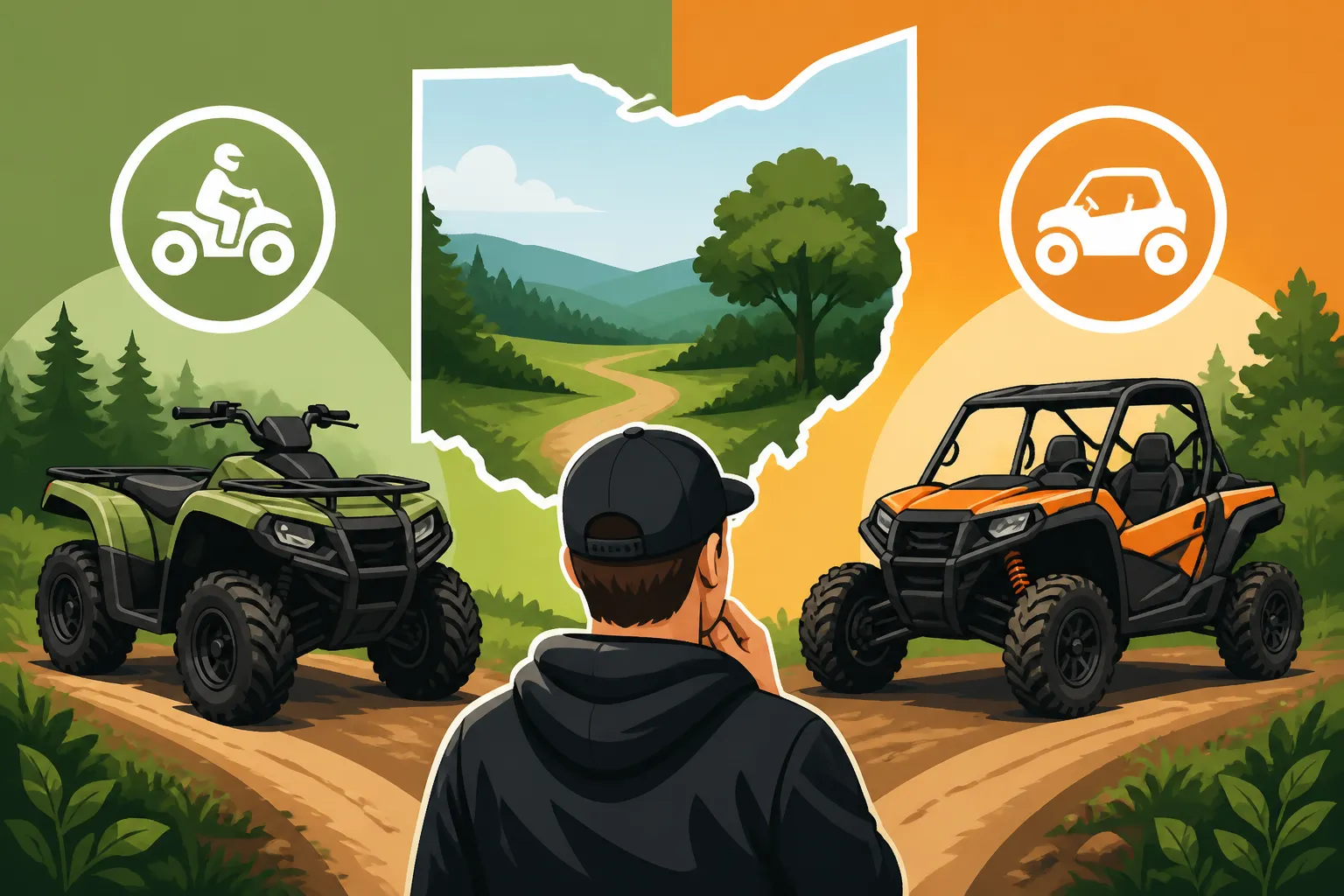
An ATV is usually a single-rider machine, though some models are designed to carry a passenger. A UTV, often called a side-by-side, has a seat and controls arranged more like a small vehicle and can carry more than one occupant when designed and equipped for it. Neither type is universally better. The choice depends on who will ride, what the machine needs to do and where it can go.
Why a first ATV may make sense
A quad is often a straightforward choice for one adult learning to ride trails. It is generally narrower than many side-by-sides, which may make it easier to fit within trail-width restrictions and maneuver through tight sections. A single ATV also avoids the added size and passenger considerations that come with a UTV.
That does not mean every ATV is easy for a beginner. A heavy or powerful model can demand good judgment and careful throttle control, especially on hills, slippery ground or uneven trails. A sport-oriented ATV may have a different riding position and suspension feel from a utility model. A utility ATV may be more comfortable for slow trail use and chores, but equipment such as racks, a plow or a winch adds weight and can change handling.
Consider how you want to sit and steer. Some riders prefer standing briefly over rough ground and shifting body weight; others want a more relaxed pace and a machine that can carry supplies. A test ride, where available and permitted, can reveal whether the seat, handlebars and controls feel manageable. Do not treat engine size as a substitute for fit or training.
When a UTV is the better match
A UTV is worth considering when carrying a passenger, working on land or bringing more cargo is central to the purchase. The seating arrangement can feel familiar to people used to driving, and a cab or roof may offer some weather protection. A UTV may also be a better fit for a household that wants to ride together on routes that allow its width and configuration.
The trade-offs are substantial. A UTV can be wider, heavier and more expensive to transport, store and maintain than an ATV. Its size can limit access on narrow trails. A roof, windshield, doors, tracks, tires or other accessories may affect width and weight, so check the machine in its intended setup—not only the brochure’s base configuration. A cab also does not make a machine a passenger car or guarantee road legality.
Think through the passenger experience, too. Confirm that each passenger has a proper seat and restraint intended for the machine, and follow the manufacturer’s capacity and occupant instructions. Do not carry more people than there are designated seats. Children need an appropriately sized and equipped seat and must meet the applicable rules for the riding location. Never assume that a passenger can safely ride on a rack or in a cargo bed.
Other machine categories
A dirt bike may suit a rider who wants a motorcycle-style experience, but its balance, controls and riding technique differ from an ATV. Youth machines are designed for smaller riders, but an adult should not choose one just because it is less intimidating or less costly. The rider’s size, coordination, maturity and the machine’s intended use matter. A farm machine may also be used mainly for work, but work capability does not automatically make it suitable for public trails.
| Option | Often suits | Important trade-offs |
|---|---|---|
| ATV | Solo trail riding, compact storage, some utility tasks | Requires active rider control; passenger use depends on design and rules |
| UTV | Two or more riders in designated seats, cargo or land work | Width, weight, transport and trail access can be limiting |
| Dirt bike | Riders seeking a motorcycle-style trail experience | Different balance and control skills; passenger use is generally not the purpose |
| Youth machine | A young rider who fits the machine and meets location rules | Must be selected for the child, not as a small adult machine |
If you expect to ride mostly alone on Ohio forest trails, an ATV that fits the width limit may be a sensible place to start. If the main purpose is family transportation around private land or carrying passengers on routes that allow the machine, a UTV may be more appropriate. If you need both roles, compare the cost and access trade-offs carefully rather than assuming one machine can do everything equally well.
Match the machine to the rider
A machine can be the right category and still be the wrong size. Fit affects control, comfort and how likely a new rider is to tire or make mistakes. Do not buy based only on a rider’s age, the machine’s engine capacity or what a friend owns.
For an ATV, the rider should be able to reach the controls without stretching, turn the handlebars through their range and operate the brake and throttle smoothly. Their feet should sit securely on the footrests, and they should be able to shift their body position without feeling trapped. The seat should not force them into a posture that makes steering or braking awkward.
For a UTV, check that each intended occupant can sit fully in the designated seat, reach the seat belt and use the controls where applicable. Make sure the vehicle’s restraint system fits the riders and that the driver can see clearly and operate the controls while wearing normal riding gear. A cab that feels roomy without a helmet or jacket may feel tight once everyone is equipped.
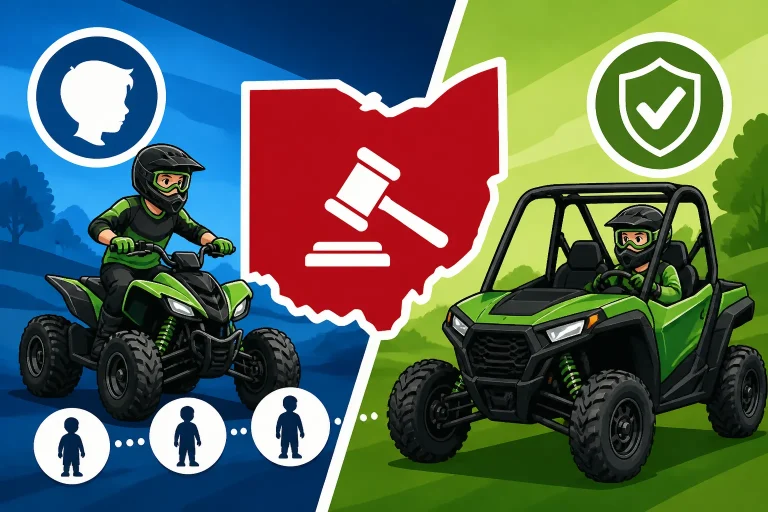
If a child will ride, treat the child’s fit and experience as a separate decision—not as a reason to buy a machine that adults later use beyond its design. A child should be able to control the machine, reach what needs to be reached, and follow instructions reliably. Adult supervision does not make an oversized machine suitable. Check the current age, supervision and equipment rules for the specific land where you plan to ride. Youth Machine Sizes and Ohio Rules and Matching a Machine to a Child in Ohio provide more detail on the selection questions.
For every rider, account for protective gear while checking fit. A helmet, eye protection, gloves and sturdy clothing affect movement and visibility. The machine should not be sized so tightly that the rider cannot operate it once geared up. A good retailer should be willing to discuss fit rather than reducing the decision to a single engine-size recommendation.
Consider physical comfort, too. Seat height, handlebar position, reach, vibration and control effort all affect how long a rider can stay focused. If more than one person will use the machine, check that the primary riders can operate it safely. A machine that fits the tallest adult may be unmanageable for a shorter rider, while a youth model may not be suitable for an adult’s weight or intended use.
Finally, account for loading and recovery. A machine that feels manageable on a showroom floor may be difficult to load, tie down, store or move if it is too heavy for your setup. Think about the trailer, tow vehicle, ramps, garage or shed, and the people available to help. If you have no safe way to load the machine or handle a breakdown, that is a real cost and usability issue—not a minor detail.
Match tires, suspension and equipment to Ohio riding
Ohio riding conditions can change with the season, recent rain and the particular trail system. Clay, shale, hills, ruts, loose ground and mud may all feature in a ride, but no single setup handles every surface perfectly. Choose a machine for your typical conditions, not for the most dramatic obstacle you have seen in a video.
For a beginner, predictable handling and good condition usually matter more than aggressive modifications. A stock machine that fits the trail can be easier to learn on than a heavily modified one with a lift, oversized tires or altered gearing. Modifications may improve performance in a specific situation, but they can also change handling, increase stress on components, make loading harder or push the machine beyond a trail’s width limit.
Tires are a good example. A tire designed for deep mud may be less comfortable or predictable on hard-packed ground and can affect steering. A very aggressive tread can also create more wear on some surfaces. Ask what the machine’s current tires are intended for and whether they suit the trails you expect to ride. For clay and shale, prioritize a balanced setup and learn how the machine behaves before changing parts. See Tires for Clay and Shale for a closer look at that trade-off.
Ground clearance, suspension travel and overall weight matter on uneven routes, but higher is not automatically better. A high center of gravity can make a machine feel less stable, particularly on a side slope or in a sharp turn. Added lift can also make it harder for a rider to mount, dismount or load the machine. Choose a setup that matches your skill level and the trails you will use most often.
A winch, hand guards, skid plates, racks and a storage box can all be useful, but accessories add cost and may add weight or width. Buy essential protection based on the machine and terrain. A beginner who mostly rides marked, maintained routes may have different needs from someone who works on land or expects to travel through rougher ground. Check how accessories are mounted and whether they interfere with lights, steering, cooling or required safety equipment.
Before accepting modifications on a used machine, ask who installed them, what parts were changed and whether the original components are available. Look for signs of rough installation, damaged wiring, loose fasteners or parts rubbing against tires and suspension. The more a machine has been altered, the more important it is to inspect the work or have a qualified shop do so.
Noise and trail etiquette matter as well. A loud exhaust may make a ride unpleasant for other visitors and can violate rules for the land. Keep required components in place and do not remove or defeat emissions, exhaust or spark-control equipment. When in doubt, check the riding area’s equipment requirements rather than relying on a seller’s assurance that a modification is acceptable.
Set a realistic purchase and ownership budget
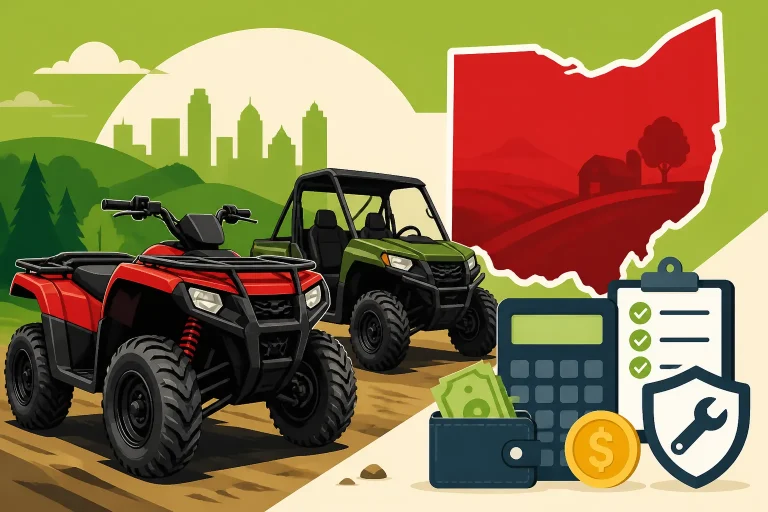
The sticker price is only one part of the cost. Budget for protective equipment, registration, any required trail permits, insurance where applicable, transport, storage, maintenance and repairs. If you buy used, reserve money for baseline service or worn parts. If you buy new, review the full written quote, including any dealer-added charges, delivery costs and optional accessories.
Start with the expenses that recur or are easy to overlook:
- Riding gear: Each rider needs properly fitting protective equipment. A helmet and eye protection are core items; gloves, boots and protective clothing help reduce exposure to impacts, debris and weather.
- Registration and trail access: Ohio registration and land-specific permits are separate questions. Check what applies to the machine and each riding area before setting the budget.
- Insurance: Requirements depend on how and where the machine is used. Ask an insurer what coverage is available and what the policy actually covers, particularly if you plan road use.
- Transport: Include a trailer, hitch, tie-downs, ramps and any tow-vehicle needs. An ATV and a side-by-side may call for different trailer capacity and space.
- Maintenance: Account for oil, filters, tires, brakes, belt or chain service, battery care and cleaning. Riding in mud or dust can increase cleaning and maintenance demands.
- Storage and security: A covered, secure place helps protect the machine and gear. A larger UTV may require more room than you have now.
- Repairs and downtime: Keep a contingency for damage, worn components or problems discovered after purchase.
The cost of permits and registration can change, and the requirements depend on where you ride. Confirm current amounts with the official agency or provider rather than relying on an old receipt or an online listing. You can use Ohio APV Registration Paperwork to prepare for the registration process and Ohio Safety Training for Riders to review training options.
New or used
A new machine offers a known starting point and may come with a manufacturer warranty, subject to its terms. You can select a configuration that fits your needs, but a new machine may require additional spending for gear, transport and accessories. Ask the dealer for a complete written breakdown and clarify which add-ons are optional. For a wider comparison of the trade-offs, see Buying New Versus Used in Ohio.
A used machine can cost less to acquire, but the savings are only real if its condition, title and history check out. A low price may reflect deferred maintenance, heavy work use, damage or a title issue. Compare machines of similar type, age, hours and condition, and be cautious about treating a seller’s claimed hours as a complete record of use. Low hours do not guarantee good storage or maintenance.
If you buy from a private seller, verify the seller’s identity and authority to sell, confirm the title and machine identification details, and agree on payment and handover in a safe, documented way. Do not pay in full based only on a photo of a title or a promise that paperwork can be sorted later. Checking a Used Machine in Ohio and Checking a Title Before You Pay cover useful checks before you commit.
For either route, ask what is included: manuals, keys, accessories, service records, original parts and any registration documents. Get promises about repairs or included items in writing. Do not let urgency or a seller’s claim that “everyone rides this trail” replace your own check of access rules and machine dimensions.
Inspect, test and prepare before the first ride
Whether you are buying new or used, take time to evaluate the machine and your complete setup. A brief look at the paint is not an inspection. If you are not confident assessing a vehicle, arrange a pre-purchase check with a qualified mechanic familiar with ATVs or UTVs.
What to inspect
Start with the frame and identification. Look for damage, unusual welds, bends, cracks, corrosion and evidence that a machine has been rolled or repaired. Check that the identification number on the machine matches the ownership paperwork. A mismatch, altered number or unclear ownership history is a reason to pause and resolve the issue before buying.
Inspect the tires for uneven wear, cuts, bulges and mismatched sizes. Check wheels, steering components, suspension, brakes, lights and controls. Look under the machine for leaks, impact damage and loose or missing fasteners. On a UTV, check the seats, belts, doors or nets, roll-over protective structure and any cab equipment. On either type, ask when routine service was last performed and whether the seller can document it.
Start the machine from cold if possible. Listen for unusual noises, observe how it idles and check for warning lights or smoke. During a test ride, if permitted, pay attention to steering, braking, throttle response, shifting and suspension. Do not test a machine in a way that puts you or others at risk, and do not take it onto land without permission. A mechanic can check for faults a short test ride will not reveal.
Ask about the machine’s use. Was it mainly used for trail riding, farm work, recreation or towing? Has it been submerged, rolled, stored outdoors or modified? Have belts, tires, bearings, brakes and fluids been serviced? Answers are useful, but they are not a substitute for inspecting the machine. Be cautious if the seller cannot explain an obvious repair or refuses a reasonable inspection.
A first service after purchase is a practical way to establish a maintenance baseline. Follow the manufacturer’s manual for inspection intervals, fluids and operating procedures; service needs vary by model and use. Riding in dust, mud or water may call for more frequent checks. Ohio ATV Maintenance Costs can help you plan for the ongoing side of ownership.
Check the documents and practical logistics
Before money changes hands, make sure the ownership paperwork is appropriate for the machine and the seller. A bill of sale can record the parties, machine description, identification number, date and agreed terms, but it does not resolve every title or registration problem. If anything is missing, inconsistent or unclear, contact the appropriate title office before completing the purchase.
Ask how the machine will be transported. Confirm that the trailer, tie-downs and tow vehicle are suitable for the machine’s weight and dimensions. Use secure tie-down points and follow the machine and trailer manufacturers’ instructions. Do not plan a first ride around driving the machine home on public roads; road access has separate rules and equipment requirements.
If buying from a dealer, ask whether the machine is already assembled, what setup remains and who handles the required paperwork. If buying privately, plan a careful handover and keep copies of the documents. A machine without clear ownership records can become an expensive problem even if it runs well.
Make the first ride a learning ride
Before heading out, read the owner’s manual, learn the controls and practice basic starts, stops and turns in a safe, permitted area. Begin slowly and leave difficult obstacles, steep slopes and deep mud for later. Ride with someone experienced when possible, tell someone where you are going and carry a charged phone, water and basic supplies. Cellular service may be unreliable in remote riding areas, so do not depend on it as your only safety plan.
Wear a properly fitting helmet and eye protection, and use other protective gear appropriate to the machine and conditions. Secure loose items and make sure luggage cannot interfere with steering, suspension or exhaust components. On a UTV, every occupant should use the designated seat and restraint system. Do not exceed the machine’s capacity or let passengers ride where they are not meant to sit.
Check the trail map and current closures before unloading. Stay on marked routes, slow down where visibility is limited, give other trail users room and avoid riding when conditions are beyond your skill. A careful first outing helps you understand the machine’s braking, turning and traction before you add speed, passengers or challenging terrain.
Frequently Asked Questions
Is an ATV or UTV better for a first machine in Ohio?
Neither is right for everyone. An ATV may suit a solo rider who wants a narrower machine for trails, while a UTV may suit passengers, cargo or work on land. Check trail width and access before choosing.
Can I take a wide side-by-side on Ohio state forest trails?
Ohio state forest trails have a 62-inch width limit. Check the machine’s actual width in its intended configuration and verify current rules for the specific riding area before going.
Does Ohio registration cover every trail permit?
No. Registration and land-specific permits can be separate requirements. Wayne National Forest uses its own OHV permit system, so check the rules for each place you plan to ride.
Should I buy a used ATV with no clear title paperwork?
Do not complete the purchase until the ownership documents and machine identification details are resolved. Contact the appropriate title office if you are uncertain what paperwork is required.
Disclaimer
This article is for general informational purposes only and does not constitute professional advice. Laws, prices and regulations vary by location and change over time. Consult a qualified professional for guidance on your specific situation.