Bringing a Machine From Indiana
Bringing an all-purpose vehicle (APV), like your beloved ATV or UTV, across state lines can feel like navigating a maze, especially when moving it from Indiana to Ohio. You’ve likely got questions swirling about what hoops you need to jump through to make your machine legal for Ohio trails, and you might even be dreading the paperwork. This guide is here to walk you through the entire process of titling and registering your Indiana-purchased APV in Ohio, ensuring you're ready to hit those Buckeye State trails with confidence.
Understanding Ohio's APV Definition
First things first, let's make sure we're all speaking the same language. What Indiana might call an ATV or UTV, Ohio law often consolidates under the umbrella term "All-Purpose Vehicle" or APV. This distinction might seem like nitpicking, but it's crucial because the rules you follow, the forms you fill out, and the fees you pay all hinge on how Ohio defines your machine.
What Qualifies as an All-Purpose Vehicle in Ohio?
Ohio's legal definition of an APV is quite broad, designed to cover a wide array of off-highway vehicles. Generally, it refers to any self-propelled vehicle designed primarily for off-highway use, including quads, side-by-sides, and sometimes even dirt bikes, depending on their specific characteristics. If your Indiana machine is a typical ATV or UTV, chances are it will fall squarely into this APV category in Ohio. This definition dictates everything from registration requirements to where you can actually ride. Understanding [How Ohio Law Defines an APV] is your starting point to ensure a smooth transition. Don't worry, it's less complicated than it sounds once you know what to look for.
The key aspects Ohio considers include the vehicle's width, weight, engine size, and intended use. For instance, most traditional ATVs are designed for a single operator or a single operator and one passenger, with handlebars for steering. UTVs, or side-by-sides, typically feature a steering wheel, foot pedals, and bucket or bench seating, often with a roll cage. Both, when designed for off-road recreation, are almost always classified as APVs. It’s important to acknowledge that what might have been a simple “quad” or “side-by-side” to you in Indiana now needs to fit Ohio’s specific nomenclature for official purposes.
Why This Matters for Your Indiana Machine
Knowing Ohio's definition is more than just academic; it directly impacts how you'll interact with the state's Bureau of Motor Vehicles (BMV) and local agencies. If your machine fits the APV definition, then you'll follow the APV titling and registration procedures. If, by some chance, your vehicle doesn't quite fit (perhaps it's a specialty vehicle or modified beyond recognition), you might need to explore other avenues, though this is rare for typical recreational machines.
For someone bringing a machine from Indiana, the biggest concern is usually ensuring that the Indiana title or bill of sale is sufficient proof of ownership for Ohio. If Indiana didn't require a title for your particular type of off-road vehicle (which can happen with older models or certain dirt bikes), that can present a hiccup. Ohio is pretty clear: if it's an APV, it needs a title to be registered. This is where many out-of-state transfers can get tricky, as different states have different titling requirements for off-road vehicles. We'll dive into how to handle that particular challenge in the next section, but for now, just know that fitting Ohio's APV mold is the first step on your journey.
Titling Your Indiana Machine in Ohio
So, you've moved to Ohio, or maybe you just bought an APV from a seller in Indiana and you're bringing it home to the Buckeye State. The very first administrative hurdle you’ll face is getting an Ohio title for your machine. This isn't just a suggestion; it's a legal requirement for APVs in Ohio. Without a title in your name, you won't be able to register it for use on designated trails or any approved roadways.
The Ohio Title Requirement for Out-of-State Purchases
Ohio law mandates that all APVs operating in the state must have an Ohio Certificate of Title. This applies whether you're buying new from a dealership, purchasing used from a private seller, or bringing your previously owned machine in from another state like Indiana. The title proves ownership, which is crucial for preventing theft and facilitating legal transfers. When you move an APV from Indiana, even if you had a title there, you'll need to transfer that ownership into an Ohio title. Think of it as formally introducing your machine to its new home state. You’ll be dealing with your county's Clerk of Courts Title Office for this process. It’s important to understand that this is a separate process from registration and is handled by a different office. For more details on this, check out [Titling an APV at an Ohio Clerk of Courts].
One common point of confusion for folks coming from states like Indiana is the variability in titling requirements. Indiana, for instance, might not have required titles for certain older ATVs. This doesn't exempt you from Ohio's rules. If your machine didn't have a title in Indiana, but Ohio requires one for registration, you'll need to prove ownership through a robust bill of sale and potentially a VIN inspection. This is where preparation becomes key. Having a clear, detailed bill of sale, perhaps even a template from a service like LawDepot, can be incredibly helpful in these situations, clearly outlining the transaction and transferring ownership legally.
Steps to Get Your Ohio Title
The process for titling an Indiana-purchased APV in Ohio is fairly straightforward, provided you have the right documentation. Here's a general breakdown:
- Gather Your Indiana Title/Proof of Ownership: If your APV had an Indiana title, you'll need the original, properly assigned to you by the previous owner (if you just bought it). If you're simply bringing your own machine, your existing Indiana title will suffice. If there was no Indiana title, then a robust bill of sale, often with notarization, is essential. Again, resources like LawDepot can provide excellent templates for a comprehensive [Ohio APV Bill of Sale Requirements] that covers all the necessary details.
- Visit Your County Clerk of Courts Title Office: You can't title your APV at the BMV deputy registrar; this must be done at the County Clerk of Courts Title Office. This distinction is important and often confuses people, so remember: titles at the Clerk of Courts, registration at the Deputy Registrar. You can learn more about [Why a County Title Office and Not the BMV] to understand this separation.
- Complete the Ohio Title Application: The staff at the Title Office will help you complete the necessary forms. You'll need to provide your personal identification (driver's license or state ID), the assigned Indiana title or other proof of ownership, and payment for the title fee. For what an Ohio APV title generally costs, you can look up [Ohio APV Title Cost].
- VIN Inspection (Potentially): If your machine is older, or if there's any discrepancy in paperwork, the Clerk of Courts might require a Vehicle Identification Number (VIN) inspection. This is to ensure the VIN on your documents matches the VIN on the actual machine and that the vehicle isn't stolen. It’s always a good idea to know about [Checking a VIN Before an Ohio Purchase], even when bringing your own machine, just in case. This inspection can usually be done by a local law enforcement officer or at some dealerships.
Once all the paperwork is in order and fees are paid, you'll be issued your Ohio Certificate of Title. This document is a critical piece of paper and should be kept in a safe place.
What to Do If Your Indiana Machine Lacks a Title
This is often the trickiest part for riders coming from states with more relaxed titling rules for off-road vehicles. If your Indiana ATV or UTV was never titled in Indiana, you won't have an original title to present. Don't panic, but be prepared for a bit more legwork.
In this scenario, your most important document becomes a comprehensive bill of sale. This isn't just a scribble on a napkin; it needs to be detailed. It should include:
- The full names and addresses of both the seller and the buyer.
- The date of the sale.
- A clear description of the APV, including make, model, year, and crucially, the full VIN.
- The purchase price.
- Signatures of both parties, ideally notarized.
If you don't have a solid bill of sale, or if the one you have is missing key information, you might need to track down the previous owner to get a more robust document. In some cases, if the machine is very old and tracing previous owners is impossible, the Clerk of Courts might have a process for applying for a "bonded title" or a similar procedure, which essentially provides an indemnity for the state. This is more complex and usually involves a surety bond. It's often easier to prevent this by using a proper bill of sale from the start; a customizable form from a service like LawDepot can really save you headaches.
Additionally, without a prior title, a VIN inspection will almost certainly be required to confirm the machine's identity and ensure it's not reported stolen. While it can be frustrating, remember that these steps are in place to protect all vehicle owners from fraud and theft.
Registering Your Indiana APV for Ohio Trails
Once you have that shiny new Ohio Certificate of Title in hand, you're halfway there! The next step is to register your APV with the state, which grants you the legal right to operate it on Ohio's designated trails and approved roadways. This is where you get your plate and validation sticker.
Why Ohio Requires Registration for Trail Use
Ohio's APV registration system serves a vital purpose: funding trail maintenance and safety programs. Unlike some states that might only require a title or no registration at all for private land use, Ohio mandates registration for anyone operating an APV on public lands, including state forests, national forests, and any county or township roads that have been opened to APV traffic. Your registration fee directly contributes to the upkeep of these riding areas, ensuring they remain safe and enjoyable for all riders.
Think of it this way: your plate and sticker aren't just for show. They're your ticket to legally access some fantastic riding opportunities across Ohio. Without a current registration, you risk fines and citations if caught riding on public property. This is a common pitfall for newcomers, who assume an out-of-state title is enough. It's not. Ohio wants you to be part of the system that supports the very trails you want to enjoy. You can find more comprehensive information on this topic in [Registering an APV in Ohio].
The Registration Process at an Ohio Deputy Registrar
With your Ohio title ready, the registration process is fairly straightforward:
- Gather Your Documents: You'll need your Ohio Certificate of Title, your driver's license or state ID, and proof of Ohio residency (if your ID doesn't reflect your current address).
- Visit a Deputy Registrar's Office: Unlike titling, registration is handled by any Bureau of Motor Vehicles (BMV) Deputy Registrar agency. These are the same offices where you would renew your car's registration or get a new driver's license.
- Complete the Registration Application: You'll fill out a form, provide your information, and present your title. The registrar will process your application.
- Pay the Registration Fee: There's a set fee for APV registration in Ohio, which covers a three-year period. On top of this, you'll also pay a small service fee to the Deputy Registrar. This fixed charge is often called [Ohio's $3.50 Deputy Registrar Fee]. For a detailed breakdown of what the total might be, refer to [Ohio APV Registration Cost].
- Receive Your Plate and Sticker: Once processed, you'll be issued an APV license plate and a validation sticker. The sticker needs to be affixed to the plate, and the plate must be securely attached to the rear of your APV, visible at all times. This is why you need to understand [Ohio APV Plates and Validation Stickers].
Keep your registration card with you when you ride. It’s proof that your machine is legal to operate.
What Happens After Registration
After you've successfully titled and registered your Indiana machine in Ohio, you're officially ready to ride! However, the journey doesn't end there. Ohio's APV registration is valid for three years, and it expires on December 31st of the third year. This means you'll need to keep an eye on that expiration date to ensure continuous legal operation.
Annual Trail Pass vs. Registration: It's important to distinguish between your state APV registration and any potential trail passes required by specific riding areas. For example, while your Ohio plate covers state forest trails, you might still need to purchase a separate permit, like the Wayne National Forest OHV permit, if you plan to ride there. Always check the specific requirements of any riding area you visit.
Keeping Records: It's always a good practice to keep copies of all your important documents – the title, registration card, and bill of sale – in a safe, accessible place. While you'll carry your registration card when riding, having digital or physical backups at home can save a lot of hassle if any originals are lost or damaged. If you've used a comprehensive document from LawDepot for your bill of sale, be sure to keep that record just as meticulously.
Essential Considerations for Indiana Riders in Ohio
Bringing your APV from Indiana to Ohio isn't just about paperwork; it's also about understanding the nuances of Ohio's off-road culture and legal landscape. A little preparation and awareness can prevent headaches down the line.
Proof of Ownership and Other Key Documents
We’ve touched on this, but it bears repeating: having indisputable proof of ownership is paramount. For many, this means a properly assigned Indiana title. If you're buying a used machine from Indiana, insist on a clear, well-documented bill of sale, even if Indiana law didn't require a title for that particular machine. A template from a reputable source like LawDepot can help you generate a professional and legally sound bill of sale. This will protect you and simplify the Ohio titling process.
Documents to always have on hand (or copies readily available):
- Original Ohio Certificate of Title: Keep this in a secure location at home.
- Ohio APV Registration Card: Carry this when riding.
- Proof of Insurance: While not always required for all off-road use, it's mandatory for any road-legal APV and highly recommended for all machines.
- Driver's License/State ID: For identification purposes.
When you go through the titling and registration process, having a well-organized folder with all your purchase agreements, previous titles, and personal identification will make the process much smoother for you and the agency staff. Remember, these folks see a lot of paperwork, and a clear, complete submission is always appreciated. [Ohio APV Registration Paperwork] goes into more detail about what to have ready.
Potential Pitfalls and How to Avoid Them
Even with the best intentions, moving an APV from state to state can have its challenges. Here are a few common pitfalls and tips to steer clear of them:
- No Indiana Title: As discussed, if your Indiana machine was never titled, you need an exceptionally strong bill of sale. Try to get it notarized if possible, and ensure it lists the VIN accurately. Missing or incomplete paperwork is the biggest reason for delays.
- Expired Registration (Indiana): While your Indiana registration isn't valid for Ohio trails, having an expired registration can sometimes raise questions about the vehicle's history. It's not usually a deal-breaker for Ohio titling, but it's good to be aware.
- Incorrect VIN: Double-check the VIN on all your documents against the actual VIN stamped on your APV's frame. Any discrepancy, even a single digit, will halt the process.
- Assuming Out-of-State Reciprocity: Do not assume that because your Indiana registration was current, you can legally ride on Ohio trails without an Ohio plate. Ohio has its own registration requirements for permanent residents. While Ohio does offer limited [Ohio Temporary Operating Permit Cost] for visitors, this is not for machines relocating to the state.
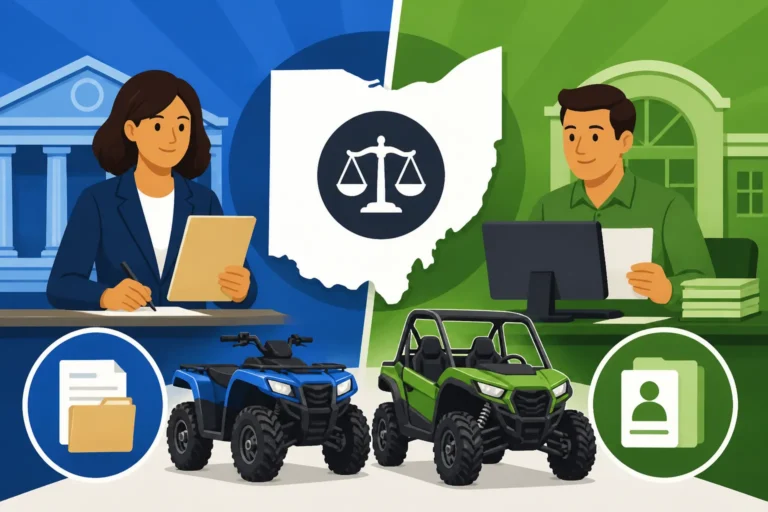
- Ignoring the Two-Counter System: Remember, titling is at the Clerk of Courts, and registration is at the Deputy Registrar. Don't waste a trip by going to the wrong office for the wrong service. The article [Two Ohio Counters for One Machine] provides a good explanation of this.
Being proactive about these details will save you time, frustration, and potentially multiple trips to different offices.
Cost Implications and Budgeting
Moving your APV to Ohio involves some financial outlays beyond the purchase price of the machine itself. It’s wise to budget for these from the start.
Here’s a general overview of the costs you'll encounter:
| Item | Description | Where You Pay |
|---|---|---|
| Ohio Title Fee | One-time fee for issuing your new Ohio Certificate of Title. | County Clerk of Courts Title Office |
| Sales Tax | If you just purchased the APV, you'll pay Ohio sales tax on the purchase price. | County Clerk of Courts Title Office (at time of titling) |
| Registration Fee | Covers the three-year APV registration period. | BMV Deputy Registrar Office |
| Deputy Registrar Fee | A small service charge added by the Deputy Registrar agency. | BMV Deputy Registrar Office |
| VIN Inspection Fee | If required, a fee for a law enforcement officer or dealership to inspect the VIN. | Law enforcement agency or dealership (if applicable) |
It’s important to note that specific fees can vary slightly and are subject to change, so it's always best to check with your local County Clerk of Courts Title Office and a BMV Deputy Registrar agency for the most current figures. However, knowing these categories will help you prepare your budget. The costs are generally manageable, but they can add up, especially if you're also factoring in sales tax on a recent purchase. Being prepared for these costs is just another step in ensuring your experience of bringing your APV from Indiana to Ohio is as smooth as possible.
Disclaimer
This article is for general informational purposes only and does not constitute professional advice. Laws, prices and regulations vary by location and change over time. Consult a qualified professional for guidance on your specific situation.