Riding After the First Frost
A first frost can make an Ohio trail look firm and inviting while leaving shaded corners, bridges, and muddy hollows slick or frozen. It also brings shorter daylight, changing trail conditions, and more hunting activity in some areas. This guide explains how to choose a suitable route, prepare your ATV or UTV, and ride carefully after the temperature drops.
What the First Frost Changes on Ohio Trails
Expect mixed conditions, not a uniformly frozen trail
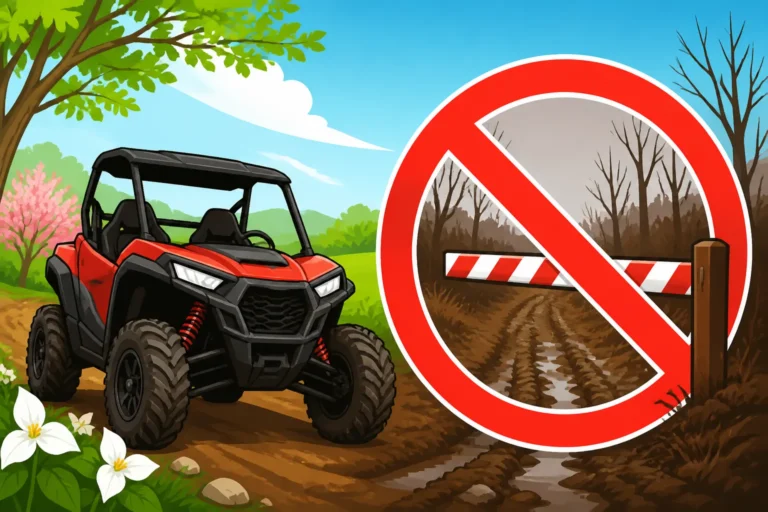
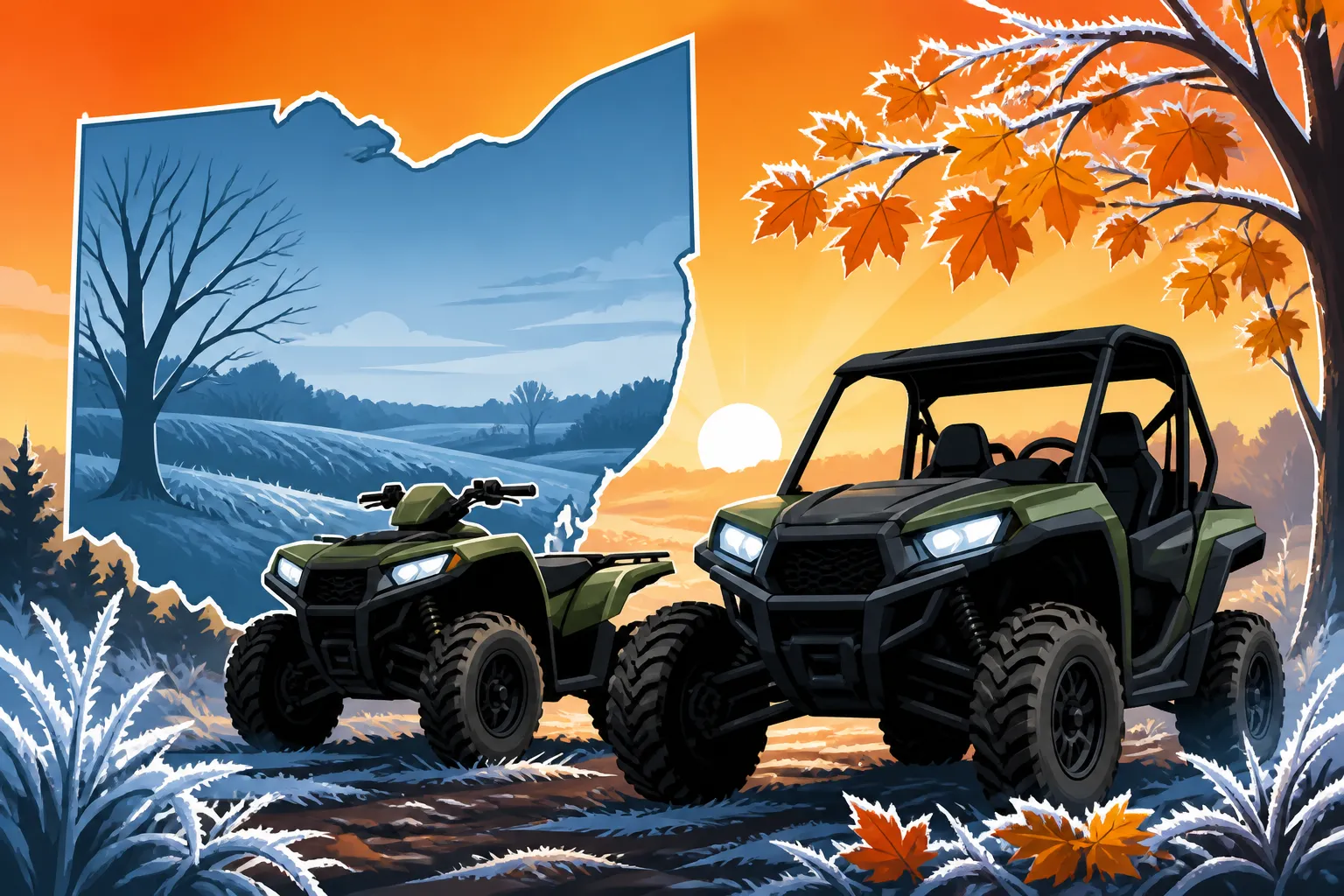
A frost is not a guarantee that the ground has frozen solid. Sunny, exposed stretches may be soft or damp, while shaded hollows and low areas can stay icy longer. Fallen leaves can hide slick mud, rocks, and ruts, making familiar terrain feel unexpectedly different under your tires.
Bridges, culverts, and packed-down sections deserve particular attention. They can be colder than the surrounding ground and may hold a thin layer of frost even when the trail looks clear. Slow down before these features, keep your movements smooth, and avoid sudden braking or sharp steering if you encounter a slick patch.
The freeze-thaw cycle can also change a route during the same ride. A muddy section may firm up overnight, then soften as the sun warms it. A rut that was easy to see on your last visit may be disguised by leaves or frost. Check [Ohio Trail Conditions Before You Ride] and be ready to turn around if the trail is more slippery or damaged than you expected.
Check access and seasonal hours before loading up
A cold morning does not automatically mean a trail is open, closed, or suitable for riding. Trail access depends on the location and its rules, as well as current closures and conditions. Ohio’s riding seasons also differ by forest and trail system, so do not assume that a route you rode in summer remains available after autumn weather arrives. [Ohio Trail Season by Forest] is a useful starting point for understanding those differences.
Some Ohio state forest trails have seasonal operating schedules, and closures can affect access before winter weather is fully established. Check the latest information from the land manager before you leave home. For example, the closure schedule may matter more than whether the trailhead parking lot is free of snow. [Trails That Shut the Second Monday of December] explains one timing detail riders should consider when planning a late-season trip.
Also check the rules for the specific place you intend to ride. A route on private property, a state forest trail, a private riding park, and a public road can all have different access requirements. A map showing a road or trail does not, by itself, establish that ATV or UTV riding is permitted there.
Preparing Your Machine and Gear for Cold Weather
Give your machine a simple pre-ride check
Cold weather makes a quick walk-around especially worthwhile. Check tire condition and pressure according to your owner’s manual, then look for damage or objects caught in the tread. Tires that worked well on dry ground may have less predictable grip on cold mud, wet leaves, or a frost-covered bridge.
Make sure your brakes respond as expected before heading onto a narrow or hilly trail. Check lights, battery condition, and the machine’s controls, too. If your ATV or UTV has been parked for a while, look for leaks and confirm that the throttle and steering move freely. A minor issue is much easier to address at home than beside a trail in the cold.
Dress for the ride, not just the temperature at the truck. Wind chill can make a moving ride feel much colder than standing in the parking area. Use layers that allow movement, gloves that preserve control, and footwear suited to wet or muddy ground. Carry a dry layer in a sealed bag so a splash or unexpected stop does not leave you chilled for the ride back.
Pack for a shorter day and a slower pace
After the first frost, it is wise to plan a route that leaves room for delays. Slippery patches, poor visibility in shaded areas, and a group member needing extra time can all stretch a ride. Start early enough to finish comfortably in daylight, but check the permitted riding hours for your destination. [Half an Hour Before Sunrise in Ohio] and [Half an Hour After Sunset in Ohio] cover timing rules riders should know when planning around the edges of the day.
Bring water, food, a basic first-aid kit, and a charged phone. Cold weather can drain a phone battery more quickly, so keep it warm and bring a backup power source if you have one. A paper map or another dependable navigation option is useful when cell service is weak or unavailable. [Ohio Trail Maps From ODNR] can help with route planning, while [Ohio Trails With Cell Signal] is relevant if staying connected is part of your safety plan.
An app such as onX Offroad can help you review routes and prepare for areas where cell coverage may be limited. Download or save the information you need before leaving reliable service, and carry a backup map rather than relying on a phone as your only navigation tool. The key is not which tool you use, but knowing how to find your way back if the route is confusing or conditions force a change of plan.
| Before you leave | Why it matters after frost |
|---|---|
| Confirm trail access and closures | Seasonal schedules and temporary restrictions can affect where you may ride |
| Check the forecast and recent conditions | Rain, wind, and overnight temperatures can change grip and visibility |
| Inspect tires, brakes, lights, and controls | Cold, wet riding makes predictable handling especially important |
| Plan a conservative route | Slower travel and unexpected slick spots can lengthen a ride |
| Carry navigation and a backup | Phone service and battery life may be unreliable in remote areas |
| Tell someone your plan | A person at home can know your route and expected return time |
Riding Carefully on Frosty Ground
Reduce speed and leave room to react
The most useful adjustment is often a calmer pace. Approach corners, hills, bridges, and rutted sections slowly enough to respond if the surface is slick. Sudden acceleration can break traction; abrupt braking can make a machine slide, particularly on a slope or a layer of wet leaves.
Leave more following distance than you would on dry ground. That gives you room if the rider ahead slows unexpectedly or loses traction. On a group ride, agree on a pace and a simple way to signal a stop or hazard. Avoid crowding the machine in front of you, especially where visibility is limited by trees, bends, or changing elevation.
Choose your line with care, but do not ride off a marked route simply to avoid a muddy or icy patch. Leaving the established trail can damage surrounding ground and may violate site rules. If a section feels unsafe, stop in a suitable place, assess it, and turn back when that is the safest option. [Ohio Trail Etiquette on Narrow Trails] offers useful reminders for sharing tight routes responsibly.
Watch for hunters and other trail users
Autumn trail use can overlap with hunting activity. Wear visible clothing appropriate to the location and season, keep to designated routes, and pay attention to posted notices and trailhead information. Do not assume that a quiet parking area means the surrounding forest is empty. Review [Sharing a Forest With Hunters] before setting out, and check local rules about visibility clothing and access.
Keep noise and speed under control near trailheads, parking areas, homes, and other users. You may meet hikers, equestrians, cyclists, or utility vehicles around a bend. Slow down well before passing, give other people plenty of room, and stop if the trail is too narrow to pass safely. On a cold day, people may be wearing hoods or moving more cautiously, so approach in a way that gives them time to notice you.
If the machine is wide, confirm that the destination allows it before making the drive. Width limits and trail suitability can vary by riding area. Ohio’s state forest system has a width restriction for certain trails, so check [Ohio's 62-Inch State Forest Width Limit] and verify the rules for your specific destination rather than judging access by how wide the trail looks from the parking lot.
Choosing a Route and Knowing When to Turn Back
Match the ride to the conditions and your experience
A route that is manageable in dry weather may feel much more demanding after frost. If you are new to riding in cool-season conditions, choose a familiar, relatively straightforward area rather than making your first frosty ride a long loop with steep hills or remote sections. [Ohio Trails for Beginners] can help you think about route difficulty before committing to a destination.
For riders who want to explore a new system, plan a shorter outing first. That gives you a chance to learn how the surface behaves without having to complete a long route if the ground is slick. Use a turnaround point, and let the group know that changing plans is part of the plan—not a failure. An early return is better than continuing onto terrain that exceeds your comfort or the machine’s ability.
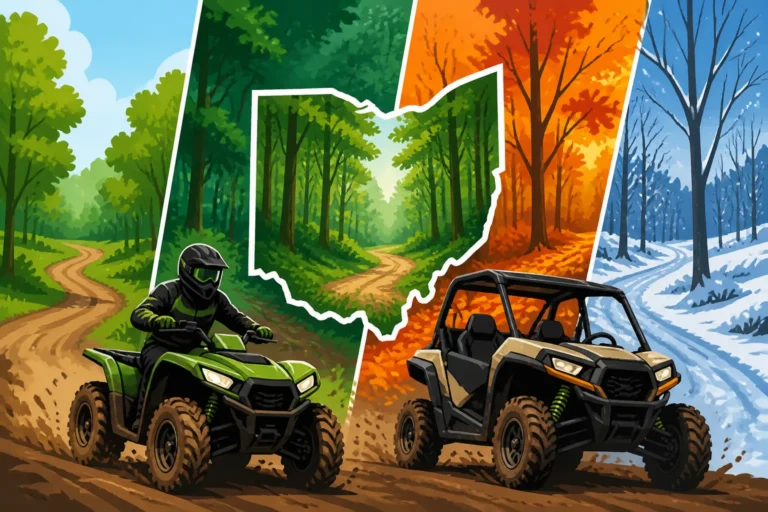
If you are considering winter riding, confirm that the trail is open and suitable rather than assuming a frost means winter access has begun. [Ohio Trails Open in Winter] can help frame the question, but always check the individual riding area’s current rules and conditions. Some destinations may have seasonal restrictions, limited hours, or temporary closures that apply regardless of the weather.
Treat changing conditions as a reason to reassess
Turn back if you find repeated icy sections, deep mud that risks damaging the trail, poor visibility, or a route that is beyond the group’s comfort level. The same applies if a rider becomes cold, tired, or uncomfortable. On a late-season ride, fatigue can sneak up while everyone is focused on getting through a difficult patch.
Watch for signs that your machine is struggling. Spinning tires, repeated sliding, or difficulty steering are reasons to pause and reconsider the route. Avoid trying to power through a slick or muddy section simply because the group has already ridden partway into it. Stop somewhere safe, talk through options, and choose the route that minimizes risk and ground damage.
Before you head out, review maps and access details, then check them again at the trailhead if posted information is available. onX Offroad can be useful for preparing a route and keeping track of where you are, but it should complement local trail information and good judgment—not replace them. Save a backup map, share your intended route, and leave enough daylight to return without rushing.
Disclaimer
This article is for general informational purposes only and does not constitute professional advice. Laws, prices and regulations vary by location and change over time. Consult a qualified professional for guidance on your specific situation.