Ruts Left by a Wet Weekend
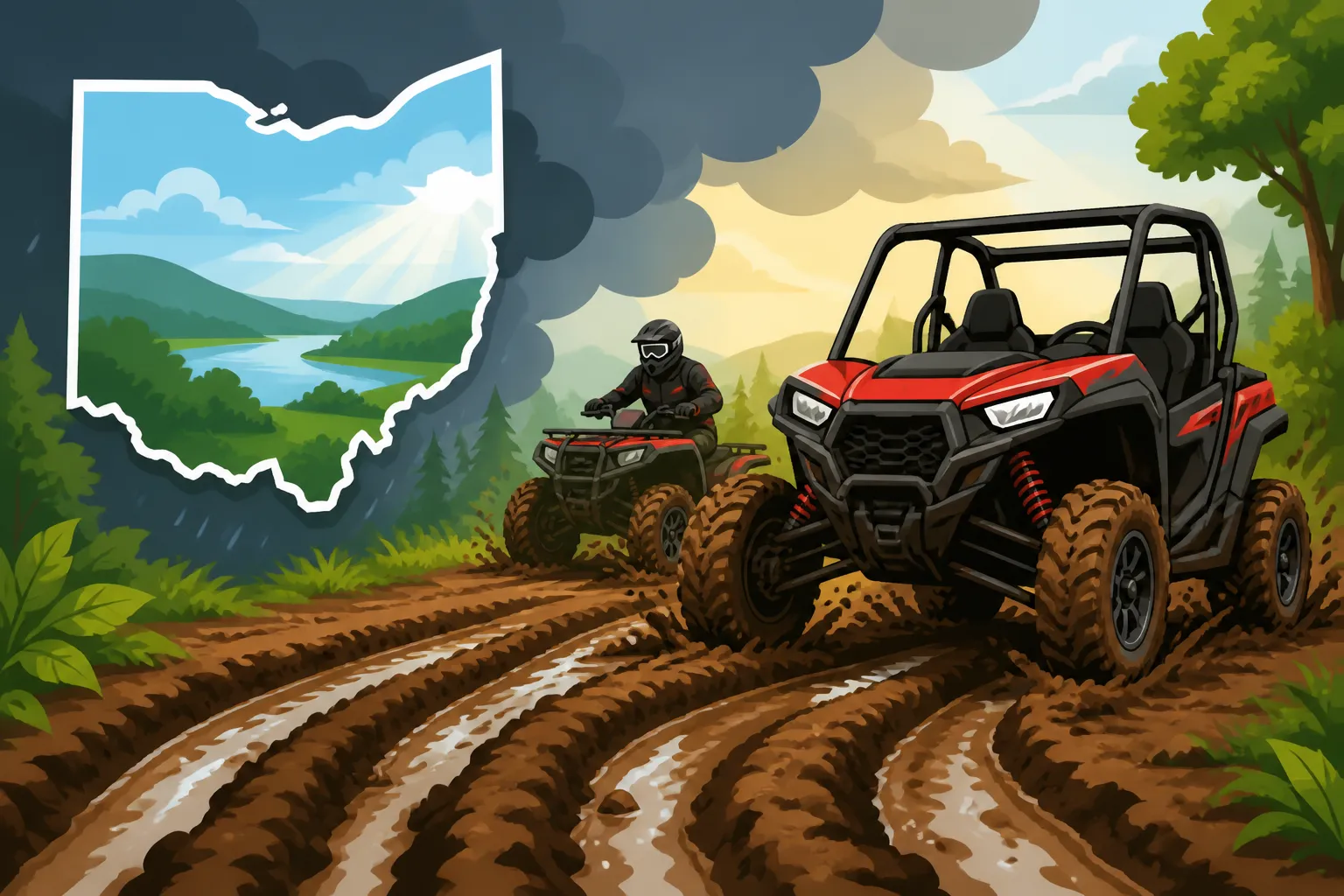
A wet weekend can turn an Ohio ATV trail into a line of deep, slippery ruts by Monday morning. It’s frustrating to arrive ready for a ride and find mud that could damage the trail, your machine, or both. This guide explains how to judge the conditions, when to turn around, and how to avoid making a bad section worse.
Why Ohio trails rut after a wet weekend
Water and repeated tire passes change the trail
A trail can look rideable at the entrance and still be saturated farther in. Rain softens the soil, and tires compress that loosened ground. Each pass can deepen existing grooves, push mud to the sides, and leave a rough channel that holds even more water.
Ohio’s mix of soils makes conditions vary from one area to the next. Clay can become slick and cling to tires, while a gravelly or rocky stretch may drain more readily. A route that handled light rain well can become a different ride after several hours of steady precipitation, especially where the trail dips, crosses a low area, or follows a hillside.
The damage isn’t always obvious from the seat. A shallow rut may simply feel bumpy. A deeper one can grab a tire, pull a machine off line, or hide a rock or branch under the mud. On a narrow trail, trying to steer around a rut can also scrape vegetation or widen the trail into the surrounding ground.
A rut can be a warning, not a challenge
It’s tempting to treat a muddy section as a test of skill. But powering through can spin tires, dig deeper trenches, and send mud into places where it blocks drainage. A rut that looks manageable for one ATV may be difficult for a wider or heavier UTV, and a machine that loses traction can leave a rider stuck in a tight spot.
Think about the whole group, too. The first rider may make it through, while the next rider finds a deeper hole or a slick bank. If someone gets stuck, recovery can cause more damage, particularly if the only way out is to winch against trees or pull across the edge of the marked route.
For a closer look at how saturated conditions affect local ground, read [Clay That Turns to Grease] and [Ohio Trails After Heavy Rain]. Both are useful reminders that the surface you see at the trailhead may not reflect what you’ll find deeper into the route.
How to judge a muddy section before riding into it
Check the trail, not just the sky
A quick glance at the forecast is a helpful start, but it doesn’t tell you exactly what a specific trail is like. Rainfall can differ across southern and eastern Ohio, and shaded hollows may stay wet after exposed ground begins to dry. A trail near Monday Creek, Hanging Rock, or Pine Creek can have its own conditions depending on recent rainfall, drainage, and traffic.
Before loading up, check trail notices and closures from the agency or land manager responsible for the riding area. Look for recent information about weather impacts, maintenance, and access restrictions. If the status is unclear, call the relevant ranger district or office rather than relying on an old post or a friend’s report from a different trail.
A mapping app such as onX Offroad can help you plan a route and understand where you are in relation to mapped trails and nearby land boundaries. Treat it as a planning aid, not proof that a route is open or passable today. Confirm access and trail conditions with the official manager. For a practical pre-trip routine, see [Ohio Trail Conditions Before You Ride], [Ohio Trail Closures to Check First], and [Calling a Ranger District Before You Load].
Use a simple go, slow, or turn-back check
At the trail entrance, look for standing water, fresh tire trenches, and soft shoulders. If you can safely inspect a muddy spot without stepping into a dangerous area, notice whether the surface supports your weight or gives way underfoot. That won’t guarantee the ground will support a machine, but it may help you recognize obvious saturation.
Once riding, reduce speed before the wet section and leave more room between machines. Avoid sudden throttle, sharp turns, and hard braking in mud. If the trail is narrow, wait until the rider ahead has cleared the section before moving in. Don’t use momentum as a substitute for visibility; hidden holes can change the situation quickly.
| What you see | Safer response |
|---|---|
| A damp, firm surface with no deep grooves | Proceed cautiously and stay on the marked route |
| Shallow mud with a stable line and clear visibility | Slow down, keep space between riders, and avoid abrupt steering |
| Deep ruts, standing water, or a soft shoulder | Stop before the section and assess whether turning back is safer |
| A rut that spans the trail or hides the bottom | Don’t charge through; choose an authorized alternative or turn around |
| Riders are making new tracks beside the trail | Don’t follow them; stay on the marked route and report damage if appropriate |
No checklist can make a saturated trail safe. If you can’t see where the rut leads, if the ground is breaking apart, or if you’re unsure how you’ll recover a stuck machine, the cautious choice is to turn around.
How to ride responsibly when ruts are present
Stay on the marked route
Riding around a muddy spot can feel like the gentler option, but repeated detours create parallel tracks. Those tracks may damage plants, disturb soil, and turn a narrow trail into a wider one. They can also lead riders onto private land or into areas that are not open to machines.
If a rut is passable and the route remains open, ride slowly and deliberately within the marked trail. Keep your machine pointed along the trail rather than cutting across its edges. If the rut is too deep or risky, don’t carve a new bypass. Turn back or use an alternate route only if it is officially open and suitable for your machine.
A navigation app can make it easier to keep track of a planned route, but it can’t authorize a detour. If you use onX Offroad to follow a map, compare what you see on the screen with posted signs and trail markers. Follow the land manager’s directions when they differ from a map. The same principle applies to any mapping tool: a visible line is not automatically an open trail.
For more on why leaving the route can create trouble, read [Ohio Rules for Riding Off a Marked Trail]. On narrow routes, [Ohio Trail Etiquette on Narrow Trails] offers additional context for sharing space without making a difficult stretch more hazardous.
Give other riders room and avoid worsening the damage
When one rider gets stuck, a crowd of machines can make the situation worse. Keep other riders clear of the recovery area, and avoid repeated attempts that spin tires in place. If recovery requires leaving the route, attaching a line to a tree, or crossing fragile ground, pause and consider whether professional or authorized assistance is safer.
Don’t assume that a machine with more power or larger tires can solve a trail problem. A powerful UTV can dig quickly, and extra ground clearance won’t prevent a wheel from dropping into a concealed rut. Passengers, cargo, tire choice, and experience also affect how a machine handles slippery ground.
After the ride, check for new notices or report a serious hazard to the trail manager when an appropriate contact is available. Share details that help someone locate the problem, such as the trail name, a nearby junction or marker, and what you observed. Avoid posting an unverified claim that an entire riding area is open or closed based on one section. Conditions can change quickly, and an accurate location is more useful than a broad warning.
How to plan around wet-weekend damage
Choose a backup plan before you leave
A good wet-weather plan includes more than a second trail name. Decide what you’ll do if the main route is closed, if the parking area is muddy, or if the first section is already deeply rutted. That could mean choosing another officially open area, postponing the trip, or switching to a private riding park whose operator can explain current conditions.
Use onX Offroad or another mapping tool to review your planned route and identify alternatives before you’re on the trail. Then verify those alternatives through the relevant trail manager or operator. Don’t assume that a nearby route has the same rules, width limits, or access status as the place you originally planned to ride.
If a group is traveling from different parts of Ohio, share the plan before everyone loads up. That saves riders from driving to the same muddy entrance only to debate the next move in a cramped staging area. It also gives the group a chance to agree on a turnaround point and on how to handle a machine that loses traction.
Be willing to reschedule
Waiting for conditions to improve can be disappointing, especially when you’ve arranged a day off, loaded the trailer, and brought friends along. But a ride that repeatedly churns wet soil can leave lasting damage and make the next visit worse for everyone. It can also turn a fun outing into a recovery job, a repair, or a difficult trip home.
Consider postponing when official notices say the route is closed, when water is covering the trail, or when fresh ruts make it hard to see a safe line. Don’t ride around a closure or assume a gate is open because someone else passed through earlier. For weekend planning, [Ohio Trails That Fill Up on Weekends] can help you think about timing and crowding, while [Ohio Trails With Mud] may help you compare the kind of riding conditions you’re seeking with the risks of a wet route.
The best call isn’t always the most exciting one. If the ground is soft enough that tires are cutting new channels, turning around helps protect the trail and reduces the chance that your group will need a difficult recovery. Save the ride for conditions that let you enjoy the route without making the damage worse.
Disclaimer
This article is for general informational purposes only and does not constitute professional advice. Laws, prices and regulations vary by location and change over time. Consult a qualified professional for guidance on your specific situation.