Spoil Piles and Steep Climbs
A spoil pile can look like a tempting hill climb, especially when the trail runs across old mining ground in southeastern Ohio. But loose shale, hidden ruts, steep drop-offs, and sudden weather changes can turn a short climb into a dangerous recovery. This guide explains how to read spoil-pile terrain, prepare your ATV or UTV, and ride Ohio’s hills with better judgment.
What Spoil Piles and Steep Climbs Are Like
How mining shaped the terrain
Spoil piles are mounds of rock and soil moved during mining. In parts of Ohio’s coal country, old mining left a landscape of ridges, benches, hollows, and abrupt slopes rather than the smooth, predictable hills you might expect on a groomed trail. Some routes pass near these landforms, and the ground can change noticeably over a short distance. [Strip-Mined Ground From the Sixties] offers more context on how this terrain came to be.
The surface may be a mix of shale, loose stone, clay, and compacted earth. A slope that looks firm from below can have a thin crust over softer material. Tire ruts may channel water down the hill, while rocks and roots can hide in grass or leaves. If you’re used to flatter trails, the challenge isn’t just the angle of the climb. It’s also judging what the tires will grip and where the machine could go if they lose traction.
Mining ground can also have sharp transitions: a bench that levels out, a narrow cut through a ridge, or a slope that drops away beyond the trail edge. These features make it important to look beyond the few feet directly in front of your machine. [Riding an Old Coal Bench] explains why former mining features can affect the character of a ride.
Why a climb can be harder than it looks
A hill’s steepness is only one part of the risk. Loose gravel or shale can make tires spin before the machine reaches the top. A wet patch can turn hard-packed dirt slick. Ruts can pull a tire off line, and a rider who accelerates sharply may lose control instead of gaining useful momentum.
The approach matters, too. A machine can handle a gradual climb that becomes unsafe if the rider enters too fast, too slowly, or at an angle. On a narrow route, turning around halfway up may not be possible. Before committing, pause at a safe spot and check whether the trail continues over the crest, whether there’s room to stop, and whether you can see enough of the route to make a sensible decision.
A useful rule is to treat an unfamiliar climb as a question, not a challenge. If you can’t see the surface or a safe way down from the top, don’t let pride make the decision for you. Turn back where it’s safe, wait for a more experienced rider, or choose another marked route.
How to Assess a Hill Before You Ride It
Check the route, surface, and conditions
Start with an official trail map or information from the managing agency, and confirm that the route is open to your type of machine. A line on a phone map does not, by itself, mean the route is legal or open. Land access, temporary closures, and trail designations can differ from one area to another. [Ohio's Reclaimed Strip Mines] is a helpful starting point for understanding the difference between riding an authorized route and simply finding old mining ground.
A mapping app such as onX Offroad can help you review your route and orient yourself, but use it as a planning aid rather than proof that a trail is open. Compare what you see on your screen with official trailhead signs and posted closures. If the map and the signs disagree, follow the posted direction and check with the land manager before proceeding.
Conditions can change quickly after rain. Water may wash loose material onto a trail, deepen existing ruts, or soften the edges of a slope. A route that felt manageable when dry may be slippery or unstable after a wet week. See [Ohio Trails After Heavy Rain] and [Riding After a Week of Rain] for more on how weather can affect trail conditions.
Make a go or no-go decision
Before starting a climb, stop where the machine is stable and give yourself time to look. Check the slope for loose rock, standing water, deep ruts, exposed roots, and places where the trail narrows. Look for signs that other riders have spun their tires or slid sideways. Those marks don’t automatically mean the hill is impossible, but they’re a reason to slow down and think.
Ask yourself whether your machine, your skill level, and the conditions match the route. A capable ATV or UTV doesn’t make every slope safe. Passenger weight, cargo, tire condition, machine width, and the rider’s experience all affect control. If you’re riding with a group, be honest about whether everyone is comfortable with the terrain. A cautious rider shouldn’t feel pressured into a climb just because someone else has already attempted it.
| What you notice | Why it matters | Safer response |
|---|---|---|
| Loose shale or gravel | Tires may spin or slide sideways | Avoid sudden throttle and consider turning back |
| Deep or angled ruts | A tire can be pulled off the intended line | Slow down and assess whether a clear route remains |
| Standing water or fresh runoff | The surface may be soft or slick underneath | Don’t assume the visible track is firm |
| A blind crest | You may not know what lies beyond the top | Don’t climb unless you can assess a safe continuation |
| A narrow trail edge or steep drop | There may be little room to correct a mistake | Choose another route if you cannot maintain a safe line |
| A posted closure or unclear access | The route may be restricted or unavailable | Stop and check with the land manager |
Terrain ratings and descriptions can also help you choose a ride that matches your comfort level. Use them as guidance, not a guarantee: rain, traffic, and maintenance can change a trail’s difficulty. [Ohio Trail Difficulty Ratings] can help you think through how to match a route to your group.
Riding Up and Down Safely
Climbing without rushing
Approach a climb at a controlled pace, with enough room to avoid a sudden turn or hard stop. Keep your eyes on the route ahead rather than staring at the front tires. Look for the firmest line that remains within the marked trail, and avoid cutting around obstacles into vegetation or onto an unapproved slope. On an ATV, shift your body as appropriate for the machine and terrain, following the manufacturer’s guidance. On a UTV, keep everyone seated and belted as required, and don’t let a passenger lean or move unpredictably.
Smooth control matters more than a dramatic burst of power. Abrupt throttle can break traction, while sudden braking on loose material can make a machine slide. If your tires begin spinning, don’t keep adding throttle in the hope that they will suddenly bite. Ease off, stay composed, and use a safe exit or turnaround if the machine is no longer moving under control.
Give other riders space. Don’t start up directly behind someone climbing, where a stall or rollback could put both machines at risk. If you’re riding in a group, agree on where people will wait and how you’ll communicate before entering a difficult section. A rider at the top should avoid blocking the trail or encouraging someone below to continue if the route is not safe for them.
Descending and deciding when to turn around
A downhill can be just as demanding as a climb. Loose rock may let the machine slide even when the rider is braking, and a rut can steer the tires toward the edge. Descend slowly and steadily, using the braking method recommended for your machine. Avoid turning sharply on a steep slope, and don’t ride close to an edge simply because the main track looks crowded.
If you need to turn around, don’t attempt a tight pivot on a steep or unstable surface. Look for a broad, level place where you can stop without blocking the route. If there isn’t one, backing, repositioning, or asking for assistance may be safer than forcing a maneuver. Never stand downhill from a machine that could roll or slide.
If a machine becomes stuck or a rider falls, stop other traffic and make the area safe before attempting recovery. Keep bystanders clear of cables, straps, and the machine’s path. If the situation is beyond your equipment or experience, get help rather than escalating the risk. A stuck machine is frustrating; a rollover or injury is far worse.
Plan a More Enjoyable Ride on Ohio Mining Terrain
Choose routes for your group, not your ego
Ohio offers a variety of riding experiences, and hilly, reclaimed terrain isn’t the right fit for every rider or every day. If you’re new to off-road riding, start with easier marked routes and build experience gradually. [Ohio Trails With Hills] can help you explore the kind of terrain to expect, while [Ohio's Four State Forest APV Areas] can help you learn about designated state forest riding areas.
Before you leave, check the managing agency’s trail information and any posted notices. Make sure your group understands the route, the expected conditions, and where you’ll regroup. Keep a paper map or saved route information available in case a phone loses service or battery. onX Offroad can be useful for keeping your planned route visible, but it shouldn’t replace official closure notices, signs, or local instructions.
For an unfamiliar area, plan a shorter first ride than you think you need. That gives you room to stop, inspect a tricky section, and adjust if the ground is wetter or rougher than expected. Tell someone where you plan to ride and when you expect to return. Those simple precautions can reduce the pressure to push on when the day isn’t going as planned.
Protect the trail and the next rider
Stay on marked routes, even when a hill looks easier from a different angle. Riding around a muddy or damaged section can widen the trail and disturb nearby land. Do not climb an unmarked spoil pile just because tire tracks suggest someone else has done it. Tracks are not permission, and they don’t tell you whether the route is legal, safe, or maintained.
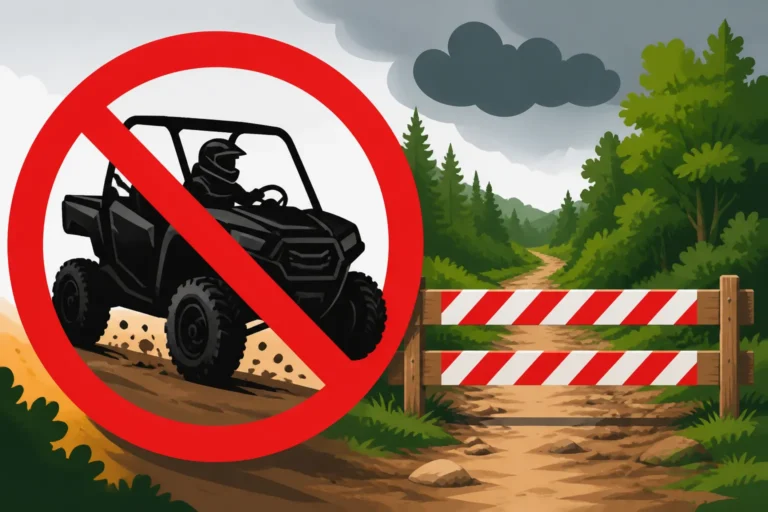
Avoid riding when your tires are tearing up the trail or when runoff is making the surface unstable. Mud and water can hide hazards, but they can also create damage that remains after the ride. If a route is closed or a sign indicates a restriction, turn around and follow the designated detour if one is provided. [Ohio Rules for Riding a Reclaimed Mine] covers why access rules matter on this kind of land.
Finally, leave enough energy for the ride back. A difficult climb can make a group feel accomplished, but there’s little benefit in reaching the top exhausted, low on daylight, or short on fuel. Use your map, the trail signs, and your own judgment to choose a route you can complete comfortably. onX Offroad may help you keep your bearings, but the safest decision is still the one that respects the trail, the conditions, and the limits of your group.
Disclaimer
This article is for general informational purposes only and does not constitute professional advice. Laws, prices and regulations vary by location and change over time. Consult a qualified professional for guidance on your specific situation.