Concrete Bridges Where Wood Used to Be
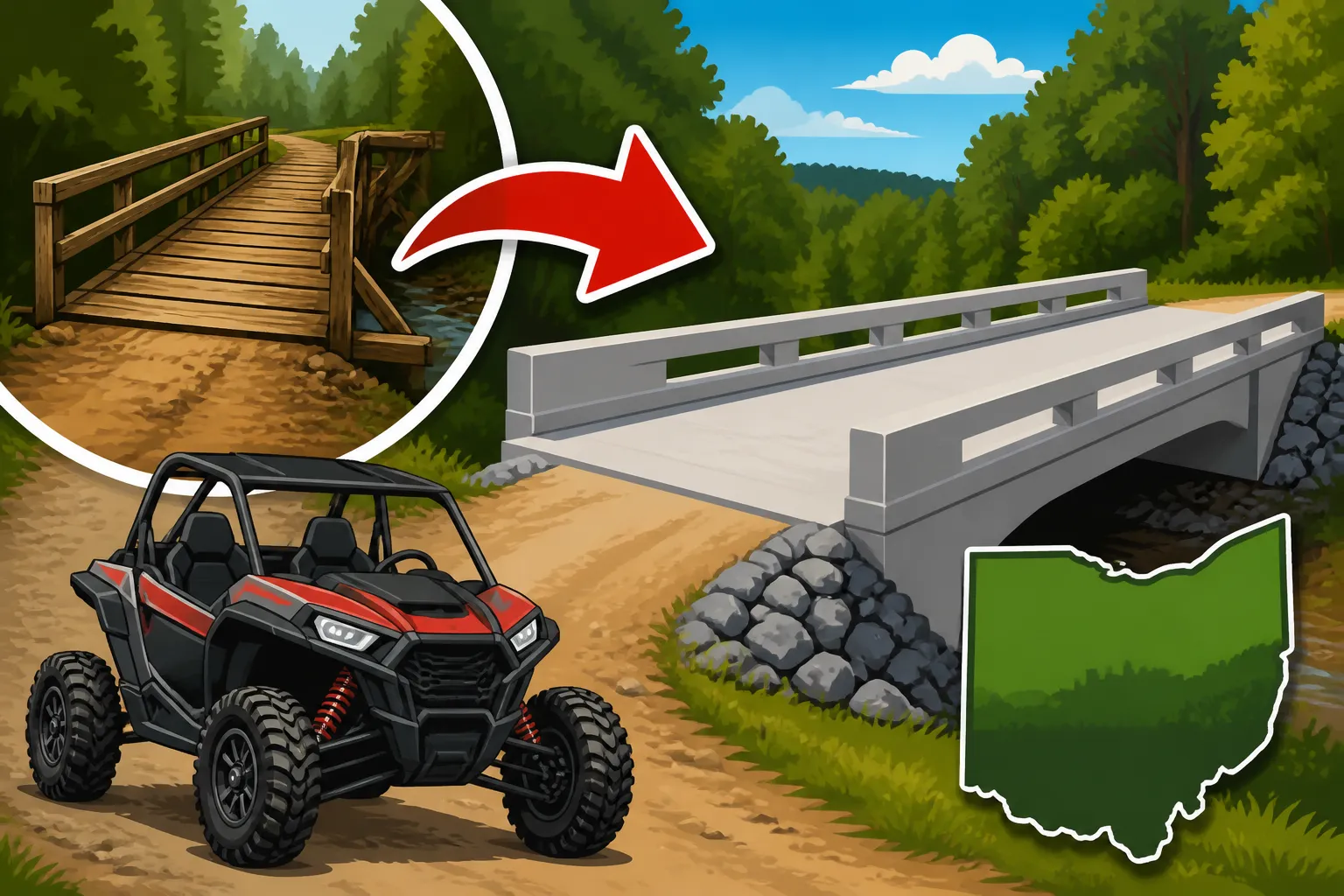
A narrow timber bridge can feel like the most uncertain part of an Ohio trail ride: Is it still sound, is the crossing open, and will a side-by-side fit? On Monday Creek, concrete bridges have replaced wooden crossings in some locations. This guide explains what that change means for riders, how to approach a bridge safely, and what to check before heading out.
What concrete bridges mean on the Monday Creek trail system
Why a trail crossing may change from wood to concrete
Bridges help trail users cross places where a route meets a creek, drainage channel, or low-lying area. Wooden structures can weather, loosen, or need repairs over time. Concrete is a durable alternative for a fixed crossing, though every bridge still depends on proper upkeep and safe conditions around it.
For riders, the important point is practical: a rebuilt crossing can make a route more stable, but it does not make the trail immune to erosion, washouts, or temporary closures. Water can undermine an approach, debris can collect after a storm, and a firm bridge surface may still be slick when wet. Treat each crossing as part of the trail, not as a guarantee that the section beyond it is clear.
The title [Eighteen Bridges Rebuilt on Monday Creek] points to the scale of bridge work associated with the area. Individual riders should still avoid assuming every bridge is identical, that every crossing has the same width, or that all construction work is complete and open. Use current official information and posted signs to confirm where you can ride.
Where Monday Creek fits into an Ohio riding plan
Monday Creek is part of the broader Wayne National Forest riding landscape near Nelsonville in southeastern Ohio. The local terrain, changing elevations, and wooded setting can make a bridge crossing feel more consequential than it looks on a map. A short span may connect two trail sections, but the approach could be rutted or uneven, especially after rain.
If you are planning a first visit, start with [Monday Creek Near Nelsonville] and [Monday Creek's 75 Miles] for broader area context. The mileage associated with a system does not mean every route is open on every day, or that a rider can cover the entire network in one outing. Trail status, closures, riding hours, and your own pace all affect what is realistic.
Access planning matters, too. Riders may approach the area from different staging locations, and the route you choose can shape how much time you spend on the trail. [Riding Monday Creek From Nelsonville] and [Riding Monday Creek From Wolcott] can help you think through starting-point differences. Before loading up, compare those plans with current maps and local notices rather than relying on an old route description.
How to cross a concrete bridge safely
Slow down before the bridge, not on top of it
The safest approach begins while you still have room to make a calm decision. Reduce speed well before the bridge, scan the surface and both approaches, and look for loose gravel, mud, standing water, leaves, or debris. If another rider is already crossing, wait until they are clear rather than crowding the entrance.
Keep your machine straight as you enter and avoid sudden steering, hard braking, or sharp acceleration on the span. Those movements can be harder to manage on a wet or uneven surface. On a quad, maintain a controlled line and leave room for the tires to track naturally. In a side-by-side, remember that passengers and cargo affect handling, and the machine’s width may leave less room for correction.
Do not use a bridge as a place to stop for a photo or regroup if doing so blocks the route. If you need to pause, move to a safe, designated area away from the crossing. On narrow trails, other riders may arrive from either direction with little warning, so clear communication and patience help prevent a minor bottleneck from turning into a risky encounter.
Check the approaches and the crossing itself
A solid bridge deck does not tell the whole story. The ground leading to it may be soft, washed out, or deeply rutted, and the exit can be just as rough as the entrance. Look for a clear route across the full crossing, not only a dry-looking patch at the near end.
If the bridge is marked closed, damaged, obstructed, or under repair, do not ride around the barrier or create a bypass. Detouring off the marked route can damage vegetation, expose soil to erosion, or take you onto land where riding is not allowed. Turn back and follow an authorized route instead. [Ohio Trail Closures to Check First] is a useful reminder to verify closures before setting out, especially when recent weather or maintenance could affect access.
When a crossing looks questionable, trust that observation. Do not test a bridge by driving onto it to see whether it holds. Turn around if the surface or approaches appear unsafe, and report a maintenance concern through the appropriate forest or trail-management channel. A cautious decision may cost a few minutes; a damaged machine or injury can end the day.
| What to check | Why it matters | Safer response |
|---|---|---|
| Posted signs or barriers | They may indicate a closure or work area | Follow the restriction and do not ride around it |
| Bridge surface | Water, mud, leaves, and debris can reduce traction | Slow down early and cross smoothly |
| Entrance and exit | Ruts or washouts can destabilize a machine | Inspect both approaches before committing |
| Width and clearance | A larger machine may have little room to maneuver | Do not force a crossing that feels too narrow |
| Other trail users | A bridge can become a pinch point | Wait your turn and communicate clearly |
| Water or debris below and beside the span | Conditions can change after rain | Turn back if the crossing appears compromised |
Preparing for a ride that includes bridge crossings
Use maps for orientation, then confirm trail status
A map helps you understand where a route goes, but it cannot always tell you whether a bridge is open today or whether a trail has changed since a map was made. Start with official trail information and current notices. [Ohio Trail Maps From ODNR] can help with general orientation, while [Ohio Trail Conditions Before You Ride] is a useful prompt to check conditions closer to departure.
A digital off-road mapping tool such as onX Offroad can help you follow a route and keep track of your position, particularly when several trail segments meet in wooded terrain. Treat it as a navigation aid, not as confirmation that a route is open or that a particular crossing is safe. Compare what you see on the screen with posted signs and the conditions on the ground.
Before leaving home, download or save the information you will need if mobile coverage is weak. Make sure everyone in the group knows the intended route and the plan if a bridge or trail segment is blocked. If the group splits up, agree on a clear meeting point rather than assuming every rider will be able to navigate back to the same crossing.
Match the ride to your machine and your group
A concrete bridge may be firm underfoot yet still be a poor fit for a particular machine or riding situation. A wide side-by-side, a loaded rack, or a passenger can change how much room you need to maneuver. If you are unsure whether your machine can cross comfortably, do not try to squeeze through simply because another rider made it across.
Group order can make the crossing easier to manage. Let one rider cross at a time, with enough space between machines to avoid pressure from behind. A less experienced rider may appreciate having a confident adult wait on the far side, where the trail is wide enough to stand safely, rather than being hurried from the entrance.
Keep your passengers informed. Tell them to stay seated and hold on as directed by the machine’s manufacturer, and avoid shifting weight suddenly during the crossing. If a rider in the group is uncomfortable, stop well before the bridge and talk through the options. Turning around is a sensible choice, not a failure to complete the ride.
Riding responsibly around bridges and trail work
Respect closures, crews, and other trail users
Bridge repairs and trail maintenance can involve equipment, workers, or temporary changes to the route. Give crews space, follow instructions, and do not enter a signed work zone. A route that appears passable from a distance may still be closed for a reason that is not obvious to passing riders.
Shared trail etiquette matters near narrow crossings. Ride at a controlled pace, give approaching users time to find a safe place to pass, and avoid revving or spinning tires while waiting. [Ohio Trail Etiquette on Narrow Trails] offers helpful context for these pinch points. If you encounter a logging truck or maintenance vehicle, move to a safe place and follow any directions from its operator; [Meeting a Logging Truck] is worth reviewing before riding in working forest areas.
Do not assume the nearest bypass is legal or safe. A track around a bridge could cross private land, disturb a streambank, or lead into a closed section. Stay on the marked route unless officials direct you elsewhere. When the route is blocked and there is no authorized detour, turn back.
Build a realistic plan for changing conditions
Rain can change the feel of a trail quickly. A concrete deck may shed water differently from a wooden surface, but wet approaches can still become slick or soft. After heavy rain, expect that low spots, creek edges, and trail entrances may be more difficult than they looked on a previous visit. If conditions are poor, consider postponing the ride rather than trying to push through.
A good plan includes enough time to ride at a conservative pace, stop when needed, and return before the day’s riding window closes. Avoid setting a schedule that depends on crossing every section quickly. If you are unfamiliar with the area, a shorter route from an established access point may be more enjoyable than trying to cover too much ground.
When planning a route through the system, use [Riding Monday Creek From Nelsonville] or [Riding Monday Creek From Wolcott] as starting-point references, then check official notices for current access and trail status. onX Offroad can help you stay oriented during the ride, but conditions and signs on the ground should guide your decisions. Take a moment to check bridge approaches, respect closures, and turn around when a crossing does not look right. That small pause can protect both your group and the trail.
Disclaimer
This article is for general informational purposes only and does not constitute professional advice. Laws, prices and regulations vary by location and change over time. Consult a qualified professional for guidance on your specific situation.