Free Places to Ride an ATV in Ohio
Finding a free place to ride an ATV in Ohio can be confusing: a trail may have no gate fee but still require a valid registration, while another public forest may require a separate pass. This guide explains which Ohio riding areas may offer access without an extra trail charge, what you still need to ride legally, and how to check before you haul your machine.
Where You Can Ride Without a Separate Trail Fee
Ohio state forest trails
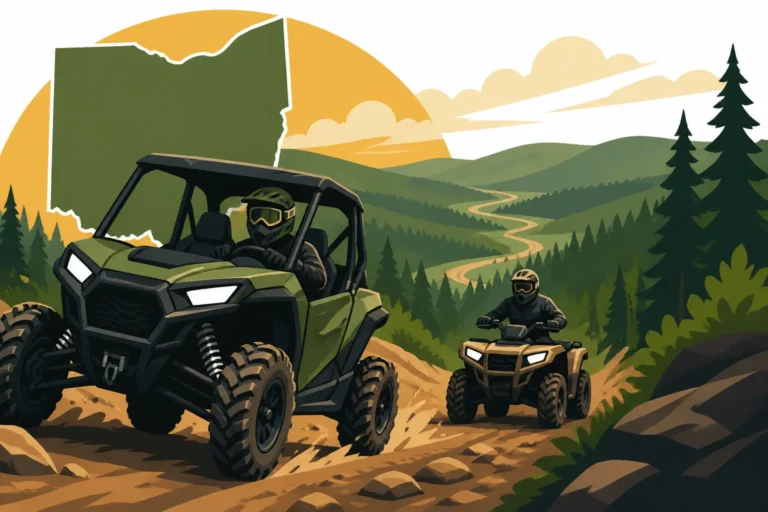
Ohio’s state forest APV trail systems are the main places riders look for public riding without a separate, per-visit trail fee. Areas include Maumee State Forest in northwest Ohio and the Perry, Pike, and Richland Furnace state forests farther south and southeast. Access is limited to designated routes; a state forest is not open for riding wherever a machine can fit.
“No separate trail fee” does not mean “no requirements” or “no costs at all.” Riders generally need to meet Ohio’s registration rules, follow posted trail restrictions, and use a machine that fits the rules for that trail system. Ohio’s APV plate is central to riding on these trails, so review [Why the Ohio Plate Is the Trail Permit] and [Do You Need a Permit for Ohio State Forest Trails?] before planning a trip.
Availability can also depend on the season, trail conditions, maintenance work, and temporary closures. A route that was open on your last visit may not be open on your next one. Check the state forest’s official information before loading up, especially after heavy rain or during seasonal opening and closing periods. For trail timing, see [Ohio's Trail Season by Forest] and [Ohio Trail Closures to Check First].
Ohio public land is not all open to ATVs
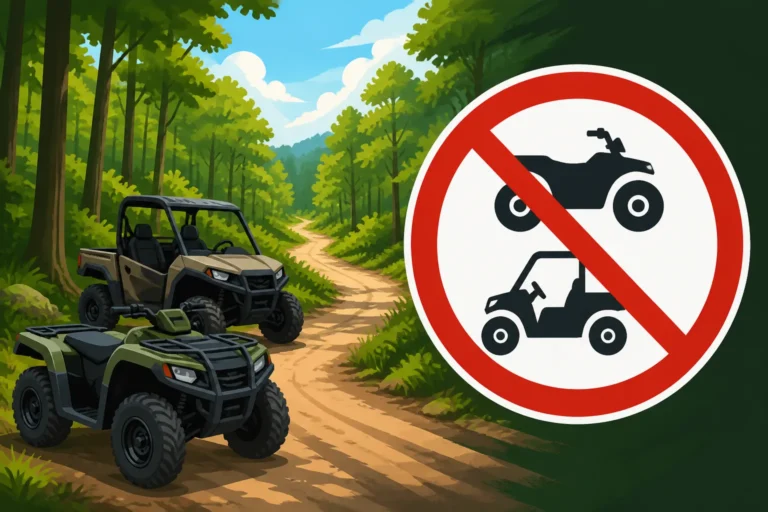
A public sign or a map showing green space does not mean ATVs are allowed there. Ohio state parks, wildlife areas, county parks, rail trails, and other public properties can have different rules, and many do not allow recreational ATV riding on their paths. Even within a state forest, riding off a marked route can be prohibited.
That distinction matters if you are trying to save money. It is tempting to assume a quiet county park road or an old track through woods is fair game because there is no fee booth. But riding without permission can lead to a citation, damage sensitive ground, or put you in conflict with land managers and other visitors. Check the specific property’s rules rather than relying on what a trail app, a social post, or another rider says.
| Riding option | Separate riding fee | What to check before you go |
|---|---|---|
| Ohio state forest APV trails | Generally no separate trail fee | Registration, designated routes, machine-width rules, season, closures |
| Wayne National Forest OHV trails | A separate OHV pass may be required | Pass coverage, trail access, registration, current conditions |
| Private land with landowner permission | Depends on the agreement | Explicit permission, boundaries, any conditions set by the owner |
| Township or county roads | No trail-entry fee, but not a trail system | Whether the road is open to APVs and what road-use rules apply |
| County parks, wildlife areas, rail trails | Do not assume riding is allowed | Property-specific rules and any written authorization |
What “Free” Really Means for Ohio ATV Riding
Budget for registration even when trail access has no gate fee
A no-fee trail can still involve the cost of keeping your machine properly registered. Registration rules vary with the machine and the rider’s circumstances, so confirm which requirements apply before traveling. If you are bringing a machine from another state, do not assume that a home-state plate automatically settles every Ohio requirement. Start with [Ohio APV Reciprocity With Other States] and [Riding Ohio With an Out-of-State Plate].
It helps to think of the trip budget in two parts: the cost of making the machine eligible to ride, and any charge to access a particular riding area. State forest trails may not add a separate trail fee, but that does not erase registration, fuel, trailer, food, or equipment costs. If you have not ridden in Ohio before, reviewing [Ohio APV Permits Explained] can help separate state registration rules from forest-specific access requirements.
Also keep your registration documents and plate in order. A rider who reaches a trailhead only to discover a missing document or an unreadable plate can lose the day before the ride even begins. Confirm paperwork requirements ahead of time through [Ohio APV Registration Paperwork], and make sure the plate is displayed as required.
Wayne National Forest is not the same as a free state forest ride
Wayne National Forest is a popular destination for off-highway riding, but its OHV trails have their own permit system. That is different from the state forest trails that may have no separate trail-access charge. Riders sometimes plan around the word “public” and discover at the trailhead that public land can still require a pass.
Before heading to Wayne, check the pass rules, where to buy one, which trails it covers, and whether every rider in your group needs individual authorization. The relevant details are covered in [How the Wayne National Forest OHV Permit Works], [Which Trails a Wayne Forest Pass Opens], and [Where Wayne Passes Are Sold]. A state registration plate should not be treated as a substitute for a required Wayne pass.
If your goal is to keep the outing inexpensive, compare the total trip rather than just the entrance charge. A closer state forest may save on fuel and travel time, while a Wayne trip may offer a different trail experience that your group considers worth the pass. The right choice depends on where you live, what you want to ride, and what is open when you plan to go.
How to Choose and Check a Free Riding Area
Match the machine to the trail system
Ohio state forest trails are not a universal fit for every ATV or UTV. Width matters: Ohio’s state forest trail rules include a 62-inch limit, so measure the machine at its widest point rather than relying on the model name or a dealer’s description. Accessories such as widened tires, wheel spacers, or other modifications can affect the measurement. For more guidance, see [Ohio's 62 Inch State Forest Limit] and [Measuring Against the 62 Inch Limit].
This can be a frustrating detail for side-by-side owners. A machine can be legal to own and registered but still be too wide for a particular state forest trail. If your UTV exceeds the limit, do not count on squeezing past a post or riding only the wider sections. Look for a riding area that specifically accommodates your machine, and confirm that its rules allow your width.
Trail difficulty and surface matter, too. A compact ATV that feels comfortable on a smooth route may be a poor match for steep, rutted, or muddy ground. Southern Ohio’s hills and clay can be demanding after rain. Check recent conditions and choose a route that fits the least experienced rider in your group. These guides can help with the decision: [Ohio Trails for Beginners] and [Ohio Trails for a Wide Machine].
Confirm operating status and rules before you leave
A good pre-trip check takes a few minutes and can prevent a long drive to a closed trailhead. Confirm that the specific riding area is open, that your machine is eligible, and that your paperwork meets the rules. Look for temporary closures, seasonal dates, weather-related notices, and instructions about trailhead parking or unloading.
Mapping tools can help you plan a route and understand the surrounding area, but treat them as planning aids rather than permission to ride. For example, you might use onX Offroad to orient yourself around trailheads and nearby roads, then confirm the actual route and current access rules with the relevant land manager. Map data and official operating notices serve different purposes; neither a trail line nor a pin should override a posted closure.
Before you head out, check the basics:
- Identify the exact property and trail system, not just the nearest town or forest.
- Confirm that ATV or UTV riding is allowed on the specific designated trails.
- Check current opening status, seasonal dates, and temporary closures.
- Verify registration, plate display, machine-width rules, and any required permits.
- Review helmet, eye protection, rider-age, and supervision requirements.
- Confirm where you can park and unload, and plan to stay on marked routes.
onX Offroad can be useful for getting oriented when you are comparing possible destinations, but use official state forest or federal land information to verify access. Before a first visit, it is also worth checking [Ohio Trail Maps From ODNR] and [What the Trailhead Board Tells You Before a Ride]. When you arrive, read posted signs at the trailhead; they may provide the most immediate notice of a closure or local restriction.
Other Ways to Ride Without Paying a Trail-Entry Fee
Get permission for private land
Private property can offer riding without a public trail-entry fee if the landowner agrees, but access must be explicit. A familiar farm lane, an old logging track, or a field that looks unused is not an invitation. Ask the owner directly, explain where you hope to ride, and respect any conditions, such as limits on dates, routes, guests, or machine type.
Permission should cover the actual riding area, not just the place where you park. Boundaries can be hard to see in wooded or rural areas, so ask for clear directions and avoid crossing onto neighboring parcels. If the owner says no, treat that as the end of the conversation; do not assume that a different entrance or a quiet time makes riding acceptable.
This option can work well for someone who knows a landowner or belongs to a local riding group with an established arrangement. It is less dependable as a spontaneous alternative to a closed public trail. For a closer look at access and permission, read [Ohio Rules for Riding Private Property] and [Ohio Landowner Permission Requirements].
Road riding is not a free substitute for an ATV trail
Some Ohio roads may be open to APVs under local rules, but that does not make every township road or county road available for recreational riding. Authority can differ from one township or county to the next, and the road’s status, machine equipment, registration, license, and insurance requirements can all matter. A route that is open in one community may be closed just over the boundary.
Road access also changes the nature of the outing. You are sharing space with ordinary traffic, and you may need to travel only on specifically authorized roads or follow particular crossing rules. Check the local resolution and current road-use requirements before treating a road as part of your ride. [Ohio Counties That Allow APVs on Roads] and [Ohio Townships That Allow APVs on Roads] are useful starting points, but confirm the details with the responsible local authority.
If what you want is a trail ride through woods, a road route may not be a satisfying replacement. It also should not be used to reach a closed trail by riding along an unauthorized shoulder or path. Keep the distinction clear: free access to a road, where permitted, is not the same as permission to ride a trail or public property.
Keep a backup plan for weather and closures
A free destination can still become an expensive disappointment if you arrive to find a closure, muddy conditions, or no suitable route for your machine. Pick a backup area before leaving home, and make sure it is genuinely open to your type of vehicle. A private riding park may be an option if public routes are closed, but private parks commonly charge for entry, so check its rules and fees directly.
Weather deserves special attention in Ohio. After sustained rain, clay can become slick and ruts can deepen quickly. Riding a closed or saturated route can damage the trail and may put you or other riders at risk. If conditions are poor, postpone the ride rather than treating a free trail as an obligation to use it. For practical planning, see [Ohio Trails After Heavy Rain] and [Ohio Trail Conditions Before You Ride].
A little preparation makes “free” riding much less stressful. Choose a system that fits your machine, verify that it is open, and understand which costs or permits still apply. That way, you can enjoy Ohio’s public riding opportunities without confusing no gate fee with unrestricted access.
Disclaimer
This article is for general informational purposes only and does not constitute professional advice. Laws, prices and regulations vary by location and change over time. Consult a qualified professional for guidance on your specific situation.