What a Roll Cage Requirement Would Change
Riding an All-Purpose Vehicle (APV) on Ohio's roads can feel like navigating a minefield of ever-changing rules and distinct requirements. It’s a common frustration among riders trying to understand why a side-by-side needs certain equipment to cruise down a county road, while a quad doesn't, or what new regulations might be on the horizon. This guide will dive deep into what a hypothetical roll cage requirement for APVs—both ATVs and UTVs—would mean for Ohio riders, exploring the practical changes, financial burdens, and safety implications if such a rule ever came to pass.
Ohio's Current APV Road Use Rules: A Quick Recap
Before we imagine a future with mandatory roll cages, it's crucial to understand where Ohio stands right now when it comes to riding your APV on public roads. The laws can feel like a tangled mess, especially when you consider the distinctions between different types of machines and the varying interpretations across townships and counties. It’s easy to feel overwhelmed, but let’s break down the current landscape.
The Distinction Between ATVs and UTVs in Ohio Law
Ohio law uses the term "all-purpose vehicle" (APV) as a broad category, but it makes a very clear distinction between machines that are ridden straddle-style (like traditional ATVs or quads) and those that are driven with a steering wheel and often have side-by-side seating (like UTVs). This distinction is absolutely critical when it comes to road use requirements. For instance, when it comes to [Why Ohio Says All-Purpose Vehicle], it's important to remember that this umbrella term still hides significant legal differences for different machine types.
Historically, ATVs were designed primarily for off-road recreational use, often with open frames and limited protection beyond the rider's gear. UTVs, on the other hand, frequently incorporate features more akin to small cars, including cabs, safety belts, and often, some form of integrated roll-over protection or a factory-installed roll bar. This fundamental design difference is why the state has applied different equipment rules for road legality. Riders often wonder [Are ATVs Street Legal in Ohio?], and the short answer is that while some APVs can be street legal, the hurdles for UTVs are much higher.
Current Equipment Standards for Road-Legal UTVs
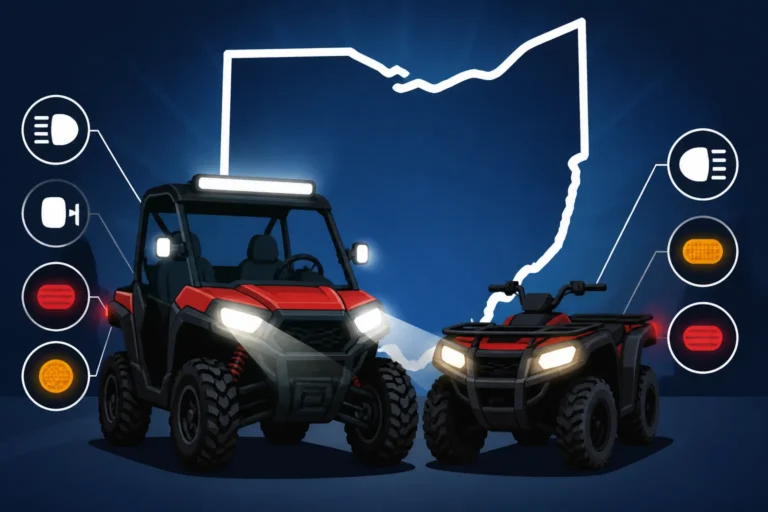
If you own a UTV and want to ride it on an open township or county road in Ohio, you've likely already discovered that the list of required equipment is extensive. These aren't just suggestions; they are mandates designed to bring the UTV closer to passenger vehicle safety standards when operating on public thoroughfares. You're looking at things like turn signals, rearview mirrors, a windshield with safety glass and wipers, a horn, brake lights, and headlights. Oh, and don't forget the seatbelts – one for every passenger the vehicle is designed to carry. The state even has an [Ohio UTV Inspection Before Registration] that your machine must pass.
These requirements aim to ensure that a UTV can signal its intentions, be seen, and provide a basic level of occupant protection if an incident occurs. This means that many UTVs, especially those primarily designed for extreme off-road use, might need significant modifications to meet these criteria. Companies like SuperATV offer a wide range of aftermarket parts that can help owners equip their UTVs to meet Ohio’s stringent requirements, from turn signal kits to full windshields. It's a significant investment, both in time and money, and it’s a necessary step before you can even think about getting that coveted APV plate and riding on designated roads.
Why ATVs Avoid Most Road-Use Equipment Mandates
Here's where it gets interesting, and often frustrating for UTV owners. Traditional ATVs, the straddle-style machines, are generally exempt from most of the extensive equipment requirements that apply to UTVs for road use. You won't find a mandate for turn signals, windshields, or even seatbelts on an ATV if it's legally operating on an open road. This isn't because ATVs are inherently safer; it's due to their fundamental design and the way they are operated.
ATVs rely more heavily on the rider's active input and body English for stability and maneuvering. They also lack enclosed cabs and passenger compartments that would necessitate items like safety glass or multiple seatbelts. The primary safety equipment for an ATV rider on the road remains personal protective gear: a DOT-compliant helmet, eye protection, and appropriate clothing. While an ATV still needs a headlight and taillight for night operation, and a working brake system, the list is far shorter than what's required for a UTV. This disparity often sparks debate among riders, especially when discussing the broader implications of safety across all APV types on public roads. It's a key reason why the question of what [Ohio APV Road Equipment List] covers varies so much by machine type.
Understanding a Roll Cage Requirement
Now, let's turn our attention to the heart of the matter: what exactly is a roll cage, and why would it be considered for a legal requirement? This concept isn't new to the off-road world, but its application to everyday road use for APVs would certainly shake things up.
What Constitutes a "Roll Cage" in Off-Road Vehicles
In the context of off-road vehicles, a roll cage is a structure designed to protect occupants in the event of a rollover or impact. It's typically constructed from heavy-gauge steel tubing, welded or bolted together to form a robust frame around the vehicle's cabin. This structure acts as a safety cell, preventing the roof from collapsing and creating a survivable space for the occupants. You see roll cages in everything from rock crawlers and racing UTVs to custom-built buggies.
Many modern UTVs come from the factory with what's often referred to as a "roll bar" or an "Occupant Protection Structure" (OPS). While these factory units provide a significant degree of protection, their design and strength can vary. A true "roll cage" typically implies a more comprehensive, multi-point design that surrounds the occupants from all angles, not just overhead. If Ohio were to implement a roll cage requirement, the exact definition would be crucial: would it accept factory OPS, or demand something more akin to a competition-spec cage? This distinction would have massive implications for vehicle owners and manufacturers alike.
The Safety Rationale Behind Roll Cages
The safety rationale behind mandating roll cages is straightforward: preventing severe injury or fatality in rollover accidents. Off-road vehicles, by their very nature, operate in environments where rollovers are a distinct possibility. Uneven terrain, steep inclines, obstacles, and sudden maneuvers can all lead to a vehicle overturning. When these vehicles transition to public roads, even though the terrain is generally flatter, the speeds can be higher, and the potential for collisions with other, much larger vehicles increases dramatically.
A roll cage significantly enhances occupant protection by maintaining the structural integrity of the passenger compartment. Without a strong cage, a rollover can crush the cabin, leading to catastrophic injuries. While UTVs often have factory-installed protection, ATVs, being open-design vehicles, offer virtually no inherent rollover protection beyond the rider's ability to bail out or the use of personal protective equipment. A roll cage requirement would fundamentally alter the safety profile of all APVs, especially ATVs, potentially saving lives and reducing serious injuries. It's a measure aimed at improving public safety, even if it comes with considerable practical challenges for riders.
Manufacturer-Installed vs. Aftermarket Options
When considering a roll cage, there are two main avenues: the one that comes from the factory and aftermarket solutions. Many UTVs, particularly utility and sport-utility models, feature robust factory-installed roll-over protection. These are engineered as part of the vehicle's original design, tested, and certified to meet certain safety standards. For these machines, if a roll cage requirement were introduced, the factory OPS might be deemed sufficient, or it might require upgrades.
For ATVs, which almost universally lack factory roll-over protection, and for older UTVs or those with less robust factory structures, aftermarket options would become essential. Companies like SuperATV specialize in designing and manufacturing high-quality aftermarket roll cages and components. These can range from simple roll bars to full, custom-fabricated cages that offer superior protection. However, fitting an aftermarket cage isn't a trivial task. It involves significant installation, potential modifications to the vehicle, and ensuring that the chosen cage meets any specific legal standards that might be set by the state. This would add considerable cost and complexity, turning a relatively simple purchase into a major engineering project for many riders.
Impacts of a Hypothetical Roll Cage Mandate on Riders
Should Ohio decide to mandate roll cages for all APVs operating on its roads, the reverberations would be felt throughout the riding community. This isn't just a minor tweak; it represents a significant shift that would demand substantial adaptation from current owners and influence future purchasing decisions.
Financial Burden for Existing APV Owners
The most immediate and tangible impact of a roll cage requirement would be the financial burden placed on existing APV owners. For UTV owners, especially those with older models or those whose factory OPS might not meet a new, more stringent standard, upgrading to a compliant roll cage could easily run into hundreds, if not thousands, of dollars. Custom fabrication or purchasing a robust aftermarket cage involves significant material and labor costs. If you just managed to equip your UTV with [Ohio UTV Road Equipment List] for lights and mirrors, now you'd face another substantial expense.
For ATV owners, the cost would be even more prohibitive, as virtually no ATVs come with integrated roll-over protection. Retrofitting an ATV with a suitable roll cage would be a massive undertaking, likely costing more than the value of many older machines. This could effectively "grandfather out" many beloved quads from legal road use, forcing owners to either sell their machines for strictly off-road use or abandon road riding altogether. This would be a particularly hard pill to swallow for riders who have meticulously maintained their machines and relied on them for both recreation and utility on rural roads.
Challenges for ATV Owners Without Existing Roll-Over Protection
The challenge for ATV owners goes beyond just cost; it's about fundamental design. ATVs are designed to be ridden actively, with the rider's body movements crucial for balance and control. Introducing a full roll cage around an ATV would fundamentally alter its dynamics and rider interaction. It could make emergency dismounts more difficult, change the center of gravity, and add significant weight, affecting handling and performance. There are "cab" or "roll-bar" type accessories for ATVs, but these are often not true roll cages and might not meet strict safety standards.
The logistics of integrating a sturdy, safe roll cage into an ATV's open design without compromising its core functionality would be incredibly complex. Many ATV enthusiasts might find such a modification impractical, unsafe, or simply antithetical to the spirit of ATV riding. This would likely lead to a mass exodus of ATVs from Ohio's roads, limiting their use strictly to private land or designated off-road trails. It would be a stark contrast to the current situation where [Ohio Rules for Riding a Township Road] allows ATVs with minimal extra equipment.
The Effect on Aftermarket Modifications and Custom Builds
A roll cage mandate would undoubtedly create a new niche and booming business for the aftermarket industry, but it would also introduce significant regulatory hurdles. Companies like SuperATV, known for their innovative accessories, would likely see high demand for compliant roll cages and components. However, this also means that any custom builds or modifications would need to be carefully engineered and potentially certified to meet the new standards.
For hobbyists and those who enjoy customizing their machines, this could mean less freedom in their projects. Instead of simply building for performance or aesthetics, modifications would need to prioritize regulatory compliance. There would be questions about the material, welding standards, mounting points, and crash testing requirements. The joy of a grassroots build could be overshadowed by the need to meet specific, potentially complex, safety specifications. This shift would impact not only individual riders but also local fabrication shops and parts suppliers, changing the entire ecosystem of APV customization in Ohio.
Operational and Legal Changes if a Roll Cage Became Law
The ripple effects of a roll cage requirement would extend far beyond individual rider expenses and modifications. It would necessitate significant changes in how APVs are inspected, insured, and even permitted for road use.
Inspection Processes and Enforcement Challenges
Implementing a roll cage requirement would fundamentally alter the APV inspection process in Ohio. Currently, UTVs undergo an inspection for basic road-worthiness, checking for items like lights, mirrors, and wipers. With a roll cage mandate, inspectors would need clear, standardized criteria to evaluate the safety and compliance of these structures. Would there be a specific design standard (e.g., SAE, ROPS, or competition-grade standards)? How would aftermarket cages be verified? Would specific materials or welding techniques be required? These questions are not easily answered.
Enforcement would also become a significant challenge for law enforcement agencies. Deputies and state troopers would need training to identify compliant roll cages versus non-compliant or improvised structures. Pulling over a machine and determining whether its roll cage meets legal specifications would be far more complex than checking for a working taillight. This could lead to inconsistent enforcement, disputes, and a backlog in the inspection system. The current [Ohio UTV Inspection Requirements] would have to be completely overhauled, requiring new protocols and potentially specialized training for personnel.
Implications for Insurance and Liability
Insurance companies would undoubtedly take notice of a roll cage mandate. While a roll cage is a safety feature, its presence (or absence) could significantly impact insurance premiums and liability considerations. Insurers might offer reduced rates for vehicles equipped with certified roll cages, recognizing the lower risk of severe injury. Conversely, riding without a mandated roll cage on open roads could lead to policy invalidation in the event of an accident, leaving riders exposed to immense financial liability.
The legal ramifications of an accident involving an un-caged APV on a public road would also be severe. A rider without a compliant roll cage, if one were required, could face charges of negligence and be held personally liable for injuries to themselves or others, potentially voiding any insurance coverage they thought they had. This would elevate the importance of compliance from a simple fine to a critical factor in personal financial protection. Understanding [Ohio APV Insurance Requirements] would become even more paramount for any rider venturing onto paved surfaces.
Potential Changes to Road Access and Use Permits
A roll cage requirement could also influence decisions about which roads are opened to APVs and under what conditions. Local authorities, like county commissioners or township trustees, who currently have the power to [How Township Trustees Open Their Roads to APV Riders], might view a statewide roll cage mandate as an additional layer of safety that makes them more comfortable with expanding APV access. The perception of increased safety could lead to more [Ohio Counties That Allow APVs on Roads] or more extensive networks of open roads.
Conversely, if a significant number of APVs (particularly ATVs) are unable to meet the roll cage requirement, it could effectively reduce the overall population of road-legal machines. This might, in turn, reduce the pressure on local governments to open roads, or even lead to some existing open roads being reconsidered if enforcement becomes too difficult. The impact on permits, such as [Ohio Temporary Operating Permit Cost] for non-residents, would also need to be addressed, as these permits would logically only be issued to machines that meet all current road-legal requirements, including any new roll cage mandate.
The Landscape of APV Safety Regulations in Ohio and Beyond
Considering a roll cage requirement means looking at the broader context of APV safety, both within Ohio’s current legal framework and by glancing at how other states approach similar issues. Safety is always at the forefront of these discussions, even if the proposed solutions can be contentious.
Current Ohio Safety Requirements for Off-Road Riding
Even without a roll cage mandate for road use, Ohio already has several important safety regulations in place for APV operation, especially when riding off-road or on designated trails. These largely focus on rider behavior and personal protective equipment rather than vehicle modification. For example, Ohio law requires all riders and passengers to wear a DOT-compliant helmet on state forest trails, and eye protection is mandatory. There are also age restrictions, dictating who can ride and under what supervision, especially for younger riders. You can read more about [Ohio Helmet Rules for APV Riders] and [Ohio Minimum Age to Ride an APV].
These rules are designed to mitigate risk in the common off-road environment where APVs are primarily used. The philosophy is that while vehicles might lack passive safety features found in cars, active rider protection and responsible operation are key. A roll cage mandate for road use would represent a significant shift by introducing a structural, passive safety element, which is a departure from the current "rider protection" focus for ATVs.
How Other States Handle Roll Cage Requirements for Road Use
Ohio is not unique in its challenges with APV road legality. Many other states grapple with how to integrate these off-highway vehicles onto public roads safely. Some states have specific "street legal" categories for UTVs that require extensive modifications, often including roll-over protection, while others have more relaxed rules. It's a patchwork of regulations across the country, making it confusing for riders who travel.
For example, states with very permissive road use laws might have minimal equipment requirements, leaving it largely up to the rider. Conversely, states with strict regulations often mandate that UTVs meet specific ROPS (Roll Over Protective Structure) standards, which are essentially formalized roll cage requirements, before they can be registered for street use. Some states even have separate categories for "low-speed vehicles" or "utility task vehicles" that dictate equipment and speed limits. Ohio would likely look at these existing models in other jurisdictions to inform its own legislation, considering both the safety benefits and the practical implications for its riding community.
Why Legislative Changes Take Time and Public Input
Any significant legislative change, especially one that impacts a broad group like APV owners, is rarely instantaneous. A roll cage requirement would need to go through a comprehensive legislative process, involving drafting a bill, committee hearings, votes in both the Ohio House and Senate, and finally, the Governor's signature. This entire process is designed to allow for public input, expert testimony, and careful consideration of all potential consequences.
Riders, industry representatives, safety advocates, and law enforcement would all have opportunities to weigh in, present data, and share their concerns. The economic impact on manufacturers, dealers, and individual riders would be a major point of discussion. The very public nature of this process is why a significant change like this doesn’t just appear overnight; it typically involves years of debate and refinement. So, while we can discuss "what if," any real change would involve a slow and deliberate journey through Ohio's legislative landscape, giving the APV community ample time to voice their opinions and adapt.
| Feature / Requirement | Current Road-Legal UTV in Ohio | Current Road-Legal ATV in Ohio | Hypothetical APV with Roll Cage Requirement |
|---|---|---|---|
| Roll Cage / OPS | Often factory-installed, but not universally mandated for specific standard. | Not required; almost never factory-installed. | Mandatory (specific standards TBD for both ATVs & UTVs). |
| Seatbelts | Required for all occupants. | Not applicable (straddle-style). | Required for all occupants (UTVs); potentially new safety harnesses for ATVs with cages. |
| Windshield | Required (safety glass & wipers). | Not required. | Required for UTVs; potentially required for ATVs if cab-like cages are adopted. |
| Turn Signals | Required. | Not required. | Required. |
| Mirrors | Required (rearview). | Not required. | Required (rearview). |
| Headlights/Taillights | Required. | Required. | Required. |
| Brake Lights | Required. | Required. | Required. |
| Horn | Required. | Not required. | Required. |
| Inspection | Yes (for UTVs). | No. | Yes (for all APVs, including cage inspection). |
| Estimated Cost Impact | Moderate (for additions). | Low (for basic road use). | High (for cage purchase & installation). |
Disclaimer
This article is for general informational purposes only and does not constitute professional advice. Laws, prices and regulations vary by location and change over time. Consult a qualified professional for guidance on your specific situation.