Muskingum, Newport, Salem and Warren Townships
It's incredibly frustrating, isn't it? You've got your ATV or UTV, you love hitting the trails, but you also want to understand where you can legally ride from your driveway or link up to the next trail system without breaking the law. Ohio's rules for riding all-purpose vehicles (APVs) and utility vehicles (UTVs) on roads can feel like a tangled mess, especially when you're trying to figure out the specifics for individual townships. This guide is here to help you unravel that confusion, specifically looking at what you need to know if you're hoping to ride in Muskingum, Newport, Salem, and Warren Townships.
The Conundrum of Ohio Township Roads for APVs
Riding your ATV or UTV on public roads in Ohio isn't as simple as just firing it up and going. Unlike some other states, Ohio doesn't have a blanket statewide rule that opens all local roads to these machines. Instead, it's a complicated, county-by-county, and even township-by-township decision. This localized control means that what's perfectly legal just a few miles down the road in one township might land you a citation in another. It's enough to make any rider throw their hands up in exasperation, wondering why it can't just be simpler!
Why Every Township Can Be Different
Imagine driving across Ohio and realizing that the speed limit changes every few miles, or that a stop sign is optional in one town but mandatory in the next. That's essentially the experience many APV and UTV riders face when trying to understand road access. Each of Ohio's 1,308 townships has the authority to decide for itself whether to permit APVs and UTVs on the roads it maintains. This local autonomy stems from state law, which grants townships and counties the power to regulate such use on their unclassified roads. This means that [How an Ohio Township Opens Its Roads] is a decision made by local officials, not by the state.
This decentralized approach means there's no single map or list provided by the state that tells you exactly where you can and cannot ride. It puts the onus squarely on you, the rider, to do your homework for every specific area you plan to traverse. For a lot of us who just want to enjoy our machines, this feels like an unnecessary hurdle, especially when you consider how many roads are out there. It's a system that truly tests your patience and your research skills!
The Role of Township Trustees in Opening Roads
So, how does a township actually make the decision to open its roads? It all comes down to the township trustees. These elected officials serve their community by setting local policy, and that includes determining the rules for APV and UTV use on township roads. For roads to be legally open to these machines, the township trustees must pass a formal resolution. This isn't just a casual conversation; it's an official legislative act that must be voted on and properly recorded. [A Township Trustees' Resolution in Ohio] is the key document you're looking for.
Once a resolution is passed, it typically outlines the specific conditions under which APVs and UTVs can be operated on township roads. This could include restrictions on speed, days or hours of operation, and even specific types of machines or roads allowed. Without such a resolution, the default is that APVs and UTVs are not permitted on township roads, except for crossing highways or riding on private property with permission. This legislative step is crucial, and it’s why just seeing other people ride isn't enough to assume legality.
Exploring Road Access in Muskingum Township
Let's turn our attention to Muskingum Township, as an example of how you might approach understanding road access in a specific area. Like any other township in Ohio, Muskingum Township has the authority to make its own decisions regarding APV and UTV use on its roads. The important thing to remember is that you can't assume anything; you have to actively seek out the official stance.
How to Investigate Muskingum's APV Road Rules
The best first step to understanding if Muskingum Township has opened its roads to APVs and UTVs is to contact the township clerk directly. This individual is the keeper of the township's official records, including any resolutions passed by the trustees. When you call, be polite and clear about what you're asking: "Has Muskingum Township passed a resolution to permit the operation of all-purpose vehicles or utility vehicles on its township roads?" They should be able to tell you definitively whether such a resolution exists and, if so, provide you with details or direct you to where you can find the actual text of the resolution. [Calling a Township Clerk About APVs] is usually the most efficient way to get accurate information.
You might also check the township's official website, if they have one, as some townships post their resolutions and ordinances online. However, remember that websites aren't always up-to-date, so a direct conversation with the clerk is usually more reliable. Local bulletin boards or community centers might also sometimes display public notices, but again, nothing beats the official word. Don't rely on hearsay or what you've seen others do, as regulations can change, and enforcement can vary.
Potential Requirements for Muskingum Township Road Use
If, by chance, Muskingum Township has passed a resolution allowing APVs and UTVs on its roads, it's vital to understand that this doesn't mean a free-for-all. Ohio state law still imposes certain requirements on APVs and UTVs that are operated on public roads, even if locally permitted. These are non-negotiable safety and legal mandates. For instance, you will almost certainly need a valid driver's license to operate any APV or UTV on a public road, which ties into [Ohio Driver's License Rules for APVs]. This is a common requirement to ensure that anyone operating a motor vehicle on a public roadway has demonstrated basic driving competence.
Furthermore, proof of insurance is typically required. Just like with cars, if you're on a public road, you generally need liability insurance for your machine. This helps protect you and others in case of an accident. [Ohio APV Insurance Requirement] outlines what kind of coverage you'd need. Your machine would also likely need specific safety equipment, such as headlights, taillights, brake lights, and possibly turn signals and mirrors if it's a UTV. If you're riding a UTV, you might even have to pass an inspection, as detailed in [Ohio's UTV Inspection Before Registration], to ensure it meets certain road-legal standards. For riders, helmets are often a must, especially for those under a certain age, and often encouraged for all riders for safety. Even if you're just linking trails, safety should be paramount.
Newport Township: Navigating Potential Road Opportunities
Similar to Muskingum, Newport Township operates under the same state framework, allowing its trustees to determine local road access for APVs and UTVs. The process for finding this information is the same, and the state-level requirements would still apply if their roads were open.
Deciphering Newport's Stance on Off-Road Vehicles
Your detective work for Newport Township will mirror that for Muskingum. The most reliable source of information is the Newport Township Clerk. Reach out to them and inquire specifically about any resolutions passed by the township trustees concerning APV and UTV access on township roads. Be prepared to ask for the date of the resolution and any details it contains. This kind of specific inquiry helps them locate the correct records quickly. Remember, local jurisdictions might have very specific wording in their resolutions, so asking for "off-road vehicles" might not be precise enough; it's better to use the state's terminology of "all-purpose vehicles" (APVs) and "utility vehicles" (UTVs).
It’s also worth considering that even if a township has opened its roads, they might have specific restrictions that are unique to their community. Perhaps certain roads are excluded, or there are noise ordinances that apply strictly to APVs. This is why getting the actual text of the resolution is so important – it eliminates guesswork and ensures you're fully compliant with local rules, not just general state guidelines. Riders often discover that the devil is in the details when it comes to local ordinances.
Equipment and Rider Rules for Newport Road Access
Should Newport Township have a resolution in place, you'd be looking at a similar set of requirements to those mentioned for Muskingum, guided by Ohio state law. A proper driver's license is a given for anyone operating a motor vehicle on a public road. Additionally, your machine would need to meet certain equipment standards to ensure it's visible and controllable on shared roadways. This often means functional headlights, taillights, brake lights, and potentially turn signals and rearview mirrors, especially for UTVs. Many riders find that upgrading their UTVs with accessories like turn signal kits and DOT-approved windshields from a brand like SuperATV can make meeting these requirements much easier, ensuring they are road-ready and safe.
The state also requires a plate for your APV if you're going to ride it on public roads, and it needs to be properly registered with the Ohio BMV. [Ohio APV Plates and Validation Stickers] details these requirements. Remember, even if a township opens its roads, it doesn't waive these state-mandated items. The whole point of these regulations is to integrate APVs and UTVs safely into the existing road infrastructure, protecting riders, passengers, and other motorists alike. So, while the township decides if you can ride, the state largely dictates how you must be equipped and licensed to do so.
Salem Township: Understanding Local APV Ordinances
Now, let's look at Salem Township. The situation here for APV and UTV road access will follow the same pattern: local control, state-level requirements, and the necessity for you to do your due diligence. It's a testament to the local governance structure in Ohio that these decisions are made at such a granular level.
Researching Salem Township's APV Road Policy
To find out about APV and UTV road access in Salem Township, you'll want to employ the same investigative tactics. Contact the Salem Township Clerk. They are your primary resource for official information about local ordinances and resolutions. Don't hesitate to ask for specific dates or resolution numbers if they can provide them, as this helps you ensure you have the most current information. Persistence and clarity in your questioning are your best tools here.
It's also a good idea to inquire if the township has a public meeting schedule or if minutes from trustee meetings are available. Sometimes, discussions about APV road access might appear in meeting minutes before a formal resolution is passed, giving you a heads-up on potential changes. However, only a formally passed resolution makes the change legally binding. As riders, we need to respect that chain of command, as frustrating as it might be to track down.
What to Expect if Salem Roads Are Open to APVs
If Salem Township trustees have indeed passed a resolution to open their roads to APVs, you'd be expected to adhere to all the standard Ohio state requirements. This includes possessing a valid driver's license, carrying appropriate liability insurance for your machine, and ensuring your APV or UTV is properly registered and plated. [How Ohio Law Defines an APV] clarifies what kind of machine this covers. For UTVs, specifically, meeting equipment requirements like proper lighting, mirrors, and potentially a windshield and wipers (if it's a cab enclosure) is crucial. A brand like SuperATV offers a range of accessories that can help UTV owners meet these standards, from lighting kits to durable, compliant windshields.
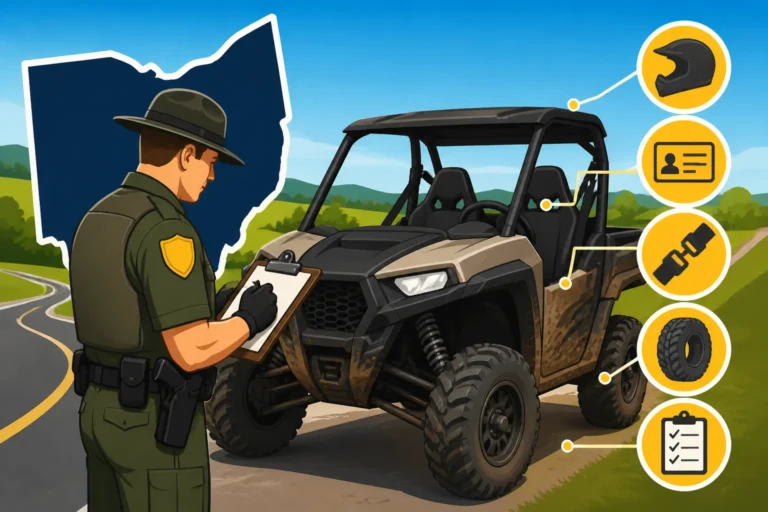
Beyond the state requirements, the township's resolution itself might contain additional specific rules. These could include speed limits that are lower than posted automotive limits, restrictions on road types (e.g., no state routes, only specific township roads), or even curfews for APV operation. It's truly a layered system, and understanding all these conditions is key to a legal and enjoyable ride. Always remember that enforcement officers will be looking for compliance with both state law and local ordinances. [What an Ohio Deputy Checks Roadside] often includes verification of registration, license, and required equipment.
Warren Township: Rules for Your ATV and UTV
Finally, let's explore Warren Township. Just like the others, Warren Township's trustees hold the power to open or close their township roads to APV and UTV traffic. This local control, while sometimes confusing, is a cornerstone of how many local regulations are managed in Ohio.
Pinpointing Warren Township's APV Road Regulations
Your approach to Warren Township should be consistent: direct communication with the Warren Township Clerk. This is the most reliable way to ascertain the official status of APV and UTV road access. Inquire about any resolutions or ordinances that the township trustees have passed that permit or regulate the use of these vehicles on township-maintained roads. Be clear and specific in your questions to get the most accurate and helpful information. [Finding Out Which Roads Are Open] often starts with this phone call.
Sometimes, townships might be in the process of discussing such resolutions, or they might have considered it and decided against it. The clerk can often provide context around these discussions, even if no formal resolution is in place. This can give you an idea of the community's general sentiment, though it doesn't change the legal standing. Remember, if there's no resolution, the roads are generally off-limits for recreational riding.
Practical Considerations for Riding Warren Township Roads
If Warren Township has indeed opened its roads, you'll need to prepare your machine and yourself to meet Ohio's state-level requirements. This means ensuring your machine is properly registered with the Ohio BMV, has a valid license plate, and you, as the operator, possess a valid driver's license. [Ohio Rules for Riding a Township Road] generally means following the same traffic laws as other vehicles, in addition to any specific APV rules.
Safety equipment is paramount. Riders should always wear a DOT-compliant helmet, as specified in [Ohio Helmet Law for APV Riders], and appropriate eye protection. Your machine must have functional lights, including headlights and taillights, to be visible to others. For UTVs, items like turn signals and mirrors become especially important for road use, helping you signal intentions and maintain situational awareness. Investing in quality accessories, perhaps from a reputable brand like SuperATV, ensures you have reliable and compliant gear. Remember, a road-legal UTV is generally a well-equipped UTV that prioritizes visibility and safety.
General Considerations for Riding in These Townships
Regardless of whether Muskingum, Newport, Salem, or Warren Townships have opened their roads, there are some overarching principles and requirements in Ohio that every APV and UTV rider needs to understand before even thinking about public road access. These are the foundations of legal and safe operation.
Essential Safety Gear and Equipment for Road Riding
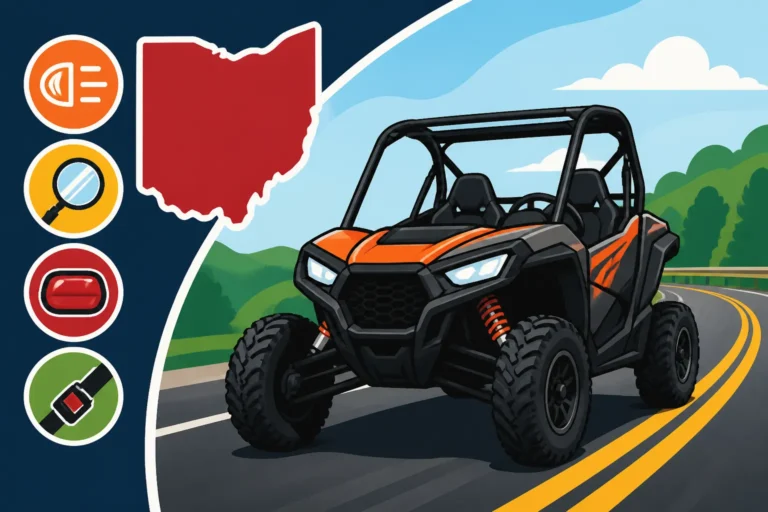
Ohio law, in general, requires certain safety equipment for any APV or UTV operated on public roads, even if only permitted locally. This includes:
- Headlights and Taillights: Your machine must have at least one headlight and one taillight that are operational during the times when natural light is insufficient or when conditions require it. This is not just for you to see, but for others to see you.
- Brake Lights: A functional brake light is essential to signal your deceleration to traffic behind you.
- Muffler and Spark Arrester: Your machine must be equipped with a muffler that is in good working order and an effective spark arrester to prevent fires, especially when riding off-road.
- Brakes: Reliable braking systems are non-negotiable for safety.
For UTVs, the requirements often expand significantly to include items like a windshield (often safety glass if permanent), turn signals, and mirrors. While ATVs are generally less common for road use and thus have fewer road-specific equipment mandates, UTVs often need to pass an inspection if they are to be driven on roads. [Ohio UTV Road Equipment List] provides a comprehensive rundown of what an inspector will be looking for. Always ensure your machine is well-maintained and all safety features are functioning before you ever venture onto a public road.
Driver Licensing, Insurance, and Age Restrictions
Beyond the machine itself, the operator and the administrative side of things are just as critical.
- Driver's License: Any person operating an APV or UTV on a public road in Ohio must possess a valid driver's license. There's no separate "off-road license"; your standard driver's license is what's required.
- Insurance: Liability insurance is a must. This protects you in the event you cause an accident involving property damage or injury to others while operating on a public road. This is standard for almost any vehicle on the road.
- Registration and Plate: All APVs and UTVs operated on public roads in Ohio must be registered with the Ohio Bureau of Motor Vehicles (BMV) and display a valid license plate. This isn't just a trail pass; it's your identification for road use.
- Age Restrictions: While specific age rules might vary for off-road operation, any minor operating an APV or UTV on a public road will need to meet the licensing requirements, meaning they generally must be old enough to possess a valid driver's license.
Navigating these rules can be a lot, and it's why many riders prefer private parks or dedicated trail systems where the rules are more consistent. However, for those who want to explore the possibility of linking trails via local roads, understanding the township's resolution and all state requirements is paramount to avoid fines and ensure safety. Remember, the goal is always to have a fun and legal ride.
Disclaimer
This article is for general informational purposes only and does not constitute professional advice. Laws, prices and regulations vary by location and change over time. Consult a qualified professional for guidance on your specific situation.