Why a Snowmobile Gets Decals Instead of a Plate
It's a common head-scratcher when you're out on the trails or talking shop with fellow riders: why does your quad need a proper metal plate, while your friend's snowmobile just sports a decal? This isn't just some arbitrary choice by the state of Ohio; there are practical, legal, and environmental reasons behind the different identification methods for All-Purpose Vehicles (APVs) like ATVs and UTVs, versus snowmobiles. This guide will dive deep into Ohio's unique system, helping you understand why these distinct machines get distinct forms of registration, and what that means for you as an owner.
Understanding Ohio's Approach to Recreational Vehicle Registration
Ohio's Bureau of Motor Vehicles (BMV) and Department of Natural Resources (ODNR) work together to manage the registration of various recreational vehicles. However, they don't treat all machines the same way, and for good reason. The specific design, typical use, and environmental conditions these vehicles operate in play a huge role in how they are identified and regulated. It’s not about favoring one type of machine over another, but rather about creating a system that is practical, enforceable, and effective for each category.
The "All-Purpose Vehicle" Designation: What It Means and Why It Gets a Plate
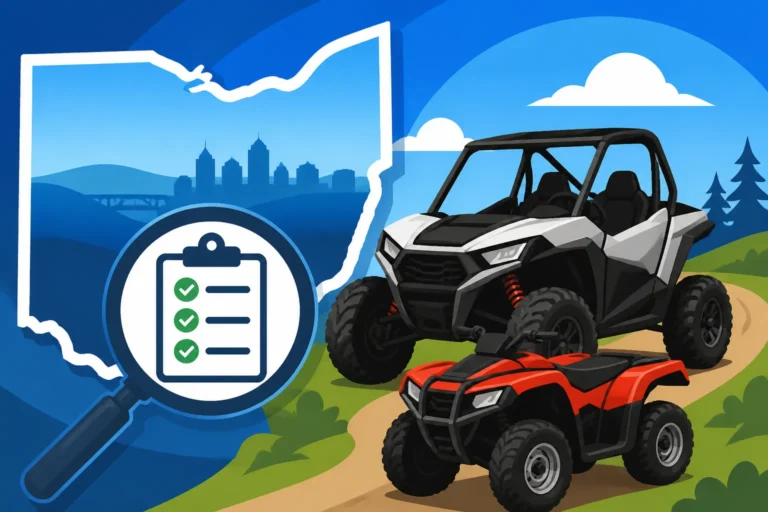
In Ohio, the term "All-Purpose Vehicle" (APV) encompasses a broad category of off-highway vehicles, including your traditional ATVs, side-by-sides (UTVs), and other similar machines designed for varied terrain. When the state passed legislation defining and regulating these vehicles, it recognized their potential for use on certain roads, for agricultural purposes, and for recreation across diverse landscapes—from dusty trails to muddy fields. Because of this versatility, and the potential for greater interaction with other vehicles, the state deemed it necessary for APVs to carry a visible, durable, and universally recognizable form of identification: a license plate.
Think about it: an APV might be crossing a county road where permitted, or even riding along the berm. In these scenarios, a clear, reflective plate makes identification much easier for law enforcement and other drivers, akin to how a car or truck is identified. This plate needs to withstand dirt, mud, and jostling on rough trails. It's a robust system designed for machines that can be quite literally "all-purpose." You can learn more about [Why Ohio Says All-Purpose Vehicle] in our detailed guide. This physical plate is a constant, tangible identifier that stays with the machine for its entire registration cycle.
The Unique Nature of Snowmobiles in Ohio Law
Snowmobiles, while also recreational vehicles, are fundamentally different from APVs in their design and intended operating environment. They are built specifically for travel over snow and ice, with skis in the front and a track in the rear. Their operational areas are typically snow-covered trails, frozen lakes, or private lands during winter months. This specialized use means that the challenges of vehicle identification are distinct. Mounting a rigid, metal license plate on a snowmobile can be surprisingly problematic, not just for the owner, but for the plate's longevity and readability.
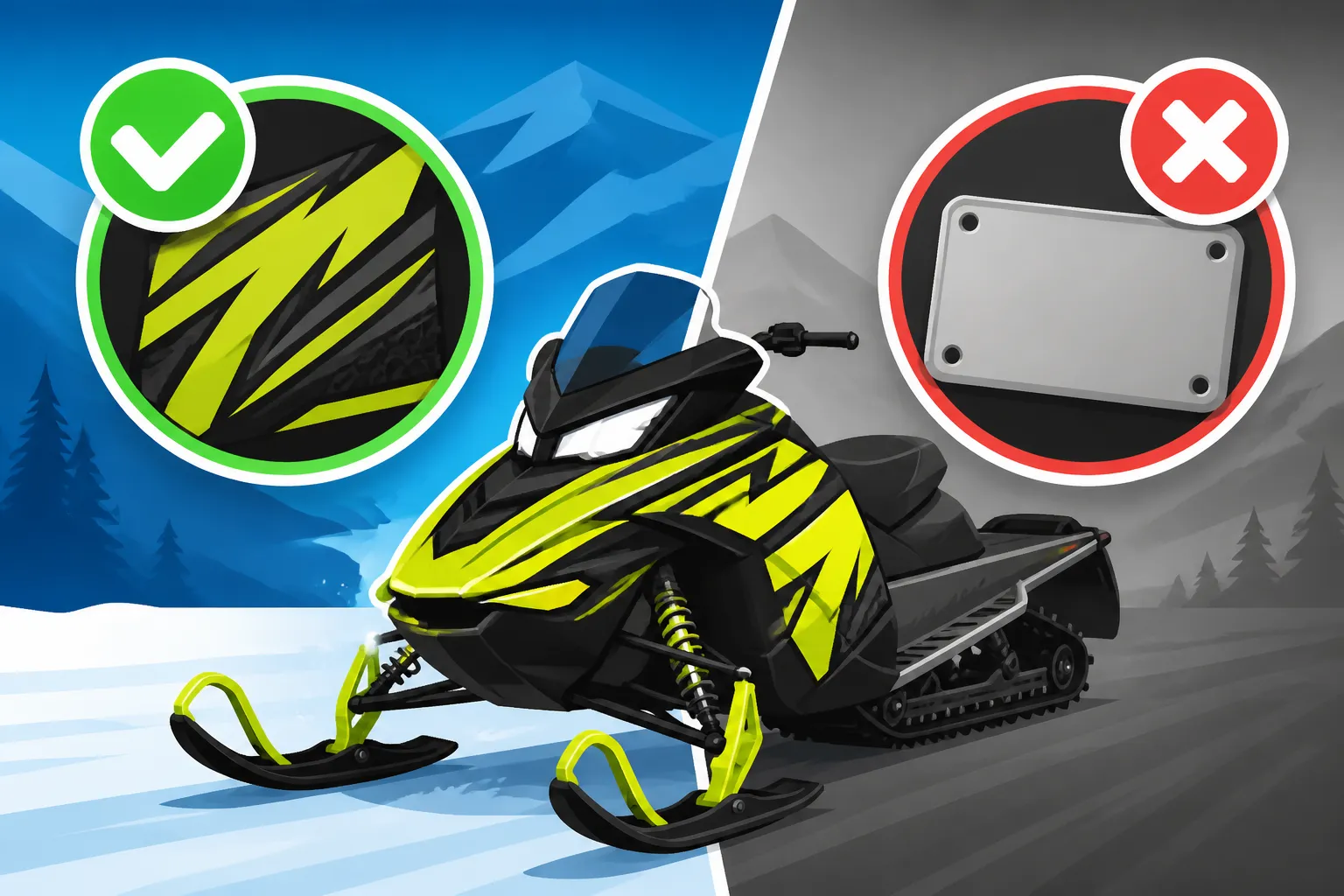
Ohio law, in recognizing these differences, created a separate registration system for snowmobiles. Instead of a plate, snowmobiles are issued validation decals. These decals serve the same purpose as a plate—to prove the machine is registered and legal to operate—but they are designed to better suit the unique conditions snowmobiles face. This distinction ensures that registration remains practical while still allowing for enforcement and responsible riding.
Practical Reasons Behind the Decal System for Snowmobiles
The decision to use decals for snowmobiles isn't just about legal definitions; it's deeply rooted in the practical realities of how these machines are used and the environments they inhabit. Ohio lawmakers, in crafting these regulations, certainly considered the everyday experiences of snowmobile owners.
Visibility and Mounting Challenges in Snow Environments
Imagine trying to securely mount a standard metal license plate to the rear of a snowmobile. Snowmobiles often have flexible, curved plastic body panels designed to shed snow and ice, or to flex during aggressive riding. A rigid metal plate could easily bend, break, or even detach when subjected to heavy snow accumulation, ice buildup, or impacts with snowdrifts. Furthermore, the constant spray of snow and slush thrown up by the track can quickly obscure a rear-mounted plate, rendering it unreadable. This spray isn't just a minor annoyance; it’s a constant factor in snowmobile operation.
Decals, on the other hand, are designed to adhere directly to the snowmobile's body panels, typically on a flat, visible surface like the cowl or tunnel. They are made from durable, weather-resistant vinyl that can withstand freezing temperatures, moisture, and UV exposure. This placement often keeps them clearer of snow and ice spray from the track. While they might still get covered in heavy snowfall, they are less prone to physical damage from the elements and the vibrations inherent in snowmobiling. The flexibility of the decal material also means it can conform better to the machine's existing surfaces without requiring specialized mounting brackets or modifications. For a closer look at the differences, check out [How Snowmobile Decals Differ in Ohio].
The Purpose of a Decal vs. a Plate: What Each Signifies in Ohio
Both an APV plate and a snowmobile decal serve the fundamental purpose of proving registration. They tell anyone who sees them—a trail warden, a park ranger, or a sheriff's deputy—that the owner has met Ohio's legal requirements to operate that machine. However, the choice of plate versus decal also reflects the primary operational context.
An APV plate, being a more permanent and robust fixture, signals a vehicle that might operate in a wider variety of environments, including those where it might be seen alongside traditional motor vehicles. It suggests a machine with a broader operational scope. In contrast, a snowmobile decal signifies a specialized vehicle, primarily confined to snow-covered terrain. The decal system, while less "formal" than a plate, is entirely appropriate for a machine that rarely, if ever, interacts with conventional road traffic in the same way an APV might. It's a system tailored to the specific context of snowmobile recreation. When considering the paperwork, be it for a snowmobile decal or an APV plate, having reliable forms is crucial. Even for personal records related to a purchase or sale, resources like LawDepot can provide templates for various legal documents, ensuring you have the right records on hand for any vehicle.
What This Means for Snowmobile Riders and APV Owners
Understanding this distinction is more than just trivia; it has real-world implications for how you register, operate, and maintain compliance with Ohio law, regardless of what type of machine you ride. It’s about knowing what's expected of you as a responsible owner.
Different Registration Processes and Requirements
Because APVs and snowmobiles are treated differently under Ohio law, their registration processes naturally diverge. For an APV, you'll typically go through a process that involves both titling and registration. The titling often occurs at a county Clerk of Courts title office, establishing legal ownership, and then you proceed to a Deputy Registrar's office for the actual registration and to receive your physical plate. There are specific forms, like [Ohio Form BMV 3722 Explained], that you’ll need to complete. The plate then needs to be displayed prominently on the rear of your APV.
Snowmobiles, on the other hand, often have a more streamlined registration process that focuses directly on obtaining the validation decal. While you still need to prove ownership, the process of obtaining the decal may not involve the same two-step title-then-register approach as APVs in all situations. The key takeaway is to always check the specific requirements for your type of vehicle. Don't assume that because your ATV needed a title and plate, your snowmobile will follow the exact same path. The documentation, the fees, and the offices you visit might all be different. If you're looking for an overview, we have a helpful guide on [Registering an APV in Ohio].
Ensuring Compliance for Both Types of Machines
For APV owners, compliance means not only having your physical plate securely mounted and visible, but also ensuring your [Ohio APV Plates and Validation Stickers] are current. That means renewing your registration every three years. You'll want to keep your registration card with you when you ride. This card, along with other essential documents, is your proof of legal operation.
For snowmobile owners, compliance hinges on ensuring your validation decal is current and properly affixed to your machine. It must be clearly visible and not obscured by snow, ice, or modifications. Just like APV owners, snowmobile enthusiasts should always carry their current registration document when riding. While the physical identifier is different, the underlying responsibility to register and maintain current documentation is the same. Staying informed about the latest requirements is crucial. Even if you're just documenting a loan or a lease for your machine, using clear, state-compliant forms, which can sometimes be found or adapted from general legal resources like LawDepot, helps solidify your compliance and protect your interests.
Here’s a quick comparison of the two systems:
| Feature | Ohio APV (ATV/UTV) | Ohio Snowmobile |
|---|---|---|
| Primary Identification | Physical License Plate | Validation Decal |
| Display Location | Rear of vehicle, clearly visible | Applied to cowl or tunnel |
| Material | Metal, rigid | Vinyl, flexible |
| Registration Cycle | Three-year registration | Often annual, check current state rules |
| Titling Requirement | Generally required | Varies, often less stringent |
| Road Interaction | Possible (where permitted) | Minimal to none |
| Key Reason for Type | Versatility, road-crossing potential | Snow-specific, environmental factors |
Ultimately, whether you're carving through fresh powder on your snowmobile or tearing up a muddy trail on your side-by-side, Ohio's registration system is designed to ensure everyone operates safely and legally. The different methods of identification simply reflect the distinct characteristics and uses of these amazing machines. Knowing the 'why' behind the plate or the decal helps you be a more informed and responsible rider, ready for whatever the trail (or snow) throws your way.
Disclaimer
This article is for general informational purposes only and does not constitute professional advice. Laws, prices and regulations vary by location and change over time. Consult a qualified professional for guidance on your specific situation.