Which County Office Collects the Title Fee
It’s a common frustration in Ohio for All-Purpose Vehicle (APV) owners – whether you’ve just bought a shiny new side-by-side or a trusty used quad – to feel completely turned around when it comes to getting it officially titled and registered. You hear about the Bureau of Motor Vehicles (BMV), county title offices, and deputy registrars, and it can quickly feel like you’re trying to navigate a maze blindfolded. This guide is here to clear up that confusion, specifically addressing which county office is responsible for collecting your APV's title fee and distinguishing it from the separate process of getting your plates.
Understanding Ohio's Two-Counter System for APVs
If you've ever dealt with vehicle paperwork in Ohio, you've probably encountered the unique system where different aspects of motor vehicle administration are handled by separate county offices. For your APV, this dual approach means you’ll be visiting two distinct locations to get everything squared away: one for your title and another for your registration. It’s not about making things difficult; it’s simply how the state's administrative structure is set up, often leading to a bit of a headache for riders who are just trying to get out on the trails.
The Distinct Roles of the Clerk of Courts and Deputy Registrar
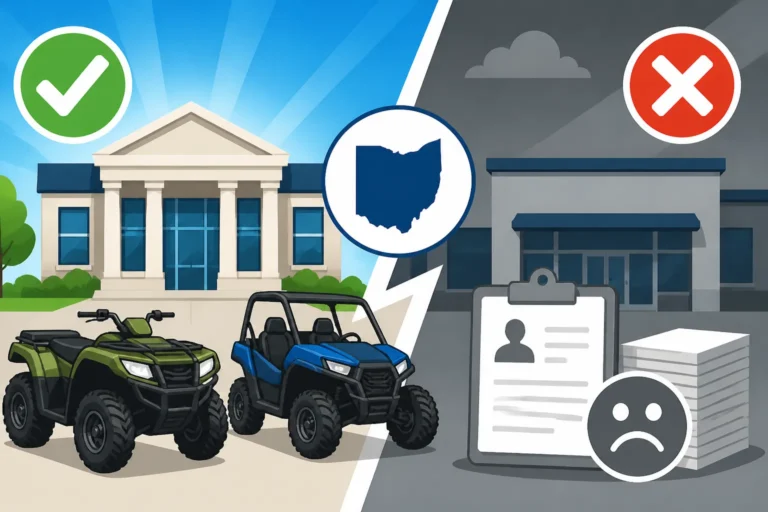
The primary source of confusion for many APV owners lies in understanding the separate, yet interconnected, roles of the County Clerk of Courts Title Office and the Deputy Registrar’s office. Think of them as two different stages in a necessary bureaucratic journey. The Clerk of Courts is all about establishing legal ownership. When you purchase an APV, whether new or used, the title is the official document that proves you are the rightful owner. This is a critical first step, as you cannot legally register your machine without a valid title in your name. It’s like buying a house; you need the deed before you can move in and start paying utility bills.
On the other hand, the Deputy Registrar, often associated directly with the BMV, is where you handle the operational aspects of your vehicle. This office is responsible for issuing your APV registration, which includes the physical license plate and validation stickers that allow you to operate your machine legally on designated Ohio trails and, in certain approved areas, on public roads. They also manage services like renewals, plate replacements, and address changes. It’s a classic "chicken and egg" scenario where the title (chicken) must come before the registration (egg), yet many riders mistakenly assume they can do both at the same counter. For more on the separation of duties, you can read about [Clerk of Courts or Deputy Registrar: Which Does What].
Why the Title Fee Goes to the Clerk of Courts
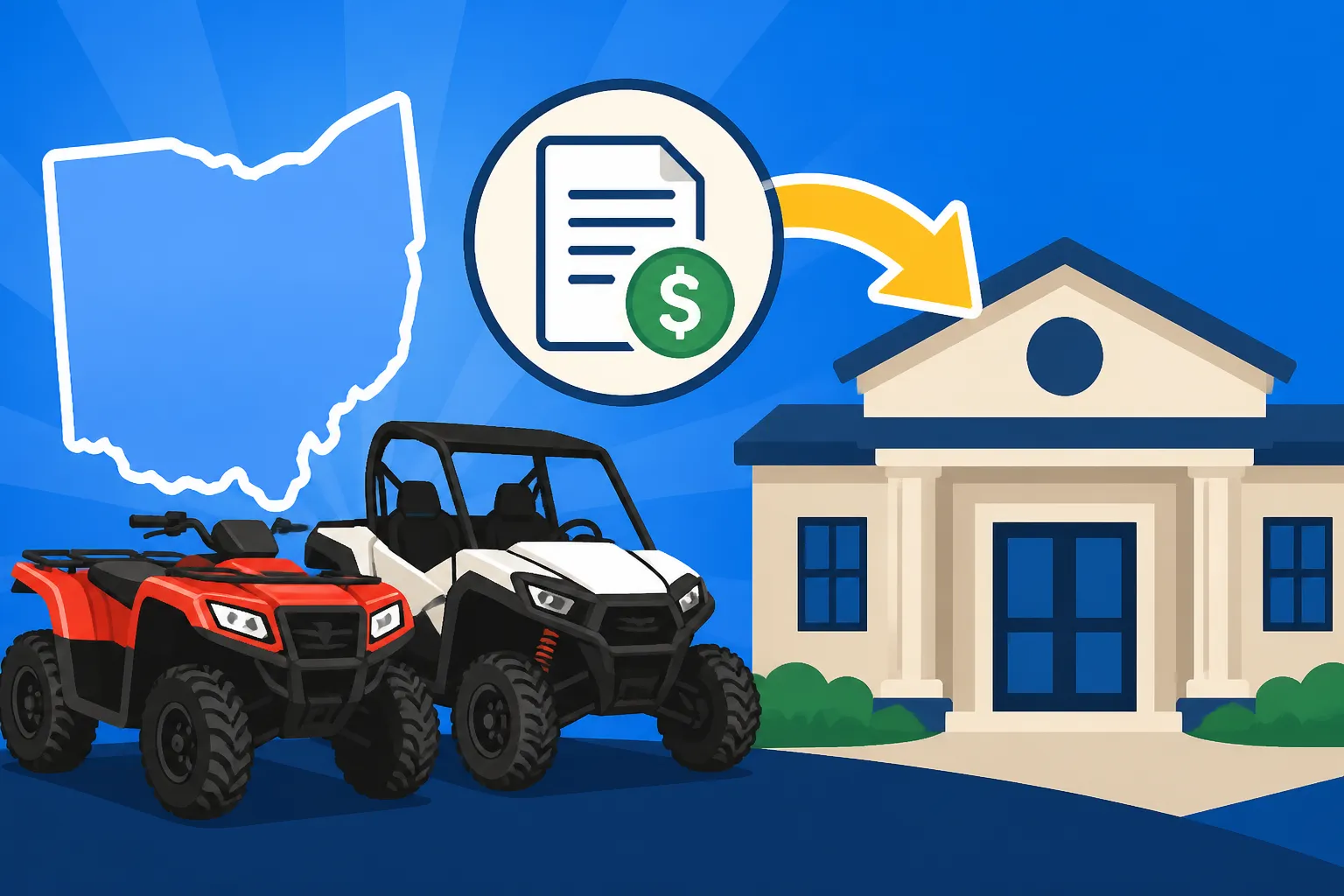
The answer to our core question is straightforward: the title fee for your Ohio APV is collected exclusively by the County Clerk of Courts Title Office. This is because the title itself is a legal document that formally transfers ownership of the vehicle to you. The Clerk of Courts office is the official custodian of these records, ensuring that the chain of ownership is clear and legally sound. When you pay your title fee, you are essentially paying for the administrative process of documenting this transfer and issuing your official proof of ownership. This document is crucial for proving that the machine belongs to you, especially if you ever need to sell it, finance it, or even report it stolen.
The fee collected by the Clerk of Courts is a statutory charge, meaning its amount is set by state law, and it's a one-time payment for that particular title transaction. It's not an annual fee like your registration. This fee contributes to the maintenance of the state's title record system and covers the cost of issuing the physical title document. It's a completely separate charge from any registration fees or service charges you'll encounter later at the Deputy Registrar's office. Understanding [What an Ohio APV Title Costs] can help you budget for this initial expense. This is also why you'll often hear it referred to as [Why a County Title Office and Not the BMV] – because it's specifically a county function, not directly handled by the state's central BMV branches.
Navigating the Clerk of Courts Office for Your APV Title
Once you understand that the Clerk of Courts is your first stop for titling, the next step is to prepare for your visit. Many riders, excited to hit the trails, rush into this process without all their ducks in a row, leading to frustrating delays. Taking the time to gather everything you need can save you a second trip and a lot of headaches.
Required Documents and Information for Titling
To successfully title your APV at the Clerk of Courts office, you’ll need a specific set of documents, and these can vary slightly depending on whether you’re buying a new machine, a used one, or transferring an out-of-state title. For a brand-new APV purchased from a dealer, you'll need the Manufacturer’s Certificate of Origin (MCO), which is basically the birth certificate for your machine. This document confirms that the APV is new and hasn't been titled before. You'll also need a valid form of identification, like your Ohio driver's license, and proof of your Ohio residency. The VIN (Vehicle Identification Number) of your APV will be paramount, so make sure you have it readily accessible.
If you’re purchasing a used APV, the process shifts slightly. You’ll need the original, physical title from the previous owner, properly assigned to you on the back. This assignment needs to be filled out completely and accurately, including the seller's signature, the purchase price, and the odometer reading (if applicable, though often less critical for off-road machines). It's incredibly important that the seller's signature matches the name on the title exactly. Any discrepancies can cause issues. For private sales, having a formal bill of sale, which you can often generate using resources like LawDepot, can provide an extra layer of protection and clarity, though the title assignment itself is the legal transfer. If you're coming from another state, you'll generally need your out-of-state title and potentially an out-of-state inspection if the Clerk of Courts office requires verification of the VIN. Always check with your specific county's Clerk of Courts for their precise requirements, as these can sometimes vary slightly. For a detailed list, check out [Ohio APV Title Requirements].
The Actual Payment Process for Your Title Fee
When you arrive at the Clerk of Courts Title Office, your primary goal, beyond submitting your paperwork, is to pay the title fee. This fee is a fixed amount set by Ohio law, and it covers the cost of processing your title application and issuing the official certificate of title. It's not a negotiable fee, nor is it dependent on the value of your APV, unlike sales tax. The acceptable forms of payment can vary by county, but generally, you can expect them to accept cash, checks, money orders, and often debit or credit cards (though credit card payments might incur a small processing fee). It’s always a good idea to call ahead or check your county Clerk of Courts website to confirm their accepted payment methods before you go.
Remember, this is the fee for the ownership document itself. It's completely separate from the sales tax you might pay on the purchase price of your APV, which is typically collected by the dealer if you buy new, or by the Deputy Registrar during registration if you buy privately. It’s also distinct from the registration fees and the Deputy Registrar’s service charge you’ll encounter when you go to get your license plate. Think of it as a one-time administrative cost to officially change the name on the ownership papers, ensuring your APV is legally yours.
Common Pitfalls and How to Avoid Them
Even with the best intentions, the titling process can hit snags. One of the most common pitfalls is incomplete or incorrect paperwork. Missing signatures, incorrect VINs, or an improperly completed title assignment from a previous owner can all lead to delays. The Clerk of Courts staff are sticklers for accuracy because titles are legal documents. Always double-check everything before you leave home. If you're dealing with a private sale, consider bringing the seller with you to the title office to ensure the assignment is completed correctly in front of the clerk, which can prevent future headaches. You can find helpful resources for proper documentation, such as [An Ohio Bill of Sale for an APV], often with templates from services like LawDepot.
Another common mistake is trying to complete the titling and registration at the same office, or in the wrong order. As we've discussed, the Clerk of Courts handles titles, and the Deputy Registrar handles registrations. You must title your APV before you can register it. Showing up at the Deputy Registrar's office without a valid title in your name will only result in being sent away to the Clerk of Courts. To save yourself time and frustration, always make the Clerk of Courts your first stop. A quick phone call to your county's Clerk of Courts office can clarify any specific requirements or answer questions you might have, especially for unique situations like [Registering an Inherited Machine in Ohio] or [Registering an Out-of-State Machine in Ohio].
Differentiating Title Fees from Registration Fees
One of the biggest sources of confusion for APV owners in Ohio is mixing up the title fee with the registration fee. While both are necessary to legally operate your machine, they serve entirely different purposes and are collected by different offices. Understanding this distinction is key to navigating the administrative landscape smoothly.
What the Title Fee Covers vs. Registration Costs
Let's break it down: the title fee is a single, one-time payment made at the County Clerk of Courts Title Office. Its sole purpose is to process and issue the official Certificate of Title for your APV. This document is your legal proof of ownership, akin to the deed for a piece of property. It doesn't expire, and you don't pay it again unless you sell the machine and buy a new one, or if you make significant changes that require a new title, like adding or removing a lienholder. For instance, if you were to transfer ownership of your APV, the new owner would pay a title fee to get a title in their name. This fee directly supports the state's titling system and the local title offices that manage these crucial records. You can learn more about [Titling an APV at an Ohio Clerk of Courts].
In contrast, registration costs are recurrent. When you register your APV at a Deputy Registrar's office, you are paying for the privilege of operating your machine on approved trails and roads for a specific period. In Ohio, APV registrations are issued for a three-year cycle. This fee covers the cost of your physical license plate and validation stickers, and a significant portion of it goes into state funds dedicated to developing, maintaining, and policing Ohio's APV trails and recreational areas. So, while the title confirms who owns the machine, the registration confirms who is allowed to ride it and where. This is why you must renew your registration every three years, but your title remains valid indefinitely as long as you own the machine.
The Role of the Deputy Registrar in Registration and Other Fees
After you've successfully obtained your APV title from the Clerk of Courts, your next stop is the Deputy Registrar's office. This is where you'll present your newly acquired title, along with proof of identity and residency, to get your machine registered. At this office, you will pay the actual registration fee, which, as mentioned, covers the three-year period your plate and stickers will be valid.
In addition to the registration fee itself, the Deputy Registrar's office also charges a small service fee, often referred to as the Deputy Registrar fee. This is a separate, modest charge that compensates the Deputy Registrar for their services in processing your registration application, issuing your plate, and handling other related transactions. It's important to understand that this Deputy Registrar fee is not part of the state's registration revenue; it's a processing charge for the local office. You'll never pay the title fee at a Deputy Registrar's counter because they simply don't have the authority or the system to process title applications. Their role is specifically focused on registration, plate issuance, and collecting associated fees for those services. The distinct financial components of your APV's legal setup are clearer when you consider [What Ohio Charges at the Counter Altogether].
Practical Steps for a Smooth Titling and Registration Process
Armed with a clear understanding of the Clerk of Courts and Deputy Registrar roles, you can now approach the titling and registration of your Ohio APV with confidence. A little preparation goes a long way in avoiding unnecessary trips and frustrating delays.
A Step-by-Step Guide for New APV Owners
For any new APV owner, the best approach is a structured one. Here’s a recommended sequence to ensure a smooth process:
- Gather Your Documents: Before you even leave your house, make sure you have all the necessary paperwork. This includes your Manufacturer's Certificate of Origin (for new machines) or the properly assigned title from the previous owner (for used machines), your valid Ohio driver's license or state ID, and proof of your Ohio residency. If it's a private sale, consider having a detailed bill of sale, perhaps using a template from LawDepot, to protect both parties.
- Visit the Clerk of Courts Title Office: This is your first and most crucial stop. Take all your gathered documents. At this office, you will submit your ownership document (MCO or assigned title), pay the title fee, and the clerk will process your application for an Ohio Certificate of Title in your name. You'll typically leave with your official title document, or at least a receipt and confirmation of its processing. Remember, they do not handle registration here.
- Head to the Deputy Registrar's Office: Once you have your Ohio Certificate of Title in hand (or proof it's been issued), then proceed to your nearest Deputy Registrar's office. Here, you'll present your title, identification, and proof of residency. You will pay the three-year registration fee and the Deputy Registrar's service charge. They will issue your APV license plate and validation stickers. This step allows your machine to be legally operated. [The Ohio BMV and All-Purpose Vehicles] details the scope of their services related to your APV.
- Attach Your Plate and Stickers: Securely attach your new APV plate to the rear of your machine, ensuring it's clearly visible. Place the validation sticker in the designated area on the plate.
Following these steps in order will prevent you from being turned away from one office for not having completed the prior step. Always check the hours of operation for both offices before you go, as they can sometimes differ.
Handling Special Situations: Used, Out-of-State, or Inherited APVs
While the general process remains the same, certain situations require a bit more attention when it comes to titling and registration.
- Buying a Used APV: This is a common scenario. Ensure the seller properly assigns the existing title to you, filling in all the required fields (your name, address, sale price, date, and their signature). If the title has a lien on it, ensure it's been properly released by the lienholder before the seller signs it over. Sometimes, a seller might not have properly transferred the title into their name after their purchase; in such cases, you might need to involve them in a "reassignment" or ensure all prior transfers are documented. Be diligent in verifying the VIN on the title matches the machine, as discussed in [Checking a VIN Before an Ohio Purchase]. Using a document service like LawDepot can assist in creating a solid paper trail for your purchase.
- Out-of-State Machines: If you're bringing an APV into Ohio from another state, you'll typically present your out-of-state title at the Clerk of Courts. They will then issue an Ohio title. Depending on the state of origin and the age of the machine, an inspection to verify the VIN might be required before the title is issued. This ensures the machine hasn't been stolen and that the VIN matches the paperwork. Then, you'll proceed to the Deputy Registrar for registration. [Registering an Out-of-State Machine in Ohio] provides more in-depth guidance.
- Inherited Machines: When an APV is inherited, the titling process will depend on whether the deceased owner had a will and if the estate is being probated. Generally, you'll need certified copies of the will, letters of administration, or other court documents proving you are the rightful heir. These documents will allow the Clerk of Courts to transfer the title into your name. This can be a sensitive time, so taking extra care with paperwork is important. [Registering an Inherited Machine in Ohio] offers further details.
Regardless of your specific situation, remember that the Clerk of Courts is where your title journey begins, and it's where that crucial title fee is collected. Be patient, be prepared, and you'll be hitting the trails in no time.
Ohio APV Titling and Registration Offices: A Comparison
To help clarify the distinct roles, here's a quick overview of what each office does regarding your APV in Ohio:
| Feature | County Clerk of Courts Title Office | Deputy Registrar (BMV) Office |
|---|---|---|
| Primary Function | Issues legal Certificate of Title | Issues registration, plate, stickers |
| Fee Collected | Title Fee (one-time) | Registration Fee (3-year cycle) |
| Additional Fees | (None directly by this office) | Deputy Registrar Service Fee |
| Documents Required | MCO, prior title, ID, residency proof | Title (in your name), ID, residency |
| When to Visit | FIRST (to obtain title) | SECOND (after title is obtained) |
| Purpose of Visit | Establish legal ownership | Obtain operating privileges |
| What You Get | Ohio Certificate of Title | APV License Plate & Stickers |
This table highlights the crucial differences and should reinforce the idea of [Two Ohio Counters for One Machine].
Disclaimer
This article is for general informational purposes only and does not constitute professional advice. Laws, prices and regulations vary by location and change over time. Consult a qualified professional for guidance on your specific situation.