An Ohio Quad That Lives on a Trailer
It's a common scenario: you’ve got a fantastic quad, maybe a side-by-side or a dirt bike, and it spends most of its life nestled securely on a trailer. You haul it to state forests, private riding parks, or even a friend's expansive property, and it rarely, if ever, touches a public road. This can lead to a nagging question: does a machine that "lives on a trailer" really need to be registered in Ohio? The short answer is almost certainly yes, and misunderstanding this critical requirement can lead to frustrating fines and wasted trips. This guide will clarify why your trailered quad needs an Ohio plate and how to navigate the essential titling and registration process.
The Ohio APV Registration Mandate: More Than Just Road Use
Even if your quad is destined only for private riding parks or specific state forest trails, Ohio law has a clear stance: if it's an "all-purpose vehicle" (APV) and you plan to ride it anywhere other than land you personally own, it needs to be registered. This can be a real head-scratcher for folks who think registration is only for street-legal vehicles or those explicitly riding on open county roads. But the state's intent here is broader, covering all off-highway recreational use.
Defining an All-Purpose Vehicle in Ohio
Ohio law uses the term "all-purpose vehicle" to encompass a wide range of off-road machines, including what most of us call ATVs, UTVs (or side-by-sides), and even dirt bikes when they're not explicitly registered as motorcycles. The definition typically focuses on factors like engine size, seating capacity, and design for off-highway use. It’s not about whether it has a windshield or turn signals; it’s about its fundamental purpose as a recreational or utility off-road machine. This is how [How Ohio Law Defines an APV] for these purposes.
If you’ve purchased a new quad from a dealer, it will likely come with a Certificate of Origin identifying it as an APV. For older machines or private sales, you might need to confirm its classification, but generally, if it’s designed for trails and fields, Ohio considers it an APV. This distinction is crucial because it dictates the entire titling and registration path you’ll follow, regardless of how often it's on a public road or in transit.
Why a Plate is Required Even for Trailer Queens
It might seem counter-intuitive to register a machine that never drives on a public street, yet Ohio mandates it. The reason boils down to access and funding. When you trailer your quad to a state forest like Monday Creek or a private park, you’re accessing public or commercially managed land where the state wants to ensure accountability and generate revenue for trail maintenance. Your registration plate acts as your [Ohio APV Permits Explained] for these locations.
Think about it this way: law enforcement or park rangers need a way to identify vehicles operating on these lands. A visible plate provides that. More importantly, the fees collected from APV registrations are funneled directly into funds specifically designated for the development and upkeep of Ohio’s recreational trails. So, even if your machine spends 99% of its time on a trailer, that annual ride at Hanging Rock benefits directly from the system your registration supports. [Where Ohio APV Registration Money Goes] is a question many ask, and it's good to know it's going back into the trails we love.
Where Your Registration Fees Go
It's always good to know where your hard-earned money goes, especially when it feels like you're paying for something you barely use. In Ohio, the fees collected from APV registrations are directed into the State Recreational Vehicle Fund. This fund is absolutely vital for the off-road community. It pays for things like trail acquisition, maintenance, signage, and even the enforcement of safety regulations on public lands.
Imagine showing up to a trail system that’s overgrown, full of deep ruts, or missing crucial markers. That’s what could happen without these funds. So, while it might feel like an inconvenience to register a quad that rarely leaves its trailer, remember that your contribution is directly supporting the very trails you drive it to. It's a collective effort to keep our riding areas safe and enjoyable for everyone. [What the State Recreational Vehicle Fund Pays For] truly makes a difference in the quality of our riding experiences.
Understanding Ohio's APV Titling Process
Before you can even think about getting a plate for your quad, you absolutely must have a title for it in Ohio. This is often where people hit their first roadblock, especially if they've bought a used machine without understanding the process. The title is proof of ownership, and without it, the Deputy Registrar won't be able to issue you a registration and plate. It's a two-step process, but the title comes first, always.
New vs. Used Machines: What to Bring to the Clerk
The process of titling your APV differs slightly depending on whether you bought it brand new or used. If you're buying a new quad from a licensed Ohio dealer, they will typically handle most of the initial paperwork. You'll receive a Manufacturer's Certificate of Origin (MCO) or Manufacturer's Statement of Origin (MSO), which is essentially the birth certificate of your machine. You'll take this, along with a bill of sale showing you paid sales tax (or be prepared to pay it), and your valid ID to a County Clerk of Courts Title Office. [Titling a New Quad With a Certificate of Origin] is usually the easiest path.
When buying a used machine privately, things can get a bit more complicated, and this is where many riders encounter issues. You absolutely need the previous owner's properly assigned Ohio title. This means their name on the front, and their signature on the back, transferring ownership to you. If there's a lien listed on the title, it must be released by the lienholder (like a bank) before the title can be transferred. Without a clean, properly assigned title, you'll be stuck. It's always a good idea to check the VIN and title history before handing over any money. A basic [An Ohio Bill of Sale for an APV] can be helpful even if not strictly required by the state for titling, especially for documenting the transaction and any agreed-upon conditions. Sometimes you might need to create your own bill of sale for a private transaction, and resources like LawDepot can provide templates to ensure all necessary details are included and legally sound.
The Importance of a Clean Title
A "clean title" means a few things in Ohio. First, it means the title is free of any liens – no bank or financial institution has a claim on the vehicle. If there's a lien listed, the previous owner must provide a lien release from the lender before you can transfer it into your name. Secondly, it means the title has been properly transferred from the last owner to you. If you buy a quad from someone who never titled it in their name after buying it from another person, you might have a problem. You often have to go back to the last titled owner.
This is why verifying the title before completing a private sale is critical. Make sure the VIN on the title matches the VIN on the machine perfectly. If anything seems off, walk away or seek legal advice. Resources like LawDepot can also offer guidance on understanding title transfers and what constitutes a valid bill of sale to protect both buyer and seller in a private transaction, making sure you have all your ducks in a row for the Clerk of Courts. Don't let the excitement of a new machine blind you to potential title issues; they can be a nightmare to resolve after the fact. [Checking a VIN Before an Ohio Purchase] is a simple but vital step.
Costs Associated with Titling
Titling an APV in Ohio isn't free, but it's generally a one-time fee unless you need to order a duplicate title later. The state charges a specific amount for the title itself, which you'll pay at the County Clerk of Courts Title Office. This fee is distinct from the registration fees you'll pay at the Deputy Registrar.
Beyond the basic title fee, you might also be responsible for sales tax if you haven't paid it already at a dealership. When buying privately, you generally pay the sales tax directly at the title office when you transfer the title. It's crucial to understand these costs upfront so there are no surprises when you go to make your machine legal. Remember, the title is the foundation; the registration plate comes next. [What an Ohio APV Title Costs] can vary, so it’s always best to check with your local Clerk of Courts for current figures.
Navigating the Registration Steps for Your Trailed Quad
Once you have your sparkling new (or newly transferred) title in hand, you’re ready for the second crucial step: registration. This is where you’ll actually get the physical plate and sticker for your quad, signaling to Ohio authorities that your machine is legally allowed on designated trails and private parks. Even for a quad that lives on a trailer, this step is non-negotiable for riding anywhere but your own property.
Where to Go: Clerk of Courts and Deputy Registrar
It's easy to get these two offices confused, but they serve distinct purposes in Ohio's APV process. As we just covered, the County Clerk of Courts Title Office handles all title transactions. This is where you establish legal ownership. Once that's done, you'll head to a Deputy Registrar agency (often found in strip malls or standalone buildings, distinct from the main BMV office). This is where vehicle registrations are processed, including APVs.
You cannot get a title at the Deputy Registrar, and you can't get your registration plate at the Clerk of Courts. They are separate entities, requiring separate visits. It's a common point of frustration for new riders who try to do it all in one stop, only to be sent to the other office. Plan your trip accordingly to save yourself time and a headache. [Where to Register an APV in Ohio] is always a Deputy Registrar. [Where to Title an APV in Ohio] is always a Clerk of Courts.
Paperwork You'll Need to Present
To register your quad, you'll need to gather a few key documents before heading to the Deputy Registrar. First and foremost, you'll need your Ohio Certificate of Title in your name. Without it, they simply cannot proceed. Next, bring a valid form of identification, such as your driver's license or state ID. You'll also need proof of your Social Security number.
If you've recently purchased the machine, having a bill of sale can sometimes be helpful, especially if there were any questions during the titling process, though it's typically not a primary document for registration itself. Essentially, the Deputy Registrar needs to confirm you're the rightful owner (via the title) and confirm your identity. Make sure all your documents are current and match your information exactly to avoid any delays. [Ohio APV Registration Paperwork] isn't extensive, but it's critical to have it all ready. For those creating a private bill of sale, remembering that LawDepot offers customizable templates can help you ensure all relevant details are captured, although for registration, the state title is paramount.
What to Expect at the Counter
When you arrive at the Deputy Registrar, you'll present your title, ID, and Social Security number. The clerk will process your application, verify your ownership, and calculate the registration fees. Ohio APV registrations are typically issued for a three-year period, which means you'll pay for three years upfront. This can sometimes feel like a hefty sum if you're not expecting it, so be prepared. [Ohio's Three-Year APV Registration] means a bigger initial outlay but less frequent renewals.
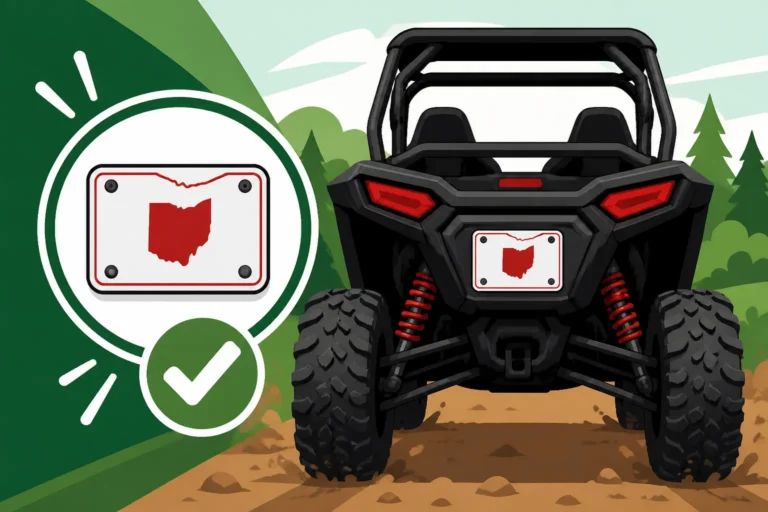
You'll pay the state registration fee, plus a small deputy registrar fee for their services. Once processed, you'll walk out with your new Ohio APV plate and a small validation sticker to affix to it. You'll also receive a registration card to keep with your machine. Even if your quad lives mostly on a trailer, that plate needs to be securely mounted and visible on the rear of the machine whenever it's being operated on non-private land. Don't just toss it in a toolbox! [Ohio APV Plates and Validation Stickers] are designed to be durable and visible.
What Happens If You Skip Registration?
It's tempting to think that because your quad is only trailered to specific riding spots, you can bypass the registration fees. However, this is a gamble that rarely pays off and can lead to significant headaches, not to mention fines. Ohio has clear penalties for operating unregistered APVs on public lands or designated trail systems. It’s simply not worth the risk.
Fines and Legal Ramifications
If you're caught operating an unregistered APV on Ohio public lands, whether it's a state forest trail or a county road that's been opened to APVs, you could face a citation. The specific fines can vary, but generally, it's a minor misdemeanor, which still comes with a financial penalty and court costs. More importantly, it can quickly sour a fun day of riding. Law enforcement officers, whether state park rangers, forest service personnel, or local deputies, are authorized to check for valid registration.
Consider a scenario: you’ve spent hours hauling your quad to Monday Creek, you’re halfway through an awesome loop, and a ranger stops you for a routine check. If you can’t produce a valid registration card and display your plate, your ride is over. You could be asked to trailer your machine out, and you’ll leave with a ticket. The cost of the fine and court fees will almost certainly outweigh the cost of the three-year registration you tried to avoid. [Ohio Fines for an Unregistered APV] are designed to encourage compliance.
Consequences on Ohio Trails
Beyond the legal fines, operating an unregistered APV can have immediate practical consequences on the trails themselves. Many state forest trail systems, private riding parks, and even certain township or county-opened roads specifically require a visible Ohio APV plate for entry or use. Without it, you might be denied access, or worse, have your machine impounded.
Imagine arriving at your favorite trailhead, ready for a day of adventure, only to be turned away because your machine isn't properly registered. All that planning, travel time, and anticipation wasted. Or picture being on a trail and having to cut your ride short because of a violation. It disrupts your experience and can create friction with others who are following the rules. Ultimately, paying for the proper registration ensures you can enjoy Ohio's diverse riding opportunities without constant worry. It's an investment in your peace of mind and access to the places you love to ride. [Ohio Rules for Riding State Forest Land] explicitly require a valid registration.
Ohio APV Titling and Registration Snapshot
| Process | Location | Key Document Required | Primary Cost Type | Frequency |
|---|---|---|---|---|
| Titling | County Clerk of Courts Title Office | Manufacturer's Certificate of Origin (New) or Assigned Ohio Title (Used) | One-time Title Fee, Sales Tax | Once, upon purchase/transfer |
| Registration | Deputy Registrar Agency | Ohio Certificate of Title in Your Name, ID, SSN | Three-Year Registration Fee, Deputy Fee | Every three years |
Disclaimer
This article is for general informational purposes only and does not constitute professional advice. Laws, prices and regulations vary by location and change over time. Consult a qualified professional for guidance on your specific situation.